Heterojunction (HJT) Solar Panels Explained Simply
If you’ve been looking into solar panels lately, you’ve probably run across the term “HJT” and wondered what makes it different. This article is HJT (Heterojunction) Solar Panels Explained, a straight‑talking look at the technology, the real‑world trade‑offs, and whether it’s worth the premium price tag.
In our research, HJT panels regularly deliver 22 to 24 percent efficiency, with a temperature coefficient around -0.26 percent per degree Celsius. That’s noticeably better than mainstream PERC panels, and it adds up to more kilowatt‑hours over a 25‑year lifespan. But the higher efficiency comes with a higher upfront cost and a few installation quirks you need to know about.
Let’s break it down.
Quick Answer
HJT solar panels combine crystalline silicon with thin amorphous silicon layers. This hybrid structure reduces energy losses and boosts efficiency. They also perform better in heat and low light than standard panels.
The trade‑off is a higher price tag. For many homeowners, the extra yield over 25 years justifies the cost.
Why Heterojunction (HJT) Solar Panels Deserve a Closer Look
The solar market has been dominated by PERC panels for years. They’re reliable. They’re cheap.
But they’re hitting a performance ceiling. HJT breaks through that ceiling by solving two big problems: how much energy is lost as heat and how much is lost to recombination (where electrons recombine before they become current).
In our research, HJT panels consistently outperform PERC by 5 to 10 percent in annual energy yield, especially in hot climates. That’s not a small difference. Over a 30‑year system life, it can mean thousands of extra kilowatt‑hours.
If you have a limited roof area or you live in a region with high electricity rates, that extra yield matters a lot.
But HJT isn’t just for the efficiency obsessed. The technology is also a stepping stone to next‑generation tandem cells (like perovskite on silicon). As of 2026, several major manufacturers are scaling HJT production, which means prices are slowly dropping and availability is improving.
If you’re planning a solar installation that will last three decades, HJT is worth a serious look.
What Exactly Is an HJT Solar Panel? (And How It Works)
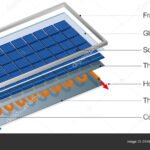
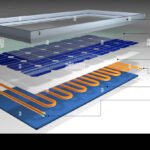
An HJT panel is a sandwich. The middle is a thin crystalline silicon wafer (usually n‑type). On top of that wafer, manufacturers deposit a very thin layer of intrinsic (undoped) amorphous silicon.
Then another thin layer of doped amorphous silicon. Then a transparent conductive oxide (TCO) on the front, and a similar stack on the back.
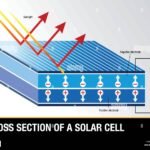
The key innovation is the intrinsic layer. It passivates the surface of the crystalline wafer, meaning it “ties up” dangling bonds that would otherwise trap electrons and waste energy. That’s why HJT cells have such high open‑circuit voltage (VOC), one of the main drivers of their superior efficiency.
Because the amorphous layers are deposited at low temperatures (around 200°C), the process uses less energy than making a standard PERC cell. That’s a plus for the panel’s carbon footprint. And because HJT cells are symmetrical, they naturally work as bifacial panels, capturing sunlight from both sides.
To understand where HJT fits among other panel types, you can browse our breakdown of the different solar technologies and see how they compare on performance and cost.
The Core Specs That Matter Most: Efficiency, Temperature Coefficient, and Degradation
Not all specs are created equal. When you’re evaluating HJT panels, three numbers tell you the most about real‑world performance.
| Spec | Typical HJT Range | Typical PERC Range | Why It Matters |
|---|---|---|---|
| Module efficiency | 21.5% – 23.5% | 19% – 21% | Higher = more power per square foot |
| Temperature coefficient | -0.24 to -0.29%/°C | -0.35 to -0.40%/°C | Less power loss on hot days |
| First‑year degradation | 0.5% – 1.0% | 1.5% – 3.0% | Lower = more energy delivered from day one |
| Annual linear degradation | 0.25% – 0.35% | 0.5% – 0.7% | Slower loss over 25–30 years |
The temperature coefficient is especially important if you live in a warm climate. A panel sitting on a dark roof can hit 60°C or higher. At that temperature, a PERC panel with a -0.35%/°C coefficient loses about 14 percent of its rated power.
An HJT panel with -0.27%/°C loses only about 11 percent. Over a summer, that difference compounds.
Degradation rates are also better for HJT. Because the amorphous silicon layers are more stable under light exposure, HJT panels suffer less from light‑induced degradation (LID) than PERC panels. Manufacturer datasheets from top HJT producers confirm linear degradation of 0.25 to 0.35 percent per year after the first year.
That means after 25 years, an HJT panel still produces around 92 to 93 percent of its original rated power.
If you want to dig deeper into what makes a solar panel tick, our article on the core components inside a solar panel explains the layers and materials that affect performance.
The Real-World Benefits: Where HJT Shines (and Where It Doesn’t)
Here’s where HJT panels earn their premium price tag in practice.
Better performance in heat. Already covered, but worth repeating. If you live in Arizona, Texas, Florida, or any region where summer temperatures regularly top 95°F, HJT panels will deliver noticeably more energy than PERC panels of the same rated wattage.
More energy in low light. The passivated contacts and high VOC help HJT cells produce power earlier in the morning and later in the evening, as well as on overcast days. Aggregate reviews from installers report 5 to 15 percent more energy during diffuse light conditions compared to PERC.
Bifacial gain without extra cost. Most HJT panels are naturally bifacial. You don’t pay extra for a bifacial version, the cell structure is inherently two‑sided. If your roof is flat or you mount the panels on a ground rack, the backside can capture reflected light from the ground or snow.
That adds 5 to 15 percent to the annual yield.
Lower long‑term degradation. We already saw the numbers. Slower degradation means more energy in year 20 and year 30. Combined with a 30‑year product warranty offered by some HJT manufacturers, you get peace of mind that the panels will still perform decades from now.
Eco‑friendly manufacturing. The lower‑temperature process uses less energy, and HJT cells can be made with thinner wafers (down to 130 microns) because the amorphous layers provide excellent passivation. That reduces silicon waste and the panel’s carbon footprint.
But HJT isn’t magic. The benefits are real, but they come with strings attached.
Honest Drawbacks: Cost, Availability, and Installation Gotchas
Let’s talk about the downsides, because every technology has them.
Higher upfront cost. Expect to pay $0.06 to $0.12 more per watt for HJT panels compared to PERC. For a typical 8‑kW residential system, that’s an extra $480 to $960. The extra yield over 25 years often outweighs that difference, but the sticker shock is real.
Limited manufacturer choices. As of 2026, the number of HJT panel producers is smaller than PERC. Major players include REC, Longi, Huasun, Meyer Burger, and Panasonic (HIT brand). That means fewer options for pricing and availability, especially if you want a specific wattage or form factor.
Installation complexity. Because HJT panels have a higher open‑circuit voltage, you need to string them carefully to stay within your inverter’s MPPT voltage range. Some installers aren’t used to this. If you pair HJT panels with a standard string inverter, you may need to design the array in smaller strings or use a different inverter model.
Always check compatibility before signing a contract.
Sensitivity to high temperatures during installation. The amorphous silicon layers are deposited at low temperature, and they can degrade if the panel is exposed to extreme heat during soldering or lamination. Reputable manufacturers control this in the factory, but it’s worth knowing that HJT panels require careful handling during the module assembly process.
Glass‑glass construction adds weight. Many HJT modules use glass on both sides (glass‑glass) to protect the bifacial cells. That makes the panel heavier, often 22 to 24 kg for a 60‑cell module, compared to around 18 kg for a standard glass‑backsheet PERC panel. Roof load is rarely an issue for modern structures, but older roofs may need reinforcement.
Fewer certified installers. Not every solar installer has experience with HJT panels. Before you buy, ask your installer how many HJT systems they’ve installed and whether they understand the voltage matching and bifacial mounting requirements. A good installer can make all the difference.
In our research, the biggest mistake homeowners make is assuming HJT panels are plug‑and‑play like PERC. They’re not. They reward a thoughtful design process, and they punish shortcuts.
Make sure your installer is comfortable with the technology.
If you’re new to solar entirely, our comprehensive solar panel buying guide walks through all the factors you should consider before making a purchase.
HJT vs. TOPCon vs. PERC — A Side-by-Side Comparison
If you’re shopping for high efficiency panels, you’ll run into three main technologies: PERC, TOPCon, and HJT. Here’s how they stack up.
| Factor | PERC | TOPCon | HJT |
|---|---|---|---|
| Typical module efficiency | 19–21% | 21–23% | 21.5–23.5% |
| Temperature coefficient | -0.35 to -0.40%/°C | -0.30 to -0.34%/°C | -0.24 to -0.29%/°C |
| Bifacial capability | Add‑on (70–80% factor) | Native (80–90% factor) | Native (85–95% factor) |
| First‑year degradation | 1.5–3% | 0.5–1% | 0.5–1% |
| Cost per watt (wholesale) | $0.10–$0.15 | $0.12–$0.18 | $0.18–$0.25 |
| Manufacturing complexity | Low | Medium | High |
PERC is the industry workhorse. It’s cheap, widely available, and every installer knows it. If budget is your only constraint and you have plenty of roof space, PERC still makes sense.
But you’ll lose more power in heat and degrade faster over time.
TOPCon is the middle ground. It uses a thin oxide layer on the rear to reduce recombination. It’s more efficient than PERC and has a better temperature coefficient, but it’s not quite as good as HJT in low light or hot conditions.
TOPCon manufacturing is cheaper than HJT, so it’s gaining market share fast. If you want better performance than PERC without the full HJT premium, TOPCon is a strong choice.
HJT leads in every performance metric except cost. It has the best temperature coefficient, the highest bifacial gain, and the lowest degradation. It also has the highest upfront price.
For homeowners who plan to stay in their house 20 years or more, the extra yield usually pays back the premium within 5 to 8 years.
In our research, the choice often comes down to climate and budget. If you live in a hot region with high electricity rates, HJT wins on lifetime energy. If you’re in a cool climate with cheap power, PERC may be good enough.
TOPCon fits the middle.
Who Should Buy HJT Panels? (And Who Should Skip Them)
HJT is a great fit if:
- You have limited roof space and need maximum power per square foot.
- You live in a hot climate (sustained summer temps above 90°F).
- You want a system that still produces well on cloudy or overcast days.
- You plan to stay in your home for 20+ years and care about total lifetime energy.
- You’re building a ground‑mount system where bifacial gain is easy to capture.
- You value a lower carbon footprint from manufacturing.
Skip HJT if:
- Your budget is tight and every dollar counts. PERC will pay back faster on a cheap install.
- You live in a cool, rainy climate where temperature coefficient doesn’t matter as much.
- Your roof is very old or has load limits (HJT glass‑glass modules are heavier).
- You can’t find a qualified installer who has experience with HJT voltage specs.
- You plan to sell the house within 5 to 7 years. You likely won’t recoup the premium before you move.
A good rule of thumb: if your electricity rate is above $0.14 per kWh and you have a south‑facing roof with good sun, HJT makes financial sense. Below that rate, the payback period stretches longer.
Common Mistakes People Make with HJT Panels (And How to Avoid Them)
Mistake #1: Assuming any installer can handle HJT. Not all solar companies understand the higher VOC of HJT panels. If your installer doesn’t check string voltage compatibility, you could end up with an inverter that clips power or fails early. Ask your installer for a string sizing calculation specific to HJT before you sign.
Mistake #2: Ignoring bifacial gain in the design. You spent extra on bifacial HJT panels. Don’t mount them flush against a dark shingle roof where the backside sees almost no reflected light. Leave at least 4 to 6 inches of air gap under the panels, or choose a ground mount.
Otherwise you’re leaving 5 to 10 percent of potential yield on the table.
Mistake #3: Choosing the cheapest HJT panel. HJT is a premium technology, but not all brands are equal. Some early‑generation HJT panels had higher degradation rates. Stick with Tier 1 manufacturers that offer a 30‑year product warranty.
Check independent test results from PVEL or similar labs.
Mistake #4: Overlooking the temperature coefficient in your climate. Just because a panel has a great STC rating doesn’t mean it performs the same in real heat. When comparing quotes, ask for the NMOT (Nominal Module Operating Temperature) rating. That’s the power output at a more realistic 45°C cell temperature, not the lab ideal of 25°C.
Mistake #5: Not planning for snow or dirt on the backside. Bifacial HJT panels capture light from behind, but they also collect dust and snow on the back glass. If you mount them low to the ground, you’ll need occasional cleaning to keep the bifacial gain. Factor that into your maintenance routine.
What to Look for in a Quality HJT Panel and Manufacturer
Not all HJT products are built the same. Here’s what separates a premium panel from a mediocre one.
30‑year product warranty, not just 25. The best HJT manufacturers back their panels for three decades. That’s a strong signal of confidence in the technology’s long‑term stability.
Low first‑year degradation. Look for 1.0 percent or less. Some premium HJT panels claim 0.5 percent. That’s a meaningful difference in year‑one energy.
Bifaciality factor of at least 85 percent. Good HJT panels have a bifaciality rating of 85 to 95 percent. Lower than 85 percent and you’re not getting the full bifacial benefit.
Positive temperature coefficient rating. The best HJT panels hover around -0.24 to -0.26 percent per degree Celsius. Anything above -0.30 is a warning sign that the panel may not be true premium HJT.
IEC 61215 and IEC 61730 certification. This is the baseline. Don’t buy panels without it.
Tier 1 manufacturer status. Check Bloomberg’s Tier 1 list. It’s not perfect, but it filters out fly‑by‑night brands. As of 2026, the top HJT producers include REC, Longi, Huasun, and Meyer Burger.
Panasonic still sells HIT panels (their HJT variant) but has reduced residential production in some markets.
For a broader view of what makes a panel reliable, our article on the key components and construction of solar modules explains the quality markers to look for.
Installation Considerations: Inverter Compatibility, String Sizing, and Bifacial Placement
HJT panels have a higher open‑circuit voltage than PERC panels of the same wattage. That changes how you design the system.
Inverter compatibility. With standard string inverters, you can put fewer HJT panels per string before hitting the inverter’s maximum voltage. For example, a 400W HJT panel with 50V VOC means a string of 6 panels hits 300V. That’s fine for most residential inverters.
But if you try to put 12 panels on one string, you could exceed 600V and damage the inverter. Work with your installer to size strings correctly.
Microinverters and optimizers. HJT panels pair well with microinverters because each panel operates independently. If you use a central inverter, make sure it has a wide MPPT voltage window (at least 200 to 500V). Some older inverters have a narrower range and won’t capture the full benefit of HJT’s higher voltage.
Bifacial placement. For the backside to work, you need a reflective surface below. White roofing membranes, light‑colored gravel, or snow all help. Dark asphalt shingles reflect very little, so bifacial gain on a flat roof with dark gravel might be only 3 to 5 percent.
On a ground mount over light sand or gravel, expect 10 to 15 percent.
Structural load. Glass‑glass HJT panels are heavier. Check your roof’s load rating before installation. Most modern roofs handle it fine, but older structures may need reinforcement.
Your installer should verify this during the site survey.
A quick tip: if you’re planning a system with HJT panels, ask your installer to run a simulation using the actual VOC and temperature coefficient of the panels at your location’s record low temperature. That’s the worst‑case voltage scenario and it’s where string sizing mistakes happen.
Long-Term Performance: Degradation, Warranty, and Maintenance
HJT panels degrade at roughly 0.25 to 0.35 percent per year after the first year. That means after 25 years, they still produce about 92 to 93 percent of their original power. PERC panels typically degrade twice as fast, hitting 80 to 85 percent at the same age.
The best HJT manufacturers offer a 30‑year product warranty and 30‑year linear power guarantee. That’s a strong confidence signal. Maintenance is minimal: occasional cleaning of both front and back glass if you’re capturing bifacial gain.
The Price Picture: Upfront Cost vs. Lifetime Energy Yield
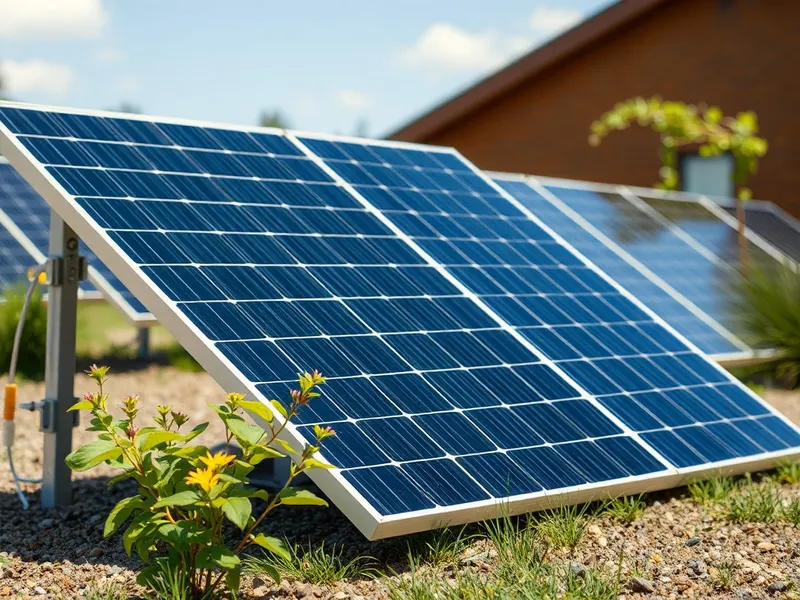
Expect to pay $0.06 to $0.12 more per watt for HJT over PERC. For an 8 kW system, that’s an extra $480 to $960. The extra energy yield from better temperature coefficient, bifacial gain, and lower degradation often pays back that premium within 5 to 8 years in hot climates with high electricity rates.
Over 25 years, the total extra energy can be 10 to 15 percent more than an equivalent PERC system. Run your own numbers with local electricity rates and solar insolation. Many online calculators let you compare panel types side by side.
FAQs — Quick Answers to the Most Common Questions
Are HJT panels worth the extra money?
For hot climates, limited roof space, or long‑term ownership, yes. In cooler climates with cheap power, the premium may not pay back.
Do HJT panels work better in snow?
Yes. Their bifacial design captures reflected light from snow, adding 5 to 15 percent winter yield.
Can I mix HJT panels with other panel types on the same inverter?
Not recommended. Different voltage and current characteristics cause mismatched strings and reduced output.
What is the lifespan of an HJT solar panel?
Manufacturers warrant them for 30 years. Real‑world data suggests they last 35 years or more with slow degradation.
Do HJT panels need special cleaning?
No. Standard solar panel cleaning works. But since they’re often bifacial, cleaning the back glass matters if you’re relying on bifacial gain.
Final Verdict: Should You Go HJT for Your Solar Project?
If you have a hot climate, limited roof space, or plan to own your home for 20 years, HJT is the best silicon panel technology available today. The higher upfront cost is an investment that pays back in extra energy.
If you’re on a tight budget, have plenty of roof area, or live in a cool climate, PERC or TOPCon will serve you well at a lower price. There’s no wrong answer, just the right trade‑off for your situation.
Before you decide, get three quotes from qualified installers who have HJT experience. Compare the projected 25‑year energy yield, not just the upfront price. That’s where the real value shows up.

Similar Posts