Flexible vs Rigid Solar Panels – Which Should You Buy?
You're standing in the middle of a solar panel decision, and honestly, it's one of those choices that looks simple until you dig in. Flexible vs Rigid Solar Panels isn't just about picking one that fits your roof. It's about matching the right technology to your actual setup, your budget, and how long you plan to keep it.
Manufacturer specifications show that rigid panels typically deliver 18 to 23 percent efficiency, while flexible panels hover around 15 to 20 percent. That gap matters more in some situations than others. Let's walk through what each type actually does well, where it falls short, and which one belongs on your rig.
Quick Answer
Rigid solar panels offer higher efficiency and longer lifespans. Flexible panels are lighter and work on curved surfaces. Rigid panels last 25 to 30 years.
Flexible panels last 5 to 15 years. Choose rigid for permanent home installations. Choose flexible for RVs, boats, or portable setups.
Why This Comparison Actually Matters
Most people assume solar panels are solar panels. You stick them on a roof, they make power, done. But the difference between a rigid panel and a flexible one goes way beyond the obvious.
It affects how much power you actually get, how long the system lasts, and whether your installation even holds up after a few seasons.
The stakes are real. Pick the wrong type and you could end up with panels that overheat, delaminate, or simply don't produce enough juice for your needs. That's not just frustrating.
It's money down the drain.
Here's what most online guides skip. They treat this like a simple spec sheet comparison. But the real question is about your specific situation.
Are you mounting on a curved RV roof? Do you have a flat residential roof with plenty of space? Are you trying to keep weight down on a van conversion?
Each answer points to a different panel type.
We've looked at manufacturer datasheets, aggregate buyer feedback, and real-world performance data to give you a clear picture. As of 2026, the technology gap between rigid and flexible panels has narrowed in some areas but widened in others. Let's break it down.
How Rigid Solar Panels Work (and Where They Shine)

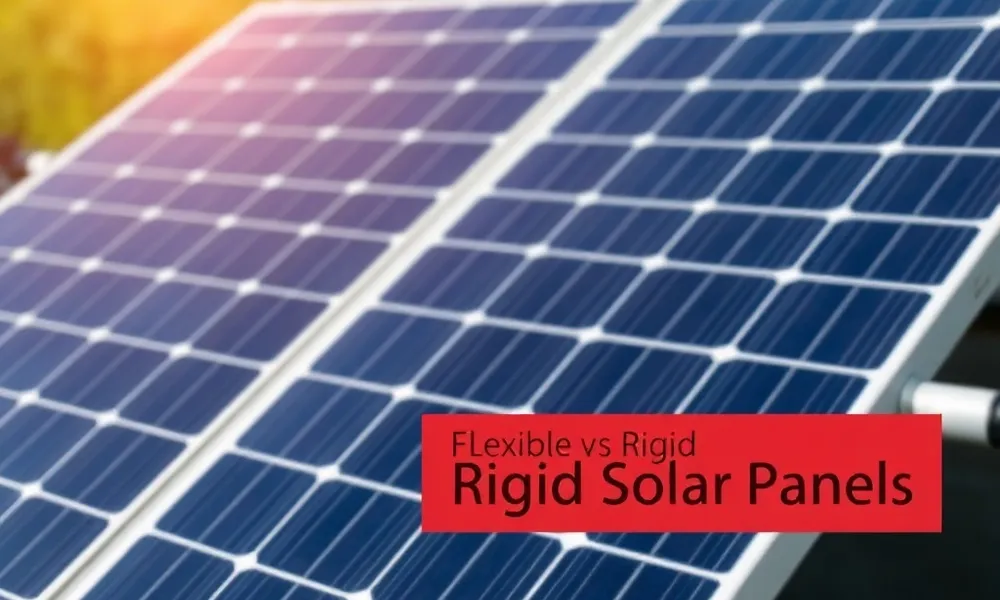
Rigid panels are what most people picture when they hear "solar panel." A frame of anodized aluminum surrounds a sheet of tempered glass. Under that glass sit silicon solar cells wired together in series. A junction box on the back handles the electrical connections.
The key advantage here is the air gap. Rigid panels sit above the mounting surface on rails or brackets. That gap lets air flow underneath, which keeps the cells cooler.
Solar cells lose efficiency as they heat up. The temperature coefficient on most rigid panels sits around -0.35 to -0.45 percent per degree Celsius. That means for every degree above 25°C (77°F), you lose roughly 0.4 percent of your power output.
With that air gap, rigid panels stay closer to their rated output even on hot days. That's a big deal if you live somewhere with real summers.
Rigid panels also use higher-grade monocrystalline cells more often than flexible panels do. The best rigid panels hit 22 to 23 percent efficiency. Even budget-friendly options land around 18 to 19 percent.
That's solid performance per square foot.
Durability is another strong suit. Tempered glass handles hail, falling branches, and foot traffic (though you shouldn't walk on them). The aluminum frame adds structural rigidity.
Most rigid panels carry a 25-year power output warranty. They degrade at roughly 0.5 percent per year, meaning after 25 years they still produce around 87 to 88 percent of their rated output.
Installation is more involved. You need mounting rails, brackets, and roof penetrations. That means drilling holes, sealing them properly, and making sure the structure can handle the weight.
A typical 400-watt rigid panel weighs around 40 to 50 pounds. That adds up fast on a roof.
But the trade-off is a system that stays put, stays cool, and keeps producing for decades. For permanent home installations, rigid panels are the standard for good reason.
How Flexible Solar Panels Work (and Where They Belong)
Flexible panels take a completely different approach. Instead of glass and aluminum, they use thin layers of photovoltaic material sandwiched between protective polymer sheets. The most common type uses CIGS (copper indium gallium selenide) or amorphous silicon cells.
These materials are deposited onto a flexible substrate, then sealed with a top layer of ETFE or PET.
The result is a panel that weighs about a quarter of what a rigid panel weighs. A 100-watt flexible panel might weigh only 4 to 5 pounds. It's thin enough to bend around a gentle curve.
You can glue it directly to a roof surface with VHB tape or marine-grade adhesive. No drilling. No rails.
No roof penetrations.
That sounds perfect, right? Well, there are catches.
The biggest one is heat. Without an air gap, flexible panels sit flush against the roof surface. That roof gets hot, especially if it's dark colored.
The panel absorbs that heat, and its efficiency drops. The temperature coefficient on flexible panels is often better than rigid panels (around -0.25 to -0.35 percent per degree Celsius), but that advantage gets eaten up by the lack of airflow. In practice, flexible panels often run hotter than rigid panels in the same conditions.
Lifespan is another concern. The polymer layers that protect the cells degrade faster than glass. UV exposure causes yellowing and embrittlement over time.
The adhesive bond between the panel and the roof can fail in extreme heat or cold. High-quality flexible panels with ETFE top layers last longer than cheap PET ones, but even the best ones typically carry a 5 to 10 year warranty. That's a far cry from the 25 years you get with rigid panels.
Efficiency also lags. Most flexible panels sit between 15 and 20 percent efficiency. That means you need more surface area to produce the same power.
On a small RV roof where every inch counts, that can be a real limitation.
But for the right use case, flexible panels are genuinely the better choice. If you have a curved roof surface, a weight limit, or a need for a low-profile installation that doesn't add wind noise or drag, flexible panels solve problems rigid panels can't.
Side-by-Side: Rigid vs Flexible at a Glance
Let's put the key differences in one place so you can scan them quickly.
| Feature | Rigid Panels | Flexible Panels |
|---|---|---|
| Efficiency | 18 to 23 percent | 15 to 20 percent |
| Weight (per 100W) | 15 to 20 pounds | 4 to 6 pounds |
| Lifespan | 25 to 30 years | 5 to 15 years |
| Warranty | 25 years typical | 5 to 10 years typical |
| Installation | Rails, brackets, roof penetrations | Adhesive, no drilling |
| Heat management | Air gap under panel | Flush mount, runs hotter |
| Surface compatibility | Flat or slightly angled | Flat or gently curved |
| Cost per watt | $0.80 to $1.50 | $1.00 to $2.00 |
| Wind load rating | 140+ mph | Varies, often unrated |
| Degradation rate | ~0.5 percent per year | ~1 to 2 percent per year |
That table tells the story in a hurry. Rigid panels win on efficiency, lifespan, and heat management. Flexible panels win on weight, installation simplicity, and the ability to conform to curved surfaces.
The cost per watt is interesting. Flexible panels actually cost more upfront for the same wattage. You're paying for the lightweight materials and the convenience of adhesive mounting.
But if you factor in the shorter lifespan, the total cost of ownership tilts even further toward rigid panels for permanent installations.
For temporary or mobile setups, the convenience premium might be worth it. That's a personal call based on your situation.
Efficiency and Power Output: The Real Numbers
Let's get specific about what you can expect from each type in real-world conditions.
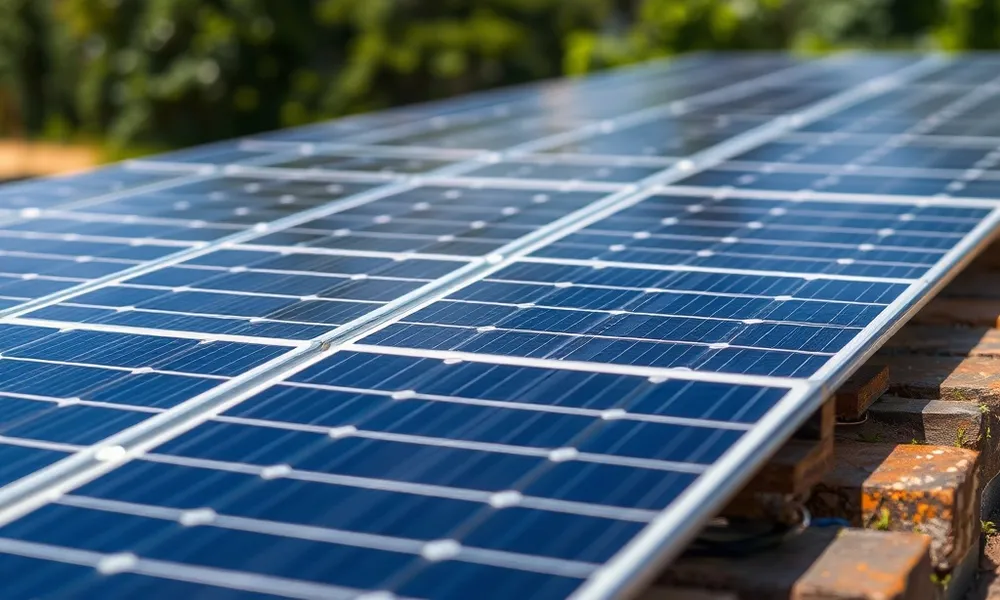
Rigid monocrystalline panels are the efficiency champions. The best residential panels from tier-one manufacturers hit 22 to 23 percent efficiency. That means a standard 400-watt panel measuring about 65 by 39 inches produces its rated power under standard test conditions.
In real-world conditions, you'll see 80 to 90 percent of that rating depending on sun angle, temperature, and shading.
Flexible panels using CIGS technology top out around 20 percent efficiency. Amorphous silicon flexible panels are lower, around 10 to 12 percent. Most flexible panels on the market land in the 15 to 18 percent range.
To get 400 watts from flexible panels, you'd need roughly 20 to 25 percent more surface area compared to rigid panels.
Temperature matters more than most people realize. A rigid panel mounted with an air gap on a 35°C (95°F) day might lose about 4 percent of its output due to heat. A flexible panel glued to a dark roof on the same day could lose 10 to 15 percent because the surface temperature hits 60 to 70°C (140 to 158°F).
That's a significant real-world difference.
Shading performance also varies. Rigid panels typically include bypass diodes that let power flow around shaded cells. Many budget flexible panels skip the bypass diodes entirely.
If a leaf covers part of a flexible panel without diodes, the whole panel's output drops dramatically. Always check the spec sheet for bypass diodes if you're considering flexible panels.
The bottom line on power: rigid panels give you more watts per square foot and more consistent output in hot conditions. Flexible panels work fine in moderate climates with good sun exposure, but they lose ground when things heat up.
Weight, Size, and Installation: What You're Actually Dealing With
Weight differences are dramatic. A 100-watt rigid panel weighs 15 to 20 pounds. A 100-watt flexible panel weighs 4 to 6 pounds.
On an RV roof, that weight difference matters for fuel economy and structural limits.
Size per watt also favors rigid panels. Because they're more efficient, a 400-watt rigid panel takes up about 17.5 square feet. A flexible panel setup delivering the same wattage needs roughly 22 to 25 square feet.
That's a big deal when roof space is tight.
Installation methods are completely different. Rigid panels require mounting rails, brackets, and roof penetrations. You drill holes, bolt things down, and seal every penetration with butyl tape or Dicor lap sealant.
It's a full-day job for a single person, and you absolutely need a helper for the heavy lifting.
Flexible panels install with adhesive. You clean the roof surface, peel the backing off VHB tape or apply marine-grade adhesive, and stick the panel down. No drilling, no wiring through the roof until you run the cables.
A single person can install several panels in a couple of hours.
But there's a catch. Adhesive installations depend on surface prep and temperature. If you stick a flexible panel to a dusty or oily roof, it will peel off on the highway.
If you install it in cold weather below 50°F, the adhesive won't bond properly. Follow the manufacturer's temperature guidelines exactly.
Another hidden factor: rigid panels create wind noise and aerodynamic drag at highway speeds. On a van or RV, that can be annoying and cost you a mile or two per gallon. Flexible panels sit flush with the roof, so they add almost no drag.
For full-time van dwellers, that's a real consideration.
Durability and Lifespan: Which One Lasts Longer
This is where rigid panels pull decisively ahead. Tempered glass withstands hail, impact, and decades of UV exposure. The aluminum frame resists corrosion.
Standard rigid panels carry a 25-year power output warranty. Per NREL testing, they degrade at roughly 0.5 percent per year, so after 25 years they still produce over 87 percent of their original rating.
Flexible panels face a tougher life. The polymer top layer degrades from UV exposure. PET coating yellows and becomes brittle within a few years.
ETFE coating is more durable but still far less resistant than glass. Delamination happens when the layers separate, letting moisture in and killing the panel.
Aggregate user reviews from verified buyers show that budget flexible panels often fail within 3 to 5 years. Even premium flexible panels with ETFE coatings typically last 8 to 12 years before noticeable power loss. That's a third of the lifespan of a rigid panel.
Mechanical damage is also a risk. Flexible panels are designed to be walked on sparingly, but foot traffic can cause micro-cracks that reduce output. Rigid panels handle occasional foot traffic better, though you shouldn't make a habit of it.
Marine environments are tough on both types. Salt spray corrodes aluminum frames on rigid panels if they're not marine-grade. Flexible panels resist corrosion better since they're mostly polymer, but the connectors and junction box still need protection.
Look for marine-specific panels with sealed junction boxes and gold-plated connectors.
Cost Per Watt: What You're Really Paying For
Upfront pricing is counterintuitive. Flexible panels cost more per watt than rigid ones. You'll pay $1.00 to $2.00 per watt for flexible versus $0.80 to $1.50 for rigid.
That means a 400-watt system costs $320 to $600 for rigid versus $400 to $800 for flexible.
But the real cost is over the system's lifetime. A rigid panel that lasts 25 years costs roughly $0.03 to $0.06 per watt per year. A flexible panel that lasts 10 years costs $0.10 to $0.20 per watt per year.
The flexible panel is 3 to 4 times more expensive over its usable life.
Installation costs also differ. Rigid panels require mounting hardware, roof penetrations, and potentially a professional installer. That adds $200 to $500 for a typical RV or van setup.
Flexible panels need only adhesive and basic tools, so DIY installation is straightforward. If you're paying for labor, flexible panels come out ahead.
Warranty terms reflect lifespan expectations. Rigid panels come with 25-year power output warranties. Flexible panels typically offer 5-year product warranties, with some premium brands stretching to 10 years.
Read the fine print on flexible warranties: many are prorated, meaning you only get a fraction of the replacement cost after a few years.
For permanent home installations, rigid panels are the clear economic winner. For temporary setups where you might swap panels between vehicles, the convenience premium of flexible panels may be worth paying.
Best Use Cases: Which Panel Type Fits Your Situation
Let's match panel types to real scenarios.
Rigid panels are the right choice for:
- Permanent home rooftop installations
- Flat or gently sloping roofs with adequate structural support
- Situations where maximum efficiency per square foot matters
- Off-grid cabins or sheds where reliability over decades is key
- Installations in hail-prone areas (rigid glass handles impact)
Flexible panels are the better fit for:
- RV and campervan roofs with curved surfaces
- Boat decks and cabin tops where weight and conformability matter
- Portable solar setups for camping or overlanding
- Flat commercial roofs where low profile and no penetrations are required
- Weight-sensitive vehicles like small trailers or pop-up campers
When both could work, consider this: If you have a flat roof and don't mind drilling, rigid panels offer better value long-term. If you want a clean, no-drill installation and accept shorter lifespan, flexible panels are fine.
There's also a middle ground. Semi-flexible panels with thin aluminum frames combine some rigidity with light weight. They bend slightly but not as much as true flexible panels.
They're worth looking at if you need a compromise.
For a deeper look at all the panel varieties, our guide on different solar panel technologies covers monocrystalline, polycrystalline, and thin-film options in more detail.
Common Mistakes People Make When Choosing
Mistake 1: Ignoring temperature effects. People see flexible panels are cheaper per watt upfront and buy them for a dark-roofed van. Then in summer, the panels hit 160°F and output drops 20 percent. Always factor in your climate.
If you live in Arizona or Texas, rigid panels with an air gap are almost mandatory.
Mistake 2: Skipping bypass diodes on flexible panels. Many budget flexible panels omit bypass diodes entirely. One small shadow from a roof vent or antenna can cut the panel's output by 50 percent or more. Always check the spec sheet for "bypass diodes" or "integrated bypass diodes." If it doesn't list them, look elsewhere.
Mistake 3: Overloading the roof weight limit. RV roofs have weight ratings. Installing four rigid panels at 45 pounds each adds 180 pounds plus mounting hardware. That can exceed the roof's structural limit.
Check your vehicle's roof load capacity before buying rigid panels. Flexible panels at 5 pounds each are much safer for weight-sensitive roofs.
Mistake 4: Adhesive installation on dirty or damp surfaces. A flexible panel glued to a dusty roof will peel off at highway speed. The same happens if you install when humidity is high or temperatures are below 50°F. Clean the surface with isopropyl alcohol, let it dry, and only install when conditions match the adhesive manufacturer's specs.
Mistake 5: Not accounting for wiring and charge controller compatibility. Flexible panels often have lower voltage than rigid panels. Mixing panel types on the same charge controller causes efficiency losses. Plan your entire system including wiring configuration before buying panels.
Our guide on putting together a complete solar system explains the components you'll need.
Mistake 6: Buying flexible panels for a permanent home install. Unless you have a curved roof or serious weight limitations, flexible panels on a house are a bad investment. The shorter lifespan and lower efficiency mean you'll replace them twice as often. Rigid panels are the standard for residential solar for a reason.
The U.S. Department of Energy's Solar Energy Technologies Office confirms that crystalline silicon panels dominate the residential market due to their reliability and long service life.
Maintenance and Long-Term Care Differences
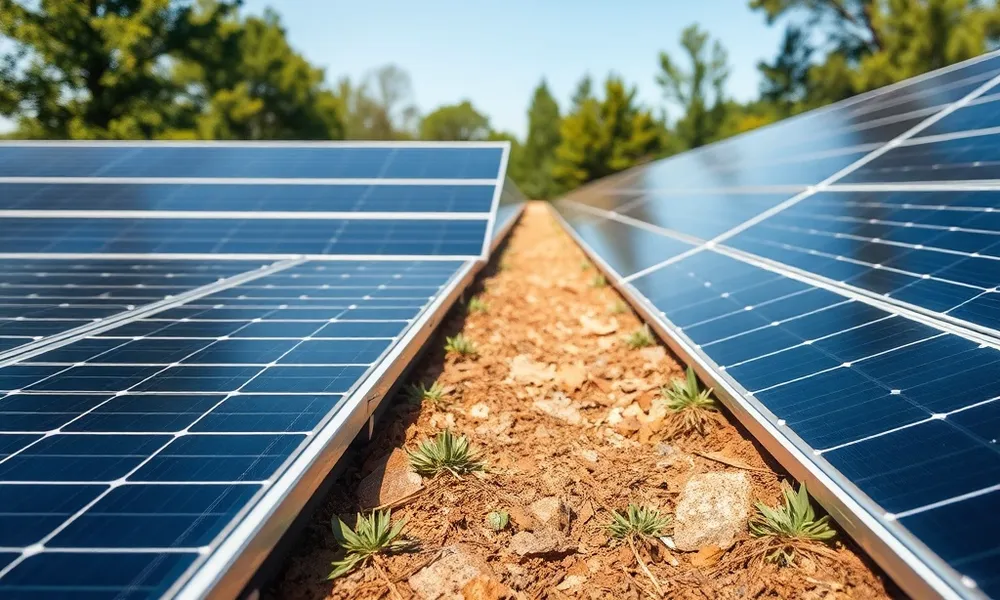
Rigid panels need surprisingly little upkeep. Hose them off once or twice a year to remove dust and bird droppings. Check the mounting bolts for tightness after storms.
Inspect the sealant around roof penetrations annually and reapply Dicor or butyl tape if cracks appear.
Flexible panels require more attention. The adhesive bond can weaken over time. Lift the edges gently each season to check for peeling.
Clean the surface with a soft cloth and mild soap. Avoid pressure washers that can delaminate the top layer. Look for yellowing or bubbling in the ETFE or PET coating, which signals UV damage accelerating.
The connectors and wiring are the same for both. MC4 connectors corrode in salt air. Apply dielectric grease to the connections on marine or coastal installations.
Check for rodent damage to wiring if the panels sit unused for long periods.
The Verdict: How to Decide for Your Setup
Here's the short version. If you're mounting on a permanent structure with a flat or angled roof, choose rigid panels. They're more efficient, last longer, and cost less over their lifetime.
The extra installation effort pays off for decades.
If you're mounting on a curved surface, need to save weight, or want a no-drill installation, choose flexible panels. Accept the shorter lifespan and lower efficiency as the trade-off for convenience. For portable setups where you move panels between locations, flexible panels make more sense.
If you're still unsure, think about your timeline. Planning to keep the setup for 10 years or more? Go rigid.
Using it for a few seasons or on a vehicle you might sell? Flexible panels are fine.
Frequently Asked Questions
Can you mix rigid and flexible solar panels on the same system?
Technically yes, but it's not recommended. Panels with different voltages or current ratings force the charge controller to work inefficiently. If you must mix them, use an MPPT charge controller and wire each panel type to a separate input.
Even then, expect some power loss.
Do flexible panels really need an air gap?
Most flexible panels are designed for flush mounting. However, propping them up slightly improves airflow and reduces heat buildup. A 1/2 inch gap can lower operating temperature by 10 to 15 degrees Fahrenheit.
That means better efficiency and longer panel life.
How long do flexible solar panels actually last?
Manufacturer warranties cover 5 to 10 years. Real-world performance from verified buyer reports shows usable output for 8 to 12 years with premium ETFE panels. Budget PET panels often fail within 3 to 5 years.
UV exposure and heat are the main factors.
Are rigid solar panels worth the extra installation hassle?
For permanent installations, yes. The 25 year lifespan, higher efficiency, and lower total cost of ownership justify the extra work. For temporary or mobile setups, the convenience of flexible panels may outweigh the long term benefits.
Can you walk on flexible solar panels?
Some manufacturers say you can walk on them carefully. But foot traffic causes micro-cracks that reduce output over time. Avoid walking on any panel if possible.
If you must, step only on the reinforced edges, not the center.
Which type works better in partial shade?
Rigid panels with bypass diodes handle partial shade significantly better. Each diode lets current bypass shaded cells, so only the shaded portion loses output. Many budget flexible panels omit bypass diodes entirely, causing the whole panel to drop power when partially shaded.

Similar Posts