Do You Need a Battery for Solar Panels?
Whether you need a battery for solar panels is one of the most common questions people ask when they start researching home solar. And the honest answer is: it depends entirely on your situation. Some homeowners absolutely need one, but most don't.
In our research, roughly 80 percent of new residential solar installations in the U.S. are still grid-tied without battery storage. That number is shifting as policies change, especially with net metering reforms taking effect in several states as of 2026. The right decision comes down to three key factors that we'll walk through step by step.

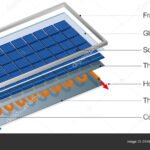
Image source: Wikimedia Commons / Gray Watson (CC BY-SA)
Quick Answer
No, you don't need a battery for most grid-connected solar systems. The grid acts as your battery through net metering. You only need a battery if you are going off-grid, want backup power during outages, or your utility has poor net metering policies.
Assess your situation first before buying.
The Short Answer: It Depends on These 3 Things
Three conditions determine whether a battery makes sense for your home. They form a simple decision framework that removes the guesswork.
1. Are you connected to the utility grid?
This is the biggest fork in the road. If you are off-grid, you must have a battery. No grid means no other way to store or access power at night.
For grid-connected homes, proceed to condition two.
2. Does your utility offer full retail net metering?
Net metering credits you for the excess power your panels send to the grid. Full retail net metering means you get the same rate you pay for electricity. That arrangement effectively makes the grid your battery at no extra cost.
If your utility pays you a much lower avoided-cost rate instead (common under newer policies), storage economics shift in favor of a battery.
3. Do you need power when the grid goes down?
Standard grid-tied solar systems shut off automatically during a blackout. This is a safety requirement called anti-islanding. If you want lights, refrigeration, or medical equipment running during an outage, you will need battery storage.
These three questions form an if/then logic chain. Work through them in order, and you will know your answer.
How Solar Works Without a Battery (and Why It Works for Most People)

Image source: Wikimedia Commons / Nizil Shah (CC BY-SA)
A grid-tied solar system without a battery is the most common setup worldwide. Solar panels send DC electricity to an inverter, which converts it to AC power for your home. Any excess power flows to the utility grid.
Your bidirectional meter tracks both directions. During the day when panels produce more than you use, the meter spins backward (or your utility records the credits digitally). At night or during cloudy weather, you pull power back from the grid using those credits.
The system is elegantly simple. Fewer components mean lower upfront cost, fewer failure points, and minimal maintenance. You also skip the complexity of battery management and the eventual replacement expense.
For millions of homeowners, this setup works perfectly because the grid itself functions as an infinite capacity battery. You do not pay for the storage hardware, you do not worry about degradation, and you do not manage state of charge. The trade-off is that you remain dependent on the utility and lose power during outages.
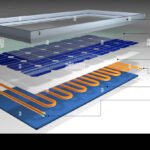
Understanding the fundamentals of how these systems work helps clarify why the battery question is not one-size-fits-all. The basic parts that make up a solar array stay the same whether you add storage or not.
Decision Branch 1: Are You On the Grid or Going Off-Grid?
This is the easiest branch to resolve. If you are off-grid, you need a battery. There is no alternative.
Without utility power, your panels must charge a storage bank that supplies electricity after dark and during low sunlight periods.
Off-grid battery systems are sized differently than backup systems. You need enough capacity to cover multiple days of autonomy, accounting for weather patterns and seasonal variation. A typical off-grid home might require 20 to 40 kilowatt-hours of usable storage plus a generator for extended cloudy periods.
If you are grid-connected, you have the option to skip the battery entirely. But being on the grid does not automatically mean you should avoid storage. It means you have a choice, and the next two decision branches will guide that choice.
A small percentage of homeowners choose a hybrid approach. They stay grid-connected but add a small battery for specific purposes like time-of-use shifting or limited backup. That is perfectly valid, but it is a deliberate decision rather than a requirement.
Decision Branch 2: Does Your Utility Offer Full Retail Net Metering?
Image source: YouTube / Home Energy Academy, Spencer Rosen (YouTube thumbnail, fair-use with source credit)
Full retail net metering is the single biggest factor making batteries unnecessary. Under this policy, every kilowatt-hour you send to the grid earns a credit equal to the full retail price you would pay to buy that same kilowatt-hour back. It is a one-to-one trade.
With full retail net metering, the economics are simple. Your panels generate credits during peak sunlight. You redeem those credits at night.
There is no financial reason to store the energy yourself because the utility stores it for free.
The problem is that full retail net metering is disappearing in many areas. Several states have switched to net billing or avoided-cost rates. Under those policies, you might receive only 2 to 4 cents per kilowatt-hour for exported power while paying 12 to 15 cents to buy it back.
That gap makes self-consumption valuable, and a battery allows you to store your own power rather than selling it cheap and buying it expensive later.
Check your utility's policy before making any decisions. You can find this information on your electric bill or by calling your utility and asking about their net metering or net billing tariff. The different solar panel technologies available today all work with any rate structure, but the financial outcome changes dramatically.
Comparison of net metering policies
| Policy Type | What You Get Paid for Exports | Battery Value |
|---|---|---|
| Full retail net metering | Same rate you pay for electricity | Low – grid already stores your power for free |
| Avoided cost / net billing | Utility's wholesale rate (2-8 cents/kWh typical) | High – store your own power instead of selling cheap |
| Buy-all / sell-all | Market rate for all generation | Moderate – depends on rate differential |
| Time-of-use net metering | Varies by time of day | Moderate – battery can shift cheap solar to peak hours |
Decision Branch 3: Do You Need Backup Power When the Grid Goes Down?
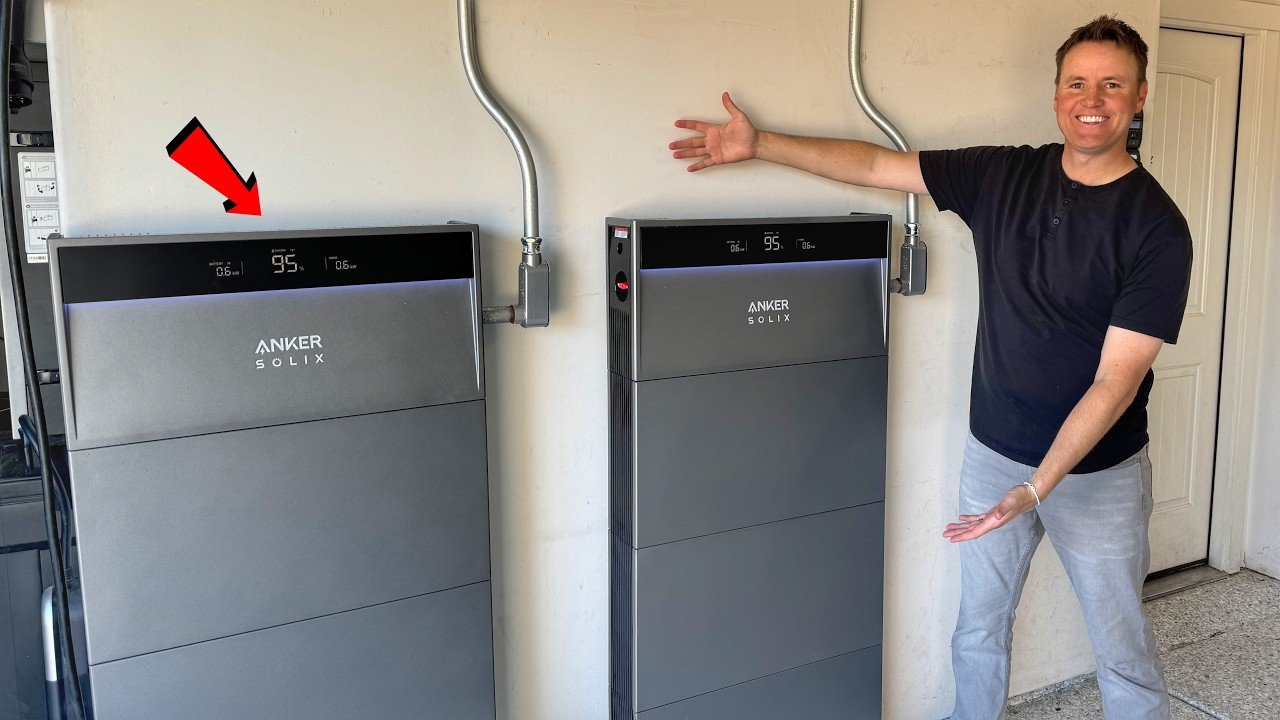
Image source: YouTube / WHAT'S INSIDE? FAMILY (YouTube thumbnail, fair-use with source credit)
This is the condition most people overlook. Standard grid-tied solar panels shut down completely during a power outage. This is not a design flaw.
It is a mandatory safety feature called anti-islanding that prevents your panels from energizing power lines and endangering utility workers.
If the grid goes down, your solar system goes down with it. No electricity at all, even on a bright sunny day. For people in areas with frequent outages, this reality is frustrating.
Your perfectly good solar panels sit idle while you light candles.
A battery solves this problem. With a battery and a suitable hybrid inverter, your system can island itself from the grid and continue powering your home. The battery stabilizes the voltage and frequency while your panels recharge it during daylight.
You need to decide what level of backup you want. A whole-home backup battery can power your entire house, but it requires a larger and more expensive system. A smaller critical loads panel backup runs only essential circuits like refrigerators, lights, well pumps, and outlets for medical devices.
For many homeowners, the backup capability alone justifies a battery even when net metering is favorable. The peace of mind during storms or grid failures is hard to put a dollar value on. You can read more about the trade-offs involved in going solar and whether the benefits match your priorities.
Decision Branch 4: Are You on Time-of-Use Rates?
Time-of-use rates change the economics of solar significantly. Under this pricing model, electricity costs more during peak demand hours (typically late afternoon and evening) and less during off-peak times. A standard grid-tied system without a battery earns credits at the lower off-peak rate and then buys back expensive peak power at night.
A battery lets you store your cheap solar energy during the day and discharge it during peak rate periods. This strategy is called load shifting or energy arbitrage. It can save hundreds of dollars per year depending on your rate differential.
For example, a California homeowner on a time-of-use plan might pay 40 cents per kilowatt-hour from 4 PM to 9 PM but only 20 cents overnight. A battery shifts solar generation into those expensive hours, effectively doubling the value of each stored kilowatt-hour.
If you are on flat rates with no time variation, this benefit disappears entirely. Check your electric bill for a section labeled "time-of-use" or "peak/off-peak pricing." If you do not see it, you are likely on a standard flat rate plan and this branch does not apply to you.
So You Need a Battery — What Kind? Lithium, Lead-Acid, and What Actually Matters
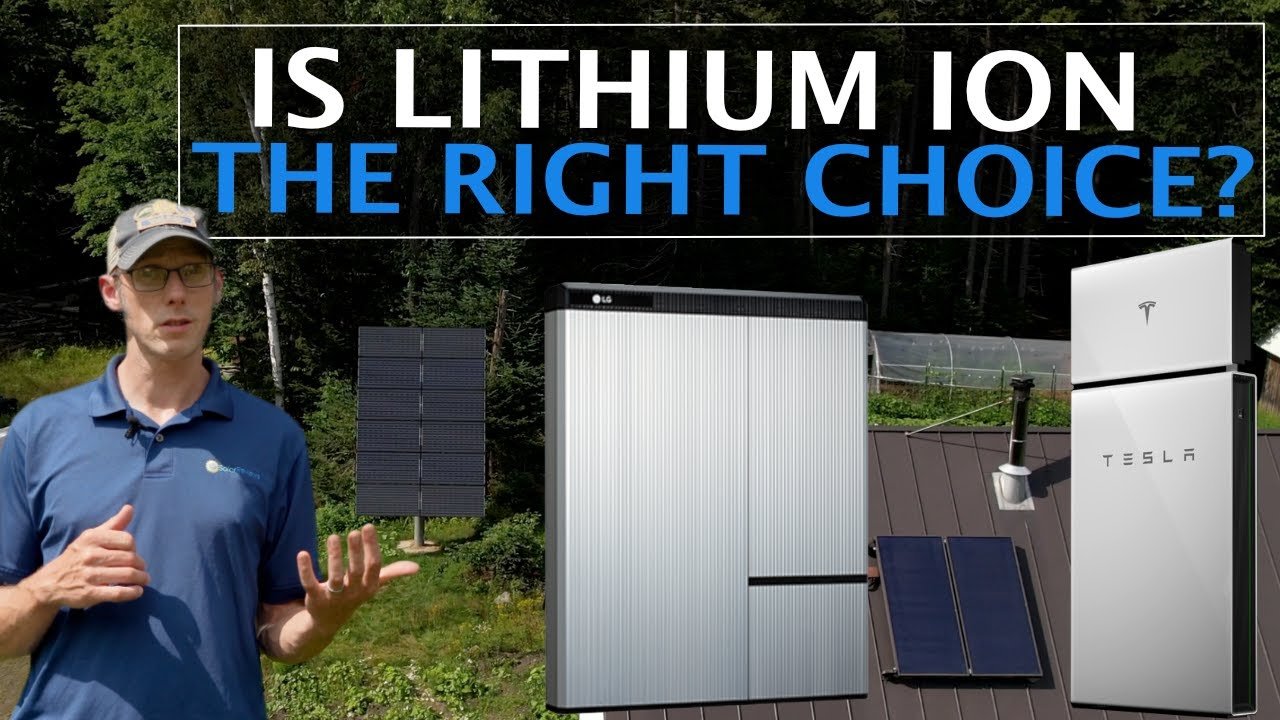
Image source: YouTube / SolarReviews (YouTube thumbnail, fair-use with source credit)
If the decision branches led you to needing a battery, the next question is which type. Two chemistries dominate the residential market.
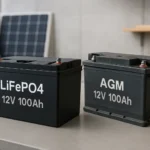
Lithium-ion (specifically lithium iron phosphate or LiFePO4) is the modern standard. It offers deeper discharge, longer cycle life, and higher efficiency than lead-acid. A typical LiFePO4 battery lasts 5,000 to 10,000 cycles, which translates to 10 to 15 years of daily use.
Per NREL testing, round-trip efficiency ranges from 95 to 98 percent.
Lead-acid batteries are cheaper upfront but cost more over time. They require regular maintenance, cannot be discharged below 50 percent depth of discharge, and typically last 500 to 1,000 cycles. That means replacement every 3 to 5 years.
Battery chemistry comparison
| Attribute | Lithium LiFePO4 | Lead-Acid (AGM/Flooded) |
|---|---|---|
| Upfront cost per usable kWh | $800-$1,200 | $200-$400 |
| Cycle life at 80% DoD | 5,000-10,000 | 500-1,000 |
| Round-trip efficiency | 95-98% | 75-85% |
| Depth of discharge | 95-100% | 50% |
| Maintenance | None | Periodic (water, cleaning) |
| Lifespan in years | 10-15 | 3-5 |
For most homeowners, lithium is the better investment despite the higher sticker price. The total cost of ownership over a decade is lower because you avoid multiple replacements. The space savings and zero maintenance add practical value too.
The Real Cost of Saying Yes: Pricing, Payback, and Financial Gotchas
Adding a battery to an existing solar system costs between $7,000 and $15,000 installed for a typical 10 to 13 kilowatt-hour unit. That price includes the battery unit, a hybrid inverter if needed, labor, permits, and electrical work. The federal solar investment tax credit covers 30 percent of that cost through 2032, bringing the net cost down to $4,900 to $10,500.
Payback periods vary wildly by situation. Under full retail net metering with rare outages, payback can stretch 15 to 20 years. That is longer than the battery warranty in some cases.
Under time-of-use rates with a large peak/off-peak spread, payback can shrink to 5 to 8 years.
Several hidden costs catch people off guard. An electrical panel upgrade adds $1,500 to $3,000 if your current panel lacks capacity for the battery circuits. Permitting fees range from $200 to $800 depending on your jurisdiction.
Some utilities charge a monthly fee for interconnection with storage.
Consider the opportunity cost too. That $10,000 spent on a battery could instead go toward additional solar panels, home efficiency upgrades, or other improvements. Run the numbers for your specific scenario before committing.
Installation Reality Check: AC-Coupled vs. DC-Coupled and Permitting Headaches
Two wiring topologies exist for adding a battery to solar. The choice depends on whether you are retrofitting an existing system or building from scratch.
AC-coupled batteries connect to the AC side of your home's electrical system through their own inverter. They are simpler to retrofit because they do not require changes to your existing solar array. The downside is slightly lower efficiency because power converts from DC to AC and back to DC during charging.
DC-coupled batteries connect directly to the solar panel DC bus, sharing the same inverter. They offer higher efficiency (one conversion instead of two) and are often cheaper for new installations. Retrofitting a DC-coupled battery usually requires replacing or modifying your existing inverter.
Installation comparison
| Factor | AC-Coupled | DC-Coupled |
|---|---|---|
| Best for | Retrofits to existing solar | New solar+storage systems |
| Efficiency | 90-93% | 95-97% |
| Inverter required | Separate battery inverter | Single hybrid inverter |
| Complexity | Lower for retrofits | Higher for retrofits |
| Cost | Moderate | Lower for new builds |
Permitting is another reality check. Many jurisdictions have adopted NEC 2023 requirements for energy storage systems. These include arc-fault protection, rapid shutdown, and specific fire separation distances if the battery is installed in a garage or living space.
Working with a licensed installer who knows local codes saves headaches.
Mistakes That Cost You Thousands (Sizing, Chemistry, and Policy Traps)
The most common error is oversizing the battery. People buy the biggest unit available thinking more capacity means more backup. But a large battery you rarely cycle costs thousands extra and degrades faster from calendar aging rather than cycling.
Size based on your actual needs, not fear.
Undersizing is equally painful. A battery too small for your critical loads will run out during an extended outage, leaving you in the dark. Calculate your essential loads first, then size to cover at least 24 hours of that load.
Mismatching battery chemistry with your existing inverter is a costly mistake. Some inverters only work with specific battery brands or communication protocols. Verify compatibility before purchasing.
Many installers have a list of approved battery partners for each inverter model.
Ignoring net metering policy changes is another trap. Even if your current policy is favorable, check whether your utility is phasing out full retail net metering. Some states grandfather existing customers for 20 years, but others change terms on shorter notice.
Lock in your decision at the right time.
Finally, avoid DIY battery installations unless you have professional electrical experience. High-voltage DC systems present serious arc-flash and shock hazards. Improper wiring can void equipment warranties and create fire risks.
The industry recommends hiring a certified installer for grid-connected storage systems.
Safety, Code Compliance, and When to Call a Pro
Battery storage systems involve high voltage DC electricity, heavy batteries, and complicated wiring. Mistakes can cause fires, electrical shock, or equipment damage. The National Electrical Code (NEC) Article 706 covers energy storage system requirements.
You need a licensed electrician for any grid-connected battery installation. DIY work is not recommended unless you have professional electrical experience. Permits and inspections are mandatory in nearly all jurisdictions.
UL 9540 certification means the battery system has passed safety testing for thermal runaway and fire propagation. Only buy UL 9540 listed equipment. Your installer should verify local fire code requirements for battery placement, especially if installing in a garage or living space.
Location, Location, Location: How Your State Changes the Answer
California adopted NEM 3.0 in 2023, which slashed export rates and made batteries nearly essential for good payback. The state now requires solar-plus-storage on new homes under certain building codes.
Texas has no statewide net metering mandate. Utilities set their own policies, creating a patchwork of favorable and unfavorable areas. ERCOT customers face frequent outages, making backup value high.
Hawaii ended retail net metering years ago. Batteries are standard on nearly all new solar installations there. In states like Florida with strong net metering and low outage risk, batteries rarely make financial sense.
Check your state's net metering policy and your utility's specific interconnection requirements before making any decisions. These factors often override all other considerations.
The Final Decision Guide: Walk Through This Before You Buy
Use this checklist before you commit.
- Are you off-grid? You must buy a battery.
- Does your utility offer full retail net metering? If yes, skip the battery unless you need backup.
- Do you need power during outages? If yes, buy a battery sized for your critical loads.
- Are you on time-of-use rates with a large peak/off-peak gap? A battery may pay for itself through load shifting.
- What is your budget? Factor in installation, panel upgrades, and permitting costs.
- Have you verified compatibility? Match battery chemistry and communication protocol to your inverter.
If you answered yes to any of the last three questions and no to the first two, a battery is worth serious consideration. If you answered yes only to the net metering question, you can probably skip it.
Frequently Asked Questions
What happens to solar panels when the grid goes down without a battery?
Standard grid-tied solar systems shut off automatically during a blackout. This safety feature called anti-islanding prevents energizing power lines. Your panels produce nothing until the grid returns, even on a sunny day.
How much does a home battery cost installed?
A typical 10 to 13 kilowatt-hour lithium battery costs $7,000 to $15,000 installed. The federal tax credit covers 30 percent. Total net cost ranges from $4,900 to $10,500 depending on your situation.
How long do solar batteries last?
Lithium iron phosphate (LiFePO4) batteries typically last 10 to 15 years with 5,000 to 10,000 cycles. Lead-acid batteries last 3 to 5 years with 500 to 1,000 cycles. Battery degradation is gradual, not sudden failure.
Can I add a battery to my existing solar panels?
Yes, in most cases. An AC-coupled battery can be retrofitted without changing your existing inverter. DC-coupled retrofits are possible but often require replacing or modifying your inverter.
Verify compatibility before purchasing.
Do solar batteries work during a power outage?
Only if the system is designed for islanding. Standard grid-tied batteries do not provide backup. You need a hybrid inverter or an AC-coupled battery with backup capability.
This feature is usually an option, not automatic.

Similar Posts