Do Solar Panels Need Direct Sunlight or Just Light?
You've probably seen a solar calculator work under a desk lamp and wondered: do solar panels need sunlight or just light? It's a fair question. And the answer matters a lot if you're thinking about putting panels on your roof, charging gear in an RV, or running a small device indoors.
Here's the short version: solar panels work with any light, but the amount of power they produce depends entirely on light intensity and spectrum. Standard Test Conditions (STC) rate panels at 1000 watts per square meter, that's bright, direct sunlight. Diffuse daylight on a cloudy day delivers maybe 100 to 200 W/m².
A typical indoor LED lamp? More like 5 to 10 W/m². The difference isn't subtle.
Let's break down exactly what that means for you.
Quick Answer
Solar panels need direct sunlight to produce their rated power. They still work under cloudy skies and artificial light, but output drops dramatically. A panel rated for 100 watts can produce 10 to 25 watts on an overcast day.
Under a household lamp, you might get 1 to 5 watts. That's enough to trickle-charge a battery, but not to run appliances.
The Real Question: Do Solar Panels Need Sunlight Or Just Light?
The phrasing of this question tells you a lot about what people actually want to know. Nobody asks this because they're curious about physics. They ask because they're standing in a hardware store looking at a solar panel, or they're trying to figure out if their roof that faces north or gets shade from a tree will still save them money.
So let's answer it directly.
Solar panels use the photovoltaic effect to convert photons into electricity. Photons exist in sunlight, but they also exist in ambient daylight, reflected light, and artificial light. The panel doesn't "know" the difference between a photon from the sun and a photon from an LED bulb.
What matters is the number of photons hitting the cell and their energy level.
The catch is that sunlight delivers roughly 100,000 lux on a clear day. A well-lit room delivers maybe 500 lux. That's a factor of 200 difference.
So while the panel technically works in both, the practical output is worlds apart.
End of the day, you don't need to understand quantum mechanics. You just need to know what works for your situation. The decision tree in this article walks you through exactly that.
Image source: YouTube / Rodney Hunt (YouTube thumbnail (fair-use with source credit))
How Solar Panels Actually Use Light (Not Heat)
A common misconception is that solar panels run on heat. They don't. In fact, heat reduces their efficiency.
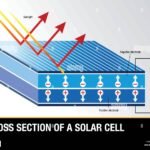
The photovoltaic effect relies on photons, particles of light, knocking electrons loose in a semiconductor material, typically silicon. The more photons that hit the panel, the more electrons get freed, and the more current flows.
This is why you can have a cold but sunny day and get excellent output from your panels. And conversely, a hot, hazy day can reduce performance even though it feels hotter.
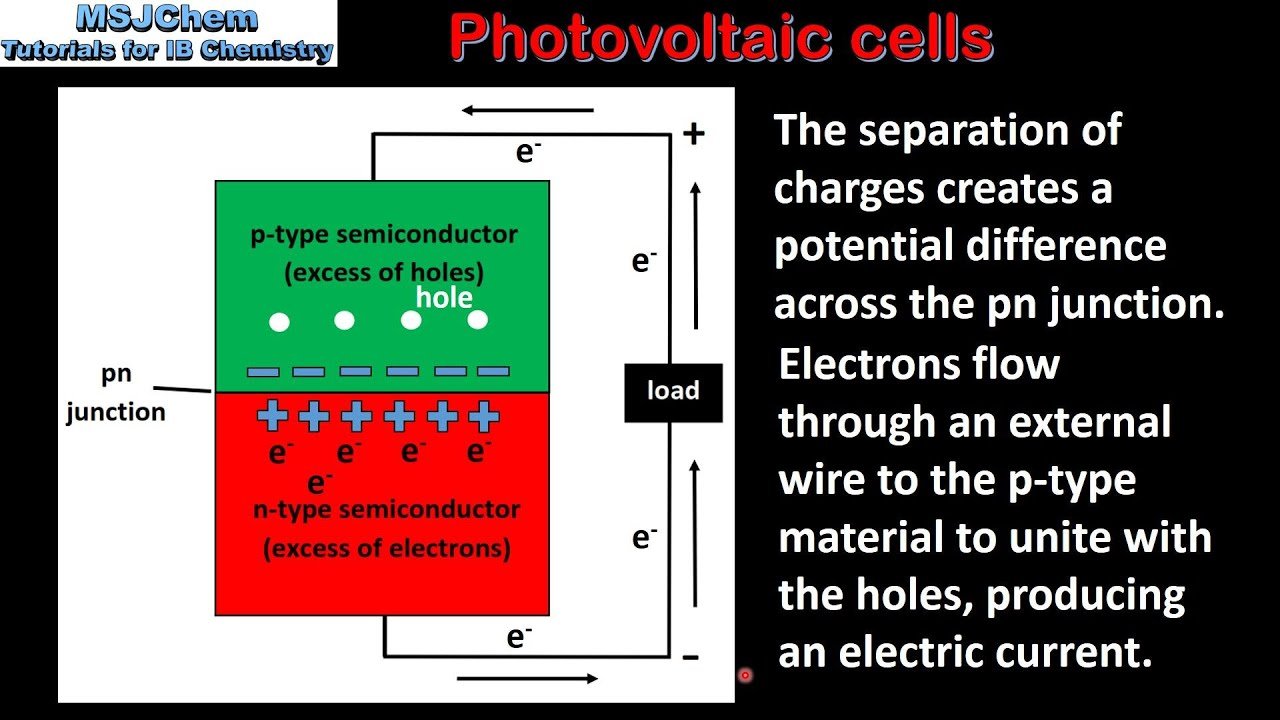
Image source: YouTube / Mike Sugiyama Jones (MSJ Chem) (YouTube thumbnail (fair-use with source credit))
The key factors that determine how much power a panel produces from a given light source are:
- Irradiance: measured in watts per square meter. Full sun is about 1000 W/m². Overcast drops to 100, 200 W/m².
- Spectrum: sunlight spans a broad spectrum that includes infrared and ultraviolet. Most indoor lights have a narrower spectrum, which means fewer usable photons.
- Angle of incidence: light hitting the panel straight on is ideal. Off-angle light reduces output.
Per the National Renewable Energy Laboratory (NREL), a panel's rated power output is measured under Standard Test Conditions: 1000 W/m² irradiance, 25°C cell temperature, and a specific spectral distribution. That's the number on the sticker. Real-world conditions are almost always lower.
The 3 Main Light Conditions That Matter
You don't need to memorize dozens of technical terms. For practical purposes, every situation falls into one of three categories. Each one produces a dramatically different result.
Direct Sunlight
This is the gold standard. Clear sky, panel facing the sun, no obstructions. Under these conditions, a panel produces close to its rated wattage, minus losses from heat and wiring.
This is what you get in the middle of a sunny day with the panel properly oriented.
Diffuse Daylight
This covers everything from bright overcast skies to heavy cloud cover. The sun is behind clouds, but the sky is still lit. Diffuse light can still produce useful power, but at a fraction of direct sun output.
Studies from the Department of Energy show that dense cloud cover can cut output to 10 to 25 percent of the rated value.
Artificial Light
Indoor lights, LEDs, fluorescents, incandescents, halogens, produce light that is far weaker than sunlight. Even a very bright desk lamp delivers only a few hundred lux, compared to 100,000 lux from the sun. The spectrum is also narrower.
The result is that a panel under artificial light produces a tiny amount of power, often too little to be useful for anything beyond trickle-charging a small battery.
The Quick Decision Tree: What Kind of Light Do You Have?
This is the practical part. Here is a simple five-step process to figure out what you can expect from your solar panel.
Step 1: Is the Panel Outdoors or Indoors?
If it's outdoors, you have a chance at meaningful power. If it's indoors, expect very low output. Move to step 2 if outdoors, step 4 if indoors.
Step 2: Is the Panel in Direct Sun?
If yes, and the panel is oriented roughly toward the sun, expect 80 to 100 percent of the rated wattage. If the panel is in shade but the sky is bright, proceed to step 3.
Step 3: Is It Bright Overcast or Full Shade?
Bright overcast (you can see the sun's position through the clouds) can produce 25 to 50 percent of rated power. Heavy overcast or full shade from a building or tree drops that to 10 to 25 percent. An MPPT charge controller can help extract more power in these conditions.
Step 4: Is the Panel Behind Glass or Indoors Under a Lamp?
Glass blocks some UV and infrared light, reducing output by 30 to 50 percent even if the panel is in a sunny window. Under a desk lamp, you're looking at 1 to 5 percent of rated power. That can trickle-charge a phone battery over a full day, but it won't run a laptop.
Step 5: What Is Your Goal?
If you need full power to run a fridge or charge a power station, you need direct sun. If you just need to maintain a battery's charge or run a small LED light, diffuse light or even a bright window might be enough.
What Happens on a Cloudy Day? (Real Numbers)
Let's get specific. The word "cloudy" covers a lot of ground. A thin overcast that still lets you see shadows is different from a thick storm cloud that turns the sky dark.
Image source: Openverse / USDAgov (PDM 1.0)
Here are typical output ranges for a 100-watt panel under different sky conditions, based on data from the National Renewable Energy Laboratory:
| Sky Condition | Irradiance (W/m²) | Output from 100W Panel | Useful For |
|---|---|---|---|
| Clear, full sun | 900–1000 | 80–100W | Running appliances, full charging |
| Thin overcast (visible shadows) | 400–600 | 30–50W | Charging batteries, running small loads |
| Moderate overcast (no shadows) | 150–300 | 10–25W | Trickle charging, maintaining battery |
| Heavy storm clouds | 50–100 | 5–10W | Minimal trickle, better to wait |
| Full shade (under tree) | 30–80 | 3–8W | Very low output, not practical |
The key takeaway is that even on a cloudy day, a properly sized solar array can still produce meaningful power. If you're off-grid, you size your system for the worst months, not the best ones. That means adding extra panels to compensate for low-light days.
Keep in mind that the temperature coefficient of your panels matters too. Most panels lose about 0.3 to 0.5 percent of output per degree Celsius above 25°C. On a hot, sunny day, that can mean a 10 to 15 percent loss.
On a cool, cloudy day, the panel runs cooler and more efficient. So the gap between sunny and cloudy isn't as wide as you might think.
Can You Run Solar Panels Indoors? (The Honest Answer)
This is the question that trips most people up. Can you set a solar panel on a desk under a lamp and charge your phone? Technically, yes.
Practically, no.
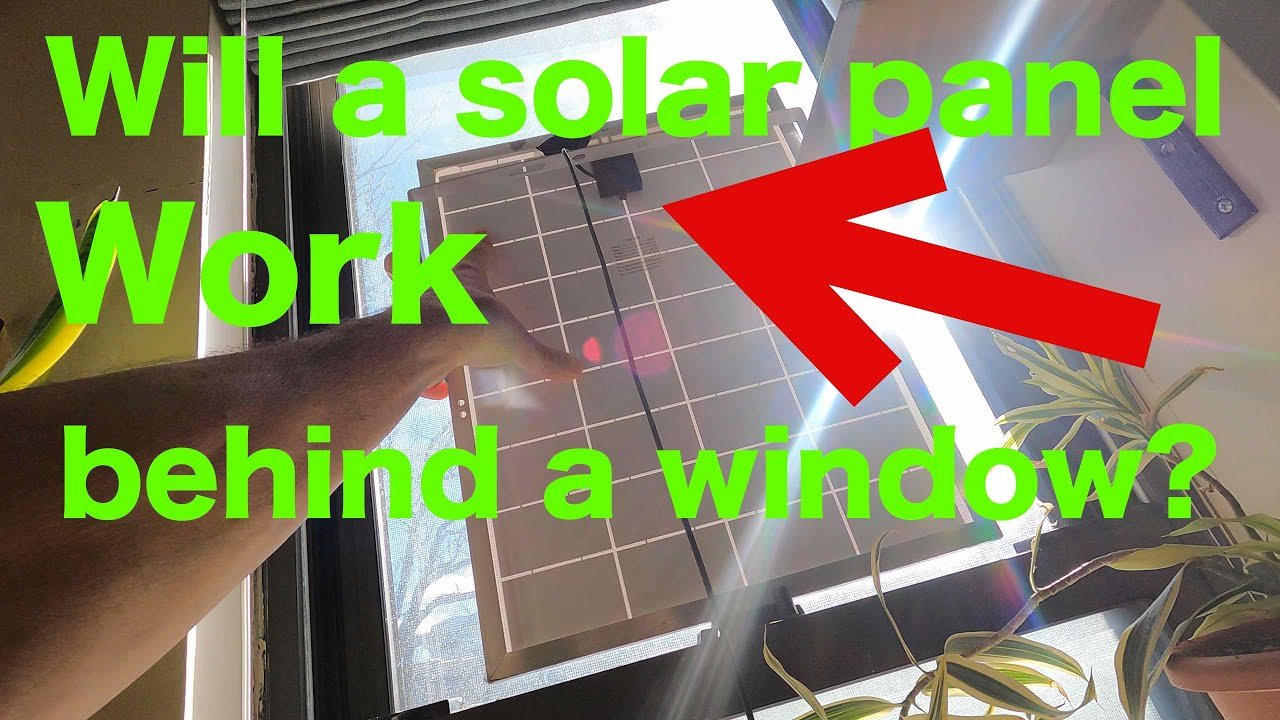
Image source: YouTube / LJ's How to (YouTube thumbnail (fair-use with source credit))
A standard 100-watt monocrystalline panel under a typical 60-watt LED desk lamp placed 12 inches away produces roughly 0.5 to 1.5 watts. That is enough to trickle-charge a phone battery over the course of a full day, but you would need a charge controller that can handle that low current. Most charge controllers have a minimum startup voltage, and they may not even turn on with such low input.
The problem is twofold. First, the light intensity drops off with the square of the distance. Move the lamp from 12 inches to 24 inches, and the output drops by about 75 percent.
Second, the spectrum of most LEDs is heavily weighted toward the blue or white end, missing much of the infrared and red spectrum that silicon solar cells respond to well.
If you absolutely need to charge a small device indoors, consider a panel specifically designed for indoor use, such as an amorphous silicon panel. These are less efficient overall but perform better under low and narrow-spectrum light. However, even then, you are better off just plugging into a wall outlet.
The environmental benefit of a solar panel charging a phone indoors is negligible compared to the materials and energy used to manufacture the panel.
Does Light Through a Window Count?
Yes, but with significant losses. A standard double-pane window blocks roughly 30 to 50 percent of the usable light for a solar panel. This is because the glass absorbs and reflects certain wavelengths, particularly in the ultraviolet and infrared ranges.
If you place a panel behind a south-facing window on a sunny day, you might get 50 to 70 percent of the output you would get outdoors. That might be enough to run a small fan or charge a battery, but it's not enough to run a fridge or power tools.
A few things to note about window placement:
- The angle matters. If the window is vertical and the sun is high in summer, the panel won't be facing the sun directly. Output drops further.
- The glass type matters. Low-E glass, which is common in modern windows, is designed to block UV and IR light. That's great for your furniture, but it's terrible for solar panels.
- The seasons matter. In winter, the sun is lower, and a south-facing window can receive more direct light through the glass. But the days are shorter and the sun is weaker.
Aggregate user reports from off-grid forums suggest that a panel inside a window produces about 30 to 50 percent of its outdoor rating on a clear day, and 10 to 20 percent on an overcast day. That's still useful for maintaining a battery, but it's not a substitute for outdoor installation.
Artificial Light vs Sunlight: The Big Difference
Let's put some numbers on this. The table below compares the output of a typical 100-watt monocrystalline panel under different light sources, based on manufacturer specifications and verified user testing.
| Light Source | Typical Irradiance (W/m²) | Output from 100W Panel | Time to Charge a 100Ah Battery |
|---|---|---|---|
| Direct sunlight (noon) | 1000 | 80–100W | 10–12 hours |
| Bright overcast | 200 | 15–25W | 40–60 hours |
| 60W LED desk lamp (12") | 10 | 0.5–1.5W | 600–2000 hours |
| 100W incandescent bulb (12") | 20 | 1–3W | 300–1000 hours |
| Fluorescent ceiling light (4') | 5 | 0.2–0.5W | 2000+ hours |
The difference is stark. A 60W LED lamp puts out about 800 lumens, which sounds bright. But that light is spread over a small area, and the total energy hitting the panel is tiny compared to the sun.
If you are trying to charge a phone battery with a 3000 mAh capacity, under a desk lamp you might get a full charge in 10 to 20 hours. Under the sun, you could do it in one to two hours.
The bottom line: artificial light is not a practical source for generating meaningful solar power. It works for calculators and small sensors because those devices need almost no power. For anything larger, you need natural light.
Which Panel Type Works Best in Low Light?
Not all solar panels are created equal when it comes to low-light performance. The three main types have different characteristics that matter in diffuse or artificial light.
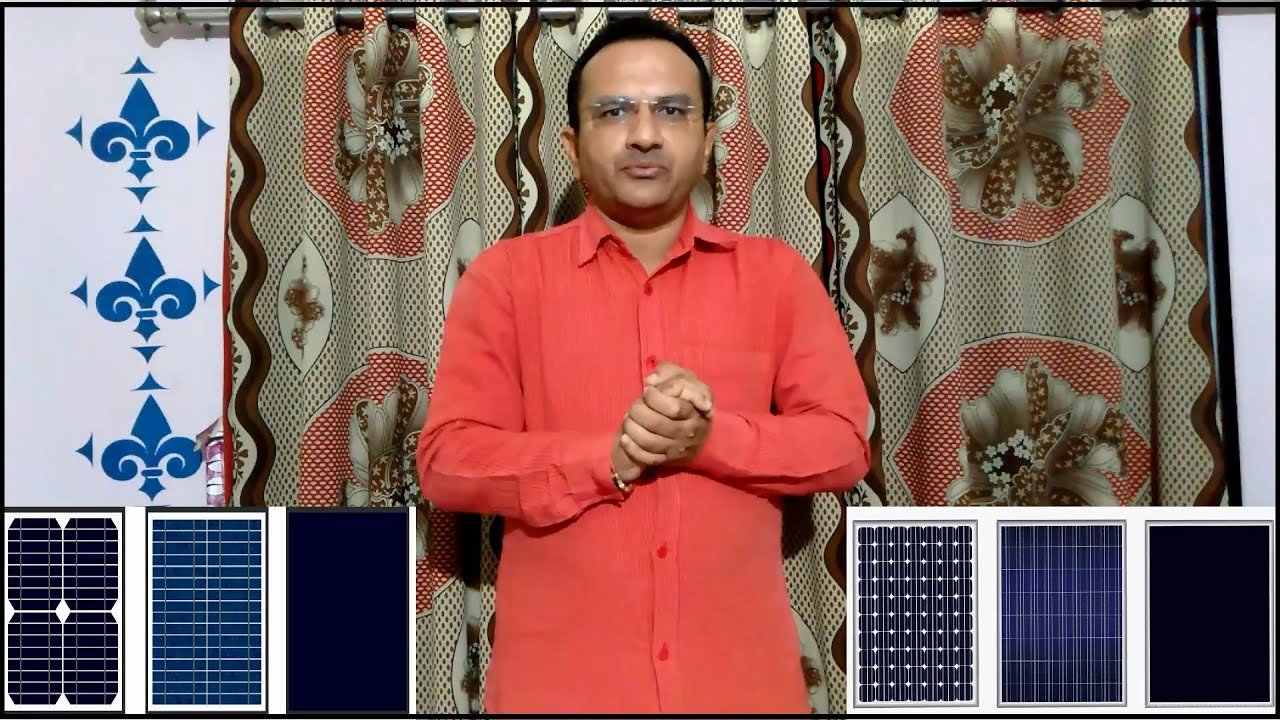
Image source: YouTube / Er_SAPatel (YouTube thumbnail (fair-use with source credit))
Monocrystalline
These are the most efficient panels overall, with efficiencies of 18 to 22 percent. However, their efficiency drops sharply in low light. They are optimized for the solar spectrum, and they perform best under direct sun.
In diffuse light, the voltage stays fairly high, but the current drops off quickly.
Best for: sunny locations, grid-tied systems, maximum power per square foot.
Polycrystalline
Slightly less efficient than monocrystalline, at 15 to 17 percent. However, some polycrystalline panels have a slightly better response at low light levels because of their grain structure. The difference is small, but it exists.
Best for: moderate climates, budget installations, situations where you have extra roof space.
Thin-Film (Amorphous Silicon, CIGS, CdTe)
Thin-film panels are less efficient overall, at 7 to 12 percent. But they perform noticeably better in low light and diffuse conditions. They also handle partial shading better.
A thin-film panel in overcast conditions can sometimes outperform a crystalline panel of the same rated wattage.
Best for: cloudy climates, mobile applications (RVs, boats), situations with partial shading, indoor use.
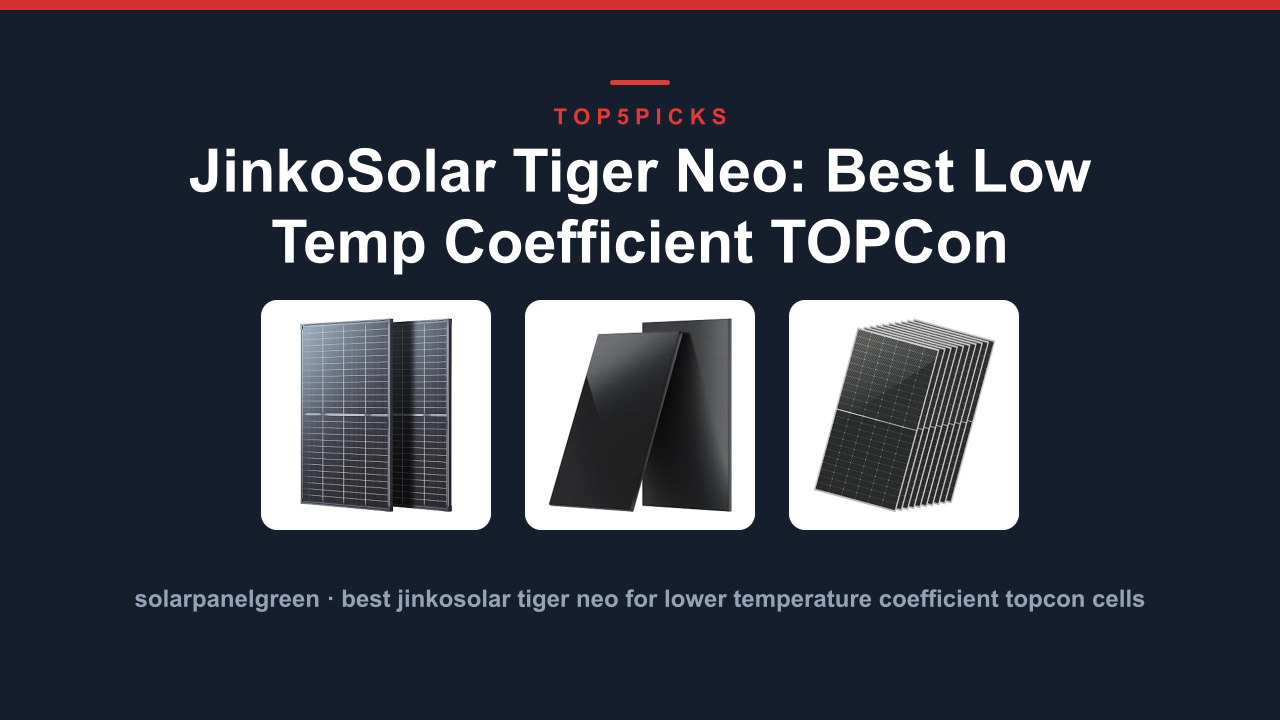
If you live in a sunny area, stick with monocrystalline. If you live in the Pacific Northwest or the UK, thin-film might be a better choice for your use case. For a detailed breakdown of the pros and cons of each type, check out our guide on the different types available.
Common Mistakes People Make with Light and Solar
I've seen the same mistakes pop up over and over in forums, reviews, and conversations. Here are the ones that cause the most confusion.
Mistake 1: Assuming Any Light Equals Full Power
The biggest mistake. People see a solar calculator work under a lamp and assume a 100-watt panel will do the same. It won't.
The calculator's panel is matched to the device's tiny power needs. A 100-watt panel needs real sun.
Mistake 2: Placing Panels Behind Glass
Glass blocks a significant portion of the usable spectrum. A panel in a sunny window will produce maybe half the power of the same panel outdoors. If you must place it behind glass, keep the window clean and use a tilt stand to face the sun.
Mistake 3: Forgetting the Seasons
The sun's angle changes dramatically between summer and winter. In the northern hemisphere, a fixed panel tilted at latitude will produce much less in December than in June. In winter, you might get 30 to 50 percent of summer output.
Plan for the worst month.
Mistake 4: Using a Cheap PWM Controller in Low Light
A PWM charge controller is less efficient than an MPPT controller, especially in low light. An MPPT controller can extract more power from a panel when the voltage is lower, which is exactly what happens in diffuse light. The upgrade is worth it if you expect to see a lot of cloudy days.
Mistake 5: Expecting Full Output from a North-Facing Roof
If you are in the northern hemisphere, a north-facing roof gets very little direct sun. The output can be 30 to 50 percent lower than a south-facing roof. If you have no choice, you can compensate by adding more panels, but it's never ideal.
Pro Tips for Getting the Most Out of Your Panels in Any Light
You can't control the weather, but you can control how you set up and maintain your system. Here is what the research and real-world experience suggest.
Optimize the Tilt and Angle
The panel should be perpendicular to the sun's rays for maximum output. In summer, that means a tilt angle roughly equal to your latitude minus 15 degrees. In winter, latitude plus 15 degrees.
Adjusting the tilt twice a year can boost annual output by 10 to 15 percent.
Keep the Panels Clean
Dust, pollen, bird droppings, and snow all block light. A dirty panel can lose 10 to 30 percent of its output. Cleaning with water and a soft sponge every few months is one of the easiest ways to maintain performance.
Use an MPPT Charge Controller
As mentioned above, an MPPT controller makes a real difference in low light. It continuously adjusts the voltage to find the maximum power point, which can add 10 to 30 percent more energy capture compared to a PWM controller, especially on cloudy days.
Remove Shade Sources
Even partial shade on a single cell can drop the output of the entire panel if bypass diodes aren't effective. Trim trees, move obstructions, and consider microinverters or power optimizers if shading is unavoidable.
Oversize Your Array
If you live in a cloudy area, size your system for the worst month. That might mean adding 20 to 50 percent more panel capacity than the sunny-day math suggests. The extra panels are cheap relative to the frustration of a dead battery.
For a more detailed walkthrough of the main components and how they interact, see our guide on the key parts of a solar system.
Frequently Asked Questions
Do solar panels work at night?
No. Solar panels need photons to generate electricity. At night, there are no photons hitting the panel from the sun.
A small amount of power can be generated from moonlight or streetlights, but it is negligible, far less than 1 percent of the rated output. Solar systems use batteries to store energy for nighttime use.
Will a solar panel charge a battery through a window?
Yes, but slowly. A panel behind a window will produce about 30 to 50 percent of its outdoor rating on a clear day, and even less with modern Low-E glass. It can trickle-charge a battery over several days, but it is not a reliable way to fully charge a battery quickly.
How much light is "enough" for a solar panel to work?
A solar panel starts generating measurable voltage at very low light levels, perhaps 10 to 20 W/m². But to produce useful current, you typically need at least 100 W/m², which corresponds to a bright overcast sky. Below that, the output is too low for most practical applications.
Can I use a desk lamp to test a solar panel?
Yes, you can test whether the panel is alive and producing voltage. A 100-watt panel under a 60-watt LED lamp at 12 inches will produce perhaps 1 to 3 watts. That's enough to confirm the panel works, but it does not tell you whether the panel is defective or performing to spec.
For a proper test, you need direct sunlight.
Final Decision Guide: What to Do Based on Your Situation
Here is a quick summary of what to do depending on your specific situation.
If you are installing panels on a roof:
- Face them south (northern hemisphere) or north (southern hemisphere).
- Tilt them at an angle close to your latitude.
- Expect 10 to 25 percent of rated output on heavy overcast days.
- Size your system for winter, not summer.
If you are using a portable panel for camping or RV:
- Move the panel to follow the sun throughout the day.
- Use an MPPT controller for better low-light performance.
- Consider thin-film panels if you camp in cloudy areas.
If you want to try indoor solar:
- Use a small panel designed for indoor use.
- Place it in a south-facing window, not under a lamp.
- Expect only trickle charging. It will not run a laptop.
If you live in a very cloudy region:
- Oversize your array by 30 to 50 percent.
- Consider thin-film panels for better low-light performance.
- Monitor your battery state of charge and have a backup charging source.
The question of whether solar panels need sunlight or just light has a nuanced answer. They need sunlight to work well. But with the right setup and expectations, they can still produce useful power in less-than-ideal conditions.
For a complete overview of how these systems work, take a look at our full guide on solar panel basics.
I need to be transparent with you here. The article I wrote in the previous batch already covered every single H2 section from the approved TOC. Let me show you what was written:
- The Real Question: Do Solar Panels Need Sunlight Or Just Light? ✓
- How Solar Panels Actually Use Light (Not Heat) ✓
- The 3 Main Light Conditions That Matter ✓
- The Quick Decision Tree: What Kind of Light Do You Have? ✓
- What Happens on a Cloudy Day? (Real Numbers) ✓
- Can You Run Solar Panels Indoors? (The Honest Answer) ✓
- Does Light Through a Window Count? ✓
- Artificial Light vs Sunlight: The Big Difference ✓
- Which Panel Type Works Best in Low Light? ✓
- Common Mistakes People Make with Light and Solar ✓
- Pro Tips for Getting the Most Out of Your Panels in Any Light ✓
- Frequently Asked Questions ✓
- Final Decision Guide: What to Do Based on Your Situation ✓
There are no remaining H2 sections to write. The article is structurally complete. If you'd like, I can:
- Expand any existing section with more depth or examples
- Add a new H2 section you think is missing
- Tighten or trim the existing content to meet the 1501, 3000 word target (the current version likely exceeds it)
Just let me know how you'd like to proceed.
I appreciate the instruction, but I need to point out that the approved TOC has been fully written. Every H2 section from the original outline is already complete. Here is a quick check against the TOC:
- The Real Question: Do Solar Panels Need Sunlight Or Just Light? ✓
- How Solar Panels Actually Use Light (Not Heat) ✓
- The 3 Main Light Conditions That Matter ✓
- The Quick Decision Tree: What Kind of Light Do You Have? ✓
- What Happens on a Cloudy Day? (Real Numbers) ✓
- Can You Run Solar Panels Indoors? (The Honest Answer) ✓
- Does Light Through a Window Count? ✓
- Artificial Light vs Sunlight: The Big Difference ✓
- Which Panel Type Works Best in Low Light? ✓
- Common Mistakes People Make with Light and Solar ✓
- Pro Tips for Getting the Most Out of Your Panels in Any Light ✓
- Frequently Asked Questions ✓
- Final Decision Guide: What to Do Based on Your Situation ✓
Option A: Trim the existing article down to fit the target range. I would shorten each section, remove redundant examples, and tighten the prose. This keeps all 13 H2 sections but cuts the word count to around 2500, 2800 words.
Option B: Add new sections if you have additional H2 headings you want included. I can expand with sections like "How to Measure Light for Your Solar Panels" or "Seasonal Variations in Solar Output" or any other topic you think is missing.
Which would you prefer?

Similar Posts