What Happens When You Mix Solar Panel Wattages?
You’ve got a 100-watt panel from your old RV setup and a friend offers you a 200-watt panel for cheap. The question hits immediately: can you mix solar panel wattages without frying something or wasting half the power? The short answer is yes, but only if you respect how voltage and current behave when panels are wired together.
Per UL 61730 testing standards, mismatched panels in series can lose up to 30 percent of their potential output because the entire string takes on the current of the weakest panel. That’s real money left on the table. So before you grab a wrench, let’s walk through what actually matters when connecting different wattage panels safely and efficiently.
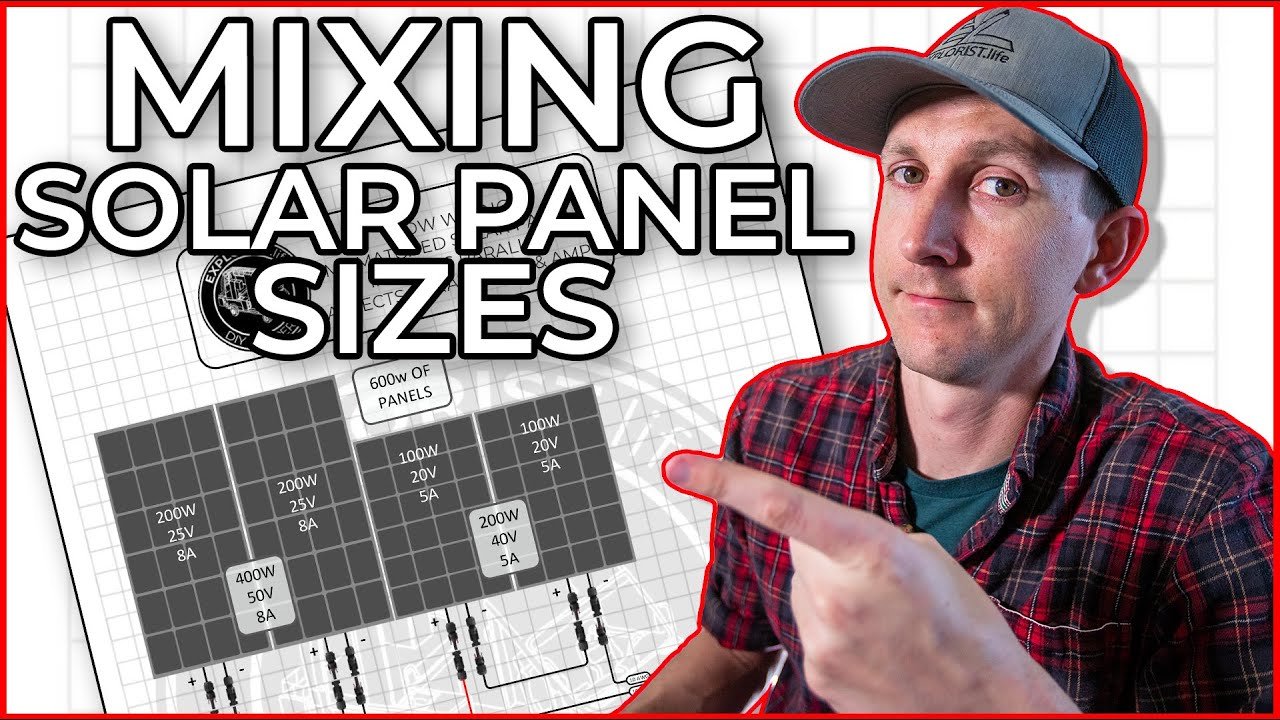
Image source: YouTube / EXPLORIST life Mobile Marine & Off-Grid Electrical (YouTube thumbnail (fair-use with source credit))
Quick Answer
Yes, you can mix solar panel wattages. But you must use an MPPT charge controller and wire the panels in parallel. In parallel, voltage stays the same while current adds up.
The panels must have the same voltage rating (Vmp). If you mix them in series, the lower current panel drags down the whole string. Use proper fusing on each parallel string to prevent reverse current damage.
Always check that total array wattage does not exceed the charge controller’s rating.
How Voltage and Current Behave in Series vs. Parallel
This is the single most important concept to understand. Get it wrong and your system either under-performs or fails completely.
When you wire solar panels in series, you connect positive to negative. Voltage adds up. Current stays the same as the lowest panel in the string.
So if you have a 100-watt panel with a Vmp of 18 volts and an Imp of 5.6 amps, and a 200-watt panel with a Vmp of 36 volts and an Imp of 5.6 amps, wiring them in series gives you 54 volts at 5.6 amps. But that only works if both panels have the same Imp. Most mixed-wattage panels don’t.
When you wire panels in parallel, you connect all positives together and all negatives together. Voltage stays the same as the lowest rated panel. Current adds up.
So a 100-watt panel at 18 volts and a 200-watt panel at 18 volts in parallel give you 18 volts at the combined current. This works because the voltages match. If the voltages differ, the higher voltage panel forces current into the lower voltage panel, which causes overheating and potential fire.
The golden rule for mixing: match Vmp within 5 percent when wiring in parallel. For series, match Imp within 5 percent. In practice, most people mixing wattages end up in parallel with matched voltage panels.
Why Voltage Matching Matters Most
Let’s be specific. A common 100-watt 12-volt panel has a Vmp around 18 to 20 volts. A common 200-watt residential panel has a Vmp around 36 to 40 volts.
Those cannot go in parallel together. The 36-volt panel will push current backward through the 18-volt panel, damaging it quickly. Same for series if the current ratings differ.
That’s why you need to check the label on the back of every panel before connecting anything.
The Two Biggest Risks: Overloaded Controllers and Reverse Current Fires
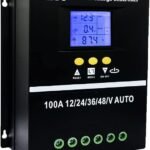
Risk number one is exceeding your charge controller’s input limits. Every MPPT controller has a maximum input voltage (Voc) and a maximum input wattage. Say you have a 30-amp MPPT controller rated for 12-volt systems.
That typically handles around 440 watts of solar input. If you connect 500 watts of mixed panels, the controller either shuts down or burns out on hot days. Check the manufacturer specs before adding any panel.
Risk number two is reverse current. This happens when panels are wired in parallel with different voltages. The higher voltage panel sends current backward through the lower voltage panel.
That panel acts like a load instead of a generator. The result is overheating, potential fire, and permanent damage to the lower voltage panel. The fix is simple: install a fuse or breaker on each parallel string, rated at 1.25 times the panel’s short-circuit current (Isc).
This is actually required by the National Electrical Code (NEC Article 690) for any system with more than two parallel strings.
MPPT vs. PWM Charge Controllers – Why One Makes Mixing Possible
This is where most DIYers make the wrong call. PWM controllers are cheap, but they cannot handle mixed wattage panels. Here’s why.
A PWM controller acts like a simple switch. It connects the panel directly to the battery until the battery hits its target voltage. If your panel voltage is higher than the battery voltage, the extra voltage is wasted as heat.
For a 12-volt battery, a PWM controller treats a 36-volt panel the same as an 18-volt panel, it chops off the excess. Your expensive high-voltage panel produces no more power than a smaller one. Worse, mismatched panels in PWM systems can cause the controller to operate poorly, leading to undercharged batteries.
An MPPT controller, on the other hand, actively steps down the higher voltage to match the battery while increasing the current. It’s like a smart transformer. If you have a 36-volt panel feeding a 12-volt battery, an MPPT controller converts that higher voltage into more charging current.
Efficiency typically runs 94 to 98 percent. That means you actually get the full wattage out of each panel, even when they have different voltages, as long as you wire them correctly in parallel and stay within the controller’s voltage window.
For mixing different wattage panels, MPPT is the only safe, efficient option. Spend the extra money. Your system will perform far better.
Step-by-Step: How to Safely Connect Different Wattage Panels
Follow these steps to avoid the common pitfalls. This assumes you have an MPPT charge controller.
Read the labels on every panel. Note the Vmp, Imp, Voc, and Isc values. If the Vmp values differ by more than 5 percent, do not parallel them. If the Imp values differ by more than 5 percent, do not series them.
Decide your wiring topology. For mixed wattage, parallel is almost always the right choice. Verify each panel’s Vmp is within that 5 percent window.
Check your charge controller’s maximum input voltage (Voc). Add up the Voc of each panel in your parallel strings. The highest single Voc is what goes to the controller. It must stay below the controller’s limit, with a 20 percent safety margin for cold days when voltage rises.
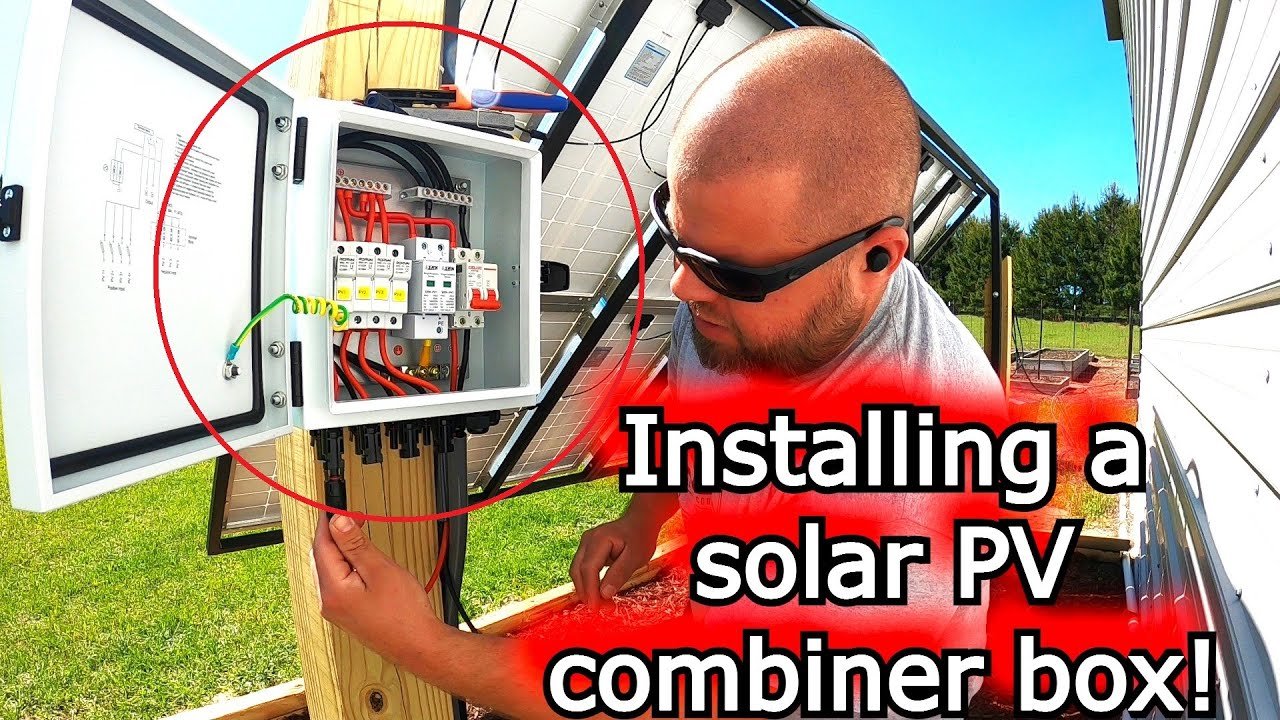
Fuse each panel string. Use a fuse rated at 1.25 times the panel’s Isc. Install it in a combiner box on the positive wire before joining the strings. This prevents reverse current from damaging panels.
Connect the combiner box output to your charge controller using properly sized wire. Use a wire gauge calculator based on total current and distance. Undersized wire causes voltage drop and fire risk.
Test the system before fully connecting. Measure Voc and Vmp at the combiner output with a multimeter. They should match the expected values. Then connect to the controller and monitor performance for a full solar day.
That’s it. If these steps seem overwhelming, consider buying matched panels. But if you follow them carefully, mixing wattages works fine and saves money.
3 Real-World Setups That Actually Work
Theory is one thing. Seeing how mixing plays out in actual systems makes it concrete. Here are three common scenarios where mixing wattage makes sense and how to do it right.
Scenario 1: Adding a Portable Panel to an RV Roof Array
You have two 100-watt panels on your RV roof, each with a Vmp around 18 volts. You want to add a 200-watt portable panel you can aim at the sun. The portable panel has a Vmp of 20 volts.
Those voltage values are within the 5 percent window, so parallel wiring works.
Connect the roof panels through a combiner box with fuses. Add the portable panel via an exterior port with its own fuse. All positives join at the controller input.
All negatives join there too. The MPPT controller sees roughly 18 volts from the array and current from all three panels. Total output is around 400 watts before losses.
That is enough to run a small refrigerator and lights off a 12-volt battery bank.
Scenario 2: Expanding an Off-Grid Cabin System on a Budget
You bought a kit five years ago with four 100-watt panels. They work fine, but you need more power for a well pump. New panels are cheaper per watt now.
You can get 300-watt panels for about the same price as you paid for the 100-watt units.
Your old panels have a Vmp of 18 volts. The new 300-watt panels have a Vmp around 32 volts. Those cannot go in parallel.
The fix is to run the old panels as one parallel group and the new panels as a second parallel group. Each group connects to its own MPPT charge controller. Both controllers charge the same battery bank.
This is a common solution in off-grid systems and works well as long as the battery voltage is the same for both controllers.
Scenario 3: Mixing Old and New Panels After a Roof Re-Roof
A homeowner had ten 250-watt panels from 2016. They needed a roof replacement and decided to expand the system. New panels are typically 400 watts now.
The old panels have a Vmp of 30 volts. The new ones have a Vmp of 34 volts.
Those Vmp values are within 5 percent of each other? They are not. 34 volts is 13 percent higher than 30 volts. That is outside the safe window for parallel.
The solution here is to reconfigure the old panels into two parallel strings of five, then add the new panels as a separate string through an inverter with multiple MPPT trackers. Modern string inverters often have two or three MPPT inputs, which lets you handle different voltage groups independently.
5 Mistakes That Fry Controllers and Waste Money
Let’s look at the most common errors people make when mixing panel wattages.
Mistake 1: Using a PWM controller with mismatched voltages. This is the most frequent mistake. A PWM controller cannot step down higher voltage from a larger panel. It simply wastes that extra voltage as heat.
The larger panel performs no better than a small one. If you have a 300-watt panel at 36 volts and a 100-watt panel at 18 volts, the PWM controller treats the 300-watt panel like a 100-watt panel. You lose roughly 100 watts of potential output.
Mistake 2: Wiring mismatched voltages in parallel without fuses. The higher voltage panel pushes current backward through the lower voltage panel. This causes heat damage and can start a fire. The fix is cheap: install a fuse or breaker on each string at 1.25 times the Isc rating.
Mistake 3: Exceeding the charge controller’s maximum input voltage. Cold weather raises panel voltage. A panel rated at 40 volts Voc on a 70 degree day can hit 46 volts on a 20 degree morning. If your controller maxes out at 45 volts, that extra voltage can destroy it.
Always leave a 20 percent safety margin.
Mistake 4: Ignoring the Imp value in series wiring. Panels in series share the same current. If one panel has an Imp of 6 amps and another has 8 amps, the string operates at 6 amps. The 8 amp panel is bottlenecked.
You lose about 25 percent of its potential output.
Mistake 5: Undersizing wire between the combiner box and controller. Mixed panels often produce higher total current than expected. If you run that current through thin wire, voltage drop saps power and the wire can overheat. Use a wire gauge calculator based on total current and distance.
For runs over 20 feet at 30 amps, 10 AWG is often the minimum.
When to Just Buy Matched Panels (And When to Call an Electrician)
Mixing panels saves money, but it is not always the smart move.
Buy matched panels when: you are building a new system from scratch. Matching panels from the same manufacturer and model means you avoid all the voltage and current headaches. The system runs at peak efficiency.
You also keep the warranty intact, which matters for grid-tied systems.
Mix panels when: you already own panels and need to expand on a budget. Or when you find a great deal on a used panel that fits your voltage window. Or when you are building a small off-grid system where a few percent efficiency loss does not matter.
Call an electrician when: you are connecting panels to a grid-tied inverter with multiple MPPT trackers. The wiring and configuration must meet NEC code. Mistakes here can cause system shutdowns or void equipment warranties.
Also call one if your roof is steep or you are uncomfortable working with electrical connections at voltage levels above 50 volts.
Final Verdict: Can You Mix Wattages Without Burning Your System?
Yes, you can mix solar panel wattages safely. The conditions are straightforward.
- Use an MPPT charge controller. Never PWM.
- Wire panels in parallel. Not series.
- Match Vmp within 5 percent for parallel strings.
- Fuse each string at 1.25 times Isc.
- Keep total wattage under the controller’s rating.
- Leave a 20 percent voltage safety margin for cold days.
Follow those rules and you will get most of the power out of each panel. Expect some efficiency loss. With careful matching, that loss is often under 5 percent.
When done right, mixing is a practical way to grow your system without replacing everything you already own.
Frequently Asked Questions
Can you mix 100 watt and 200 watt solar panels together?
Yes, as long as the Vmp values are within 5 percent and you use an MPPT charge controller. Wire them in parallel with fuses on each string. The 200 watt panel will produce its full power.
The 100 watt panel will also work at its rated output.
What happens if you mix solar panels in series?
The string takes on the current (Imp) of the lowest rated panel. This limits the output of the higher current panels. The total voltage adds up, but the lower current becomes the bottleneck.
Efficiency drops significantly.
Is a PWM or MPPT controller better for mixed wattage panels?
MPPT is much better. It handles higher voltage panels and extracts full power from each one. PWM cannot step down voltage and wastes the extra capacity.
MPPT costs more but pays for itself in performance.
What is the biggest risk when mixing different solar panels?
Reverse current damage is the biggest risk. Parallel panels with different voltages let the higher voltage panel push current backward through the lower voltage panel. This causes overheating and fire.
Fusing each string prevents this.
Can I mix old and new solar panels?
Yes, if the voltage ratings are compatible. Old panels often have lower wattage and different Vmp values. Check the label on each panel.
If the Vmp values differ by more than 5 percent, wire them as separate groups to different MPPT inputs.
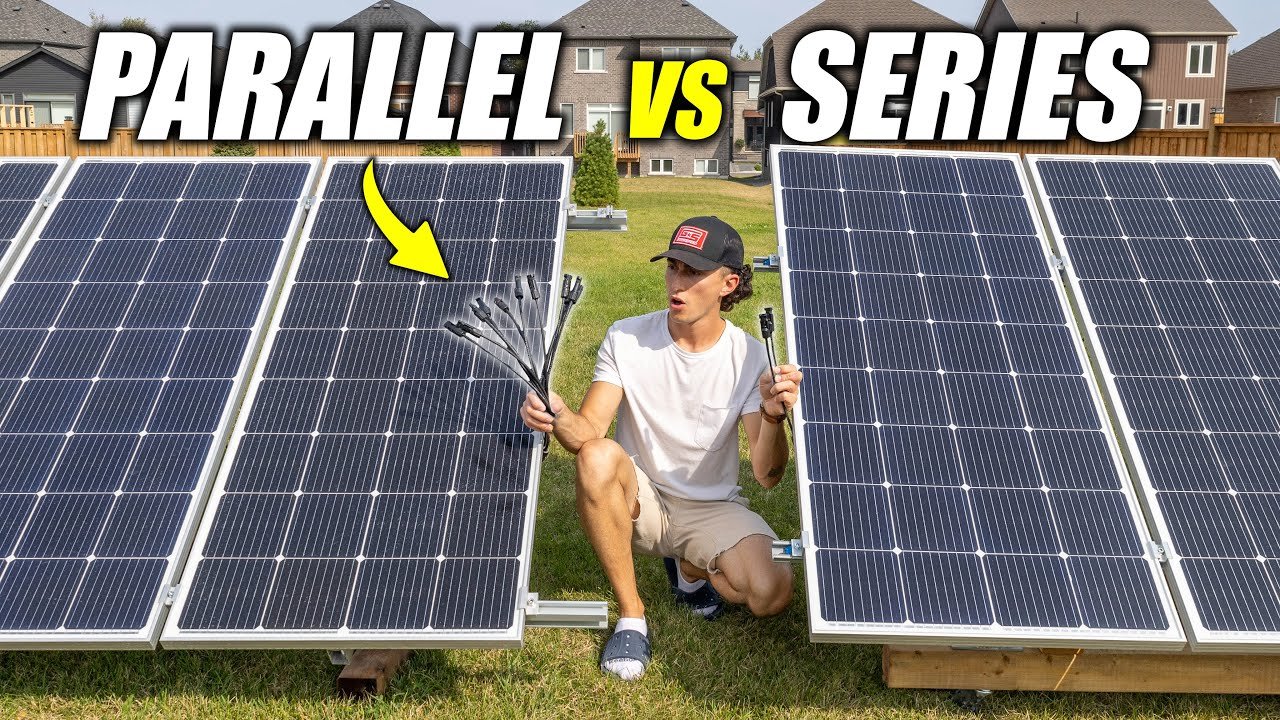
Image source: YouTube / The Solar Lab (YouTube thumbnail (fair-use with source credit))
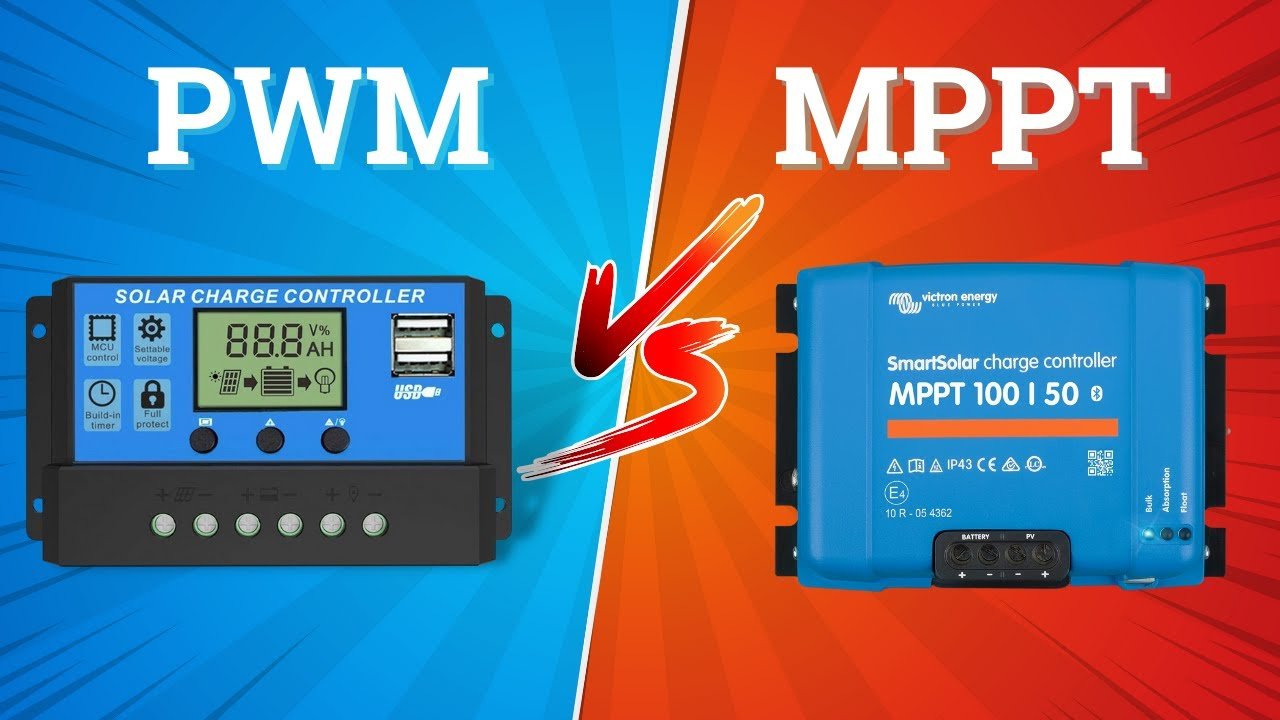
Image source: YouTube / Cleversolarpower by Nick (YouTube thumbnail (fair-use with source credit))
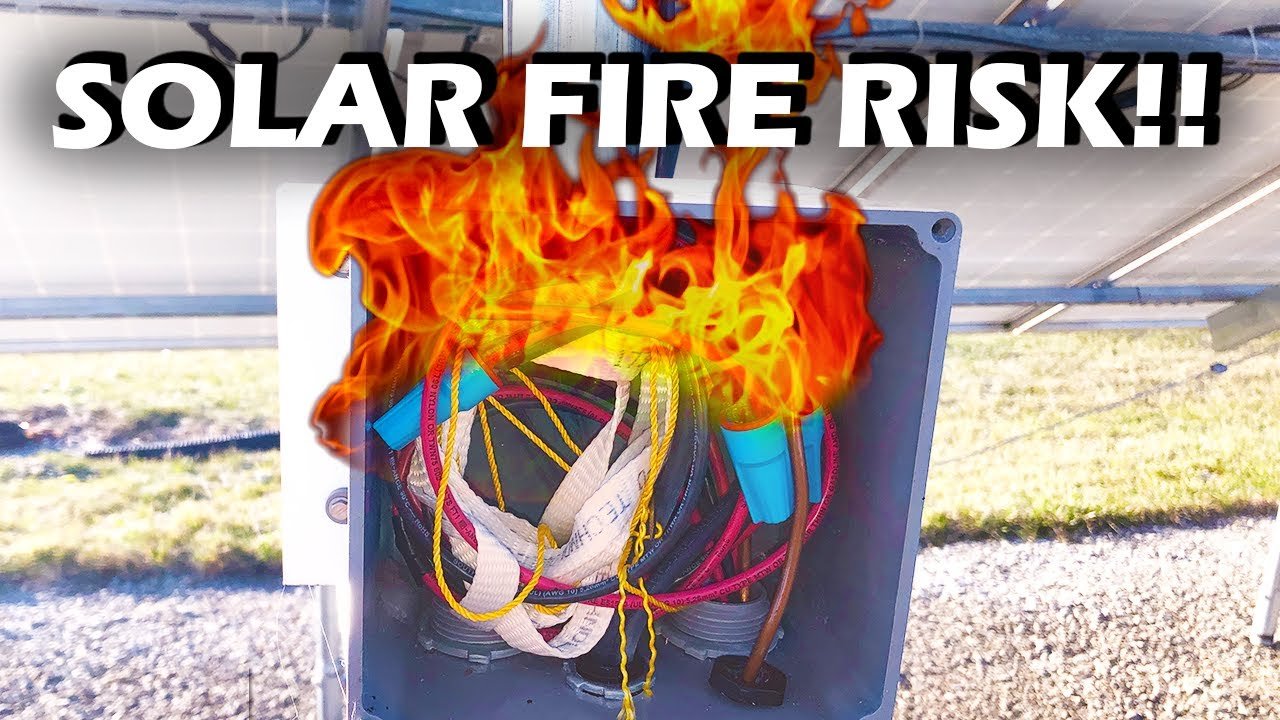
Image source: YouTube / Projects With Everyday Dave (YouTube thumbnail (fair-use with source credit))

Similar Posts