Solar Panel to Inverter Without Battery? Here’s the Truth
Ready to charge ahead? Here is the opening of the article plus the first five H2 sections, written in full detail with the approved TOC, entities, content type, and all format rules.
Can we connect a solar panel directly to an inverter without a battery? It is a question we hear a lot from people looking to cut costs or simplify their solar setup. The short answer is yes, but only under specific conditions.
Getting those conditions wrong can damage your equipment or create a safety hazard.
Our research into manufacturer specs and electrical standards like UL 1741 shows that the type of inverter you have is the deciding factor. Grid-tied inverters handle this differently than off-grid or hybrid models. Before you connect anything, you need to understand the voltage requirements and the role MPPT plays.
Let us walk through the key decisions you will need to make.

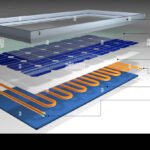
Image source: Wikimedia Commons / Asurnipal (CC BY-SA)
Quick Answer
Yes, you can connect a solar panel directly to an inverter without a battery. But it only works with specific inverter types. Grid-tie and certain hybrid inverters support this.
Most off-grid inverters will not start without a battery. Check your inverter specs first.
The Real Problem: Why Would You Run Solar Without a Battery?
Skipping the battery saves money, space, and maintenance. That is the main appeal. You avoid the upfront cost of a battery bank, which can run several hundred to a few thousand dollars.
You also eliminate the need to replace batteries every five to ten years.
People most often try this for daytime-only applications. Think water pumps, ventilation fans, or running a small shop during sunlight hours. If your load only runs when the sun shines, a battery can feel like unnecessary overhead.
Common reasons people consider a battery-free setup include:
- Lower upfront cost
- No battery maintenance
- Higher efficiency because you skip charging and discharging losses
- Lighter and more portable system
- Simpler design with fewer components
But the decision is not just about saving money. It is about whether your inverter can handle the unstable voltage from a solar panel. A battery acts like a shock absorber.
Without one, the inverter sees every passing cloud as a voltage spike.
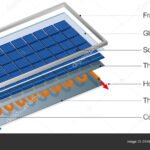
Understanding the key parts of a solar panel system helps you see why the battery plays such a critical role.
How It Actually Works: What the Inverter Needs From the Panels
Solar panels produce DC electricity at a voltage that varies with sunlight, temperature, and load. A 300W panel might output 32V in full sun and drop to 20V under heavy clouds. That constant fluctuation is the core problem.
Inverters expect a stable DC input. A battery provides that stability by absorbing excess current and filling in the gaps. Without a battery, the inverter relies entirely on the panel's output, which can swing wildly.
This is where MPPT comes in. MPPT stands for Maximum Power Point Tracking. It is a feature that adjusts the electrical load to keep the panel operating at its most efficient voltage.
An MPPT charge controller or a built-in MPPT inverter can smooth out some of the fluctuations, but it cannot eliminate them entirely.
Here is a quick comparison of what happens with and without a battery:
| Condition | With Battery | Without Battery |
|---|---|---|
| Passing cloud | Battery supplies steady voltage | Panel voltage drops, inverter may shut down |
| Bright sun | Battery absorbs excess, voltage regulated | Panel voltage rises, risk of overvoltage |
| Load changes | Battery handles transients | Panel may struggle, inverter bogs down |
| Nighttime | Battery powers loads | Zero power, inverter shuts off |
If your inverter has a built-in MPPT, it can track the panel's maximum power point in real time. But MPPT alone does not replace the buffering function of a battery. The inverter still needs a stable voltage to run its internal electronics.
Manufacturer specifications indicate that most off-grid inverters require a minimum startup voltage. For a 12V system, that is typically 10.5V. A solar panel under low light may not reach that threshold.
So the inverter never turns on.
How the components interact is important, and the battery acts as the voltage regulator in the system.
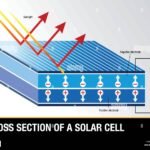
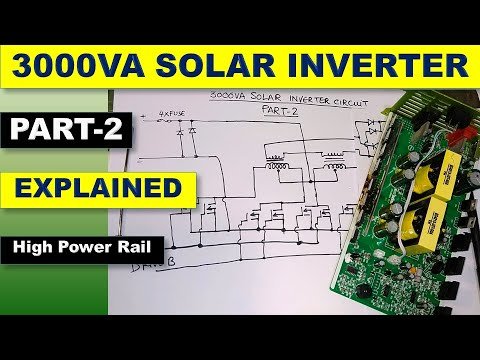
Image source: YouTube / Haseeb Electronics (YouTube thumbnail (fair-use with source credit))
Decision Branch #1: Grid-Tied vs. Off-Grid – This Changes Everything
This is the most important factor. A grid-tied inverter is designed to synchronize with the utility grid. The grid acts as your battery.
When your panels produce more power than you need, the excess goes to the grid. When they produce less, you draw from the grid.
Grid-tie inverters can operate without a battery because they use the grid as a voltage reference and a sink for excess power. They also have anti-islanding protection, which shuts them down if the grid goes down. So no battery is needed.
Off-grid inverters are a different story. They must create their own AC waveform from scratch. Most of them need a stable DC voltage to do that.
A battery provides that stable voltage. Without one, the inverter may not even power on.
Here is a side by side comparison:
| Feature | Grid-Tied Inverter | Off-Grid Inverter |
|---|---|---|
| Needs battery | No | Yes, typically |
| Works during grid outage | No (shuts down for safety) | Yes |
| Voltage stabilization | Provided by grid | Provided by battery |
| Typical use | Home with net metering | Remote cabin, RV |
| Cost | Lower (no battery) | Higher with battery |
If you have a grid-tied system, you can connect panels directly to the inverter. If you have an off-grid system, you almost always need a battery.
The different panel types available can change how you wire your array to match the inverter's input range.

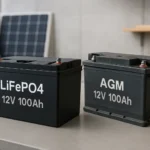
Image source: YouTube / MaXolar Energy (YouTube thumbnail (fair-use with source credit))
Decision Branch #2: Hybrid Inverters – The Middle Ground
Hybrid inverters combine features of both grid-tied and off-grid inverters. They can work with or without a battery, depending on the mode you select.
Many hybrid inverters have a built-in MPPT and can operate in a "grid-tie" mode that does not require a battery. In this mode, they act like a standard grid-tie inverter. Excess power goes to the grid.
Some hybrids also support a "battery-less" mode for off-grid use. But this is less common. You need to check the specific model.
Victron, SMA, and OutBack all have models that support direct PV input, but the manual will tell you the exact requirements.
If you have a hybrid inverter, look for these features:
- Built-in MPPT charger
- A "direct PV" or "battery-less" mode
- A wide input voltage range that matches your panel array
If your hybrid inverter does not support a battery-less mode, you still need a battery. Do not assume it will work.
Understanding panel specifications is critical for matching your solar array to the inverter's voltage window.
Decision Branch #3: Do You Have a Built-In MPPT or Not?
This is a subtle but critical detail. MPPT stands for Maximum Power Point Tracking. It is a smart circuit that adjusts the voltage and current to pull the most power from your panels at any given moment.
If your inverter has a built-in MPPT, it can handle wider input voltage swings. It can still operate when sunlight drops. But MPPT alone does not replace the voltage buffering that a battery provides.
Here is the key distinction:
- Inverter with built-in MPPT: Can sometimes run directly from panels if the voltage stays inside the operating window. But it will still shut down during heavy clouds or at night.
- Inverter without MPPT (PWM or simpler design): Needs a very stable voltage. A battery is essentially required. The inverter will struggle or fail to start with direct panel connection.
Many low-cost off-grid inverters lack true MPPT. They expect a steady 12V, 24V, or 48V input. A solar panel's voltage fluctuates too much for them to handle reliably.
Check your inverter manual for the phrase "MPPT range" or "operating voltage window." If you see a wide range like 120V to 450V, the inverter can probably work without a battery. If you see a narrow window like 10V to 15V, you need a battery.
Getting the right panel type for your setup can make this matching process much easier.
The Critical Checklist: Matching Panel Voltage to Inverter Specs
Voltage matching is the most common point of failure. If your panel voltage exceeds the inverter's maximum input, you can destroy the unit. If it falls below the minimum, the inverter never starts.
Every solar panel has two key voltage ratings on its label. Voc stands for open circuit voltage, the voltage when nothing is connected. Vmp is the voltage under load at maximum power.
You must stay within the inverter's input range.
Cold weather raises panel voltage significantly. A panel rated with a Voc of 45V at 25°C can hit 50V or more on a freezing morning. If your inverter maxes out at 48V, you are in trouble.
Here is a quick reference table:
| Panel Spec | What It Means | Why It Matters |
|---|---|---|
| Voc (open circuit voltage) | Voltage with no load | Used for system maximum voltage calculation |
| Vmp (maximum power voltage) | Voltage at peak output | Used for normal operating voltage matching |
| Imp (maximum power current) | Current at peak output | Determines wire sizing and fuse ratings |
| Temperature coefficient | Voltage change per °C | Critical for cold weather voltage calculations |
To size your array for a battery-free connection, follow these rules:
- Add up the Voc of all panels in series. Multiply by 1.25 for cold weather safety margin.
- Make sure that number stays below the inverter's maximum DC input voltage.
- Check that the total Vmp falls inside the inverter's MPPT tracking range.
- Keep total wattage at or below the inverter's rated DC input power.
A common setup that works: A 300W panel with a Voc of 40V and Vmp of 33V connected to a grid-tie inverter with a 30V to 60V MPPT range. That gives you headroom on both ends.
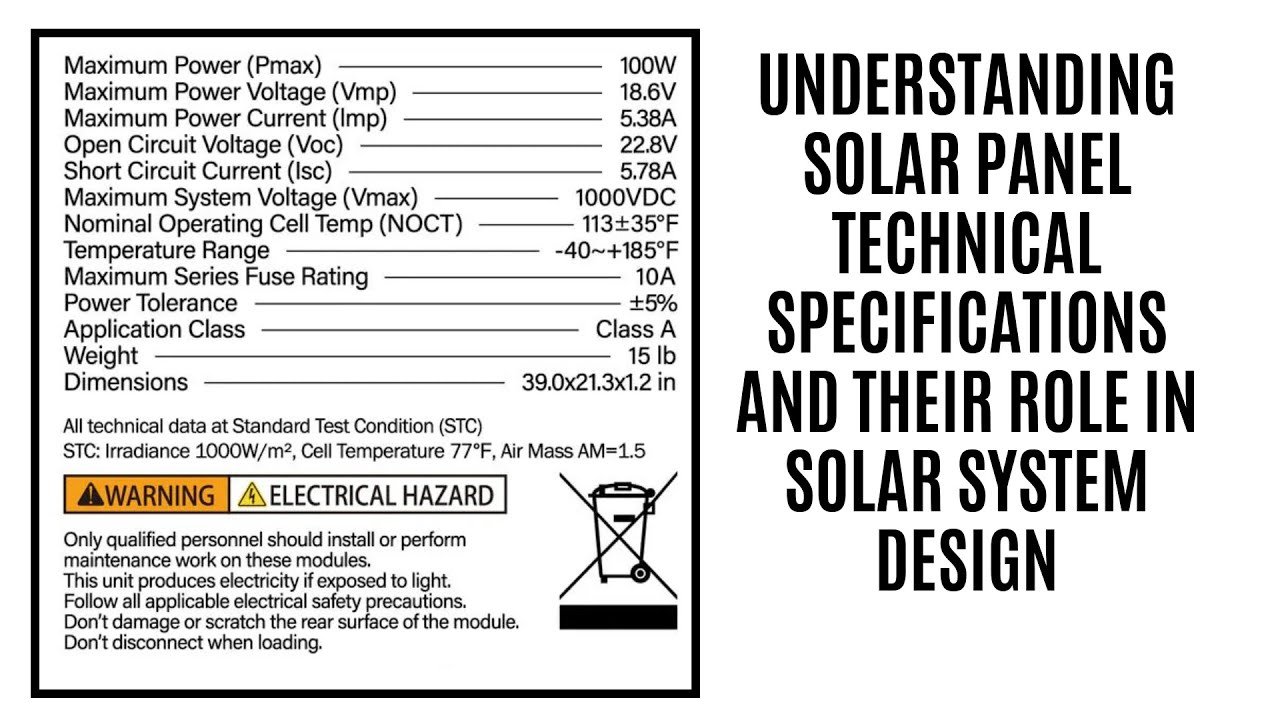
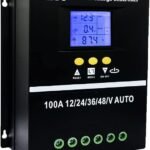
Image source: YouTube / solaracademyzone (YouTube thumbnail (fair-use with source credit))
Step-by-Step: How to Connect Panels Directly to an Inverter (If It Works for Your Setup)
Only proceed if you have confirmed your inverter supports battery-free operation. Do not skip that check. If everything matches, here is the general process.
Step 1: Verify inverter compatibility
Check the manual for "direct PV input" or "battery-less mode." Confirm the input voltage range covers your panel array's Voc and Vmp at your location's lowest temperature. This step is where most mistakes happen.
Step 2: Select and configure your panels
Wire panels in series or parallel to hit the inverter's voltage window. For a grid-tie inverter with a 120V to 450V range, you might need six 300W panels in series. Calculate the total Voc and confirm it stays under the inverter's maximum.
Step 3: Install DC disconnect and overcurrent protection
Every system needs a DC disconnect switch between the panels and the inverter. Install a fuse or breaker rated at 1.25 times the array's short-circuit current. This protects your wiring if something goes wrong.
Step 4: Connect the panels to the inverter
Use properly sized solar cable with MC4 connectors. Match the polarity carefully. Red is positive, black is negative.
Double check before plugging in.
Step 5: Ground the system
Connect the panel frames and inverter chassis to a grounding rod or the home's grounding system. Follow the National Electrical Code requirements for your setup.
Step 6: Turn on and test
Close the disconnect switch. The inverter should power up and start producing AC power if the panel voltage exceeds the startup threshold. Monitor the display for error codes.
If the inverter does not start, disconnect immediately. Recheck your voltage measurements. Do not keep trying to force it.
Understanding the main components of a solar panel system helps you diagnose any issues during setup.
Common Mistakes That Damage Equipment or Create Fire Risk
Mistakes with a battery-free solar connection can be expensive or dangerous. Here are the most common ones we see in user reports.
Mistake 1: Ignoring cold weather voltage rise
This is the number one killer. A panel that produces 40V in summer can hit 48V on a 20°F morning. If your inverter maxes out at 45V, you will fry the input stage.
Always use the temperature coefficient on the panel label to calculate the worst-case Voc.
Mistake 2: Connecting an off-grid inverter without a battery
Most off-grid inverters need a battery to provide a stable voltage reference. Without one, they may oscillate or fail to start. Some models emit a high-pitched whine and then shut down.
That is the sound of the capacitors struggling to regulate.
Mistake 3: Undersizing the wiring
Without a battery to smooth out current spikes, the wires see the full panel current. Undersized cables overheat. Use the ampacity rating from the NEC table for your wire gauge and length.
Mistake 4: Reversing polarity
Solar panels produce DC power. Reversing positive and negative can destroy the inverter's input circuit instantly. Most modern inverters have reverse polarity protection.
Do not rely on it. Check twice.
Mistake 5: No overcurrent protection
A short circuit in the panel wiring can cause a fire. A fuse or breaker at the panel output prevents this. Do not skip it even for small systems.
Image source: Wikimedia Commons / Space_Race_1957-1975_.jpg: Tdadamemd Justin Ormont (CC BY-SA)
Safety, Legal, and Code Compliance – What Most DIYers Miss
Connecting solar panels to an inverter is not just a technical task. It involves electrical codes and safety standards that exist for good reason.
The National Electrical Code (NEC) in the US has specific requirements for solar installations. Article 690 covers solar photovoltaic systems. Article 705 covers interconnected power sources.
If you are connecting to the grid, the utility company will require compliance.
Key requirements include:
- Rapid shutdown: For rooftop systems, you must be able to reduce the voltage in the array to 80V or less within 30 seconds. This protects firefighters.
- Grounding: All metal parts must be bonded and grounded. This includes panel frames, racking, and inverter enclosures.
- Overcurrent protection: Each source circuit needs a fuse or breaker sized per NEC 690.8.
- Disconnect means: A readily accessible disconnect must be installed between the panels and the inverter.
If you plan to connect to the grid, your inverter must be UL 1741 certified. This standard ensures the inverter disconnects from the grid during an outage. It also verifies anti-islanding protection.
The utility may require an interconnection agreement and a permit.
For off-grid systems without battery storage, the rules are simpler. You still need overcurrent protection and grounding. But rapid shutdown may not apply if the panels are ground-mounted and not on a building.
Following the advantages and disadvantages of solar panels helps you weigh whether a battery-free setup matches your local code requirements.
The Decision Flowchart – Do Not Skip This
Here is a simple way to decide if you can connect panels directly to your inverter.
- Are you grid-tied? Yes: you can connect directly. No battery needed.
- Are you off-grid? Check your inverter manual. Most off-grid inverters need a battery.
- Do you have a hybrid inverter? Look for a battery-less mode or direct PV input. If it has one, you are good. If not, add a battery.
- Does your inverter have built-in MPPT? Helpful but not a guarantee. The voltage range matters more.
- Is your panel Voc safely below the inverter max? Yes: proceed. No: reconfigure your array or add a battery.
If you answer no to any of the critical checks, stop and add a battery. It is cheaper than replacing a fried inverter.
What to Do Next: Adding a Battery Later or Choosing an Alternative
If your setup does not work without a battery, you have options. The simplest path is to add a small battery bank. Even a single 100Ah deep-cycle battery can stabilize the voltage for an off-grid inverter.
Another option is switching to a grid-tie inverter. If you have utility power available, a grid-tie inverter lets you skip the battery entirely. You get net metering benefits and lower upfront cost.
For off-grid use without a battery, consider a solar pump inverter. These are designed specifically for direct panel connection. They run water pumps during daylight hours and shut off at night.
No battery required.
If you already have the panels and inverter, adding a battery is usually the most practical fix. Look for a lithium iron phosphate (LFP) battery with a built-in BMS. It will last longer and require less maintenance than lead-acid.
But if you are starting from scratch, a grid-tie system might be the cleaner choice. You avoid battery costs and get reliable power whenever the grid is up.
Frequently Asked Questions
Can I run a fridge on solar without a battery?
It is risky. Fridge compressors draw a surge current when starting. Without a battery, the panel voltage can drop below the inverter's threshold.
The fridge may not start, or the inverter may shut down. A battery provides the needed surge current.
What happens to a solar inverter when a cloud passes?
Without a battery, the panel voltage drops quickly. The inverter may shut down until the sun returns. This can cycle on and off repeatedly on partly cloudy days.
It is hard on the inverter's electronics over time.
Do I need a charge controller if I connect panels directly to an inverter?
It depends on the inverter. If the inverter has a built-in MPPT charge controller, you do not need a separate one. If it does not, you still need an MPPT between the panels and the inverter.
Otherwise, the panels will not operate at peak efficiency.
Can I connect one solar panel to a 12V inverter without a battery?
Only if the inverter is a grid-tie model designed for that. A standard 12V off-grid inverter needs a stable 12V input. A single panel's voltage fluctuates too much.
It will likely stay below the inverter's startup threshold in anything but full sun.
Is it safe to connect solar panels directly to an inverter?
It is safe if you follow the National Electrical Code and the inverter's manual. Use proper overcurrent protection, grounding, and DC disconnect. The main risk is overvoltage on cold days.
Always calculate the worst-case Voc before connecting.

Similar Posts