Solar Power Without Sun: Does It Work?
You ask a honest question. And it's one of the most common misconceptions people have about solar. That panels are useless unless the sun is blazing directly overhead, like a desert at noon.
Can Solar Panels Work Without Direct Sunlight? Yes, they can. Not at full power, but they absolutely generate electricity on cloudy days, in shade, and under overcast skies. The output drops, but it doesn't drop to zero.
According to National Renewable Energy Laboratory (NREL) data, typical residential panels produce roughly 10, 25% of their rated wattage under bright overcast conditions. That's not nothing. That's still usable power.
So if you've been wondering whether solar is worth it in a place that isn't Phoenix or Los Angeles, keep reading. We're going to walk through exactly how it works, what affects your real-world output, and how to decide if solar still makes sense for your situation.
Quick Answer
Yes, solar panels work without direct sunlight. They convert diffuse light, not just direct rays. Output drops to 10, 25% on bright overcast days.
Heavy cloud cover reduces it to 5, 10%. They produce nothing in total darkness. You still save money and offset energy in cloudy climates.
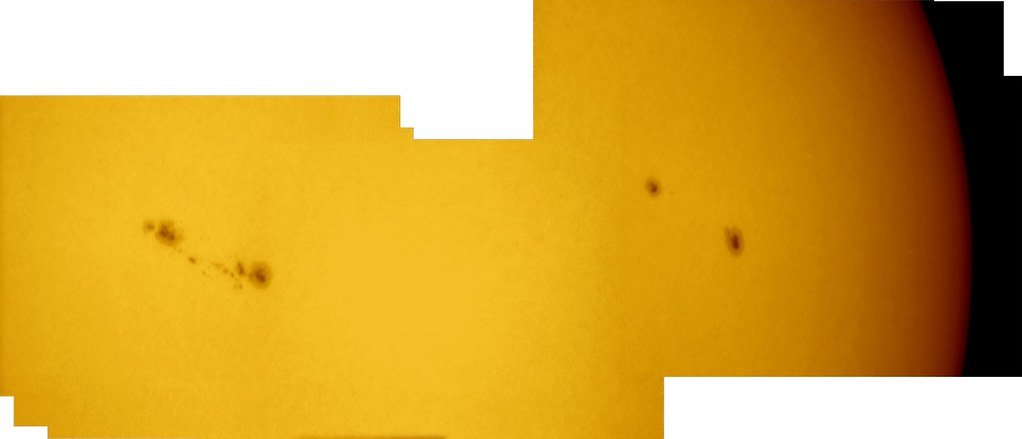
Image source: Openverse / blobrana2 (PDM 1.0)
How Solar Panels Actually Use Light (The Simple Physics)
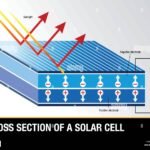
Solar panels don't need a straight line of sight to the sun. They don't work like a magnifying glass. The photovoltaic effect triggers whenever light particles, called photons, hit a solar cell.
Those photons knock electrons loose, creating a flow of electricity.
The trick is that light comes in two forms. Direct sunlight travels in a straight beam from the sun to your panel. That's the bright, harsh light you feel on a clear summer afternoon.
Diffuse light scatters through clouds, haze, dust, or fog before reaching the panel. It's softer, less intense, but it still carries photons. Those scattered photons still work.
Let's put some numbers on this. Standard Test Conditions (STC), which manufacturers use to rate panels, assume 1000 watts per square meter (W/m²) of irradiance. That's a completely cloudless day at noon.
On a bright overcast day, you might get 200, 300 W/m². On heavy overcast with rain, it can drop to 50, 100 W/m². The panel's output scales roughly with that irradiance.
So a 400W panel at 200 W/m² produces about 80W, not zero.
And here's a bonus. When it's cloudy, temperatures usually drop. Solar panels are more efficient when they're cool.
The temperature coefficient, typically around, 0.3% to, 0.5% per degree Celsius above 25°C, works in your favor. You lose some light, but you gain some efficiency from the cooler conditions. It doesn't fully offset the loss, but it helps.
The bottom line is simple. Direct sun is best. Diffuse sun works too.
Just less of it.
The Decision Tree: What Kind of Light Are You Working With?
This is where things get practical. Your specific light conditions determine how much power you actually get and whether solar makes sense. Let's break it down into four branches.
Branch 1: Bright Overcast (Thin Clouds, Hazy Sun)
If you can see where the sun is behind the clouds, even if it's a bright white patch, that's bright overcast. You'll get roughly 15, 25% of your panel's rated wattage. On a 400W system, that's around 60, 100W.
That's enough to keep batteries charging, run a small fridge, and offset some household loads.
If this is your typical weather, solar is still very viable. Net metering makes these partial outputs valuable. You're still generating during the day.
Branch 2: Heavy Overcast (Thick Storm Clouds, Rain)
When the sky looks like a gray blanket and you can't see the sun at all, output drops to 5, 10% of rated wattage. A 400W panel might make 20, 40W. Your inverter may not even turn on if the voltage from your panels stays below the inverter's startup threshold.
Microinverters usually start at lower voltages than string inverters.
If this is your dominant weather, you need a properly sized system and good battery storage. Generation alone won't power a home in real time. But it will offset some of your usage.
Branch 3: Deep Shade (Trees, Buildings, North-Facing Roof)
Partial shade is a different beast. Even a small shadow across one corner of a panel can drop output dramatically. That's because solar cells are connected in series.
If one cell in a string gets shaded, it effectively becomes a resistor, restricting current flow.
Bypass diodes help. Most modern panels have three bypass diodes. Each diode protects a section of the panel, letting current bypass the shaded cells.
But if you have a single string inverter, shade on one panel in the string drags down the whole string. That's the "Christmas light" problem.
If you have partial shading, you need either microinverters or power optimizers. Each panel works independently. A shaded panel producing 30W doesn't hurt the unshaded panel next to it making 300W.
This is a critical design choice.
Branch 4: No Light At All (Night, Indoors, Snow-Covered Panels)
Solar cells produce virtually zero power in total darkness. Period. There are no workarounds, no tricks.
Nighttime generation is a myth. Standard panels won't charge from indoor lighting either. The light levels are too low to reach the activation threshold.
Snow cover blocks all light. Once snow melts or slides off, production resumes. Some panels have anti-reflective coatings that help shed snow faster, but you can't cheat physics.
If your panels are covered or it's nighttime, you rely on battery storage, net metering credits, or grid power. That's the honest truth.
What Actually Determines Your Low-Light Output
Not all panels and systems perform the same under diffuse light. Three factors matter most.
Panel Type Matters
Monocrystalline panels typically have the best low-light performance. Their higher efficiency (18, 23%) means they convert more of the available diffuse light into electricity. Polycrystalline panels (15, 18%) are slightly less efficient in low light.
Thin-film panels (amorphous silicon) can be better in very low light because they have a wider spectral response, but they're less efficient overall and require more roof space.
System Design Decisions
| System Type | Best For | Low-Light Tradeoff |
|---|---|---|
| String inverter | Unshaded, south-facing roof | One shaded panel cripples the whole string |
| Microinverter | Partial shade, complex roof | Each panel works independently, higher cost |
| Power optimizer | Partial shade, lower budget than micros | Panel-level monitoring, string inverter still in use |
Microinverters and optimizers convert DC to AC at each panel. That means a shaded panel doesn't drag down the rest. If you have any shade at all, spend the extra money here.
It pays for itself.
Site Assessment Is Everything
You can't guess at shade patterns. Use a solar pathfinder tool or an app like SunEye to map your roof's annual shading. You'll see exactly when shadows from trees, chimneys, or neighbors block your panels.
This data drives every decision about system size and component choice.
If you're planning a system from scratch, our Solar Panel Buying Guide walks through site assessment in detail. It covers the tools, the math, and the design choices that matter for cloudy locations.
Common Mistakes People Make About Cloudy-Day Solar
I see these errors all the time in reviews and homeowner forums. Let's flag them.
Assuming Zero Output Means Zero Value
This is the big one. People look at a cloudy day, see the meter barely moving, and assume solar was a waste. But over a full year, even cloudy regions get enough diffuse light to offset significant energy use.
Germany gets about as much annual solar irradiation as Alaska, yet Germany leads the world in per capita solar adoption. The value accumulates.
Oversizing to Compensate for Clouds
This sounds logical but backfires. If you double the panel count to make up for cloudy days, you generate a huge excess on sunny days. Net metering caps and summer overproduction penalties can reduce your savings.
Better to size correctly and add battery storage for cloudy periods.
Buying Cheap Panels with Poor Low-Light Specs
Not all panels are equal. Some budget panels have poor temperature coefficients and inefficient bypass diode design. Check the spec sheet for low-irradiance performance (sometimes listed as "low light behavior").
Also look at the temperature coefficient. A lower number (closer to, 0.3%/°C) is better than, 0.5%/°C.
Ignoring Bypass Diodes and String Configuration
We covered this above. If you have partial shade and use a string inverter without microinverters or optimizers, you are throwing away money. The shade kills the whole string.
Don't skimp here.
For more foundational information on panel types, efficiency, and how residential solar actually works, our Solar Panels category covers the essentials. It's a solid resource if you're still learning the basics.
Real User Scenarios
Let's look at three real situations. Each one shows how diffuse light and partial shade actually play out.
Case 1: Homeowner in Seattle with a South-Facing Roof
Seattle gets about 201 cloudy days per year. That's more than two thirds of the year. A typical 6 kW system installed there produces roughly 7,200 to 8,000 kWh annually.
That's about 80% of what the same system would make in Phoenix.
What does a November afternoon look like? At 2 PM under heavy overcast, a 400W panel on a Seattle roof might output 30 to 50W. That's not enough to run the dishwasher.
But over the whole month, that same panel still generates about 40 to 50 kWh. That covers lighting, a refrigerator, and some electronics.
The key insight is cumulative. A cloudy day looks bad in isolation. Over a year, it still adds up to significant energy.
Case 2: RV Owner Camping in the Woods
Partial tree shade is the enemy of mobile solar. A 200W portable panel set up in a clearing with one corner shaded might drop to 50W. That's a 75% loss from a single branch shadow.
The fix is simple. Move the panel every couple of hours to chase the brightest part of the sky. Tilt it toward the sun.
Even on overcast days, aiming at the brightest patch of cloud can double your output. That's the difference between charging a phone and running a cooler.
Case 3: Off-Grid Cabin Owner in the Pacific Northwest
Off-grid solar in a cloudy climate requires battery storage. A cabin with a 2 kW array and 10 kWh of battery might last three days without sun. After that, the generator kicks in.
The strategy here is to oversize the battery, not the panels. You capture the diffuse sunlight when it's available and store it for the dark stretches. Most off-grid owners in cloudy regions use a generator for winter months.
Solar covers spring through fall.
Is Solar Worth It in a Cloudy Climate? Here's the Honest Math
Let's run the numbers. A 5 kW system in a sunny climate like Arizona produces about 8,000 kWh per year. The same system in Seattle produces about 5,500 kWh per year.
That's a 31% reduction.
At $0.12 per kWh, the Arizona system saves $960 annually. The Seattle system saves $660 annually. The Seattle system costs the same to install, roughly $15,000 to $20,000 before incentives.
The payback period is longer in cloudy climates. Eight to twelve years instead of six to nine. But here's the thing.
Net metering changes the math. If your utility credits you at the full retail rate for excess generation, you still get value even on cloudy days. The credits accumulate.
Federal tax credits (30% as of 2026) apply equally. State and local incentives vary. Some cloudy states offer additional rebates.
Oregon, New York, and Massachusetts have strong programs.
The honest answer is yes, solar is worth it in cloudy climates. The payback is slower. You need a well-designed system with microinverters or optimizers.
But the long-term savings are real.
Expert Tips for Maximizing Output Without Direct Sun
You can squeeze more power from diffuse light with a few smart adjustments.
Orient panels toward the equator. In the northern hemisphere, that means south-facing. A south-facing roof captures more diffuse light over the day than an east or west roof. Even a southeast or southwest orientation works.
Adjust tilt angle for winter. The sun sits lower in the sky from November to February. Increasing your panel tilt by 15 to 20 degrees from your summer angle captures more low-angle light. Fixed ground mounts and adjustable racks let you change tilt seasonally.
Roof mounts are harder to adjust, so optimize for year-round average.
Keep panels clean. Dirt and dust block light. On a bright sunny day, a 5% loss from grime is annoying. On an overcast day, that same grime can reduce output by 15 to 20%.
Clean panels with water and a soft brush every few months. More often if you live in a dusty area.
Choose microinverters or optimizers for any shade. We covered this above. It bears repeating. If any part of your roof gets shade at any time of day, spend the extra money.
The performance gain is worth the cost.
Monitor production. Use the app that comes with your inverter. Check it weekly. If you see a drop in production on a clear day, you have a problem.
A single failed panel or a dirty section can be fixed early.
Frequently Asked Questions
Can solar panels charge batteries on cloudy days?
Yes. Even at 10% output, a 400W panel still delivers 40W. That trickle charges a deep-cycle battery over several hours.
It's slow, but it works. A battery bank gives you a buffer for the night or a stretch of bad weather.
Do I need direct sunlight to run my house on solar?
No. But you do need enough panels to generate your daily load. On overcast days, you draw from the grid or from batteries.
Net metering lets you bank sunny-day credits to cover cloudy-day usage. Off-grid systems need larger battery banks.
Is thin-film better than crystalline in low light?
Thin-film panels have a wider spectral response. They perform slightly better in very low light, like heavy overcast. But they are less efficient overall.
You need more roof space for the same wattage. For most homeowners, monocrystalline is the better choice.
Will my solar system work in winter?
Yes. Winter has shorter days and lower sun angles, but panels still generate power. Snow cover stops production until the snow slides off.
Cold temperatures actually improve efficiency. A typical winter day produces 30 to 50% of a summer day's output.
How much power does a panel make under a streetlight?
Negligible. A streetlight produces maybe 10 to 20 W/m² at close range. A 400W panel would make less than 5W.
It's not worth wiring for. The same applies to indoor lighting. Standard panels need real daylight to function.
The Bottom Line: Should You Still Go Solar If You Don't Get Direct Sun?
It depends on your specific situation. Here's the decision framework.
If you have a south-facing roof with no shade, even in a cloudy climate, solar works. You'll get a slower payback but real savings. Go ahead.
If you have partial shade from trees or buildings, solar still works. You need microinverters or optimizers. Get a professional shade analysis first.
If your roof faces north or is heavily shaded all day, solar probably isn't worth it. The output will be too low to justify the cost. Consider a ground-mounted system in a sunny spot if you have land.
If you're off-grid in a cloudy area, solar works with sufficient battery storage. Plan for a generator as backup. Oversize the battery, not the panels.
The final takeaway is simple. Solar panels don't need a cloudless sky. They need light.
Diffuse light, scattered light, hazy light. It all works. The question is how much you get, not whether you get any at all.
If you're still unsure, get a site assessment from a certified installer. They'll run the numbers for your specific roof and local weather. That data will tell you exactly what to expect.
And if you want a deeper dive into choosing the right equipment and sizing your system, our Solar Panel Buying Guide covers everything from panel types to inverter selection.
Solar in a cloudy climate isn't a gimmick. It's a proven technology. It just needs the right expectations and the right design.

Similar Posts