Can a 300 Watt Solar Panel Run a Refrigerator? Yes, If…

Can a 300 Watt Solar Panel Run a Refrigerator? It's one of the most common questions we hear from people planning an off-grid setup. The short answer is yes, but the real answer depends on a few specific conditions you need to understand first.
A 300W panel alone won't keep your ice cream frozen without the right supporting equipment.
According to Energy Star testing, a typical modern refrigerator uses between 1.2 and 2.0 kilowatt-hours per day. A single 300W solar panel produces roughly 1.2 to 1.5 kWh per day under good sun conditions. That puts you right on the edge of what's possible.
Let's walk through the variables that decide whether this setup works for you.
Quick Answer
Yes, a 300 watt solar panel can run a refrigerator. But only with a battery bank, a charge controller, and the right fridge. A 12V compressor fridge paired with a 100Ah LiFePO4 battery is your best bet.
Full-size kitchen fridges usually need more panels. The exact answer depends on your fridge's daily energy use and your local sunlight.
The Honest Short Answer: Yes, But Only Under These Conditions
The 30-Second Verdict
A 300W panel can run a refrigerator if you match the right equipment. The key is pairing it with a battery that stores enough power for nighttime and cloudy periods. As of 2026, a 12V compressor fridge plus a 100Ah lithium battery and an MPPT charge controller is the most reliable combination.
This setup works well for RVs, tiny houses, and weekend cabins.
Why Most People Get the Answer Wrong
Most people assume a 300W panel directly powers the fridge like a wall outlet. That's not how solar works. The panel charges a battery during the day, and the battery runs the fridge around the clock.
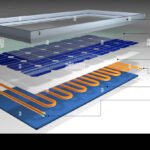
Without a battery, your fridge stops every time the sun goes behind a cloud. The other common mistake is ignoring the difference between the various types of solar panels available. Monocrystalline panels produce more power in limited space, which matters for a setup this tight.
The Four Variables That Decide If It Works
The Fridge: 12V Compressor vs 120V AC
The biggest variable is the fridge itself. A 12V compressor fridge, like the ones used in RVs and boats, draws roughly 40 to 60 watts while running. These units are designed for efficiency.
A standard 120V AC kitchen fridge can draw 150 to 200 watts running, with a startup surge of 600 to 800 watts. That surge alone can trip a small inverter. If you're serious about running a fridge on 300W, start with a 12V compressor model.
The Battery: Where the Real Power Comes From
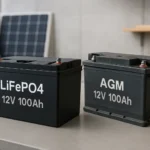
Your battery bank is the heart of the system. The solar panel feeds the battery, and the battery feeds the fridge. A 100Ah lead-acid battery gives you about 0.6 kWh of usable power (since you can only drain it to 50 percent).
A 100Ah LiFePO4 battery gives you about 1.2 kWh of usable power. That's double the runtime for roughly the same physical size. Understanding the main components of a solar power system helps you avoid expensive mismatches.
The Sun: Peak Hours Add Up Fast
Your location determines how much power a 300W panel actually produces. The National Renewable Energy Laboratory (NREL) publishes peak sun hour maps that show your area's average daily sunlight. The Southwest gets 5 to 6 peak hours.
The Pacific Northwest gets 2.5 to 4. That's the difference between 1.5 kWh per day and 0.75 kWh per day. You need to know your number before you buy anything.
The Inverter: Surge Ratings Matter More Than People Think
If you're using a 120V fridge, the inverter must handle the startup surge. A fridge that draws 150 watts running can pull 800 watts for a split second when the compressor kicks on. Most cheap inverters rated for 300 watts continuous can't handle that surge.
You need an inverter rated for at least 1000 watts peak to run a standard kitchen fridge safely.
Quick Math: Does Your Fridge Fit on 300W?
Step 1: Find Your Fridge's Real Daily Draw
Grab a Kill A Watt meter or check the Energy Guide label on your fridge. A modern Energy Star fridge uses 1.2 to 2.0 kWh per day. A mini fridge uses 0.5 to 1.0 kWh per day.
A 12V compressor fridge uses 0.4 to 0.8 kWh per day. Write down your number. This is the most important measurement you'll take.
Step 2: Calculate What 300W Actually Produces in Your Area
Multiply 300 watts by your location's peak sun hours. Then multiply by 0.85 to account for system losses. For example, in the Southwest with 5 peak hours: 300W x 5 hours x 0.85 = 1.275 kWh per day.
In the Pacific Northwest with 3 peak hours: 300W x 3 hours x 0.85 = 0.765 kWh per day. That's a huge difference. Understanding how solar panels actually generate electricity helps you see why location matters this much.
Step 3: Add Efficiency Losses and Compare
Batteries lose about 10 to 15 percent of the energy you put into them. Inverters lose another 10 to 15 percent. Wire resistance and heat add small losses too.
Your real usable power is roughly 70 to 75 percent of the panel's raw output. Compare that final number to your fridge's daily draw. If your fridge needs 1.2 kWh and your system delivers 0.9 kWh, you'll run out of power every night.
Realistic Numbers That Work Right Now
Here's what actually works for people:
- A 12V compressor fridge using 0.6 kWh per day works with a 300W panel and a 100Ah LiFePO4 battery in most of the US.
- A mini fridge using 1.0 kWh per day works in sunny areas but needs careful monitoring.
- A full-size kitchen fridge using 1.5 kWh per day needs at least 400W of panels and a larger battery.
Your Decision Path: Which Setup Works With 300W?
Path A: 12V Compressor Fridge + LiFePO4 Battery: The Best Bet
This is the most reliable setup. A 12V fridge draws less power, avoids inverter losses, and runs directly from the battery. Pair it with a 100Ah LiFePO4 battery and a 300W panel with an MPPT controller.
You get roughly 1.2 kWh of usable storage, which covers a 0.6 kWh fridge for almost two days of no sun. This setup works for vans, boats, and off-grid cabins. Weighing the advantages and disadvantages of different solar setups helps you decide if this path fits your needs.
Path B: Energy-Efficient Mini Fridge + Inverter: Tight but Possible
If you already own a mini fridge, this path saves money upfront. You need a 300W panel, a 100Ah LiFePO4 battery, a 1000W inverter, and an MPPT charge controller. The inverter adds efficiency losses, so you'll get less runtime.
This works in sunny climates but struggles during cloudy weeks. Monitor your battery voltage closely. If it drops below 12.0 volts, the fridge won't start.
Path C: Full-Size Kitchen Fridge: When 300W Just Isn't Enough
A standard kitchen fridge is too hungry for a single 300W panel. You need at least 400W of panels and a 200Ah battery bank to run one reliably. The startup surge alone can overwhelm a small inverter.
If you're determined to use your existing fridge, plan to add a second panel right away. Our solar panel buying guide covers the panel sizes and configurations that work for larger loads.
Path D: Solar Generator: The All-in-One Compromise
Portable power stations like the ones with built-in batteries and inverters are simple to set up. A 1200Wh solar generator with a 300W panel can run a 12V fridge for about 24 hours on a full charge. The downside is limited expandability.
You can't easily add more battery capacity later. This works for camping and emergency backup but not for full-time off-grid living.
Build Your System: Step-by-Step From Panel to Cold Fridge
Step 1: Measure Your Fridge's Real Usage Before Buying Anything
Plug a Kill A Watt meter into the fridge and let it run for 24 hours. Read the total kilowatt-hours displayed. This gives you the real number for your specific fridge in your specific environment.
Ambient temperature matters. A fridge in a hot garage works harder than one in a climate-controlled kitchen. Run the test in the conditions where you'll actually use the system.
Step 2: Wire It in the Right Order
Connect the solar panel to the charge controller first. Then connect the charge controller to the battery. Then connect the inverter to the battery.
Never connect the inverter directly to the solar panel. The panel produces variable voltage that can damage electronics. Every connection needs a fuse or breaker rated for the wire size.
Use the correct gauge wire for the distance and current.
Step 3: Set the Charge Controller Correctly
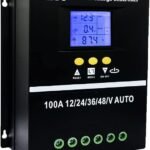
An MPPT charge controller is strongly recommended for a 300W panel. It extracts more power from the panel than a PWM controller, especially in low light or partial shade. Set the controller's battery type to match your battery chemistry.
Lithium batteries need a different voltage profile than lead-acid. The controller's manual will walk you through the settings.
Step 4: Match the Inverter and Add Proper Protection
If you're running a 120V fridge, choose an inverter rated for at least double the fridge's running watts. That covers the startup surge. Look for an inverter with a low-voltage cutoff that matches your battery type.
This prevents the battery from being drained too deeply, which damages lead-acid batteries and shortens their lifespan. Add a fuse between the battery and the inverter.
Step 5: Test for 48 Hours Before You Trust It
Run the system for two full days without adding any extra load. Check the battery voltage at sunrise, midday, and sunset. The battery should be full or near full by late afternoon.
It should stay above the low-voltage cutoff overnight. If the battery drops too low, you need more panel capacity or a larger battery. Never leave food in the fridge until you've confirmed the system runs reliably through a full day-night cycle.
Mistakes That Spoil Food and Waste Money
Most solar refrigeration failures trace back to the same few errors. Here's what we see most in off-grid setups.
Skipping the Battery Entirely
Some people wire the panel straight to the fridge. It doesn't work. The fridge needs more current than the panel can supply in bursts.
A battery buffers that power flow. Without one, the fridge won't start. You'd also get voltage drops that trip the fridge's protection circuit.
Ignoring the Compressor's Startup Surge
A fridge motor draws two to three times its running watts for a split second. A 12V compressor fridge could spike to 120 watts. A 120V AC fridge can spike to 800 watts.
If your inverter isn't rated for that surge, it trips before the compressor turns over. Always check surge rating, not just continuous rating. This is the number one reason people think 300W can't work.
Using a PWM Controller When You Need MPPT
PWM charge controllers waste a chunk of solar power through heat. An MPPT controller pulls up to 30 percent more from the same panel. That difference can save your setup on a cloudy day.
Spend the extra cash on MPPT. It's the difference between a system that barely works and one that actually thrives.
Letting the Battery Dip Past Its Limits
Draining lead-acid below 50 percent kills it within dozens of cycles. Lithium tolerates deeper discharge, but its BMS disconnects at the low limit. That disconnect spares the battery yet kills your fridge.
Set the inverter's low-voltage cutoff correctly. Program it to match your battery chemistry.
The Food Safety Rule You Can't Afford to Ignore
Per USDA guidance, keep your fridge below 40°F (4°C). If the power drops for hours, food spoils fast. Buy a thermometer and check it daily during the first week.
Trust the numbers, not guesses. The cost of a thermometer is nothing compared to a fridge full of ruined groceries.
FAQs: What People Really Ask About Solar-Powered Fridges
Can a 300W Panel Run a Full-Size Refrigerator?
Not reliably. A full-size fridge uses 1.2 to 2.0 kWh daily. A 300W panel produces about 1.2 to 1.5 kWh under good sun.
After battery and inverter losses, you come up short most nights. You'd need 400W or more.
How Many Batteries Do I Need for a Fridge?
For a 12V compressor fridge, one 100Ah LiFePO4 battery provides two cloudy days. For a mini fridge, get 200Ah. For a full-size kitchen fridge, plan on 200Ah lithium or 400Ah lead-acid.
Match the bank to your fridge's real daily draw.
How Long Can a Fridge Run on Solar Alone?
A 12V compressor fridge runs indefinitely if the battery fully recharges each sunny day. On a fully charged 100Ah LiFePO4 battery, expect about 24 hours. A mini fridge runs 10 to 12 hours.
Cloudy weather shortens that.
12V vs 120V: Which Fridge Is Better Off-Grid?
For a 300W system, the 12V compressor fridge wins. It draws less, skips inverter losses, and starts reliably. A 120V AC fridge needs a bigger inverter, extra panels, and a larger battery bank.
Unless you already own the 120V model, go 12V.
Final Verdict: Should You Run Your Fridge on 300W?
The Decision Made Simple
A 300W panel runs a fridge only with the right parts. That means a 12V compressor fridge, a 100Ah LiFePO4 battery, an MPPT controller, and a proper inverter. This combo delivers about 1.2 kWh of usable power.
It can handle a small efficient fridge day in and day out. For most off-grid cabins and vans, that's the sweet spot.
If You Do Only One Thing, Do This
Run your fridge on a Kill A Watt meter for 24 hours. Compare its daily draw to the 1.2 to 1.5 kWh your panel produces. If the fridge needs less, your setup works.
If it needs more, buy more panels before you catch a spoiled-food headache. A little math now saves you from a big mistake later. Browse our off-grid solar sizing resources for more help.

Similar Posts