Bifacial vs Monofacial: Which Solar Panel Wins?
If you're comparing bifacial solar panels vs. monofacial, you're probably wondering if the extra cost is worth it. The short answer is: it depends entirely on where you're installing them. Because the rear side of a bifacial panel only produces power when it has light to capture, and that light comes from the ground.
In our research, manufacturers typically quote a bifacial gain of 5% to 30% extra energy. The actual number depends on the albedo (reflectivity) of the surface below the panel. Fresh snow gives you the high end.
Dark asphalt gives you the low end. Let's start with the quick answer, then break down the physics and the numbers.
Quick Answer
Bifacial panels generate power from both sides. Monofacial panels only use the front. The extra output from bifacial depends on the ground surface.
For most rooftops, the gain is small. For ground mounts, it can be significant.
How Bifacial Panels Work: The Simple Physics Behind the Rear-Side Gain
A monofacial panel has a solid backsheet. It only captures light hitting the front glass. A bifacial panel has a transparent backsheet or a second layer of glass.
This lets light through to the back of the solar cells.
The cells themselves are built differently. Older bifacial panels used PERC cells with a small opening in the back. Modern bifacial panels use TOPCon or HJT cells.
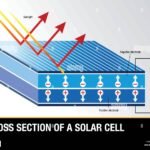
These cells are naturally more transparent to infrared light, so they capture more energy from the rear side. For a closer look at the internal structure of a solar cell, see our guide on the main components of a solar panel.
The amount of extra power you get depends on three main factors:
Albedo: how reflective the surface below the panel is. White gravel reflects about 40% of light. Grass reflects only 20%. Fresh snow reflects up to 80%.
Mounting height: panels mounted higher above the ground get more light on the rear side. A ground mount with a 4-foot clearance will outperform a flat rooftop mount.
Shading: anything that blocks light from reaching the rear side kills the bifacial gain. This includes roof structures, dirt, and even the panel's own frame.
Manufacturer specifications indicate that the bifaciality factor (the ratio of rear efficiency to front efficiency) is usually 90% to 95% for modern TOPCon modules. That means the rear side is almost as efficient as the front. But that only matters if there's enough light back there.
In our research, the real-world bifacial gain on a typical ground mount with a white gravel surface is around 15% to 25%. On a residential rooftop with dark shingles, it drops to 5% to 10%. That's the difference between a worthwhile investment and a wasted premium.
NREL's published research on bifacial performance confirms that mounting height and ground reflectivity are the two biggest variables.
Bifacial vs. Monofacial: The Full Side-by-Side Comparison
Let's put the two side by side. Here's how they compare on the specs that actually matter.
| Feature | Bifacial | Monofacial |
|---|---|---|
| Power output | 5% to 30% more from rear side | Only front side |
| Efficiency (front) | 22% to 24% (TOPCon) | 20% to 22% (PERC) |
| Cost per watt | $0.90 to $1.20 | $0.80 to $1.00 |
| Degradation rate | 0.4% per year (glass-glass) | 0.5% per year |
| Warranty | 30 years typical | 25 years typical |
| Temperature coefficient | −0.30% to −0.35%/°C | −0.35% to −0.40%/°C |
| Best for | Ground mounts, trackers, carports | Rooftops, budget builds |
The key takeaway here is the degradation rate. Bifacial panels are almost always glass-glass construction. That means there's no backsheet to peel or yellow over time.
The 0.4% per year degradation means they'll still produce over 88% of their original power after 30 years compared to 87.5% for a standard monofacial panel. Small difference, but it adds up over decades.
The temperature coefficient is also slightly better on bifacial modules. That's because the dual-glass design helps heat dissipate more evenly. In hot climates, that can mean a few extra percentage points of production on the hottest days.
Cost Breakdown: Upfront Price, Payback Period, and Long-Term Savings
Let's talk numbers. As of 2026, a monofacial panel costs roughly $0.80 to $1.00 per watt. A bifacial panel costs $0.90 to $1.20 per watt.
That's a premium of about 10% to 20% upfront.
But the payback depends entirely on the bifacial gain you actually get.
Ground mount with white gravel (20% gain): Your extra energy production offsets the higher cost within 2 to 3 years. After that, it's pure profit.
Residential rooftop with dark shingles (5% gain): The payback period extends to 6 to 8 years. You might never recoup the premium before the system's warranty expires.
Snowy region (25% gain on ground mount): This is the sweet spot. Snow reflection boosts rear-side output dramatically. Payback can be under 2 years.
You also need to factor in the longer lifespan. The 30-year warranty on bifacial panels means you get 5 more years of free energy compared to a typical 25-year monofacial warranty. Over 30 years, the bifacial system can produce 10% to 15% more total energy, even before accounting for the rear-side gain.
For a deeper look at the overall cost of going solar, our solar panel buying guide breaks down the numbers in more detail.
Who Should Buy Bifacial (and Who Should Stick With Monofacial)
This is the decision you're here for. Here's a simple breakdown of who gets the most value from each option.
Bifacial is ideal for:
- Ground-mounted arrays with at least 3 feet of clearance
- Solar trackers (single-axis or dual-axis)
- Carports and pergolas (open structure underneath)
- Flat roofs with white membrane or reflective coating
- High-albedo areas (desert, snow, white gravel)
- Large-scale commercial or utility projects
Monofacial is better for:
- Most residential rooftops (especially dark shingles)
- Sloped roofs with low clearance (less than 6 inches)
- Shaded roofs or partial shade conditions
- Tight budgets where upfront cost matters most
- DIY builds where simplicity is key
The general rule of thumb is simple: if the ground below your panels is dark, flat, or close to the panels, bifacial won't pay off. If it's light-colored, elevated, or open, bifacial is a smart investment.
For a broader overview of the different panel types available, our guide on the types of solar panels can help you see where bifacial fits in the bigger picture. And if you're still weighing the pros and cons, our article on the advantages and disadvantages of solar panels covers the long-term trade-offs.

Similar Posts