Anti-Reflection Coating: Boost Solar Panel Efficiency
Solar panels are built to soak up sunlight, but a surprising amount of that light bounces right off the glass before it ever reaches the silicon cells. Depending on the panel and the angle of the sun, you can lose anywhere from 4% to 8% of your potential energy to simple reflection. That's where an Anti Reflection Coating for Solar Panels comes in.
It's a thin, engineered layer that cuts down that glare and lets more light through, boosting your system's real-world output without changing anything else.
The coating works through a principle called refractive index matching, and manufacturers typically target a transmittance increase from roughly 91% to 95% or higher on standard low-iron glass. According to testing data from the National Renewable Energy Laboratory, a well-applied coating can reduce surface reflection to under 2%. That extra 3% or 4% of captured light translates directly into more kilowatt-hours over the life of your array.
But not every panel needs the same treatment, and the wrong choice can cost you more than it saves. Let's walk through how this actually works and how to decide what's right for your setup.
Quick Answer
Anti-reflection coating for solar panels increases light transmission by reducing surface glare. It boosts energy yield by 2% to 5%. Factory-applied coatings are more durable and covered under warranty.
Aftermarket coatings cost less upfront but risk voiding your panel warranty. Your climate, panel surface, and budget determine the best option.
Problem / Pain Point: Why Most Solar Panels Lose 3–8% of Their Potential (and How AR Coating Fixes It)
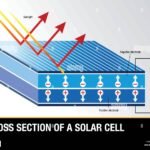
Every time sunlight hits a bare sheet of glass, some of it bounces away. That's just physics. The refractive index of standard solar glass sits around 1.5, while air is 1.0.
That mismatch creates a natural reflectivity of about 4% per surface at normal incidence, and the number climbs higher when the sun is at a shallow angle in the early morning or late afternoon.
Where the losses actually show up
Your panels already suffer from several efficiency drains. Temperature coefficients, wiring resistance, inverter conversion losses, and soiling from dust and bird droppings all chip away at the rated output. Reflection loss is just one more leak in the bucket, but it's one you can actually plug with a relatively simple treatment.
Consider a typical 400-watt residential panel. Without AR coating, it might reflect roughly 16 watts of potential energy per square meter under ideal conditions. Over a year, that adds up to a measurable loss.
For a 10-panel array, you're looking at 150 to 200 watts of unrealized capacity sitting right on the glass surface.
Why bare glass still dominates the market
You might wonder why manufacturers don't coat every panel from the factory. Cost is one reason. A proper sol-gel or sputtered coating adds a manufacturing step, and that extra penny per watt eats into margins.
Durability is another concern. Early formulations degraded under UV exposure or peeled after a few seasons, giving the technology a reputation problem. As of 2026, the best coatings have solved most of those longevity issues, but the legacy of wariness still lingers among some installers and buyers.
The real problem is that most solar owners don't realize they're leaving energy on the table. They chase higher efficiency panels or bigger inverters when a simple coating upgrade could deliver a similar gain at a fraction of the cost. Understanding the available options allows you to make an intentional choice rather than leaving free electrons behind.
Core Explanation / How It Works: How Anti-Reflection Coatings Boost Light Transmission
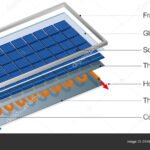
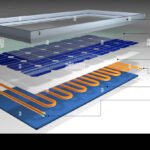
An anti-reflection coating is essentially a microscopic layer of material that sits between the air and the glass. Its job is to smooth out the refractive index transition so fewer photons bounce away and more travel through to the solar cells below.
The physics in plain language
Think of light moving through air and then hitting glass. That rapid change in density is like a wave hitting a seawall. Some of the wave's energy reflects backward.
An AR coating adds a middle layer with an intermediate density, acting like a gradual ramp instead of a sharp step. The coating's refractive index typically falls around 1.3 to 1.4, right between air's 1.0 and glass's 1.5. This gentle transition cancels out a significant portion of the reflected wave through a phenomenon called destructive interference.
Common coating materials and how they're applied
Two main material families dominate the market today.
Porous silica coatings use silicon dioxide in a sol-gel process. The material is applied as a liquid, either by dipping the glass panel into a bath or by spraying it on in a controlled environment. As it dries and cures, it forms a porous structure that traps tiny air pockets.
Those air pockets lower the effective refractive index, giving the coating its anti-reflective performance. Sol-gel coatings are relatively inexpensive and can be applied to existing panels as a retrofit.
Titanium dioxide coatings are harder and more durable, but they come with a different set of trade-offs. TiO₂ has a photocatalytic property that helps break down organic dirt when exposed to UV light. That sounds great for self-cleaning, but the same chemistry can accelerate degradation of the underlying panel encapsulant if the coating isn't perfectly formulated.
Most TiO₂ coatings are applied via sputtering or chemical vapor deposition, methods that require factory equipment and aren't practical for aftermarket use.
Single-layer vs. multi-layer designs
A single-layer coating works well at one specific wavelength and angle of incidence. That's fine for panels that face the sun directly most of the day. Multi-layer coatings stack two or three materials with different refractive indices, broadening the range of angles and wavelengths that get anti-reflective treatment.
The trade-off is cost and manufacturing complexity. For residential panels, a good single-layer sol-gel coating typically does the job. Utility-scale installations with tracking systems that follow the sun can benefit more from multi-layer designs.
What the numbers actually look like
The improvement is real but modest. A panel rated at 400 watts with 91% transmittance might produce about 364 watts of captured light before cell conversion losses. Add a quality coating that pushes transmittance to 95%, and that captured number climbs to 380 watts.
The cell itself still converts roughly 20% of that into electricity, so your net gain is roughly 3 to 4 watts per panel. Over 20 panels, that's 60 to 80 extra watts of generation capacity without adding a single new panel to your roof.
Step-by-Step Process / How to Guide: Your Decision Tree – Choose the Right AR Coating Based on Panel Type, Climate, Budget, and Warranty
Choosing an anti-reflection coating isn't a one-size-fits-all decision. The right choice depends on four main variables: your panel's surface material, your local climate, your budget, and your willingness to accept warranty risk. Here's how to work through each one.
Step 1: Identify your panel surface material
Look at your existing panels or the spec sheet for a new installation. Most residential panels use tempered glass with a low-iron formulation. If that's what you have, you have the widest range of coating options.
Some newer thin-film or flexible panels use polymer surfaces like ETFE or PET. AR coatings designed for glass generally won't bond properly to these plastics, and the thermal expansion mismatch can cause delamination within months. If you have polymer panels, skip the aftermarket coating entirely and look for factory-applied options only.
Step 2: Check your panel warranty
This step is non-negotiable. Pull out the warranty documentation for your solar panels. Many major manufacturers explicitly forbid the application of any aftermarket coating.
Others allow it as long as the coating is professionally applied and doesn't damage the glass. Violating these terms can void the entire panel warranty, not just the glass portion. If your warranty prohibits aftermarket coatings, your only option is to buy new panels that already have a factory coating.
Step 3: Assess your local climate
Your environment determines whether the coating will pay back its cost within a reasonable timeframe.
Desert or dry climates with high dust levels benefit from AR coatings because they also tend to reduce soiling accumulation. The porous surface of sol-gel coatings can help dust particles slide off during rain or cleaning. Snowy regions get a double benefit. Reduced reflection plus faster snow shedding from the smoother surface means more winter generation. Humid or tropical areas need a hydrophobic formulation to prevent moisture film formation and mildew growth. Coastal zones with salt spray demand coatings with high chemical resistance, typically the denser factory-applied types.
Step 4: Calculate your budget and payback period
A professional aftermarket coating for a residential array typically costs $0.10 to $0.30 per watt installed. For a 5 kW system, that's $500 to $1,500. At a 3% efficiency gain in a location with 5 peak sun hours per day, you'd generate roughly 250 to 300 extra kilowatt-hours per year.
At a typical electricity rate of $0.12 per kWh, that's $30 to $36 in annual savings. That works out to a payback period of roughly 4 to 7 years. For a system with a 25-year lifespan, that's 18 to 21 years of pure benefit after the payback point.
Step 5: Choose your application method
| Application Method | Best For | Pros | Cons |
|---|---|---|---|
| Factory-applied (OEM) | New panel purchase, high durability | Warranty coverage, longest lifespan | Higher upfront cost, limited to new panels |
| Professional aftermarket spray | Existing glass panels, mid-range budget | Controlled application, decent durability | Requires certified installer, moderate cost |
| DIY roller or wipe kit | Small arrays, tight budget | Lowest upfront cost, no install fee | Uneven coverage risk, shortest lifespan, warranty void |
Table: Comparison of AR coating application methods based on use case, durability, and cost.
Mistakes to Avoid / Common Errors: 5 Costly Mistakes That Void Your Warranty or Waste Your Money
The solar industry has seen plenty of well-intentioned coating projects go sideways. Here are the mistakes that keep coming up in installer forums and verified buyer feedback.
Mistake 1: Applying coating without reading the warranty terms
This is the biggest one by a wide margin. People see a $300 coating kit and think they're getting a bargain. Six months later, a panel fails for an unrelated reason, and the manufacturer denies the claim because the coating was detected during inspection.
Some warranties explicitly state that any alteration to the glass surface voids coverage. Do not apply any coating until you have written confirmation from your panel manufacturer that the specific product is allowed.
Mistake 2: Using the wrong cleaning method after coating
AR coatings are thin, typically only 100 to 200 nanometers. That's about a thousandth of the thickness of a human hair. Using an abrasive sponge, a pressure washer at close range, or harsh chemical cleaners can scratch or strip the coating within a single cleaning session.
Use a soft microfiber cloth, deionized water, and a very mild soap if needed. Never use ammonia-based glass cleaners on AR-coated surfaces.
Mistake 3: Applying coating in wrong weather conditions
Most sol-gel coatings require specific temperature and humidity ranges during application and curing. Applying them in direct sunlight, high wind, or high humidity causes uneven drying, bubbles, and poor adhesion. The result is a patchy finish that looks terrible and delivers inconsistent performance.
Professional applicators typically work in early morning or late afternoon when the panels are cool and the conditions are stable.
Mistake 4: Expecting the coating to fix damaged panels
If your glass is already scratched, hazy from years of weathering, or has delamination around the edges, AR coating will not fix those problems. In fact, it can make them more visible. The coating is an optical enhancement, not a repair.
Evaluate your panels' physical condition honestly before investing in coating.
Mistake 5: Choosing the wrong coating type for your environment
A hydrophilic coating that works beautifully in the dry Southwest can be a disaster in the humid Southeast. The coating attracts moisture, creating a thin water film that actually reduces light transmission instead of improving it. Likewise, a hydrophobic coating in a dusty environment can cause dust to cake into stubborn patches rather than washing off cleanly.
Match the coating chemistry to your specific climate conditions, not just to the price tag.
Maintenance / Long-Term Optimization: How to Keep Your AR Coating Working for 10+ Years
A well-applied AR coating is not maintenance-free, but it doesn't require much. The key is knowing what to do and what not to do.
Cleaning frequency and technique
Clean your coated panels at the same interval you would normally, which for most systems means twice a year. Use a soft brush or squeegee with a long handle to reach the panels safely from the ground. Avoid walking on the panels, as the coating is more vulnerable to pressure cracking than bare glass.
Rinse thoroughly before wiping to remove grit that could cause micro-scratches.
When to consider recoating
Factory-applied coatings typically last the full 25-year panel lifespan. Aftermarket coatings vary widely in durability. Expect 5 to 10 years from a professionally applied sol-gel coating and 3 to 5 years from a DIY kit.
Signs of degradation include visible patchiness, reduced power output relative to a neighboring uncoated panel, or water beading differently than it did when fresh.
Monitoring performance
Install a monitoring system that tracks your panel-level output. Compare the power curve of coated panels against uncoated ones in the same array. If you see the gain narrowing over time, that's a sign the coating is degrading.
Aggregate reviews from commercial solar farms indicate that aftermarket coatings lose about 0.5% to 1% of their effectiveness per year, so a gradual decline is expected and not a cause for alarm.
Avoid common maintenance traps
Never use waxes, sealants, or any product labeled as a "glass treatment" on top of your AR coating. These products add their own layer that can interfere with the optical properties. Stick to water and a soft cloth.
If you live in an area with hard water, use deionized or distilled water for the final rinse to avoid mineral deposits that etch the coating over time.
Frequently Asked Questions
How much efficiency does an anti-reflection coating actually add?
Real-world gains typically range from 2% to 5% in total panel output. Laboratory tests show higher numbers under controlled angles, but your actual increase depends on sun angle, panel orientation, and soiling. A 3% gain is a reasonable expectation for a quality coating in most residential setups.
Can I apply anti-reflection coating to my existing solar panels?
Yes, but only after checking your panel warranty and confirming compatibility with your glass type. Aftermarket spray or roller kits exist for DIY use. Professional application is safer and lasts longer.
Never apply anything to polymer or thin-film panels without manufacturer approval.
How long does anti-reflection coating last on solar panels?
Factory-applied coatings typically last the full 25-year panel lifespan. Professionally applied aftermarket coatings last 5 to 10 years depending on climate and cleaning habits. DIY kits may need reapplication every 3 to 5 years.
UV exposure and abrasive cleaning are the main degradation factors.
Does anti-reflection coating help with snow or dust?
Yes, in two ways. The smoother surface reduces snow adhesion, helping panels shed snow faster after a storm. For dust, the coating reduces the electrostatic attraction that holds particles to the glass.
However, hydrophobic coatings in dry dusty areas can cause caking, so match the coating type to your climate.
Will anti-reflection coating void my solar panel warranty?
It can, and this is the most common hidden cost. Many manufacturers explicitly prohibit aftermarket coatings. Even if they don't, a coating that damages the glass or causes delamination will not be covered.
Always get written confirmation from the panel manufacturer before applying any aftermarket coating.
Can I clean coated panels with regular glass cleaner?
No. Ammonia-based cleaners and abrasive pads will damage the thin coating layer. Use only deionized water, a soft microfiber cloth, and a mild soap if necessary.
Rinse thoroughly before wiping to remove grit. Pressure washers should be kept at low pressure and a wide spray pattern.
Final Recommendation / Verdict / Decision Guide: Is AR Coating Worth It for You? A Quick Scorecard
Deciding whether to apply an anti-reflection coating comes down to three factors: your panel type, your climate, and your tolerance for warranty risk. Here is a simple scorecard to help you decide.
| Condition | If True | If False |
|---|---|---|
| Panels are glass, not polymer | Proceed | Skip aftermarket coating |
| Manufacturer allows aftermarket coatings | Proceed | Buy factory-coated panels only |
| You live in a sunny, high-dust, or snowy climate | Coating offers strong ROI | Coastal or humid climates need hydrophobic type |
| You plan to keep panels for 10+ years | Worth the investment | Short-term payback may not justify cost |
| You can afford professional application | Go with pro | DIY only if you accept lower durability |
Our verdict: For most residential solar owners with glass panels and a 10+ year horizon, an anti-reflection coating is a solid investment. The typical 3% gain adds up to hundreds of dollars in extra generation over the system's life. Just make sure you check the warranty first and choose the right coating for your climate.
If you're buying new panels, consider paying a small premium for factory-coated ones to avoid warranty headaches. For off-grid or portable setups where every watt counts, the case is even stronger. The key is to approach it with your eyes open, not ignoring the risks but not leaving free energy on the table either.

Similar Posts