Do Solar Panels Actually Damage Your Roof?
You've probably heard the horror stories. A neighbor's roof started leaking six months after solar panels went up. A friend had cracked tiles after an install crew walked all over them.
So the question is fair: will solar panels damage my roof? The short answer is yes, they can, but it's almost never the panels themselves that cause the problem. It's how they're mounted, who installs them, and what condition your roof was in beforehand.
As of 2026, the U.S. Department of Energy estimates that over 5 million homes have rooftop solar. The vast majority of those roofs are fine.
But the minority that do have issues share a few common threads. Understanding those threads before you sign a contract is the difference between protecting your roof and paying for repairs later. Let's walk through what actually happens when solar meets shingles.
The Real Concern: What's Actually at Stake
Your roof's primary job is keeping water out. Everything else is secondary. When you install solar panels, you're adding hundreds of pounds of equipment, drilling holes through the waterproof layer, and having people walk around up there for hours.
Each of those actions carries some level of risk.
The stakes are straightforward. A leak can lead to rotting decking, mold in your attic, damaged insulation, and even structural issues if it goes unnoticed long enough. Those repairs aren't cheap.
A simple leak fix might run a few hundred dollars. Rotting roof deck replacement can run thousands, and that's before you deal with water damage inside your home.
But here's the thing: the solar industry has been doing this for decades. The methods, materials, and codes exist to do it safely. The question is whether your specific situation lines up with those best practices.
Quick Answer
Solar panels can damage your roof. It happens in about 1 to 3 percent of installations. The damage is almost always from poor installation, not the panels themselves.
Leaks at penetration points are the most common issue. Old or damaged roofs are at the highest risk. A qualified installer minimizes these risks significantly.
Your Roof Type and Age – The Two Biggest Variables
Not all roofs are created equal when it comes to solar. The material your roof is made of and how old it is are the two biggest factors in determining whether you'll run into problems. Let's break down the four most common roof types you'll run into.
Asphalt Shingle: The Most Common, Also the Most Damaged
Asphalt shingles cover roughly 75 percent of U.S. homes. They're affordable, widely available, and relatively easy to work with. That's the good news.
The bad news is they're also the most prone to installation mistakes.
The problem comes down to the flashing. Every penetration point where a mount bolts through the shingles needs proper metal flashing installed underneath the shingle above it. If the flashing is done wrong, water runs down the roof, hits that gap, and goes straight into your decking.
It's a slow leak that can go unnoticed for months.
Asphalt shingles also lose granules over time. If an installer is careless, they can scrape off granules around the mounts. That accelerates aging in those spots and can lead to cracking sooner than expected.
The sweet spot for asphalt shingle roofs? Between 5 and 10 years old. Young enough that they're in good shape, old enough that you're not wasting a brand new roof.
Metal Standing Seam: The Best Case Scenario
If you have a standing seam metal roof, you're in the best possible situation for solar. These roofs have raised seams that run vertically. Clamps attach directly to those seams without any roof penetration at all.
No holes means no leak risk at the attachment point. It's that simple. The panels sit on top of the clamps, and the roof remains completely intact.
Metal roofs also last 40 to 60 years, so there's no concern about needing a replacement during the panel's lifespan.
The only real downside is cost. Standing seam metal roofs are more expensive upfront. But if you already have one, you've got the ideal solar platform.
Tile and Slate: High Beauty, High Risk
Tile roofs, whether clay or concrete, look beautiful. They also break easily. Walking on them requires training and the right footwear.
Drilling through them requires specialized bits and techniques. One wrong step or a drill bit that wanders, and you've got a cracked tile.
The upside is that tile roofs last a very long time, often 50 years or more. So you won't need to remove the panels for a roof replacement anytime soon. But the installation labor is more expensive, and finding an installer who knows how to work with tile without damaging it is critical.
If you have tile, ask the installer specifically about their tile experience. A solar company that mostly works on asphalt shingle roofs may not have the right crew for tile.
Flat Roofs (TPO, EPDM, Built-Up): Different Rules
Flat roofs are common on commercial buildings and some modern homes. They use different mounting systems entirely. Instead of penetrating the membrane, many flat roof systems use ballasted mounts.
Heavy concrete blocks or pavers hold the panels in place without any roof penetrations.
The trade-off is weight. A ballasted system adds significant load to the roof structure. That requires a structural engineer to verify the roof can handle it.
Some flat roofs also use penetrating mounts with specialized flashing boots designed for rubber membranes.
The biggest risk with flat roofs is ponding water. If the panel mounts trap water against the membrane, it can accelerate degradation. Proper drainage planning is essential.
The Decision Tree Starts Here – Three Questions to Ask Yourself
Before you call a single solar company, answer these three questions. Your answers will tell you whether you're a low-risk or high-risk candidate for solar.
Question 1: How Old Is Your Roof (Honestly)?
If your roof is over 15 years old, you need to think carefully. Asphalt shingle roofs typically last 20 to 30 years. Installing solar on a roof that needs replacement in 5 to 10 years means you'll eventually pay to remove the panels, replace the roof, and reinstall the panels.
That's thousands of dollars in extra labor.
If your roof is under 10 years old and in good condition, proceed.
If your roof is 10 to 15 years old, get a roofer to inspect it first.
If your roof is over 15 years old, strongly consider replacing it before solar.
Question 2: Any Existing Damage You've Been Ignoring?
Maybe you've got a few curled shingles you never got around to fixing. Maybe there's a patch of moss growing in a shady spot. Maybe you noticed a small water stain on the ceiling last winter but it went away.
Do not ignore these red flags.
Solar installers will typically do a roof inspection before they start. But they're looking for structural issues, not necessarily cosmetic problems that could become leaks later. You should have a roofer evaluate the roof separately.
Any existing damage will only get worse once there are panels on top of it making repairs harder.
Question 3: Who's Doing the Install?
This is the biggest variable of all. An experienced solar installer who understands roofing can install panels with minimal risk. A solar company that subcontracts to the cheapest crew available can leave your roof full of problems.
Your installer should have roofing experience on their team. Not just electrical experience, not just sales experience. Someone on the crew should know how to properly flash a roof penetration and seal it to last 25 years.
Ask about their training. Ask for references from jobs that are at least 3 years old. And read the warranty carefully.
How Many Holes Are We Talking? The Mounting System Breakdown
The number of holes in your roof depends entirely on the mounting system. Different options mean different levels of intrusion.
Penetrating Mounts: The Standard, But Not Risk-Free
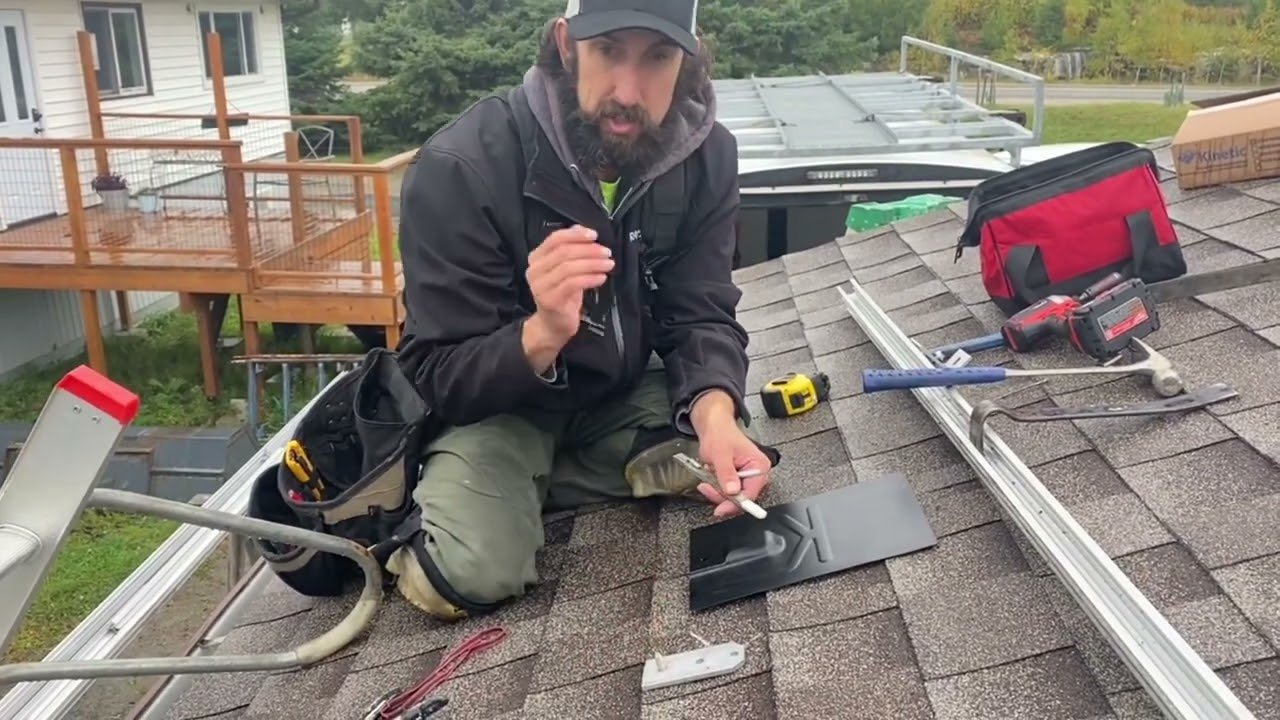
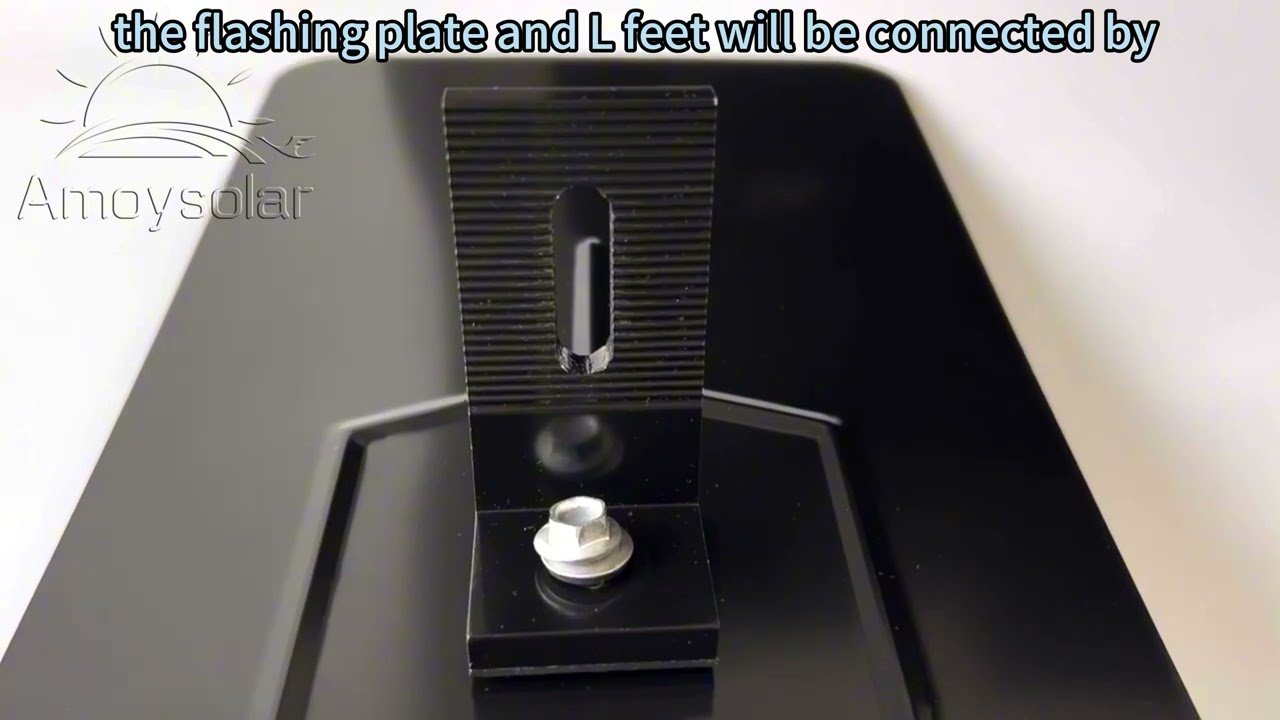
Most residential solar installations use penetrating mounts. These are metal brackets that bolt through the roofing material into the rafters below. Each bracket is then sealed with a flashing boot and caulking.
For an average 6 kW system, you're looking at roughly 15 to 25 penetration points.
That might sound like a lot, and it is. Each penetration is a potential leak point if not done correctly. But when done right, with proper flashing and sealing, these penetrations are reliable for decades.
The International Residential Code (IRC) requires specific flashing methods for roof penetrations. A code-compliant installation uses metal flashing that integrates under the shingle course above the mount.
The key is that the flashing isn't just a dab of caulk. It's a physical barrier that directs water around the penetration. Caulk dries out and cracks after a few years.
Metal flashing doesn't.
Non-Penetrating Mounts: Ballasted and Clamp Options
For some roof types, you can avoid penetrations entirely. We already mentioned standing seam metal roofs with clamp mounts. These are the gold standard for zero penetration solar.
Flat roofs often use ballasted systems. Concrete blocks or paver stones weigh down the racking system. The roof stays intact.
The trade-off is weight and cost. Ballasted systems are heavier and typically more expensive than penetrating mounts.
There are also adhesive mount systems that glue brackets to the roof surface. These are less common and carry their own risks. Adhesive bonds can degrade over time, especially in hot climates.
Most roofers I've spoken with prefer mechanical attachment for reliability.
The Flashing Factor: Where Most Leaks Start
Every penetration needs flashing. The flashing directs water around the hole. If the flashing is improperly installed, the hole inside the roof deck stays exposed.
Water finds its way in eventually.
Quality flashings are made of aluminum or stainless steel. They come in different designs depending on the roofing material. For asphalt shingles, the flashing slides under the shingle course above the mount.
For tile roofs, the flashing curves to match the tile profile. For flat roofs, there are specialized boots that seal against the membrane.
Don't let an installer talk you into "just using caulk." Caulk is a short-term solution for a long-term problem. Proper flashing is non-negotiable for a safe installation.
The Real Risks – What Can Actually Go Wrong
Let's be direct about what can happen. Forewarned is forearmed, and knowing the actual failure modes helps you spot them before they become expensive problems.
Leaks at Penetration Points (The #1 Complaint)
This is the most common issue by a wide margin. Every hole drilled through your roof is a potential pathway for water. The flashing around that hole is your only defense.
When flashing fails, it's almost always because it was installed incorrectly from day one. Maybe the roofer didn't slide it far enough under the shingle above. Maybe they used caulk instead of a mechanical flashing boot.
Maybe they missed the rafter and had to drill a second hole nearby. Whatever the reason, water finds its way in eventually.
The scary part is that leaks often don't show up immediately. They can take months or even years to appear. By then, the damage inside your attic may already be significant.
Shingle Damage During Installation
Installers spend hours walking on your roof. Tools get dropped. Panels get dragged across the surface.
Even careful workers can accidentally tear or dislodge shingles.
The risk is highest on hot days when asphalt shingles are soft and pliable. Foot traffic can leave depressions or scuff marks that don't look like much at first. Over time, those damaged spots lose granules faster and can start to curl or crack.
Your contract should include a clause about repairing any damage caused during installation. Get that in writing before work begins.
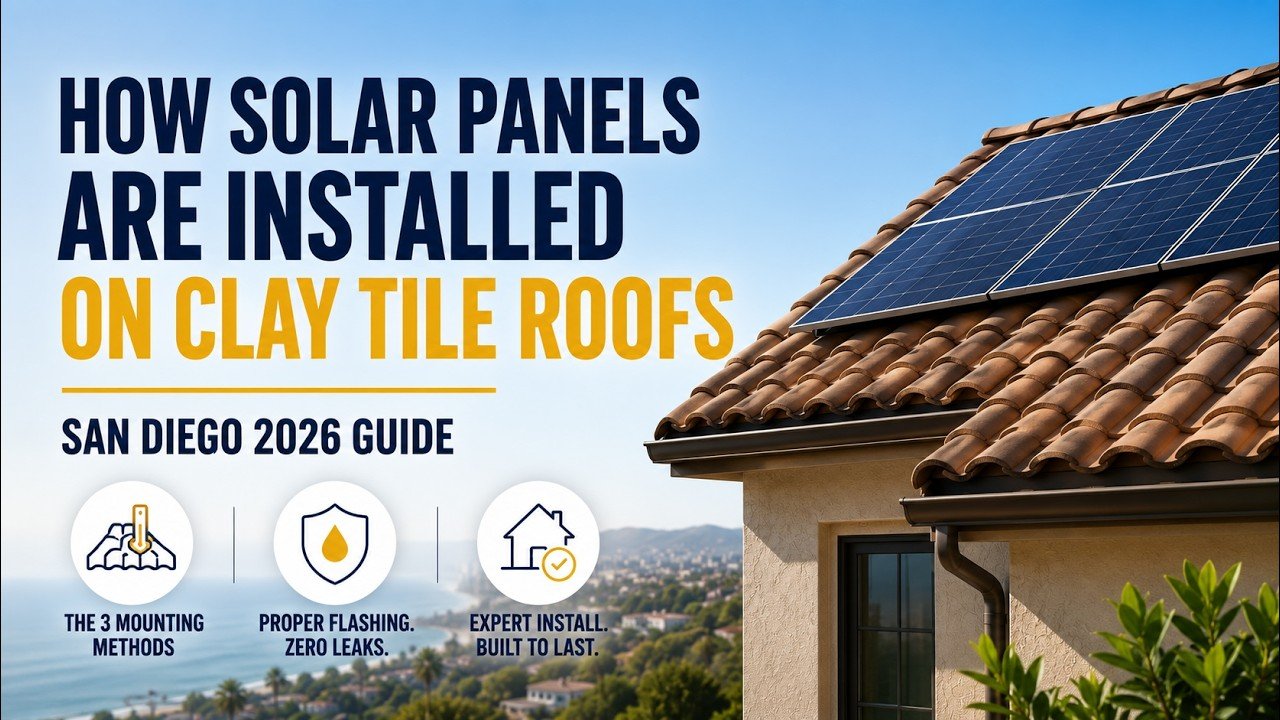
Tile Cracking From Foot Traffic and Drilling
Tile roofs are the most fragile. Clay tiles crack under concentrated weight. Concrete tiles are more durable but still brittle compared to asphalt.
A well-trained installer walks on the low points of tiles, not the high crowns. They use walk pads or boards to distribute their weight. They drill with diamond-tipped bits that don't shatter the material.
Any of these steps skipped means cracked tiles.
Replacing a single cracked tile after installation costs between $5 and $15 for the tile itself. But the labor to find a matching replacement, remove the panel above, and install it correctly can run $200 or more.
Gutter and Fascia Damage
Panels overhang the edge of the roof in most installations. Installers need to access that edge to secure the lower mounting rail. Ladder placement and foot traffic near the edge can dent gutters or loosen fascia boards.
This is a smaller issue than roof leaks, but it's an annoyance that you shouldn't have to deal with. A thorough installer will protect your gutters with padding and be careful around the fascia.
Long-Term Hidden Issues: Rust, Rot, and Granule Loss
Over 10 or 15 years, the area under the panels ages differently than the exposed roof. It doesn't see rain or direct sun. That sounds good, but it creates its own problems.
Debris like leaves and pine needles can accumulate under the panels. Moisture gets trapped. Mold and moss can develop.
On metal flashings, trapped moisture accelerates corrosion.
The granule loss we mentioned earlier also accelerates aging. An asphalt shingle that loses its granules has a much shorter lifespan. When the panels eventually come off for a roof replacement, you may find that the covered areas are in worse shape than the exposed areas.
That's ironic but common.
The Installer Makes or Breaks It
Your choice of installer is the single most important decision you'll make. A great installer on an average roof will outperform a mediocre installer on a perfect roof every time.
Why a Solar Company Without a Roofer Is a Red Flag
Many solar companies started as electrical contractors. They understand inverters, wiring, and grid interconnection. That's important.
But they may not understand roofing.
Your solar installer should have at least one person on the crew who knows roofing. Not just "we've done a few roofs." Someone who understands shingle layering, flashing details, underlayment, and decking. If the company doesn't have a roofer on staff, they should subcontract to one.
Ask directly: "Who on your team handles the roof penetrations and flashing?" The answer should be specific.
What to Look for in a Contract (Warranty Language)
Your contract should spell out who's responsible for roof damage. Look for these three things:
- A workmanship warranty of at least 5 years, covering installation defects
- A roof penetration warranty that covers leaks at mounting points
- A clear process for addressing damage discovered after installation
A good contract also states what happens if your roof needs replacement during the panel's lifespan. Some installers offer free removal and reinstallation within a certain window.
Red Flags During a Walkthrough
When the installer comes to inspect your roof, pay attention. Do they actually go up on the roof? Or do they only look from the ground?
Do they check the attic for existing leaks or rot? Do they ask about the roof's age and condition?
An installer who skips these steps is cutting corners before they even start. That's a strong sign of trouble ahead.
No-Penetration Options: Are They Worth It?
If the idea of drilling holes in your roof makes you nervous, you have alternatives. They work well for certain roof types and situations.
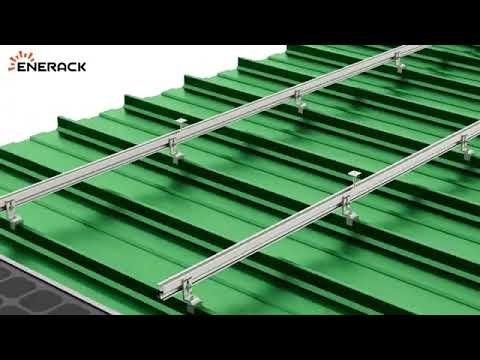
For standing seam metal roofs, clamp mounts are the obvious choice. No holes needed. The clamps grip the seam and hold the mounting rail securely.
Wind uplift ratings are excellent. This is as close to zero-risk solar as you can get.
For flat roofs, ballasted systems use concrete blocks or paver stones to hold the panels down. The roof membrane stays intact. The added weight is the main concern.
Your roof structure needs to support it. A structural engineer should sign off on the load calculations.
For tile roofs, there are mounting systems that use adhesive rather than mechanical fasteners. These are less common and less proven. Our research suggests that most installers still prefer mechanical attachment for reliability.
Are no-penetration options worth the extra cost? For standing seam metal roofs, absolutely. The premium is small and the peace of mind is substantial.
For flat roofs, ballasted systems are often comparable in cost to penetrating mounts. For other roof types, the options are limited and the cost difference may not justify the trade-off in reliability.
What About a Roof Replacement First? The Cost vs. Timing Question
This is the most common dilemma homeowners face. Your roof is 15 years old. It's in okay shape but not great.
Do you install solar now or replace the roof first?
The answer depends on math and timing.
If your roof has 10 or more years left, go ahead with solar. If it has less than 10 years, replace it first. The cost of removing and reinstalling panels for a roof replacement runs $2,000 to $5,000.
That's money you'd rather spend on something else.
There's also the hassle factor. Removing panels, storing them, replacing the roof, then reinstalling. That's weeks of disruption.
Doing a roof replacement before solar avoids that entirely.
If you're in the gray zone (roof is 10 to 15 years old), get a professional roof inspection. A roofer who's not affiliated with the solar company can give you an honest assessment. Pay the $100 to $200 for the inspection.
It's cheap insurance against a bad decision.
One more thing to consider. If you replace your roof, you can choose solar-ready materials. Some roofing manufacturers now offer integrated flashing systems designed specifically for solar mounts.
These are cleaner, more reliable, and often carry their own warranty.
Mistakes to Avoid That Cost Homeowners Real Money
These are the most common errors we see in homeowner forums and complaint databases. Avoid these and you'll avoid most of the headaches.

Skipping a Pre-Install Roof Inspection
You wouldn't buy a used car without a mechanic looking at it first. But many homeowners skip a roof inspection before solar installation. They assume the solar company will catch any problems.
Solar companies are looking for structural issues and penetrations. They're not necessarily looking for aging shingles, minor granule loss, or early signs of rot. A dedicated roof inspection catches those things.
Get a roofer to inspect your roof and give you a written report. Share it with your solar installer. Address any issues before the panels go up.
Hiring the Cheapest Bid Without Checking Roof Experience
Solar prices vary widely. A low bid might save you $1,000 upfront. But if that installer cuts corners on roof penetrations, you'll spend that $1,000 and more on leak repairs later.
Ask each bidder about their roofing experience. Request references from installations that are at least 3 years old. Call those references and ask specifically about leaks or roof issues.
The extra effort takes an hour and could save you thousands.
Ignoring HOA and Permit Requirements
Some HOAs have restrictions on solar panel placement, especially on visible roof slopes. Installing without approval can lead to costly fines and removal orders.
Building permits are also required in most jurisdictions. An installer who tells you "we don't need a permit" is not someone you want working on your roof. Permitted work gets inspected.
Inspections catch mistakes.
Assuming a 25-Year Panel Warranty Covers Roof Damage
Panel warranties cover the panels themselves. They cover power output, defects, and manufacturing issues. They do not cover roof leaks, cracked shingles, or water damage.
Your coverage for roof damage comes from the installer's workmanship warranty. That's typically 5 to 10 years. After that, you're responsible for any roof issues related to the installation.
Make sure you understand the difference before you sign.
Frequently Asked Questions
Can solar panels cause roof leaks?
Yes, but only if the flashing is installed incorrectly. Proper metal flashing at each penetration point directs water around the hole. When done right, leaks are rare.
Should I replace my roof before getting solar?
If your roof has less than 10 years of life left, yes. Replacing it later means paying to remove and reinstall the panels. That costs $2,000 to $5,000 extra.
How many holes do solar panels put in my roof?
A typical 6 kW system requires 15 to 25 penetration points. Each one gets a flashing boot and sealant. Non-penetration options exist for standing seam metal and flat roofs.
Does solar void my roof warranty?
It can. Some roofing manufacturers void the warranty if unapproved penetrations are made. Check with your roofer before signing anything.
Your solar installer should use compatible flashing methods.
What happens if my roof leaks after solar installation?
Contact your installer immediately. Your workmanship warranty should cover leak repairs at penetration points. If the damage is from poor installation, the installer pays.
Get everything in writing beforehand.
Your Decision Guide – What to Do Based on Your Situation
If your roof is under 10 years old and in good condition, proceed with solar. Choose an installer with roofing experience. Verify their workmanship warranty covers penetrations for at least 5 years.
If your roof is 10 to 15 years old, get a professional roof inspection first. Fix any existing damage before panels go up. Consider a replacement if the inspector finds significant wear.
If your roof is over 15 years old, replace it before installing solar. You'll avoid the cost and hassle of removal later. Use the opportunity to choose solar-ready roofing materials.
If you have a standing seam metal roof, you're in the best position. Use clamp mounts for zero penetrations. The risk of damage is near zero.
If you have a tile roof, hire an installer with specific tile experience. Budget for higher installation costs. Verify their process for walking on and drilling through tiles.
If you have a flat roof, consider ballasted mounts. They avoid penetrations entirely. Get a structural engineer to verify the load capacity first.
The bottom line is simple. Solar panels won't damage your roof if you plan ahead, choose the right installer, and address your roof's condition first. Skip those steps, and you're gambling with your biggest investment.

Similar Posts