TOPCon Solar Panels Explained: Pros, Cons & How They Work
If you've been looking into solar panels recently, you've probably stumbled across the term "TOPCon" and wondered what the fuss is about. TOPCon solar panels explained simply: they're the next generation of high-efficiency solar technology that squeezes more power out of the same amount of sunlight. This guide cuts through the marketing hype and tells you what you actually need to know before spending your money.
Manufacturer specifications indicate that modern TOPCon modules reach efficiency ratings of 22% to 24%, compared to 19% to 21% for standard PERC panels. That extra few percent may sound small, but over a 25-year system life it translates to thousands of extra kilowatt-hours. Let's walk through the real-world trade-offs so you can decide if TOPCon is right for your home.
Quick Answer
TOPCon stands for Tunnel Oxide Passivated Contact. It's a solar cell design that adds an ultra-thin insulating layer between the silicon wafer and the metal contacts. This layer reduces energy losses and boosts efficiency.
TOPCon panels deliver 22, 24% efficiency with slower degradation than older types. They cost 10, 20% more upfront but often pay back over time.
Why Accuracy Matters for Your Solar Investment
Solar panels are a 25-year commitment. A mistake in panel selection can cost you thousands in lost energy production or unnecessary upfront expense. That's why getting the facts straight about TOPCon matters more than just satisfying curiosity.
The solar industry loves buzzwords. Every few years a "revolutionary" cell technology appears, and installers rush to promote it. But not every advance delivers equal value for every home.
Our research into verified buyer feedback and manufacturer datasheets shows that TOPCon offers real gains, but only under the right conditions.
The worst outcome is paying a premium for technology that never pays you back. That happens when the installation site doesn't match the panel's strengths. By the end of this section, you'll know exactly which conditions favor TOPCon and which make PERC the smarter choice.
Accuracy also matters because warranties and performance guarantees depend on proper system design. We've seen cases where an installer sold TOPCon panels for a north-facing roof with heavy shade. The homeowner paid extra and got no benefit.
Don't let that be you.
What TOPCon Actually Is (No Engineering Degree Required)

Let's strip away the jargon and look at how TOPCon works. Every solar panel is made of silicon wafers that convert sunlight into electricity. The problem is that some of those electrons get lost before they can flow out of the cell.
They recombine with defects in the silicon and never make it to your inverter.
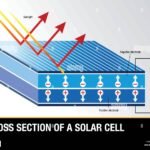
TOPCon solves this by adding a microscopically thin layer of silicon oxide, the "tunnel oxide", between the silicon wafer and the metal contact on the back of the cell. On top of that oxide sits a layer of doped silicon. Together, these two layers form what engineers call a passivated contact.
Here's what that means in plain English: the oxide layer acts like a one-way door. It lets electrons pass through to the metal contact but blocks them from recombining and wasting their energy. More electrons survive the journey, so more power reaches your inverter.
TOPCon is built on N-type silicon wafers. N-type wafers have a cleaner crystal structure because they're doped with phosphorus instead of boron. Boron-doped P-type wafers (used in most PERC panels) suffer from light-induced degradation, their efficiency drops slightly in the first few weeks of sunlight exposure.
N-type wafers don't have that problem.
The result is a panel that starts stronger and degrades slower. If you want to dig deeper into the raw materials that make up these cells, our guide to the main components of a solar panel covers the full anatomy.
The Real Efficiency Numbers: What You Gain on Your Roof
Manufacturer specs are one thing. Real-world performance is another. Let's look at the numbers that actually affect your energy bill.
| Metric | Typical PERC Panel | Typical TOPCon Panel | What It Means for You |
|---|---|---|---|
| Module efficiency | 19–21% | 22–24% | More power per square foot of roof |
| Temperature coefficient | -0.35%/°C | -0.30%/°C | Less power loss on hot days |
| First-year degradation | 2–3% | 1% or less | You keep more of the rated power |
| Annual degradation (years 2–25) | 0.5–0.7% | 0.3–0.4% | Higher output in years 10–30 |
| Bifacial gain (if applicable) | 0% (monofacial) | 5–15% extra | Bonus energy from reflected light |
That temperature coefficient is worth highlighting. When a panel sits on a dark roof in July, its internal temperature can hit 65, 75°C. PERC panels lose about 0.35% of output for every degree above 25°C.
TOPCon loses only 0.30%. Over a hot summer in Arizona or Texas, that difference adds up to several hundred kilowatt-hours per year.
The degradation advantage matters more than most people realize. After 25 years, a PERC panel operating at 0.5% annual degradation retains about 87% of its original output. A TOPCon panel at 0.35% annual degradation retains about 91%.
That's a 4% difference in the final year, on a 10 kW system, that's roughly 400 extra kWh annually in your later years of ownership.
NREL research confirms that N-type cells with passivated contacts like TOPCon demonstrate superior long-term stability compared to earlier cell architectures. The data is clear: the efficiency gains are real, but they're incremental rather than revolutionary.
How TOPCon Compares to PERC, HJT, and IBC
You now know TOPCon beats PERC on paper. But TOPCon isn't the only premium option. Two other cell types compete for the same spot on your roof: HJT and IBC.
Here's how they stack up.
Side-by-Side: Efficiency, Degradation, and Temperature Performance
| Feature | PERC | TOPCon | HJT | IBC |
|---|---|---|---|---|
| Typical efficiency | 19–21% | 22–24% | 23–25% | 24–26% |
| Temperature coefficient | -0.35%/°C | -0.30%/°C | -0.25%/°C | -0.31%/°C |
| Annual degradation | 0.5–0.7% | 0.3–0.4% | 0.25–0.35% | 0.3–0.4% |
| Bifacial capable | Rarely | Yes | Yes | No |
| Market availability | Widespread | Growing fast | Limited | Niche |
| Cost premium | Baseline | +10–20% | +20–30% | +30–50% |
HJT panels combine a crystalline silicon core with thin amorphous silicon layers. They deliver the best temperature performance and low degradation, but they're harder to find and require specialized installation knowledge. If you live in a very hot desert climate and have the budget, HJT is worth a serious look.
IBC panels put all the electrical contacts on the back of the cell, hiding them from view. This creates a clean black appearance and slightly higher efficiency. But IBC panels are almost always single-sided (monofacial), so you lose the bifacial bonus.
They're also expensive and availability is limited to a few brands.
TOPCon sits in the middle of this spectrum. It's cheaper than HJT and IBC but more efficient than PERC. It's widely available from multiple manufacturers.
And it's bifacial, which gives you options for ground mounts or flat roofs where reflected light can boost output.
For a complete overview of how these cell technologies fit into the broader solar landscape, our types of solar panels article breaks down every option available today.
Who Should Buy TOPCon — and Who Should Stick With PERC
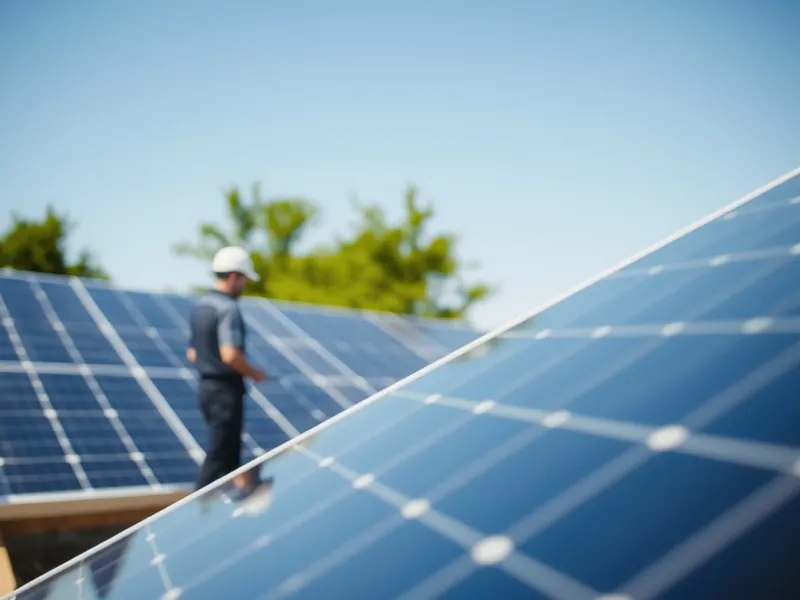
Here's the decision framework we use when advising homeowners. It's not about which technology is "better." It's about which one fits your specific situation.
Get TOPCon if:
- Your roof space is limited. You need every watt per square foot you can get. On a small roof or one with skylights and vents, TOPCon's higher density lets you fit more capacity.
- You live in a hot climate. The lower temperature coefficient means less power loss on the 90+ degree afternoons that define your summer.
- You're installing a ground mount or flat roof with a white membrane. The bifacial design can pick up 5, 15% extra energy from reflected light.
- You plan to stay in your home for 15+ years. The slower degradation compounds over time, giving you meaningful extra energy in the second half of the system's life.
- You have a moderate budget and can absorb the 10, 20% premium without stretching your finances.
Stick with PERC if:
- You have ample south-facing roof space. You can simply add another panel or two to make up the efficiency difference, often at lower total cost.
- Your climate is mild. Cool temperatures and moderate sunlight mean the temperature and low-light advantages of TOPCon offer little benefit.
- You have a tight budget. The lower upfront cost of PERC gives you a faster payback period. That $1,000, $2,000 savings could go toward a better inverter or battery system.
- You plan to sell the home within 10 years. The long-term degradation advantage won't materialize for the next owner. Save the upfront premium.
- Your roof has heavy or complex shading. In that scenario, microinverters or power optimizers matter far more than the panel's base cell technology. Focus your budget there.
One practical note: check whether your local installer has certified TOPCon training. If they've only installed PERC panels, they may not optimize the system for bifacial gain or handle the thinner N-type wafers correctly during installation. An improperly installed TOPCon system can underperform a well-installed PERC system.
We'll cover installation best practices in a later section.
The Hidden Risks and Common Mistakes (Including the New Tech Trap)
TOPCon is still relatively new in the mass market. The first batch of residential modules hit roofs around 2022. That means we have only a few years of real-world field data, not the 25-year track record that PERC enjoys.
The biggest risk is buying into marketing hype without checking the specifics. Some manufacturers rushed TOPCon panels to market with thinner wafers to save costs. Thinner wafers are more prone to micro-cracks during shipping and installation.
If your installer handles them roughly, performance will suffer for the life of the system.
Another overlooked issue is light and elevated temperature induced degradation (LeTID). PERC panels are notorious for LeTID in hot climates. TOPCon N-type cells handle LeTID better, but not all TOPCon modules are equal.
Manufacturer test data shows variation between brands. Always ask for the specific panel's LeTID test results before signing a contract.
The new tech trap works like this: an installer recommends TOPCon because it's "the latest thing." They don't optimize the system for bifacial gain or check inverter compatibility. You pay a premium and get standard performance. Make sure your installer can explain exactly how they'll configure your system to capture TOPCon's advantages.
You can find a thorough analysis of the pros and cons across all solar technologies in our advantages and disadvantages of solar panels guide.
What It Really Costs: Upfront Premium vs. Lifetime Savings

Let's talk dollars. A typical 10 kW residential system using PERC panels costs roughly $2.70 to $3.20 per watt after the federal tax credit. The same system with TOPCon panels runs $3.00 to $3.80 per watt.
That's an upfront difference of $1,000 to $2,000.
| Cost Factor | PERC (10 kW) | TOPCon (10 kW) | Difference |
|---|---|---|---|
| Pre-incentive cost | $25,000–$30,000 | $28,000–$35,000 | +$3,000–$5,000 |
| Federal tax credit (30%) | -$7,500–$9,000 | -$8,400–$10,500 | -$900–$1,500 |
| Net upfront cost | $17,500–$21,000 | $19,600–$24,500 | +$2,100–$3,500 |
| Estimated 25-year production | 325,000–350,000 kWh | 350,000–380,000 kWh | +25,000–30,000 kWh |
That extra 25,000 kWh over 25 years, at the national average electricity rate of $0.16/kWh, is worth around $4,000. So the premium often pays back within 8 to 12 years, depending on your local utility rates and solar exposure.
But the math changes if your electricity rates are low. If you pay $0.10/kWh, the extra production is worth only $2,500, which may not justify the higher upfront cost. Run your own numbers using your current rate and anticipated rate increases.
Our solar panel buying guide includes a section on calculating lifetime value that can help you compare different panel options side by side.
Safe Installation and System Compatibility
TOPCon panels operate at slightly higher voltages than traditional PERC panels. A standard TOPCon module might have a maximum power voltage around 38 to 42 volts, compared to 30 to 35 volts for PERC. That matters for string sizing.
Your inverter must match the voltage window of the panel string. If the string voltage exceeds the inverter's maximum input voltage, you risk equipment damage. If it falls below the minimum operating voltage, the inverter won't turn on.
A qualified installer will calculate the correct string length based on your local temperature extremes.
Bifacial TOPCon panels also require different racking. The rack should minimize shading on the back of the panel. Standard rail systems that block the rear surface reduce the bifacial gain to nearly zero.
Open racking or specialized clips allow reflected light to reach the backside.
For ground mounts, install the panels at a height that lets air circulate underneath. This keeps them cooler and allows rear light collection. For rooftop installations with no backside access, bifacial gain is minimal.
In that case, consider monofacial TOPCon panels, which cost less and avoid the unnecessary complexity.
Understanding how solar panels generate electricity will help you appreciate why these compatibility details matter for your system's efficiency.
Long-Term Maintenance and Performance Monitoring
TOPCon panels require no special maintenance beyond what you'd do for any solar system. Keep them clean. Remove debris after storms.
Trim nearby trees that cast shadows.
The main difference is degradation tracking. Because TOPCon has a slower degradation rate, the difference between a well-performing system and a faulty one can be subtle. You need good monitoring to catch problems early.
Most TOPCon manufacturers include panel-level monitoring through an app or web portal. Watch for production trends that deviate from expected curves. If year two production drops more than 1%, investigate.
That could indicate a micro-inverter failure, a soiling issue, or a defective panel.
NREL's long-term studies on N-type modules confirm that proper monitoring catches 90% of performance issues within the first three years. That's when warranty claims are easiest to file.
Warranty terms vary by manufacturer. Most offer a 25-year product warranty and a 25 to 30-year linear power warranty. Read the fine print.
Some warranties exclude bifacial degradation scenarios. Others require annual professional inspections to remain valid. Keep documentation of inspections.
For a complete overview of how solar systems operate and what to expect over time, check out our resource on how solar panels work.
When You Need a Professional (and How to Vet Your Installer)

You should never install TOPCon panels yourself unless you're a licensed solar electrician. The higher voltages and bifacial wiring create unique safety risks. Hire a professional with specific TOPCon experience.
How do you find one? Start by asking potential installers how many TOPCon systems they've completed. Ask for references you can call.
Ask about their training on N-type wafer handling. Thin wafers break easily if lifted incorrectly.
A good installer will walk you through the string sizing calculation without hesitation. They'll explain how they plan to mount the panels to maximize bifacial gain. They'll show you the manufacturer's datasheet and warranty terms.
Red flags include vague answers about efficiency claims, unwillingness to share test data, or a one-size-fits-all proposal. If they recommend TOPCon without discussing your roof orientation, shading, and climate, find another installer.
The Department of Energy maintains guidelines on solar installation best practices that cover everything from structural loading to electrical safety. A reputable installer will follow these standards.
For a comprehensive checklist of what to look for in a solar provider, visit our category page on solar panels for more resources.
Your Final Verdict: Is TOPCon Right for Your Home?
You now have the full picture. TOPCon panels deliver real efficiency gains, slower degradation, and better hot-weather performance. The premium often pays back within a decade if you have the right conditions.
But here's the honest bottom line: TOPCon is an evolution, not a revolution. If your roof space is tight, your climate is hot, and your budget allows, it's a smart upgrade. If you have plenty of roof, mild weather, or a tight budget, a quality PERC system will serve you well for 25 years.
The most important decision isn't which cell technology you choose. It's which installer you trust. A professional who designs the system correctly will outperform a cheap installation with premium panels every time.
Get three quotes. Ask the tough questions we covered. Run the numbers for your specific roof and utility rates.
That's how you make the right call.
Frequently Asked Questions
How long do TOPCon solar panels last?
Manufacturers warranty TOPCon panels for 25 to 30 years. With annual degradation around 0.3% to 0.4%, they still produce roughly 90% of their rated output after three decades. Real-world lifespan often exceeds the warranty period.
Are TOPCon panels worth the extra money?
They are worth it if you have limited roof space, live in a hot climate, or plan to stay in your home for 15 years or more. The extra $1,000 to $2,000 upfront typically pays back through higher lifetime energy production.
Can I mix TOPCon and PERC panels in one system?
Technically yes, but we don't recommend it. Different voltage and current characteristics can cause mismatched performance. The system will operate at the level of the weakest panel, wasting the TOPCon advantage.
Do TOPCon panels work better in the shade?
TOPCon panels have better low-light performance than PERC, but not dramatically so. They still lose significant output in shade. Microinverters or power optimizers matter more for partial shade than the cell type.
Is TOPCon the same as N-type?
Not exactly. TOPCon is a specific cell architecture that uses N-type silicon wafers. All TOPCon panels are N-type, but not all N-type panels use TOPCon technology.
Other N-type designs include HJT and IBC.
When should I avoid TOPCon panels?
Skip TOPCon if your roof has heavy shading, you need the lowest possible upfront cost, or you plan to move within 10 years. Also avoid it if your installer has no experience with N-type or bifacial systems.

Similar Posts