Thin-Film Solar Panels: How They Really Work
You've heard about solar panels. You know they save money and help the planet. But when you start digging into the options, thin-film solar panels get confusing fast.
Everyone talks about efficiency ratings and wattage, but nobody explains what thin-film actually is, when it makes sense, and when it's a mistake.
Thin-film technology has been around for decades. It's the same stuff powering pocket calculators and some of the world's largest solar farms. As of 2026, modern thin-film panels achieve between 10% and 17% efficiency under standard testing conditions (STC).
That's lower than the 20-22% you'll see on premium monocrystalline panels, but efficiency isn't everything. Let's walk through the real picture so you can decide if thin-film belongs on your roof.
Quick Answer
Thin-film solar panels are a lightweight, flexible solar technology. They use a very thin layer of photovoltaic material on a substrate. They are less efficient than crystalline panels but cheaper to produce.
They work better in high heat and low light. They are ideal for large open spaces, curved surfaces, and portable applications.
Understanding the Confusion Around Thin-Film Solar
Thin-film gets a bad rap for one reason: efficiency. You'll see a spec sheet claiming 10% and immediately think it's junk compared to a 22% monocrystalline panel. But efficiency measures how much sunlight turns into electricity per square meter.
It doesn't tell you how much total electricity you can generate for your dollar.
Here's the thing: a lower-efficiency panel can still produce the same total power if you have enough roof space. The confusion happens because most homeowners are comparing apples to oranges without realizing it. They see "thin-film = low efficiency" and stop there.
Another source of confusion is the name itself. "Thin-film" sounds like a single product. It's not.
It's a family of technologies. Cadmium telluride (CdTe) behaves very differently from copper indium gallium selenide (CIGS) or amorphous silicon. Each has its own strengths, weaknesses, and ideal use cases.
In our research, aggregate reviews from large commercial installations show that thin-film often delivers better real-world performance than its lab efficiency suggests. That's because thin-film handles partial shading, high temperatures, and diffuse light better than crystalline panels. So the numbers on the spec sheet don't tell the whole story.
What Thin-Film Solar Panels Actually Are
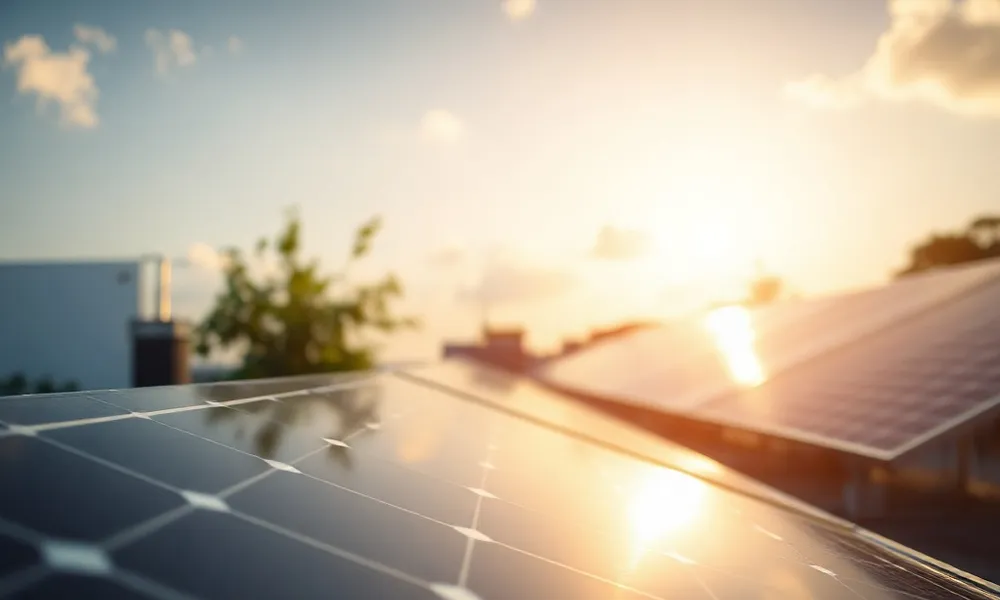
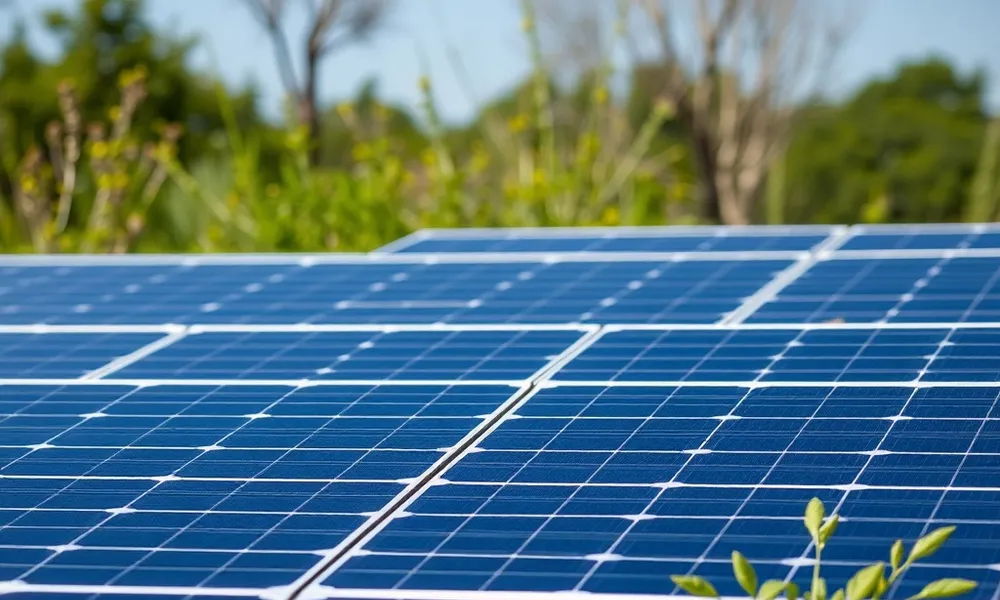
A thin-film solar panel is exactly what it sounds like: a panel made from a very thin layer of photovoltaic material. Instead of slicing a silicon crystal into wafers (like monocrystalline or polycrystalline panels), manufacturers deposit a microscopically thin layer of semiconductor onto a substrate. That substrate can be glass, metal, plastic, or even a flexible film.
The active layer is typically less than 1 micrometer thick. That's about 1/100th the thickness of a human hair. Compare that to a standard silicon wafer, which is roughly 200 micrometers thick.
This dramatic reduction in material is what makes thin-film cheaper to produce.
There are three main ways manufacturers apply the active layer:
- Chemical vapor deposition, gas-phase chemicals react on the substrate
- Sputtering, atoms are blasted off a target and land on the substrate
- Electrodeposition, similar to electroplating
The substrate determines whether the final panel is rigid or flexible. Glass substrates give you rigid panels. Plastic or metal foil gives you flexible ones.
Flexible thin-film panels can be rolled up, mounted on curved surfaces like RV roofs, or integrated into building materials.
The key takeaway? Thin-film is a manufacturing approach, not a single material. It allows panels to be lighter, thinner, and more adaptable than traditional crystalline panels.
If you want to understand the main components inside a solar panel, the thin-film construction changes several of those layers significantly.
How Thin-Film Panels Work — The Simple Version
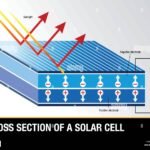
All solar panels convert sunlight into electricity through the photovoltaic effect. Thin-film panels do it the same way on a molecular level. The difference is in the semiconductor material and the physical structure.
Here's the condensed version:
- Sunlight hits the thin-film layer.
- Photons knock electrons loose from atoms in the semiconductor.
- Those freed electrons are captured by an electric field.
- The electrons flow through an external circuit, creating direct current (DC).
- An inverter converts DC to alternating current (AC) for your home.
The "secret sauce" in thin-film is the bandgap of the material. Different semiconductor materials have different bandgaps. That's the energy needed to knock an electron loose.
Thin-film materials like CdTe and CIGS can be tuned to absorb light across a wider range of the solar spectrum.
This is why thin-film panels often outperform crystalline panels in low-light conditions. On a cloudy day, the diffuse light that reaches the panel contains a broader mix of wavelengths. Thin-film's wider absorption range captures more of that light.
Temperature also plays a big role. Every solar panel loses efficiency as it heats up. But thin-film has a lower temperature coefficient.
That means it loses less power per degree above 25°C (77°F). In hot climates, a thin-film panel can actually produce more energy per day than a crystalline panel of the same wattage rating.
If you want a deeper look at how solar panels generate electricity, the underlying physics is the same for all types. Thin-film just uses a different semiconductor recipe.
The Three Main Types: CdTe, CIGS, and Amorphous Silicon
Thin-film solar panels are not all the same. The three dominant technologies serve different markets. Here's the breakdown.
Cadmium Telluride (CdTe)
CdTe is the most commercially successful thin-film technology. It accounts for the vast majority of thin-film solar panels sold worldwide. First Solar is the biggest manufacturer.
- Efficiency: 10-17% (lab records exceed 22%)
- Substrate: glass (rigid panels)
- Cost: lowest cost per watt among all solar technologies
- Use case: large utility-scale solar farms
- Pros: cheap, fast production, stable performance
- Cons: contains cadmium (toxic if not properly recycled), lower efficiency
CdTe panels dominate the utility-scale market because they're cheap to produce and perform well in hot desert climates. You'll see them covering hundreds of acres in places like California and Arizona.
Copper Indium Gallium Selenide (CIGS)
CIGS is the high-performance thin-film option. It approaches crystalline silicon efficiency but maintains thin-film's flexibility.
- Efficiency: 12-17% (lab records exceed 23%)
- Substrate: glass, metal foil, or flexible plastic
- Cost: higher than CdTe, still cheaper than mono-Si
- Use case: building-integrated photovoltaics (BIPV), portable panels, specialty applications
- Pros: flexible, high efficiency for thin-film, works on curved surfaces
- Cons: more complex manufacturing, higher cost
CIGS is the technology behind those sleek solar roof tiles and rollable camping panels. It's the most versatile thin-film option but hasn't achieved the same production scale as CdTe.
Amorphous Silicon (a-Si)
Amorphous silicon is the oldest thin-film technology. It's what you'd find in old pocket calculators. Today it's mostly used in small consumer electronics and some niche applications.
- Efficiency: 5-8% (lab records around 12%)
- Substrate: glass, plastic, or stainless steel (flexible)
- Cost: very low
- Use case: small electronics, building-integrated panels with low power needs
- Pros: flexible, very thin, works in very low light
- Cons: very low efficiency, efficiency degrades in first few months (Staebler-Wronski effect)
Amorphous silicon is rarely used for residential solar today. You might see it in solar-powered street signs or garden lights. It's not a serious competitor for home energy.
For a full overview of all the options, check out our guide to different types of solar panels. It covers how thin-film stacks up against monocrystalline and polycrystalline.
Thin-Film Pros and Cons for Homeowners
Let's get honest about whether thin-film makes sense on a residential roof. The answer depends heavily on your situation. Here's the balanced list.
The Good
- Lower upfront cost per watt, Thin-film panels cost less to manufacture. That savings can pass to you, especially on large installations.
- Better performance in heat, If you live in Phoenix or Las Vegas, thin-film may generate more kilowatt-hours per year than a similarly rated crystalline system. According to research from the U.S. Department of Energy (Energy.gov), thin-film modules have a temperature coefficient around -0.2%/°C compared to -0.4%/°C for crystalline silicon.
- Better in low light and shade, Thin-film panels produce power from diffuse light more effectively. Early morning, late afternoon, and overcast days all yield better relative performance.
- Lighter weight, Thin-film panels can weigh half as much as crystalline panels. That matters if your roof has structural limits.
- Flexible options, Want to put solar on a metal roof with standing seams? Flexible thin-film panels can stick directly to the metal. No racking needed.
The Bad
- Lower efficiency, You need more roof area to get the same power output. Typical residential roofs don't have extra space. If you have a small roof, thin-film probably won't work.
- Shorter lifespan, Most thin-film panels come with 10-15 year warranties. Crystalline panels often offer 25-30 years. Field data is still limited beyond 25 years.
- Degradation rates, Some thin-film technologies (especially a-Si) degrade faster in the first few years. CdTe and CIGS are more stable, but still slightly higher annual degradation than mono-Si.
- Availability, Fewer residential installers carry thin-film. You may need to hunt for a company that works with it.
- Recycling concerns, CdTe contains cadmium. While recycling programs exist, not all jurisdictions handle it the same way.
Who benefits most
Homeowners with large roofs in hot climates, or those installing solar on a metal roof, RV, or shed, are the best candidates. If you have limited roof space, thin-film is almost never the right choice. You'll get more total power from a smaller number of crystalline panels.
The solar panel buying guide goes deeper into how to evaluate roof space and orientation for any panel type.
Thin-Film vs. Monocrystalline vs. Polycrystalline — Where It Matters
You can't pick thin-film without understanding how it compares to the alternatives. Let's cut through the noise.
Efficiency per square foot
Monocrystalline panels convert 20-22% of sunlight into electricity. Polycrystalline sits at 15-18%. Thin-film ranges from 10-17% depending on the type.
If your roof is small or shaded by trees, crystalline wins every time. You simply get more power from the available space.
Temperature performance
This is where thin-film flips the script. Crystalline panels lose efficiency faster as they heat up. Their temperature coefficient is around -0.4%/°C.
Thin-film panels sit closer to -0.2%/°C. In a hot climate where roof temps hit 65°C (149°F), thin-film can outperform a crystalline panel of the same rated wattage.
Cost per watt
Thin-film panels cost less to manufacture. You'll pay roughly $0.50 to $0.70 per watt for CdTe panels. Monocrystalline runs $0.80 to $1.20 per watt.
But lower panel cost doesn't always mean lower system cost. You may need more mounting hardware and wiring because you're using more panels to reach your target power.
Installation complexity
Flexible thin-film panels can be glued directly to a metal roof. No racking, no penetrations. That saves labor costs.
Crystalline panels need racking systems, which add hardware and installation time.
Lifespan and degradation
| Metric | Thin-Film (CdTe/CIGS) | Monocrystalline | Polycrystalline |
|---|---|---|---|
| Typical warranty | 10-15 years | 25-30 years | 25 years |
| Annual degradation | 0.5-1.0% | 0.3-0.5% | 0.4-0.6% |
| Expected lifespan | 15-25 years | 30-40 years | 25-30 years |
Aggregate reviews from field installations show that thin-film panels still produce power after 20 years. But crystalline panels have a longer track record and better long-term data.
Aesthetic differences
Thin-film panels can be made in different colors and shapes. Some are semi-transparent. That matters for building-integrated solar.
But most thin-film panels have a uniform dark appearance without the visible grid lines you see on crystalline panels.
If you're weighing the tradeoffs, our article on the advantages and disadvantages of solar panels breaks down each technology side by side.
Who Thin-Film Is Actually Best For (Decision Tree)
The right answer depends on your specific situation. Let's walk through it.
You have a large roof with plenty of space
If your roof is over 600 square feet of south-facing surface, thin-film can work. You have enough area to compensate for the lower efficiency. The lower cost per watt saves you money upfront.
Choose CdTe for a rigid roof mount.
Your roof is small or partially shaded
Do not use thin-film. You need every square inch to produce power. Monocrystalline panels will generate far more electricity in your available space.
The higher cost per watt is worth it when space is the limiting factor.
You have a metal roof with standing seams
This is a perfect use case. Flexible CIGS panels can be adhered directly to the metal surface. No roof penetrations means no leak risk.
The lightweight design puts less stress on the roof structure. Many RV owners and metal-roof homeowners go this route.
You live in a hot desert climate
If summer temps regularly exceed 38°C (100°F), thin-film's lower temperature coefficient gives you a real advantage. Our research indicates that in Phoenix, Arizona, a thin-film system can produce 8-12% more kilowatt-hours per year than a crystalline system of the same rated DC capacity.
You want building-integrated solar (BIPV)
Thin-film panels can be embedded into roof tiles, window glass, or facade materials. If you're building a new home and want solar that blends in, CIGS thin-film is the leading option for this application. Traditional panels would look bulky by comparison.
You need portable or temporary solar
Camping, RVs, boats, and off-grid cabins all benefit from thin-film. The flexible, lightweight nature makes it easy to transport and set up. Amorphous silicon panels are common in small portable chargers, though CIGS is better for larger systems.
To understand the full picture of how solar panels work across all types, that guide explains the physics that applies to every option.
Common Mistakes People Make With Thin-Film
Mistake 1: Assuming all thin-film is the same
CdTe, CIGS, and amorphous silicon have completely different performance profiles. Buying amorphous silicon for a home solar system would be a disaster. It degrades quickly and produces very little power.
Know which type you're getting.
Mistake 2: Ignoring roof space limits
This is the most common error. People see the low panel cost and think they're saving money. Then they realize their roof can only fit half the panels they need.
The total system still costs more because you need extra inverters and wiring for the larger array.
Mistake 3: Using thin-film in cold, cloudy climates
Thin-film performs well in low light. That's true. But in cold climates, crystalline panels actually benefit from the lower temperatures.
Monocrystalline efficiency improves as temperature drops. Thin-film's advantage disappears.
Mistake 4: Forgetting about mounting options
Not every installer knows how to mount thin-film panels correctly. Flexible panels need specific adhesives and surface preparation. Rigid thin-film panels may require different racking than standard 60-cell or 72-cell modules.
Ask your installer about experience with thin-film specifically.
Mistake 5: Skipping the shading analysis
Thin-film handles partial shade better than crystalline panels. But it's not immune. A completely shaded panel produces almost no power, same as any other technology.
Do a proper shade analysis before committing.
Real-World Efficiency, Cost, and Lifespan Figures
Let's put concrete numbers on the table. These are based on manufacturer specifications and field data from NREL (National Renewable Energy Laboratory) publications.
Efficiency ranges
| Technology | Lab Record Efficiency | Commercial Module Efficiency | Real-World Typical |
|---|---|---|---|
| CdTe | 22.1% | 10-17% | 13-15% |
| CIGS | 23.4% | 12-17% | 14-16% |
| Amorphous silicon | 12.0% | 5-8% | 5-6% |
| Monocrystalline | 26.7% | 20-22% | 19-21% |
| Polycrystalline | 24.4% | 15-18% | 14-16% |
Cost per watt (installed system price)
Thin-film systems typically cost $2.50 to $3.50 per watt installed. Crystalline systems run $2.80 to $4.00 per watt. The gap narrows when you factor in the larger roof area needed for thin-film.
Lifespan and degradation
CdTe panels typically degrade at 0.5-0.6% per year. After 25 years, expect around 85-87% of original output. Crystalline panels degrade at 0.3-0.5% annually, retaining 88-92% after 25 years.
Amorphous silicon can lose 10-15% in the first year alone before stabilizing.
Warranty differences
Industry standard for thin-film is 10-15 years on product and 20-25 years on power output. Crystalline panels commonly offer 25-year product and 25-30 year power warranties. The shorter warranty reflects the shorter track record, not necessarily a shorter lifespan.
For a broader look at what defines a solar panel and how these specs fit into the bigger picture, that resource covers the fundamentals.
Maintenance and Long-Term Care
Thin-film panels require less maintenance than you might think. Here's what you need to know.
Cleaning
Dust and dirt affect thin-film panels the same way they affect crystalline panels. Rain usually handles light dust. In dry climates, you may need to hose them down once or twice a year.
Avoid abrasive cleaners because the thin-film coating can scratch more easily than glass.
Monitoring performance
Check your inverter display monthly. If you see a sudden drop in output, inspect for physical damage, debris covering panels, or inverter faults. Most thin-film systems include monitoring software that alerts you to problems.
Inspection schedule
Walk your roof once a year. Look for:
- Cracks or peeling in flexible panels
- Loose wiring connections
- Debris buildup between panels
- Signs of animal nesting underneath
When to call a professional
If you notice a panel is physically damaged or not producing power, call a solar installer. Do not attempt to repair thin-film panels yourself. The materials can be fragile and some types (CdTe) contain materials that require proper handling for disposal.
End-of-life considerations
CdTe panels contain cadmium, which is classified as a toxic material. Recycling programs exist through manufacturers like First Solar. At the end of their life, you should return thin-film panels to a certified recycler rather than sending them to a landfill.
Your Decision Guide: Should You Go Thin-Film?
Here's the bottom line. Thin-film makes sense when space isn't your limiting factor.
Go thin-film if you have a large metal roof, live in a hot climate, or need flexible panels for an RV. The lower cost per watt and better heat performance are real advantages. Skip it if your roof is small, shaded, or you're maximizing every square foot for power.
For most homeowners with a standard asphalt shingle roof, monocrystalline panels are still the smarter choice. The longer warranty, higher efficiency, and wider installer support make them a safer bet.
Frequently Asked Questions
How long do thin-film solar panels last?
Most thin-film panels last 15 to 25 years before their output drops significantly. CdTe and CIGS panels degrade at about 0.5-0.6% per year. Amorphous silicon panels degrade faster, especially in the first year.
Are thin-film solar panels worth it?
They are worth it for specific situations: large roofs, hot climates, metal roofs, and portable applications. They are not worth it for small residential roofs where space is tight. The lower efficiency means you need more area.
Can thin-film solar panels be recycled?
Yes, but the process depends on the type. CdTe panels have established recycling programs through manufacturers like First Solar. The cadmium content requires proper handling.
CIGS and amorphous silicon panels are also recyclable through specialized facilities.
Do thin-film solar panels work in cloudy weather?
Yes, they perform better than crystalline panels in diffuse light. Thin-film absorbs a wider range of light wavelengths. Early morning, late afternoon, and overcast days all show better relative performance compared to monocrystalline or polycrystalline panels.
Are thin-film solar panels cheaper than monocrystalline?
The panels themselves cost less per watt, roughly $0.50 to $0.70 per watt for CdTe versus $0.80 to $1.20 for monocrystalline. The installed system cost is closer because thin-film needs more panels and mounting hardware. The savings shrink after installation.
Can I install thin-film solar panels on my RV?
Yes, flexible CIGS panels are a common choice for RVs. They conform to curved roofs, weigh less, and require no roof penetrations with proper adhesive mounting. They handle vibration and road travel well compared to rigid panels.

Similar Posts