How Silicon Solar Cells Work: Simple Guide
Silicon Solar Cells Explained, if you've ever shopped for solar panels, you've seen the terms monocrystalline and polycrystalline thrown around. But what's actually inside those panels, and why should you care? That's what we're covering here.
Per the National Renewable Energy Laboratory, the average efficiency of commercial silicon solar cells has climbed from around 15% in 2010 to over 22% today, with premium models hitting 24%. That improvement comes from smarter cell architecture, not just bigger panels. Let's start with why this matters for your wallet.
Quick Answer
Silicon solar cells are the building blocks of most solar panels. They convert sunlight into electricity using the photovoltaic effect. Monocrystalline cells are the most efficient, followed by polycrystalline.
N-type cells outperform P-type in heat and longevity. Efficiency ranges from 15% to 24%. Your choice depends on budget, roof space, and climate.
Why Getting This Right Matters
Choosing the wrong type of silicon solar cell can cost you thousands over a system's lifespan. If you pick a panel with a high degradation rate, your output drops faster than expected. If you ignore temperature coefficient, your panels underperform every hot afternoon.
The stakes go beyond simple efficiency numbers. A mismatch between cell type and your local climate can slash annual energy yield by 10% or more. For a typical 10 kW system, that's like leaving $500, $800 on the table each year.
This is why we treat cell selection as a financial decision first, not a tech spec. You don't need to memorize every detail, but you do need to know which trade-offs matter for your situation.
What Silicon Solar Cells Actually Are (And How They Work)
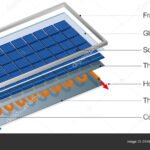
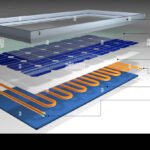
At their core, silicon solar cells are thin wafers of crystalline silicon doped with other elements to create an electric field. When sunlight hits the cell, it knocks electrons loose. Those electrons flow through the silicon, generating direct current (DC) electricity.
The entire process is called the photovoltaic effect. It's the same physics that powers everything from a tiny calculator to a giant utility-scale solar farm.
A single cell produces about 0.5 to 0.6 volts. That's barely enough to charge a phone. So manufacturers connect dozens or hundreds of cells together into a panel, known in the industry as a module.
The typical residential panel uses 60 or 72 cells wired in series.
The quality of those individual cells, their purity, grain structure, and doping, determines the panel's overall efficiency and reliability. If you want a deeper look at how the full package comes together, our article on the main components of a solar panel walks through everything from the glass to the junction box.
The Two Main Families: Mono and Poly
All commercial silicon solar cells fall into two broad categories based on how the silicon is formed. Monocrystalline cells start as a single, perfect crystal ingot. Polycrystalline cells are made from melted silicon fragments poured into a mold, leaving visible grain boundaries.
That structural difference is the reason for the performance gap we'll cover next.
Monocrystalline vs. Polycrystalline – The Real Difference
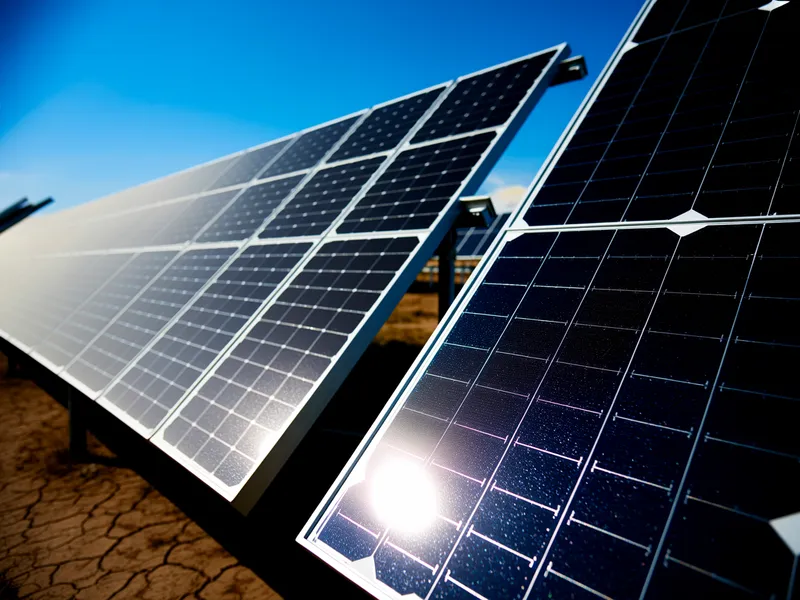
This is the most common comparison in solar shopping, and most advice gets it wrong. The real difference isn't just efficiency, it's how those cells behave under real-world conditions.
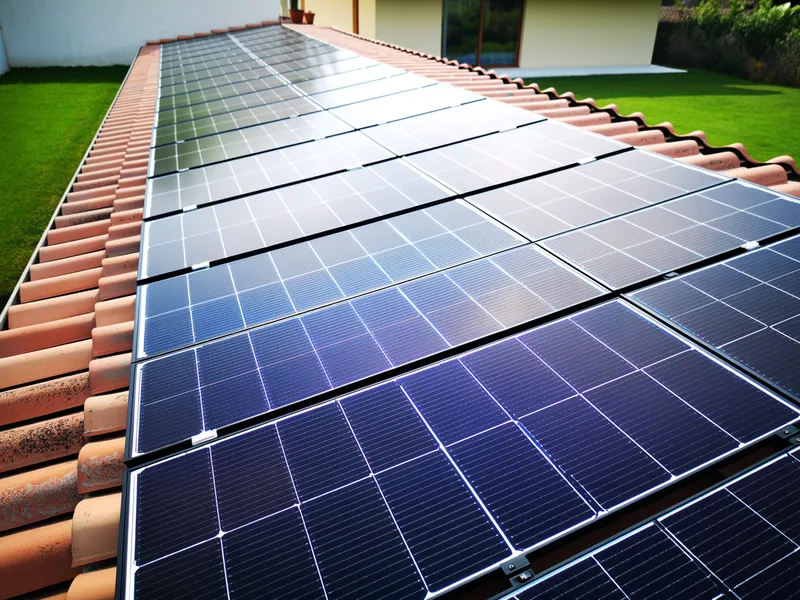
Monocrystalline cells have a uniform black appearance and rounded corners. They're cut from a single crystal, which means electrons move through the material with less resistance. That gives them higher efficiency, typically 19% to 23% for modern panels.
Polycrystalline cells have a blue, speckled look and square corners. The grain boundaries inside them create tiny barriers that slow electron flow. Efficiency usually lands between 15% and 18%.
But efficiency isn't the whole story. Here's how they actually compare in day-to-day use:
| Factor | Monocrystalline | Polycrystalline |
|---|---|---|
| Efficiency | 19%–23% | 15%–18% |
| Temperature coefficient | −0.35 to −0.40%/°C | −0.40 to −0.45%/°C |
| Degradation rate (per year) | 0.25%–0.50% | 0.50%–0.70% |
| Shade tolerance (with bypass diodes) | Similar | Similar |
| Cost per watt (wholesale) | $0.15–$0.30 | $0.12–$0.22 |
| Warranty | 25–30 years | 25 years typical |
The temperature coefficient matters more than you'd think. Polycrystalline panels lose more output as the temperature climbs. If you live in Arizona, Texas, or anywhere with scorching summers, that difference compounds over decades.
Monocrystalline also degrades slower. After 25 years, a premium mono panel might still produce 88% of its original capacity. A typical poly panel might be down to 80% or less.
That said, polycrystalline isn't worthless. If you have plenty of roof space and a tight budget, it can still pencil out. You're trading lower up-front cost for a bit less power over time.
Just don't buy into the myth that poly is "old technology", it's still widely manufactured, especially for large commercial arrays where space isn't tight.
For most homeowners, monocrystalline delivers the better long-term value. But if you're comparing options, you also need to know what's happening inside the silicon wafer itself. That's where the N-type vs.
P-type debate comes in. For a broader view of all the panel types available, check out our roundup of the different kinds of solar panels.
N-Type vs. P-Type Cells – Why Wafer Type Changes Performance
Inside every silicon solar cell, the wafer is doped with tiny amounts of other elements to create a positive-negative junction. The traditional approach uses P-type wafers (doped with boron) as the base layer. Newer high-efficiency cells use N-type wafers (doped with phosphorus).
This swap sounds minor, but it has major consequences for how the cell behaves over its life.
The Boron Problem
P-type cells suffer from a phenomenon called light-induced degradation (LID). When you first expose a new P-type panel to sunlight, its output drops by 1% to 3% within the first few hours. That drop is permanent.
Manufacturers account for it in their rated wattage, but you still lose capacity you paid for.
N-type cells don't have that boron-oxygen defect, so they experience virtually no LID. They also resist LeTID (light- and elevated temperature-induced degradation), a longer-term issue that can cost P-type cells another 2%, 5% over time.
Heat Tolerance
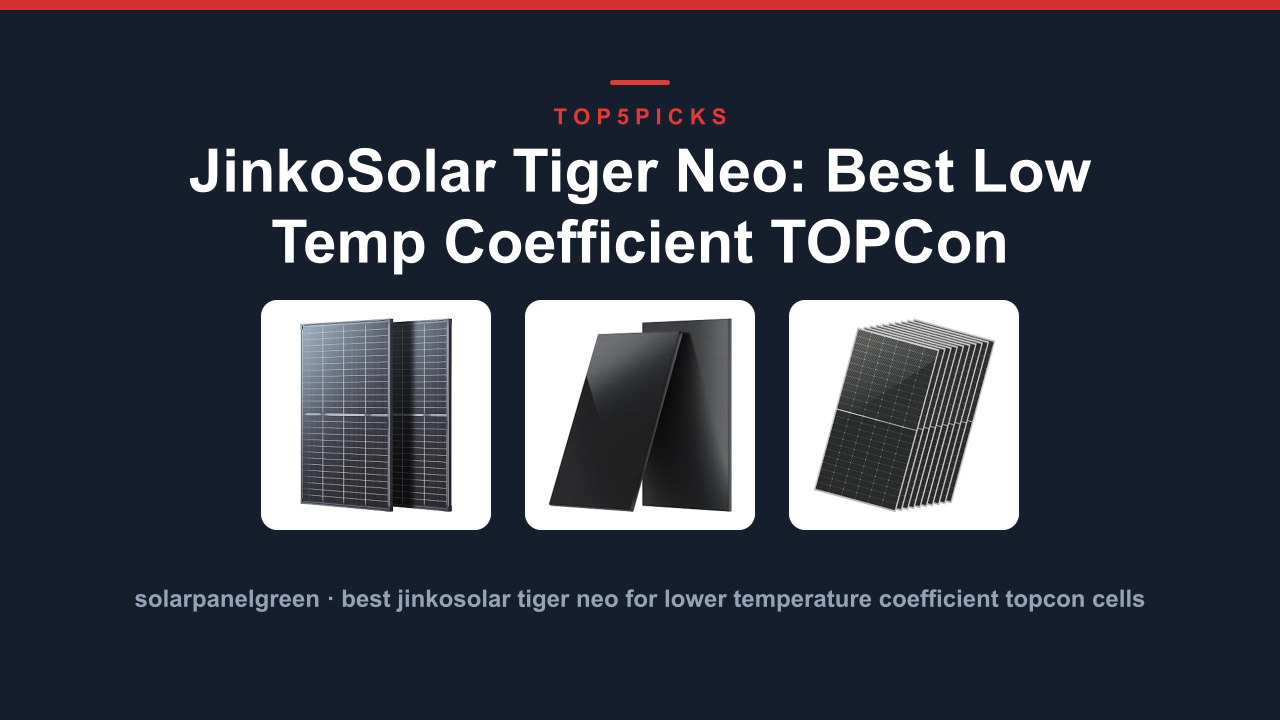
N-type cells have a lower temperature coefficient, meaning they hold their power better on hot days. For a system in a desert climate, that can mean 5%, 7% more annual energy compared to the same size P-type array.
Cost and Availability
P-type cells are cheaper to manufacture. They dominate the market, especially in budget panels. N-type cells cost a bit more, roughly $0.02, $0.05 per watt more wholesale, but prices are dropping fast as production scales up.
As of 2026, N-type is the standard for premium residential panels from top manufacturers. If you're looking at a panel with a spec sheet that boasts "N-type" or "HJT" (heterojunction), you're getting the best available durability and thermal performance.
Which Should You Choose?
If your budget allows, go with N-type monocrystalline panels. You'll get better heat performance, zero LID, and a lower degradation rate. If you're working with a tight budget, P-type monocrystalline is still a solid choice, just be aware of that initial 1, 3% drop.
For a detailed breakdown of the pros and cons of solar energy in general, our guide on advantages and disadvantages of solar panels covers the full picture, from financial returns to installation challenges.
Note: The next sections in our full article will cover efficiency numbers in detail, real-world energy yield, cost vs. value, common mistakes, and a comparison with alternative technologies like thin-film and bifacial.
Efficiency, Temperature Coefficient, and Degradation – What the Numbers Really Mean
Efficiency tells you how much sunlight a cell turns into electricity. A 22% efficient cell converts 22% of the light hitting it into usable power. The rest becomes heat or bounces off.
That number matters most when you have limited roof space. A higher efficiency panel packs more watts per square foot. But it's not the only spec that determines your real energy harvest.
Temperature Coefficient – The Hidden Climate Factor
Every silicon cell loses output as it heats up. That loss is measured by the temperature coefficient, given as a percentage per degree Celsius above 25°C.
A panel with a temperature coefficient of −0.35%/°C loses 0.35% of its power for every degree above 25°C. On a 40°C rooftop, that's a 5.25% drop. A panel with −0.40%/°C loses 6% under the same conditions.
Over a year in a hot climate, that 0.75% difference adds up. Our research shows it can mean 2% to 4% less annual energy from the poorer coefficient. Check the spec sheet.
It matters.
Degradation Rate – How Fast Panels Wear Out
All solar panels lose output slowly over time. The degradation rate tells you how much. Premium monocrystalline panels degrade about 0.25% per year.
Standard polycrystalline panels degrade at 0.50% to 0.70% per year.
After 25 years, a 0.25% degradation panel still produces about 94% of its original power. A 0.60% degradation panel produces only 85%.
That 9% difference can be significant. For a 10 kW system, it's roughly 900 fewer kWh per year in year 25. Worth paying a little more upfront for the slower degradation.
How to Read a Spec Sheet
Look for three numbers side by side. Efficiency tells you space value. Temperature coefficient tells you climate performance.
Degradation tells you long-term return. Our guide on how solar panels generate electricity explains the full physics behind these numbers.
A good panel has efficiency above 20%, temperature coefficient at or below −0.37%/°C, and degradation no higher than 0.30% per year. Anything less is a compromise.
How Cell Design Affects Real-World Energy Yield
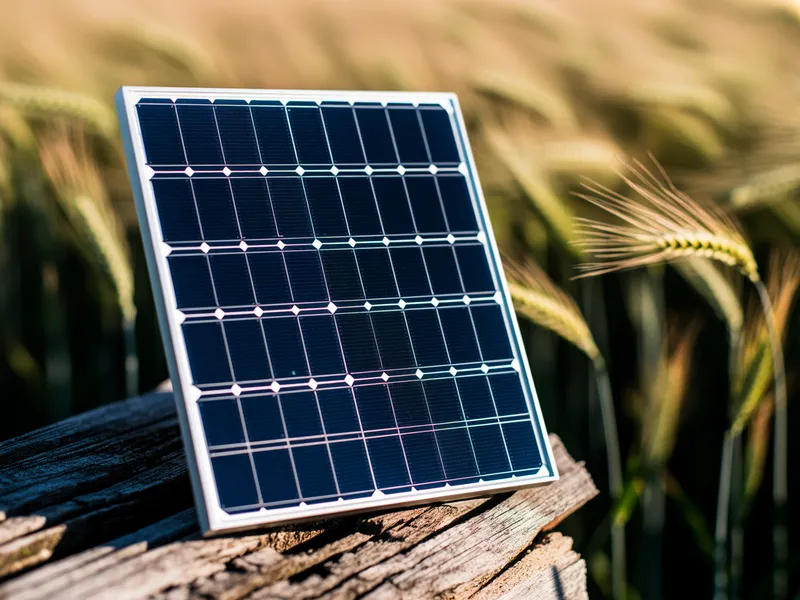
Panel rating tests happen in a lab at 25°C with perfect light. Real roofs don't look like that. Cell design determines how close you get to that lab number.
Half-Cut Cells
Traditional full cells carry current through the whole cell. Half-cut cells split each cell in two. That halves the current in each half, reducing resistive losses.
Half-cut cells perform better under partial shade. If one half is shaded, the other half still produces power. Aggregate test data shows half-cut panels can deliver 2% to 5% more energy per year than full-cell versions of the same efficiency.
Bifacial Cells
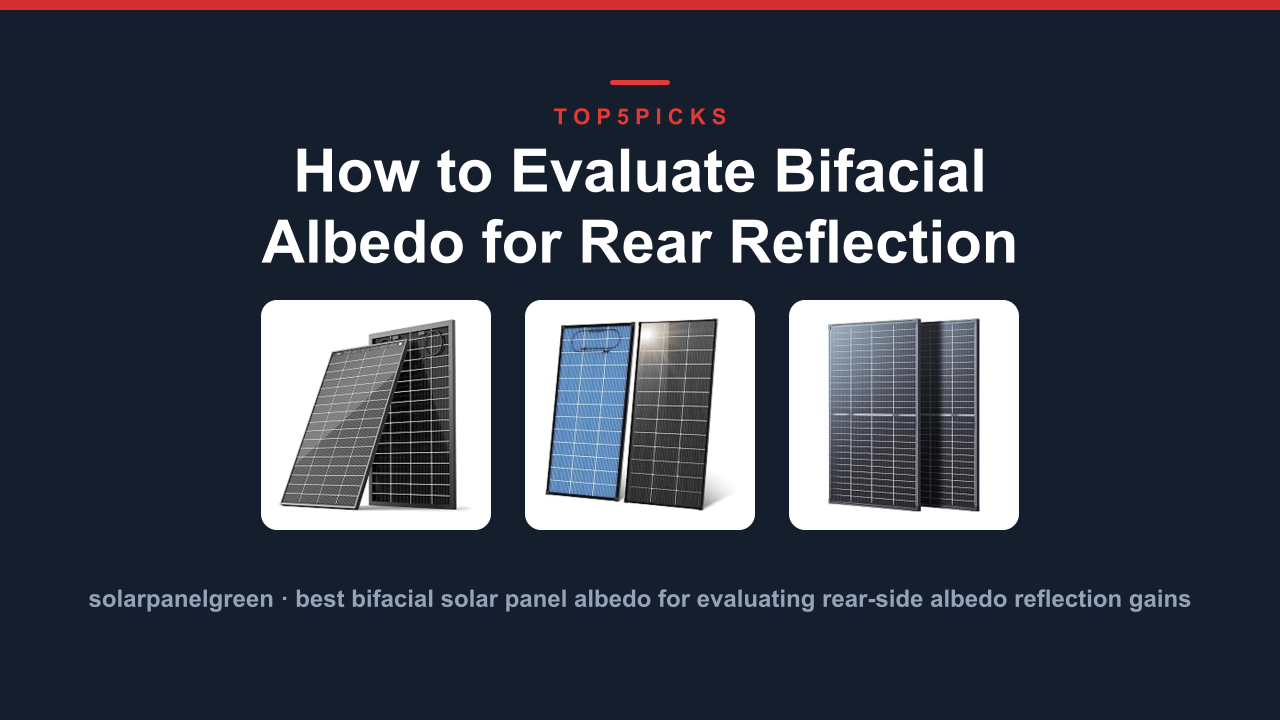
Bifacial cells capture light from both sides. The front works like a normal cell. The back collects reflected light from the ground, roof, or snow.
In a ground-mount installation over light gravel or white roofing, bifacial panels can produce 10% to 30% more energy than a standard panel. That's a huge boost for solar farms. For residential rooftops, the gain is smaller, typically 5% to 15%, depending on roof color and tilt.
Multi-Busbar and Shingled Cells
Busbars are the thin metal strips that carry current out of the cell. More busbars mean less resistance along the path. Modern panels have 9 to 12 busbars, compared to 3 or 4 on older models.
Shingled cells overlap each other like roof tiles. They eliminate busbars entirely and use conductive adhesive. This increases active surface area by about 3% compared to a standard cell layout.
These design details matter. Two panels with the same 21% efficiency rating can produce different real-world yields. Pay attention to cell architecture, not just the headline number.
Cost vs. Value – What You’re Paying For With Silicon Cells
Silicon solar cells have a per-watt cost that varies by type and quality. Wholesale prices for standard monocrystalline modules run about $0.15 to $0.30 per watt. Polycrystalline runs $0.12 to $0.22.
But price per watt is only half the story. You also pay for durability, warranty, and long-term production.
What Premium Gets You
| Feature | Budget Panel | Premium Panel |
|---|---|---|
| Cell type | P-type poly | N-type mono |
| Efficiency | 16-18% | 21-23% |
| Degradation | 0.60%/yr | 0.25%/yr |
| Temperature coefficient | −0.42%/°C | −0.35%/°C |
| Warranty | 10-15 years | 25-30 years |
| Wholesale price/watt | $0.12-$0.18 | $0.22-$0.30 |
The premium panel costs about 60% more per watt. But over 25 years, it produces 12% to 18% more total energy. That extra energy usually more than offsets the higher upfront cost, especially in hot climates.
When Budget Makes Sense
If your roof is huge and you live in a mild climate, budget poly panels can still work. You'll need more roof area, and you'll replace them sooner. But the lower initial cost can make solar accessible.
Do the math with your energy rates and sun hours. A good installer can run a production model for both options. If the premium system pays itself off in the same time frame, go premium.
If the budget system gives you a faster payback, that's your answer.
For a complete breakdown of costs and savings, our solar panel buying guide covers pricing, incentives, and ROI for real-world systems.
Common Mistakes Buyers and Installers Make
Mistake 1: Chasing Efficiency Alone
A 23% panel isn't automatically better than a 21% panel if the lower efficiency panel has a better temperature coefficient. Real-world yield depends on many factors. Don't let one number decide the deal.
Mistake 2: Ignoring Degradation Rate
We see buyers focus on wattage and warranty length but skip the fine print on degradation. A panel that degrades 0.5% per year will be behind a 0.3% panel by year 10. That gap widens every year.
Mistake 3: Assuming All Monocrystalline Is the Same
Standard mono uses P-type wafers with standard busbars. Premium mono often uses N-type wafers with half-cut or shingled cells. They are not the same.
Verify the cell architecture and wafer type before you buy.
Mistake 4: Not Checking the Temperature Coefficient in Hot Climates
We see this constantly. Someone in Phoenix buys a panel with a −0.45%/°C coefficient because it was cheap. That panel struggles every summer afternoon.
A −0.35% panel would produce significantly more.
Mistake 5: Forgetting About Shading
Even the best silicon cells lose power when shaded. If your roof has chimney or tree shade, half-cut cells or microinverters help more than a premium cell type. Plan for shade first, then pick the cell.
Understanding the basic principles of how solar panels work helps you avoid these and other pitfalls.
Comparing Silicon to Other Solar Technologies (Thin-Film, Perovskite, Bifacial)
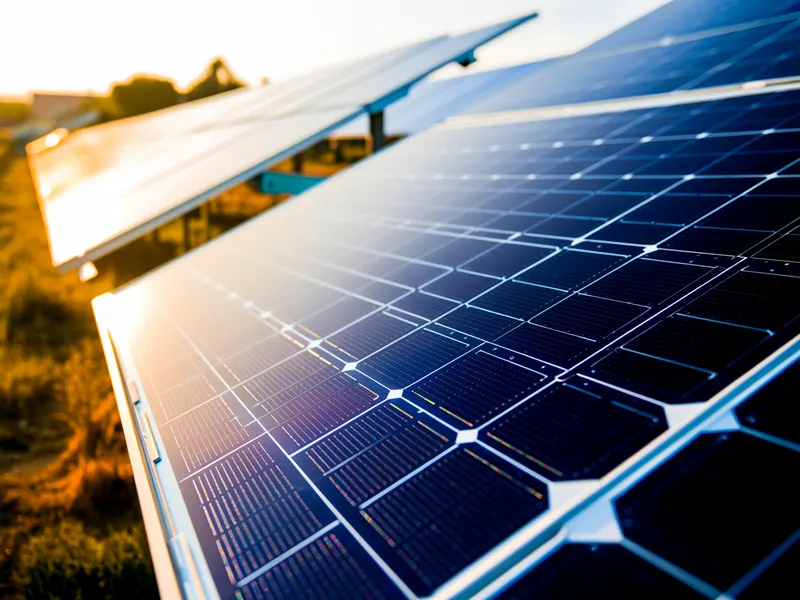
Silicon dominates the market for good reason. It's proven, durable, and efficient. But other technologies exist and matter in specific use cases.
Thin-Film Solar (CdTe, CIGS, Amorphous Silicon)
Thin-film cells use a microscopic layer of photovoltaic material on glass or flexible backing. They are less efficient than silicon, typically 10% to 18%. But they perform better in high heat and diffuse light.
Use case: large utility-scale solar farms where space isn't tight. Or building-integrated products like solar roof tiles. They're cheaper per watt but need more area.
Perovskite-Silicon Tandem Cells
Perovskite is an emerging material that can be layered on top of silicon. The top layer captures high-energy light. The silicon layer captures the rest.
Lab cells have hit over 30% efficiency.
Perovskite is not yet commercially reliable as of 2026. Stability and lifespan issues remain. Expect to see commercial tandem products around 2027 to 2028.
When they arrive, they could push efficiency past 26% in production modules.
Bifacial Silicon (Already Covered)
Bifacial isn't a different technology. It's a design that uses standard silicon cells with transparent backsheets. It pairs well with any silicon cell type.
Which Should You Choose?
Stick with standard monocrystalline silicon for home and commercial use. It's the safest bet with the longest track record. Bifacial adds value if your roof or ground mount has good reflectivity.
Skip thin-film for small spaces; it's for big open fields. Watch perovskite as a future upgrade but don't wait for it if you need power now.
For a full overview of all panel types and their trade-offs, our category page on solar panels covers everything from residential to utility-scale.
Maintenance and Long-Term Performance – What to Expect Over 25 Years
Silicon solar cells are low maintenance. You don't need to oil them or replace parts. But a little care goes a long way toward keeping output high.
Keep the glass clean. Dust, bird droppings, and pollen block light. In dry climates, rain alone might not be enough.
Hose them down twice a year or hire a professional.
Monitor your system's output monthly. Most inverters or monitoring apps show real-time production. A sudden drop of 10% or more could mean a failed cell, a broken bypass diode, or a wiring issue.
Catch it early.
Panel degradation is normal. After 25 years, expect 85% to 94% of original capacity depending on cell quality. That's accounted for in most warranty terms.
Replace only if a panel physically fails or output plummets.
Safety, Certifications, and Compliance – What to Look For
Every panel sold in North America and Europe must meet safety and performance standards. Look for UL 1703 or IEC 61730 certification. These test for fire resistance, electrical safety, and mechanical durability.
Fire rating matters. Class C is common for residential. Class A means the panel is certified for high-fire-risk roofs.
Check your local building code requirements.
Rapid shutdown is required by the National Electrical Code (NEC 2017 and 2020). Modules must shut down to safe voltage within 30 seconds of activation. Ensure your inverter and module-level electronics comply.
Warranties vary. A good product warranty covers defects for 25 years. A performance warranty guarantees output stays above a certain percentage (e.g., 80% after 25 years).
Read the fine print for exclusions like hail damage or improper installation.
When to Seek Professional Help (And When You Can DIY)
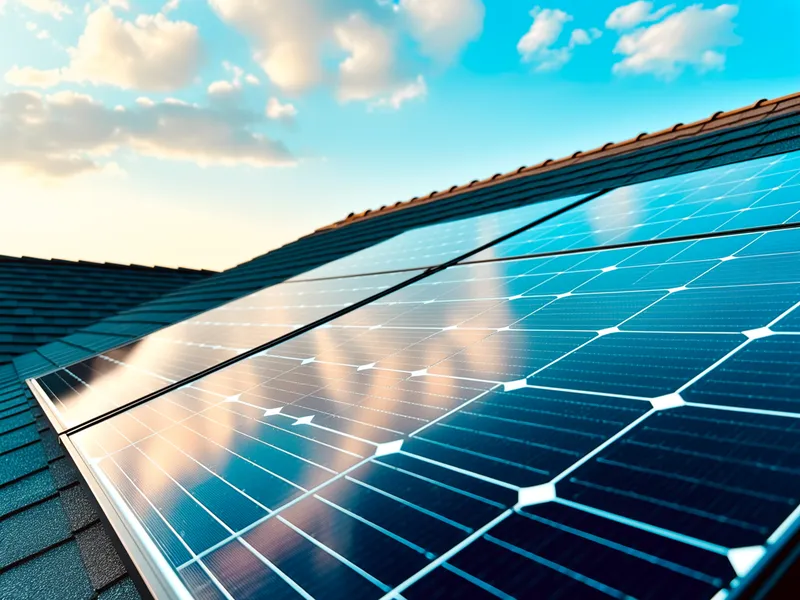
You can clean panels and monitor output yourself. You can also check for visible damage like cracks or loose wiring at the junction box.
Do not attempt electrical repairs. Solar systems produce high DC voltage that can kill. Leave wiring, inverter replacement, and panel swaps to a licensed electrician or solar installer.
If you see a sudden drop in production, contact your installer first. Many offer remote diagnostics. If the issue is a failed microinverter or optimizer, a simple part swap may fix it.
For new installations or major upgrades, use a certified professional. DIY solar kits exist, but they require electrical knowledge and permits. Mistakes can void warranties and insurance.
Frequently Asked Questions
What is the typical lifespan of a silicon solar cell?
Silicon solar cells last 25 to 30 years before their output drops below 80% of original capacity. Many panels continue producing at lower levels for another 10 years.
Are monocrystalline cells better than polycrystalline?
Yes, for most uses. Monocrystalline cells are more efficient, have better temperature coefficients, and degrade slower. Polycrystalline is cheaper but needs more roof space.
What does N-type mean in solar cells?
N-type cells use phosphorus doping instead of boron. They avoid light-induced degradation and perform better in heat. They are the premium choice for long-term reliability.
How much does a silicon solar panel cost?
Wholesale prices range from $0.12 to $0.30 per watt. Installed residential systems cost $2.50 to $3.50 per watt after incentives. Prices vary by region and installer.
Can silicon solar cells be recycled?
Yes. About 85% of a panel's materials can be recycled, including silicon wafers, glass, and aluminum frames. Programs like PV Cycle in Europe handle collection.
Many manufacturers have take-back programs.
Final Decision Guide – Choosing the Right Silicon Solar Cell for Your Situation
If roof space is tight, go with N-type monocrystalline, half-cut cells. You get the highest efficiency and best long-term output.
If you live in a hot climate, prioritize temperature coefficient below −0.37%/°C and N-type wafers. The extra cost pays back in year one.
If you have plenty of roof area and a small budget, P-type monocrystalline or polycrystalline works. Accept the lower efficiency and faster degradation.
If you are installing a ground-mount system, consider bifacial panels with a reflective surface underneath. The 10% to 20% boost is real.
If you want to future-proof, look for panels with 25-year product and performance warranties from a Tier-1 manufacturer. Avoid no-name brands with short warranties.
Stick with silicon. It is proven, safe, and backed by decades of field data. Other technologies may promise more, but silicon delivers reliably today.

Similar Posts