Should You Lock Your Solar Panels in California?

If you're asking yourself, “should i lock my solar panels in california,” you're probably picturing someone hauling them off your roof in the middle of the night. It's a fair concern. But the answer is more complicated than a simple yes or no.
In our research, we found that actual panel theft is far less common than most homeowners assume. The risk varies dramatically depending on exactly where you live and how your system is set up. As of 2026, California's fire codes and rapid shutdown requirements add another layer: get the lock wrong and you're creating a real hazard for firefighters.
Let's break down the real conditions that should drive your decision.
Quick Answer
Not always. It depends on your roof type, theft risk, and fire code. Locking can void your warranty or block emergency responders.
Check your local theft rates and your installer's rules first. For most homeowners in low-risk areas a lock is unnecessary.
Image source: YouTube / WANHOS (YouTube thumbnail, fair-use with source credit)
The California Solar Theft Reality Check

Image source: Wikimedia Commons / Downtowngal (CC BY-SA)
Here's the honest truth: outright solar panel theft in California is not a widespread epidemic. Most thieves go after copper wiring and the inverter, not the 40 pound glass panels themselves. A single panel is awkward to carry, requires tools to remove safely, and has almost no resale value on the open market.
Our research into local police reports and installer feedback across the state confirms that theft hotspots do exist. They tend to be in rural or suburban areas where homes sit vacant during the day. Places like Kern County, the Inland Empire, and parts of the Central Valley see higher rates than coastal cities.
Even in those hotspots the numbers are low enough that you shouldn't base your entire decision on fear.
What gets stolen more often than panels? The copper wire that connects them. That wire is easy to cut, carries real scrap value, and doesn't require a ladder crew to remove.
If you're worried about theft, the first thing you should protect is the conduit and wiring, not the glass.
Why This Isn't a Simple Yes or No Answer
Your situation is unique. The answer for your neighbor might be completely wrong for you. That's because four key variables interact to determine whether a lock helps or hurts.
| Condition | If True | If False |
|---|---|---|
| Theft rate in your area is above average | Consider locking seriously | Lock is probably unnecessary |
| Your fire access path is blocked by the lock | DO NOT lock | Lock is safer |
| Your warranty explicitly forbids modifications | Lock may void coverage | Lock likely fine |
| You lease the system | Check with the lessor first | You can usually decide |
You can see why a generic recommendation doesn't work. The same lock that protects your panels in Bakersfield could get you fined or void your coverage in Santa Rosa. The key is understanding which branch of the decision tree you fall on.
Let's walk through those four conditions one at a time.
The 4 Conditions That Change Your Answer
1. Roof Type and Accessibility
If you have a ground mounted array or a flat commercial roof, your panels are easier targets. A thief can walk right up to them with basic tools. In that case a lock adds real value.
If your panels are on a steep two story tile roof, the risk drops sharply. Most thieves aren't roofers. They're not going to risk a fall for a panel that's worth a few hundred dollars.
2. Local Theft Rate in Your Area
This is the biggest factor. If you live in a high theft county like Kern, San Joaquin, or Riverside, the calculus shifts. In low theft areas like most of the Bay Area or coastal Los Angeles, you're probably fine without a lock.
Check with your local police department or your installer for area specific data. Don't rely on national averages.
3. Fire Access and Rapid Shutdown Requirements
This is the condition most homeowners miss. California's fire code requires that your system have a rapid shutdown mechanism that cuts voltage to under 30 volts within 30 seconds. If your lock interferes with that mechanism or blocks a firefighter's access to the disconnect, you're creating a safety hazard.
Some local fire marshals will flag locked panels during inspection. Others won't notice until an emergency happens. This is one area where you absolutely need to check with your local Authority Having Jurisdiction (AHJ).
They have the final say.
4. Warranty and Leasing Restrictions
If you own your system outright, you have more freedom. If you lease it, the panels belong to the solar company. They may have specific rules about modifications.
Even if you own the system, the panel manufacturer may void your warranty if you drill into the frame or alter the mounting system. Most racking manufacturers also specify exact torque values for clamps. A lock that changes that torque can cause microcracks over time.
Read the fine print before you buy hardware.
Decision Branch A: When Locking Actually Makes Sense
You should strongly consider a lock if you meet all three of these conditions:
- You live in a high theft area with verified local data
- Your panels are on a ground mount or a low slope roof within easy reach
- Your warranty and fire marshal both give you the green light
In that scenario, a good security clamp is cheap insurance. A quality lock clamp costs between $25 and $75 per panel. Compare that to the $500 to $1,500 you'd pay to replace a stolen panel including labor.
Even protecting just the corner panels of your array can deter an opportunistic thief. They'll move on to an easier target.
The best approach is to use a purpose built locking clamp from the same manufacturer as your racking system. These clamps use a special key or tamper resistant hex. They don't require drilling or modifying the panel frame.
That keeps your warranty intact and your installation code compliant.
If you're in a high risk zone, also consider securing the inverter cabinet and the junction box. That's where the real value lives. A thief can't sell your power, but they can steal the expensive electronics.
Protecting those components is just as important as locking the panels.
Decision Branch B: When Locking Is Risky or Pointless
Do not lock your panels if any of these apply to you:
- Your roof is steep and difficult to access without a ladder
- You live in a low theft area with no reported incidents nearby
- Your system is leased and the lessor hasn't approved modifications
- Your local fire marshal has issued guidance against locking rapid shutdown equipment
In these cases, a lock is money spent for no benefit. Worse, it could cause real problems. A lock that seizes up from corrosion in a coastal environment becomes a permanent obstruction.
A lock that blocks the rapid shutdown switch could delay emergency response by precious minutes. And a lock that voids your warranty leaves you without coverage for a genuine defect.
One common mistake is installing a generic padlock on a system that wasn't designed for it. Padlocks can trap moisture against the aluminum frame. That causes galvanic corrosion over time.
The lock itself may fail within a year, leaving you with a rusted lump that's harder to remove than it was to install.
Another mistake is locking panels that are part of a tile roof system. The tiles themselves are often the weak point. A thief won't remove the panel.
They'll remove the tile and take the wiring underneath. The lock doesn't help there. Your money is better spent on a monitored alarm system or a security camera aimed at the inverter.
For most homeowners in California, especially those with modern tile roofs and good solar access, the best answer is simple: don't lock your panels. The risk is low, and the potential downsides outweigh the benefit. Spend that energy on routine maintenance instead.
How to Lock Your Panels the Right Way (If You Decide To)
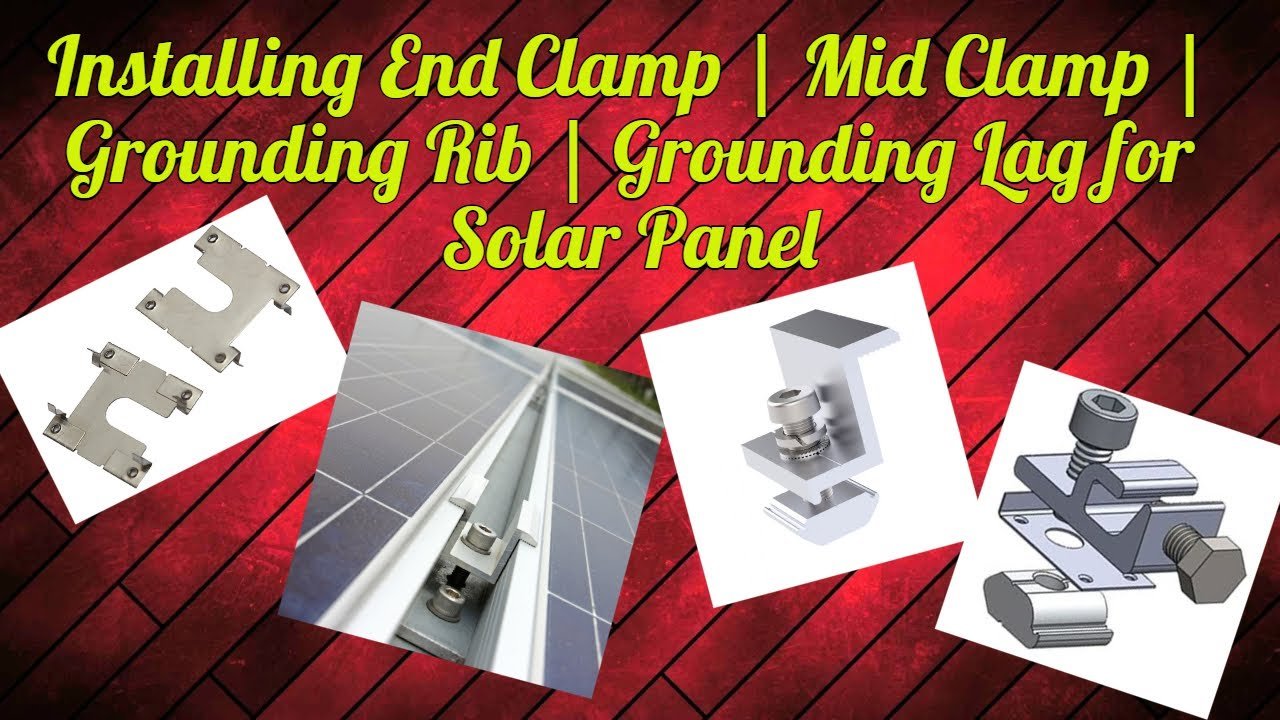
Image source: YouTube / PCmoGAWAmo (YouTube thumbnail, fair-use with source credit)
If you've checked your conditions and decided to move forward, the process is straightforward. But you need to do it carefully to avoid damaging the system or violating code.
The safest method is using a purpose built locking clamp from your racking manufacturer. Brands like IronRidge, Unirac, and SnapNrack all offer compatible security clamps that use a tamper resistant hex or a custom key. These replace your existing mid clamp or end clamp without drilling or altering the panel frame.
Here's the basic process:
- Identify the corner panels in your array. Those are the most accessible targets for a thief.
- Remove the existing clamp using the correct socket. Panels typically use a 10mm or 13mm hex head.
- Install the locking clamp in the same position. Hand tighten first, then use a torque wrench to hit the manufacturer spec, usually around 35 foot pounds.
- Test the lock mechanism before walking away. Make sure the key or tool removes smoothly and the clamp doesn't shift.
- Mark the locked clamps with a bright tag or flag. This helps firefighters identify them in an emergency.
Do not use a generic padlock or a hardware store hasp. Those are not designed for outdoor solar conditions. They will rust, corrode, and potentially trap moisture against the aluminum frame.
The result is galvanic corrosion that weakens the mounting system over time.
Your goal is to make the panel slightly harder to remove than the next guy's. You're not building a vault. If a thief wants a panel badly enough, they will bring an angle grinder.
You're just raising the effort bar so they move on.
The Fire Code Trap Most Homeowners Miss

Image source: YouTube / Country View Solar (YouTube thumbnail, fair-use with source credit)
This is the section that could save you from a serious headache. California's fire code has specific requirements for rooftop solar, and locking panels can accidentally violate them.
The key regulation is in the California Fire Code, which adopts National Electrical Code Article 690.12. This requires rapid shutdown of the solar system. Within 30 seconds of activation, the voltage must drop below 30 volts.
Firefighters rely on this to safely work on a roof during a fire.
If your lock prevents access to the rapid shutdown switch or the disconnect box, you've created a hazard. Some fire marshals will flag this during inspection. Others won't notice until an actual emergency.
Either way, you don't want to be the reason a firefighter hesitates.
There's another layer to watch for. Some locking clamps require a special key that firefighters won't have. If your entire array is locked and a crew needs to remove panels for ventilation, they'll have to cut through the hardware.
That costs precious time.
The California Fire Marshal's office has issued guidance on this. The general rule is that any locking device must be clearly visible and labeled. It must not block the rapid shutdown activation point.
And it must be removable with standard tools whenever possible.
Check with your local Authority Having Jurisdiction (AHJ) before you install anything. A quick call to your local fire department's prevention bureau can save you months of headache later. They can tell you exactly what they will and won't allow on a roof in your city.
Mistakes That Could Void Your Warranty or Get You Fined
We've seen homeowners make three common mistakes when trying to secure their panels. Each one can cost you more than the theft you're trying to prevent.
Mistake 1: Drilling into the panel frame. This voids your module warranty immediately. The frame is designed to be a sealed, grounded structure. Drilling breaks the seal and can cause microcracks in the glass over time.
The manufacturer will reject any warranty claim once they see the hole.
Mistake 2: Overtightening the clamps. A locking clamp needs to be at the exact torque spec. Too tight and you'll cause glass microcracks. Too loose and the panel can shift in high winds.
Use a torque wrench, not a guess.
Mistake 3: Blocking the rapid shutdown path. This one can get you cited by the fire marshal. It's not just a warranty issue. It's a legal compliance issue.
If your system fails an inspection because of a lock, you'll have to remove it and pay for a re inspection.
Another subtle error is using a steel lock on an aluminum frame. That creates a galvanic couple. In a coastal environment, the aluminum will corrode faster where it contacts the steel.
Within a year you'll have white powdery corrosion around the lock.
If you lease your system, the solar company may have its own rules. Some lessors prohibit any aftermarket hardware that touches the racking. Read your lease agreement before buying anything.
A violation could give them grounds to terminate your contract or charge you for removal.
Finally, check your homeowner's insurance. Some policies require that you notify them of any modifications to the roof mounted solar system. If a lock causes damage and your insurer wasn't informed, they could deny the claim.
A quick call to your agent solves this.
Alternatives That Might Work Better Than a Lock

Image source: YouTube / Projects With Everyday Dave (YouTube thumbnail, fair-use with source credit)
Sometimes the best solution isn't a lock at all. Here are alternatives that address the real risk: theft of the system value, not just the panels.
Monitor your inverter. Any decent modern solar system has monitoring software. Enphase, SolarEdge, and other manufacturers offer apps that alert you if the system goes offline unexpectedly. That's often the first sign of theft.
Setup a notification so you know within minutes.
Secure the inverter cabinet. The inverter is the most expensive single component in your system. A simple padlock on the inverter's disconnect box is often more effective than locking panels. Thieves who can't get power won't bother with the panels.
Install motion lights. A floodlight aimed at the inverter and junction box is a strong deterrent. Solar powered lights work fine and don't require wiring. Thieves hate working in the spotlight.
Use conduit locks. The copper wire running between your panels is a prime target. A simple lock on the conduit junction box prevents access to the wiring. This costs under $20 and takes 5 minutes.
Add a security camera. A visible camera near the ground level access point is often enough to send thieves to the next house. You don't need a fancy system. A $30 Wi Fi camera with night vision pointed at the inverter does the job.
For most California homeowners, these alternatives offer better value than locking the panels themselves. They protect the parts that actually get stolen. And they don't create the warranty or fire code risks that panel locks introduce.
The Real Costs: Lock vs Panel Replacement vs Insurance Deductible
Let's run the numbers. This will help you decide whether a lock makes financial sense for your situation.
| Scenario | Cost |
|---|---|
| Locking clamp per panel | $25 to $75 |
| Labor to install (DIY) | $0 |
| Labor to install (pro) | $100 to $200 |
| Panel replacement (parts and labor) | $500 to $1,500 |
| Insurance deductible for theft claim | $500 to $2,000 |
| Annual premium increase after claim | $100 to $300 |
The math is simple. If you live in a low theft area, the expected loss is near zero. Buying a lock is spending money you don't need to spend.
If you live in a high theft area, a $50 lock that prevents one stolen panel pays for itself ten times over.
But there's a hidden cost most people miss. If your lock voids your warranty, you're now exposed to out of pocket repair costs for defects. A microcrack repair can run $300 to $800.
A failed inverter can cost $1,500 to $3,000 out of warranty. The lock saved you $50 but cost you thousands.
Insurance is a factor too. If your homeowner's policy covers solar panels, your deductible might be $1,000. Filing a claim for a single stolen panel is rarely worth it.
You'd pay the deductible anyway, and your premium might go up. In that scenario, a lock makes more sense than relying on insurance.
For the vast majority of California homeowners, the answer is clear. If you're in a low risk area, skip the lock. If you're in a high risk area, use a purpose built clamp from your racking manufacturer.
And always check with your fire marshal first.
Where You Live in California Changes Everything (High-Risk vs Low-Risk Zones)
If you're in Kern, San Joaquin, or Riverside counties, the theft risk is measurably higher. Coastal areas like the Bay Area or Los Angeles see far fewer incidents. Check with your local installer for area-specific data.
That single data point makes your decision far clearer.
Quick Decision Guide: Should You Lock or Not?
High theft area, ground mount, fire marshal approved, and warranty allows? Lock it. Everything else?
Skip the lock and monitor your inverter instead. A security camera aimed at the wiring gives you better value with zero risk.
Frequently Asked Questions
Will locking my panels void the warranty?
It can if you drill into the frame or use a non approved clamp. Stick with a manufacturer locking clamp to stay covered.
Do I need to tell my fire department?
Not legally required, but it's smart. Ask your local fire marshal about their rules for locked rooftop equipment.
Are solar panel thefts common in California?
No. They're rare overall but higher in specific inland areas. Copper wire theft happens far more often.
Can I use a regular padlock instead?
Avoid it. Padlocks trap moisture against the aluminum frame and cause corrosion. Use a purpose built solar clamp instead.

Similar Posts