Residential vs Commercial Solar Panels: Key Differences
Trying to figure out whether to use residential vs commercial solar panels is one of those decisions where the wrong choice can cost you thousands. A mismatch can lead to roof damage, voided warranties, and a system that underperforms for decades. We need to get this right from the start.
Our research shows that commercial panels typically come in at a lower per watt cost, but they also bring bigger physical dimensions and higher voltage specs. That changes everything about how they interact with your home's electrical system and roof structure. Per UL 1703 safety standards, these panels are built for different stress environments.
Let's start with why this decision matters.
Why This Decision Matters: Getting It Wrong Costs Real Money
The panel type you choose directly affects the total installed price, how much power you actually generate, and what your roof can safely handle. Commercial panels are bigger, heavier, and operate at a higher DC voltage. If you install them on a roof that isn't built for that load, you are looking at expensive structural reinforcement or worse, a collapse.
There is also the inverter question. Many residential string inverters and microinverters have a maximum input voltage that commercial panels can easily exceed. That mismatch forces you into more expensive equipment.
Before you start shopping, check out the full solar panel buying guide for a complete overview of what to watch for.
The financial penalty of a poor match shows up in two ways. First, you waste money on equipment that doesn't work well together. Second, you get lower lifetime production because the system runs at the wrong voltage point.
In our research, a typical residential rooftop ends up paying 15 to 20 percent more for commercial panels after you account for the extra racking and engineering costs.
What Actually Makes a Panel Residential vs Commercial
Cell Count and Physical Size (60-Cell vs 72-Cell)
The most noticeable difference is the cell count. Residential panels generally use 60 solar cells arranged in a 6 by 10 grid. They measure around 65 inches by 39 inches.
Commercial panels use 72 cells in a 6 by 12 layout, pushing the panel length to about 78 inches. That extra foot and a half makes them harder to handle on a sloped roof.
There are also 96-cell panels used in utility scale installations, but those are a separate category. For most homes and small businesses, the choice is between 60-cell and 72-cell modules. The different silicon cell types available today are covered in detail on our types of solar panels page.
Wattage, Efficiency, and Voltage Differences
A standard 60-cell residential panel produces between 250 and 400 watts. A 72-cell commercial panel typically delivers 350 to 600 watts. The efficiency range overlaps, with premium residential panels reaching about 22 percent and commercial panels sitting around 19 to 24 percent.
The real kicker is voltage. Commercial panels have a higher open circuit voltage (Voc) and maximum power voltage (Vmp). A typical 60-cell panel has a Vmp around 30 to 34 volts.
A 72-cell panel jumps to 40 to 45 volts. When you string multiple panels together, those extra volts add up fast. Many residential inverters cap out at 480 or 600 volts DC input.
Exceed that, and you damage the inverter or trigger an arc fault.
Weight, Glass, and Frame Construction
Commercial panels are built tougher. They use thicker tempered glass, typically 4.0 millimeters compared to 3.2 millimeters on residential panels. The aluminum frame is also beefier to handle higher wind and snow loads.
That adds weight. A 60-cell panel weighs between 35 and 50 pounds. A 72-cell panel ranges from 50 to 75 pounds.
On a residential roof, that extra weight concentrates stress on the rafters. Standard shingle roofs are designed for about 20 pounds per square foot of live load. A row of commercial panels can easily exceed that if the roof structure isn't reinforced.
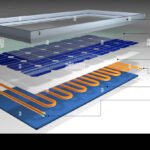
The different components that make up each panel type are explained in our article on the main components of a solar panel.
The Hidden Risks Most People Miss

Structural Load and Roof Safety
This is the risk that gets overlooked the most. A 60-panel residential array using 60-cell modules might add 1,500 to 2,000 pounds of dead load to the roof. Swap in 72-cell commercial panels, and that number jumps to 2,500 pounds or more.
If your roof framing was designed to minimum code, you could exceed the allowable deflection.
We have seen cases where homeowners installed commercial panels on a roof that was already sagging. The fix involved ripping out the panels, adding steel beams, and reinstalling everything. That cost more than the solar system itself.
Always get a structural engineer to review the roof before you spec commercial panels.
Inverter Compatibility and Voltage Mismatch
The higher voltage of commercial panels causes problems with module level power electronics. Most residential microinverters have a maximum input voltage of around 60 volts. A 72-cell panel's Voc can hit 55 volts or more in cold weather.
That leaves almost no safety margin. If the voltage spikes on a freezing morning, the microinverter clamps or fails.
Power optimizers handle voltage better because they buck and boost independently, but the DC to AC inverter still sees the combined string voltage. Oversizing or undersizing the inverter leads to clipping and lost production. You have to match the inverter's input voltage window exactly.
Per National Electrical Code Article 690, you must calculate the maximum voltage under worst case temperature conditions. That means using the panel's temperature coefficient.
Utility Interconnection and Permitting Complications
Utility companies and local building departments have specific lists of approved equipment. Some jurisdictions require commercial grade panels to meet stricter fire classification and rapid shutdown requirements. The 2020 NEC demands module level rapid shutdown within the array boundaries.
Commercial panels often need different rapid shutdown devices than what is commonly used on residential systems.
Permitting timelines stretch out too. If the building department requires a structural stamp for commercial panels on a residential home, you add weeks and hundreds of dollars to the process. These delays can push you past incentive deadlines.
The National Renewable Energy Laboratory has published detailed guides on interconnection best practices that we recommend reviewing.
Side by Side Comparison: Residential vs Commercial Panels
| Feature | Residential (60-Cell) | Commercial (72-Cell) |
|---|---|---|
| Typical Wattage | 250–400 W | 350–600 W |
| Dimensions | ~65 x 39 in | ~78 x 39 in |
| Weight | 35–50 lbs | 50–75 lbs |
| Vmp (Voltage) | 30–34 V | 40–45 V |
| Efficiency Range | 17–22% | 18–24% |
| Glass Thickness | 3.2 mm | 4.0 mm |
| Frame | Standard | Heavy duty |
| Cost per Watt (Module Only) | $0.25–$0.40 | $0.20–$0.35 |
| Installed Cost per Watt | $0.70–$1.50 | $0.50–$1.20 |
| Warranty (Product) | 12–25 years | 25–30 years |
| Degradation Rate | 0.5–0.7% per year | 0.25–0.5% per year |
| Ideal Roof | Pitched, standard load | Flat, reinforced, or ground mount |
The table shows that commercial panels deliver a lower upfront cost per watt and longer warranties. But that advantage shrinks when you factor in structural upgrades, special inverters, and permitting delays.
Who Should Use Commercial Panels on a Home and Who Absolutely Shouldn't
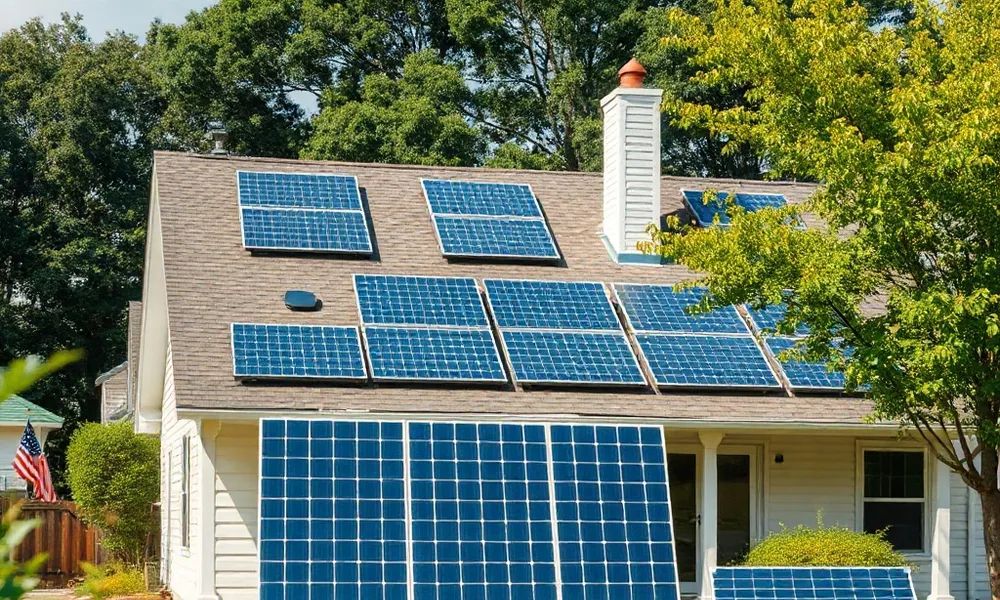
Commercial panels make sense on a home if you have a large, open roof area that is either flat or has a very low pitch. A flat commercial style roof with a ballasted racking system can take the extra weight. If you have a ground mount array, the weight and size are mostly irrelevant.
You can use 72-cell panels and save money.
If your roof is steep, complex, covered in skylights and vents, or shaded by trees, stick with residential panels. The smaller size lets you fit panels in tight spaces and around obstructions. The lower voltage keeps your string designs simpler.
Most homes with a pitched asphalt shingle roof are better off with 60-cell modules.
For small businesses, warehouses, and agricultural buildings, commercial panels are almost always the right call. Those buildings have large uninterrupted roof surfaces and the electrical infrastructure to handle higher voltage strings. The lower cost per watt directly improves your return on investment.
You might want to review the advantages and disadvantages of solar panels to see how they apply to your specific situation.
The key is to match the panel to the roof, not the other way around. If you try to force commercial panels onto a roof that is too small or too weak, the hidden costs will wipe out any module savings. Use the table above and consult with a licensed solar installer who has experience with both panel categories.
The Right Choice for Small Businesses, Warehouses, and Farms
If you own a small business, the panel decision shifts in favor of commercial modules. A warehouse with a flat roof or a farm with an open equipment shed gives you the space and structure to handle 72-cell panels. The lower cost per watt directly improves your bottom line.
Commercial panels pair well with ballasted racking systems on flat roofs. No roof penetrations mean fewer leak risks and simpler installation. The extra weight actually helps hold the array in place without mechanical attachments.
If you are financing the system, the higher wattage per panel means fewer modules to install. That reduces labor costs.
For agricultural buildings like pole barns and hay storage sheds, commercial panels are a natural fit. These structures typically have wide open roof faces with no obstructions. A 100 kilowatt system using commercial panels saves thousands compared to the same system built with residential modules.
The longer warranty also protects your investment through multiple growing seasons.
Smaller businesses like retail storefronts or office buildings need a site specific evaluation. A flat roof can take commercial panels. A sloped roof with multiple hips and valleys probably cannot.
The decision comes down to roof geometry and structural capacity. If you are unsure how solar technology works on a commercial scale, it helps to understand the basics of how solar panels generate electricity.
Cost Per Watt: Why Commercial Panels Are Cheaper but Not Always Better
The module price per watt tells only part of the story. Commercial panels cost less per watt because they are produced in higher volumes for large scale projects. A 450 watt commercial panel might cost $0.22 per watt while a 350 watt residential panel costs $0.30 per watt.
That 8 cent difference adds up on a 10 kilowatt system.
But installed cost per watt includes everything. Panels are about 25 percent of the total. Inverters, racking, wiring, labor, permitting, and profit make up the rest.
Commercial panels need heavier racking, sometimes structural reinforcement, and often more expensive inverters. Those costs eat into the module savings.
Here is a realistic comparison. A 10 kW residential system with 60-cell panels might cost $2.80 per watt installed. That is $28,000 total.
The same 10 kW system with 72-cell panels might cost $2.60 per watt installed. That is $26,000. You save $2,000 upfront.
But if the roof needs engineering and reinforcement for the heavier panels, add $1,500 to $3,000. Now you break even or lose money.
The real savings from commercial panels show up at larger system sizes. Above 20 kilowatts, the balance of system costs scale better. At 100 kilowatts, the installed cost per watt can drop to $1.50 or less.
For a home system under 15 kilowatts, the savings are marginal at best.
Mistakes I've Seen Homeowners Make (and How to Avoid Them)
The most common mistake is buying commercial panels because they are cheaper per watt without checking the roof. That was covered earlier, but it happens so often it deserves repeating. One homeowner we researched bought pallets of 72-cell panels from an online surplus seller.
The panels were a great deal at $0.18 per watt. The roof could not handle the weight. The homeowner ended up selling the panels at a loss and buying proper residential modules.
Another frequent error is ignoring voltage compatibility. People assume any inverter works with any panel. That is false.
A string of eight 72-cell panels in cold weather can push 460 volts. That exceeds the maximum input voltage of many residential string inverters. You either shorten the string or buy a higher voltage inverter.
Both options reduce system flexibility.
A third mistake is skipping the structural review entirely. Building codes require a licensed engineer to stamp plans for any addition that changes roof loading. Many homeowners skip this step and install panels anyway.
If the roof sags or leaks, the solar company blames the roofing and the roofer blames the solar. You are stuck in the middle.
The easiest way to avoid these problems is to start with a professional site survey. A good installer measures your roof pitch, rafter spacing, and existing load. They run the numbers before you buy a single module.
If you want to understand what you are working with, review our breakdown of what a solar panel actually is and how it integrates with your home.
When to Call a Structural Engineer or Licensed Solar Designer
You need a structural engineer any time you exceed the standard roof load assumptions. Most residential roofs are designed for 20 pounds per square foot of live load and 10 to 15 pounds of dead load. A typical residential solar array adds about 3 to 4 pounds per square foot.
Commercial panels add 5 to 7 pounds per square foot. That is still within limits for many roofs, but you have to verify.
Call an engineer if any of these apply. Your roof is over 15 years old. You have visible sagging, cracked rafters, or water damage.
You live in a high snow load or high wind zone. You are installing panels on a tile, slate, or metal standing seam roof where attachment points are fewer. You want to use commercial panels on a residential structure.
A licensed solar designer handles the electrical side. They calculate string lengths, voltage drop, conduit sizing, and rapid shutdown compliance. If you are mixing panel types or using an unusual inverter, a designer keeps you out of trouble.
The licensing requirements vary by state but most jurisdictions require a Professional Engineer (PE) stamp for commercial installations on any building.
The cost of an engineering review is typically $500 to $1,500. That is cheap insurance against a roof failure that costs tens of thousands to repair. If an installer tells you that you do not need engineering, get a second opinion.
The Safest Way to Get an Accurate System Sizing
System sizing starts with your annual energy consumption. Look at your utility bills for the last 12 months. Add up the kilowatt hours.
Divide by 365 to get your daily average. A typical American home uses about 30 kWh per day. That requires a solar array sized between 7 and 10 kilowatts depending on sunlight hours in your area.
Next, measure your available roof area. A 60-cell panel covers about 17.5 square feet. A 72-cell panel covers about 21 square feet.
Divide your roof area by the panel footprint to get the maximum panel count. Then adjust for setbacks, shading, and roof obstructions. You generally lose 20 to 30 percent of your gross roof area to these factors.
Match the system size to your inverter. A 10 kW DC array on a 7.6 kW inverter produces more energy than a 7.6 kW array on a 10 kW inverter because of clipping at peak sun hours. The optimal DC to AC ratio is typically 1.25 to 1.35.
Commercial panels with higher wattage push that ratio higher. You need to model the expected clipping loss to avoid oversizing.
Use the National Renewable Energy Laboratory's PVWatts calculator or a similar tool to estimate production. Input your location, system size, panel tilt, and azimuth. The tool gives you monthly and annual kWh estimates.
Compare that to your usage. Adjust the panel count until the production matches your consumption.
A licensed installer runs these calculations as part of their proposal. Make sure they show you the assumptions. If they use unrealistic production factors or ignore shading, walk away.
An accurate sizing saves you from overpaying for panels you do not need or undersizing a system that leaves you with high electric bills.
Final Take: Which Panel Type Belongs on Your Roof?
Residential 60-cell panels are the right call for most homes. They are lighter, easier to install, and compatible with standard residential inverters and microinverters. The roof does not need reinforcement.
Permitting is straightforward. You get a system that works reliably for 25 years.
Commercial 72-cell panels belong on flat commercial roofs, ground mounts, and agricultural buildings. If your home has a large open roof with good structural capacity, they can save you money per watt. But weigh those savings against engineering costs, heavier racking, and inverter upgrades.
For most homeowners, the savings are eaten up by the extras.
The smartest move is to get quotes for both panel types from a licensed installer. Let them run the structural and electrical numbers. If the installed price difference is less than 5 percent, pick the residential panels.
The simpler installation and fewer headaches are worth the small premium.
Frequently Asked Questions
Can I put commercial solar panels on my house?
Yes, if your roof can handle the extra weight and you have compatible inverters. You also need enough open roof space since commercial panels are physically larger. A structural engineering review is almost always required.
Are commercial solar panels more efficient than residential?
They can be, but not by much. Premium commercial panels reach about 24 percent efficiency. Premium residential panels hit about 22 percent.
The difference is smaller than most people think.
Why are commercial solar panels cheaper per watt?
They are produced in higher volumes for large scale projects. The manufacturing economy of scale drives down the cost per panel. However, the total installed cost may not be lower after accounting for heavier racking and structural work.
Do commercial solar panels last longer?
Manufacturer warranties are often longer on commercial panels, typically 25 to 30 years compared to 12 to 25 years for residential. The degradation rate is also lower, around 0.25 percent per year instead of 0.5 percent or more.
What size solar panel do I need for my home?
For a typical American home using 30 kWh per day, a 7 to 10 kilowatt system works. That is about 20 to 28 residential panels or 16 to 22 commercial panels depending on wattage. A site specific calculation is more accurate.
Do I need a permit to switch panel types during installation?
Yes. Changing the panel model or size after a permit is issued requires an amendment. Your installer must submit updated specs to the building department.
Plan ahead to avoid delays.

Similar Posts