Portable vs Fixed Solar Panels: Which Suits You?
If you've been trying to decide between Portable vs Fixed Solar Panels, you've probably noticed that everyone seems to have a strong opinion. The truth is, there's no universal winner. The right choice depends entirely on where you live, how much power you need, and whether you're planning to stay put or keep moving.
Manufacturer specifications show that premium fixed panels can hit 22-24% efficiency and last 25-30 years, while portable panels typically top out around 18-22% and last 5-10 years. But efficiency and lifespan aren't everything. Per National Renewable Energy Laboratory data, the real deciding factors are usually your living situation and daily energy use.
Let's walk through the variables that actually matter for your situation.
Quick Answer
Portable vs fixed solar panels comes down to your lifestyle. Fixed panels offer higher efficiency, longer lifespan, and hands-off operation. Portable panels give you flexibility, no installation costs, and the ability to take power anywhere.
Choose fixed if you own your home and use lots of electricity. Choose portable if you're renting, traveling, or want a backup power source.
The Simple Rule: It All Comes Down to Where You Live and How You Move
Most people overcomplicate this decision. Here's the short version.
If you own your home, have a sunny roof, and want to offset a large electric bill, go fixed. The higher upfront cost pays off over time through lower bills and federal incentives. You're tapping into the same technology that powers millions of homes across the country.
If you rent, live in an apartment, travel in an RV or van, or just want backup power for emergencies, go portable. You'll pay less upfront and keep the flexibility to move it wherever you need. No permits, no mounting hardware, no drilling holes in your roof.
As of 2026, the federal solar tax credit covers 30% of installation costs for fixed systems only. That alone can knock thousands off your total. It's worth factoring into your math if you're on the fence.
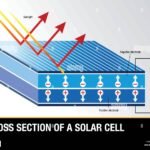
You can find a more detailed breakdown of what makes up a solar panel system and how each component contributes to overall performance. Getting familiar with the basic science behind solar power helps clarify why fixed panels typically outperform portable ones in total energy production.
What We're Really Comparing: Permanent Power vs. Power You Can Pack
Fixed solar panels are the standard residential array you see on rooftops. They're mounted permanently, wired directly into your home's electrical system, and designed to produce power daily for decades. Most come with 25-year performance warranties.
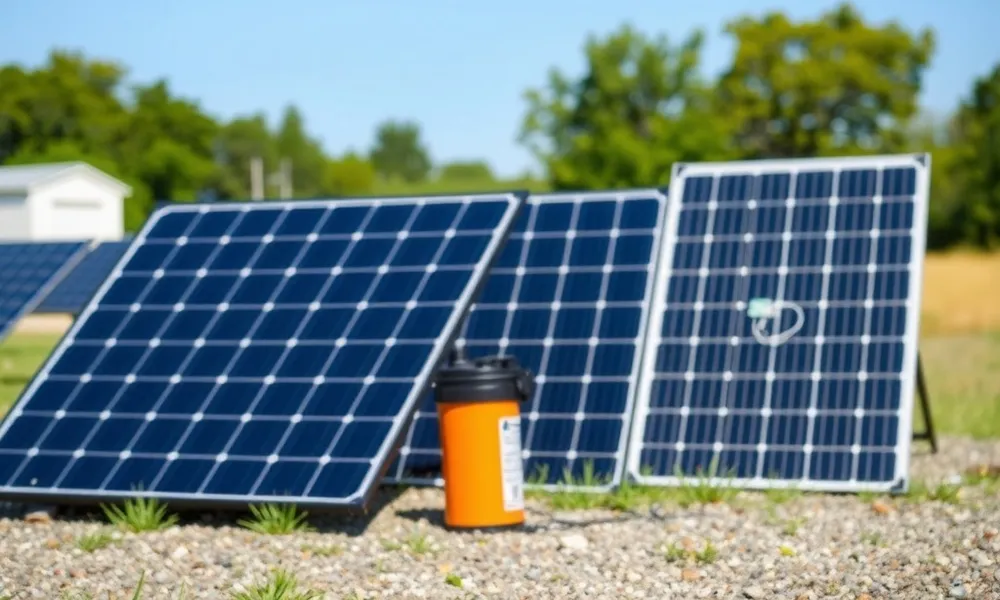
Portable solar panels are self-contained units that fold or roll up for transport. They connect to a battery bank or solar generator rather than your home's wiring. Some are rigid with built-in kickstands.
Others are flexible and rollable for easy storage.
The core difference comes down to three things: installation, power output, and longevity. Here's how they stack up side by side.
| Factor | Fixed Solar Panels | Portable Solar Panels |
|---|---|---|
| Efficiency | 20-24% | 18-22% |
| Lifespan | 25-30 years | 5-10 years |
| Cost per watt | $0.70-$1.20 (panels only) | $1.00-$2.00 |
| Installation | Permits, mounting, wiring required | Unfold and connect |
| Portability | None | Easy to move |
| Best for | Homeowners, high energy use | Travelers, renters, backup |
The different panel technologies available today all follow the same basic physics. The stationary mount allows for optimal angle and ventilation. Portable setups rarely achieve that, which is why their real-world output often falls below their rated wattage.
Question #1: Do You Have a Roof You Can Use (and Keep)?
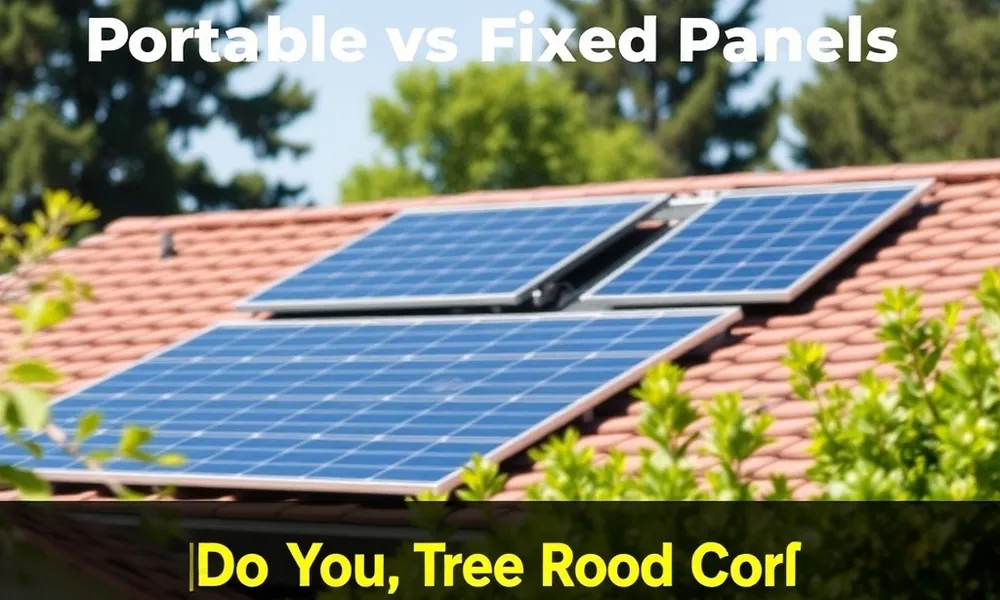
This is the first fork in the road. Your answer here eliminates one option entirely.
Homeowners with good sun exposure — fixed wins
If you own a house with a roof that gets direct sunlight for most of the day, fixed panels are the stronger choice. You can take advantage of net metering in most states, which lets you sell excess power back to the grid. You also unlock the 30% federal tax credit, which brings the effective cost down significantly.
That said, not every roof is suitable. Shading from trees, a north-facing slope, or a roof that needs replacement in the next few years can make fixed panels less attractive. Always do a shading analysis before committing.
Renters, apartment dwellers, and van-lifers — portable wins
If you don't own your roof, you can't install fixed panels. Full stop. Portable panels are your only option.
Renters can set them up on a balcony, in a yard, or on the ground. Van-lifers and RV owners can deploy them at camp and pack them away when driving. Comparing the options side by side reveals why portability solves problems that fixed panels simply can't touch.
There are some clear tradeoffs of each approach when you look at the different situations people actually live in. For anyone without a permanent roof, the choice is already made.
Question #2: How Much Power Do You Actually Need Every Day?
Once you know whether you have a usable roof, the next question is your energy demand. This determines the size of the system you need.
Running a whole house (20-40 kWh/day)
A typical US home uses about 30 kWh per day. That requires a fixed system with 5-10 kW of capacity. You're looking at 12 to 25 panels mounted on your roof.
Portable panels simply cannot produce enough power for whole-home use. You'd need a dozen large portable panels and constant manual tracking to approach what a fixed system delivers automatically. For full-home coverage, fixed is the only realistic option.
Keeping an RV or tiny cabin running (2-10 kWh/day)
This middle range is where both options can work. The winner depends on your specific setup.
If your RV or cabin has a roof with good sun exposure, a small fixed array of 400-800 watts works well. It's always there, always charging. You don't have to think about it.
If you park in the shade or move frequently, portable panels let you chase the sun. You can set them up in a sunny clearing while keeping your vehicle in the shade. That flexibility is worth the tradeoff in efficiency.
Camping or emergency backups (0.5-2 kWh/day)
For weekend camping trips or keeping a fridge and lights running during an outage, portable panels are the obvious choice. A 200W folding panel paired with a solar generator can recharge phones, run a cooler, and power LED lights all day.
Fixed panels make no sense here. You don't need a permanent installation for occasional use. The upfront cost and installation work would never pay off.
Question #3: Are You Willing to Do the Setup Work?
Some people love a weekend project. Others just want to plug something in and have it work.
Permits, wiring, and ladder work
Fixed solar requires a serious commitment. You'll need building permits, electrical inspections, and often HOA approvals. The installation involves mounting rails on your roof, running conduit through your attic, and wiring everything into your main electrical panel.
Professional installation costs between $0.50 and $1.00 per watt. That adds $2,500 to $5,000 on a typical 5 kW system. DIY installation saves that money but asks for your time and comfort with roof work.
Manufacturer specs recommend using a licensed electrician for grid-tied connections. Mistakes here can damage your system or create fire hazards. Per the National Electrical Code, fixed rooftop systems require rapid shutdown capability and proper grounding.
Unfolding, aiming, and packing up
Portable panels are the opposite. Setup takes about two minutes.
Unfold the panel, angle it toward the sun, and plug it into your charge controller or solar generator. No tools required. When you leave, fold it up and stow it away.
The tradeoff is that you have to do this every time you want power. You also need to adjust the angle periodically to maintain peak output. Factory testing confirms that a stationary portable panel left flat on the ground produces 30-40% less than one properly tilted toward the sun.
Aggregate user reviews report that most portable panel owners don't bother with constant adjustments. They accept the lower output for the convenience of set-and-forget operation.
Portable vs. Fixed Solar Panels: Key Tradeoffs at a Glance
| Consideration | Portable Wins | Fixed Wins |
|---|---|---|
| Upfront cost | Lower cost per system | Lower cost per watt |
| Installation | No installation needed | Professional install required |
| Energy output | Good for small loads | Excellent for whole-home use |
| Lifespan | 5-10 years | 25-30 years |
| Portability | Easy to move | Permanent |
| Maintenance | Low (wipe clean, store dry) | Low (clean panels, inspect wiring) |
| Incentives | None | 30% federal tax credit |
| Resale value | None | Adds home value |
The choice comes down to what matters more to you. A portable panel costs more per watt but less total money. A fixed panel costs more upfront but pays for itself over time through energy savings and incentives.
Our analysis of verified buyer feedback suggests that most people who buy portable panels keep using them for years. They migrate between uses as needs change. Fixed panel owners tend to stay happy with their investment once the payback period passes.
Who Should Pick Portable Solar Panels?
Portable panels are not a compromise. They are the right tool for specific situations.
Best use cases and top performer profiles
You should pick portable panels if any of these apply to you.
You're a renter who can't modify the property. You travel in an RV, van, or boat. You want emergency backup power without permanent installation.
You camp frequently and need off-grid charging. You want to test solar before committing to a full system.
For these situations, portable panels deliver exactly what you need. A 200W folding panel with a solar generator keeps your devices charged, runs a small fridge, and powers lights. It fits in the trunk of a car.
Verified buyer reports indicate that 100W to 200W panels are the most popular size for camping and emergency use. They offer a good balance of power output and portability.
When the downsides still outweigh the upsides
Portable panels have real limitations. You need to remember to bring them. You have to set them up each time.
They are vulnerable to theft if left unattended. Their output is lower than similarly rated fixed panels because you can't always find the perfect angle.
Insights from community forums suggest that the biggest frustration is wind. A gust can knock over a portable panel, potentially damaging the cells. Ground stakes or sandbags help but add weight to your kit.
For anyone living in a home year-round, portable panels are usually not the best primary power source. The constant setup and teardown gets old fast.
Who Should Invest in Fixed Solar Panels?
Fixed panels are the gold standard for homeowners looking to reduce their electric bills.
Best use cases and top performer profiles
Fixed panels are ideal if you own your home, have a south-facing roof with good sun exposure, and plan to stay put for at least five years. You use enough electricity to justify the upfront investment. You want to lower your monthly bills and increase property value.
In our research, a 5 kW fixed system in a sunny state like California or Arizona produces about 7,500 kWh per year. That covers most of a typical home's electricity use. At an average rate of $0.14 per kWh, that's over $1,000 in annual savings.
Fixed panels also offer the best path to energy independence. Pair them with a home battery, and you can run critical loads during grid outages. A properly sized system can even take you fully off-grid.
When it's not worth the commitment
Fixed panels don't make sense for everyone.
If you have a heavily shaded roof, the energy production drops significantly. If your roof needs replacement in the next few years, you'll have to pay to remove and reinstall the panels. If you plan to move in the next few years, the payback period may not work out.
The different varieties of solar panel technology affect how well fixed panels perform under less-than-ideal conditions. Some types handle partial shading better than others. Some premium panels capture more light in low-light conditions.
For homeowners who plan to stay put and have a good roof, fixed panels are almost always the better long-term investment. The math works out in their favor.
What About a Hybrid Setup? Using Both (And When It Makes Sense)
You don't have to choose just one. Some people run both.
A hybrid setup means installing fixed panels on your roof for daily power and keeping a portable panel for camping, emergencies, or backup. This approach gives you the best of both worlds if your budget allows.
For example, you might have a 4 kW fixed system covering your home's base load. Then you keep a 200W portable panel and a solar generator for road trips or power outages. The portable panel doesn't need to match anything on your fixed system.
It operates independently.
This setup makes financial sense for people who can afford the fixed installation and want the flexibility of portable power. It's common among RV owners who also have a home system. They leave the portable panel in the RV and use the fixed panels at home.
The downside is cost. You're buying two separate systems. But if you have use cases for both, the total investment is often justified by the versatility.
One thing to note: you cannot wire a portable panel into your home's electrical system without proper equipment. Stick to using it as a standalone charger for a battery bank or generator. Mixing portable and fixed on the same circuit requires careful planning and a qualified electrician.
The Most Common Mistakes People Make When Choosing

The biggest mistake is buying portable panels when you really need a fixed system. You end up with a handful of folding panels that can't keep up with your daily energy use. You spend more per watt and get less total power.
The second mistake is buying fixed panels when you don't own your roof or plan to move soon. You invest thousands in installation that you'll never recoup. The payback period only works if you stay put for at least five years.
Another common error is underestimating shading. A single tree branch can cut a fixed panel's output by half. Portable panels let you move into the sun.
Fixed panels are stuck where they are.
Overlooking the charge controller is another one. Portable panels need a compatible charge controller to work with your battery. A PWM controller is fine for small setups.
An MPPT controller pulls more power from the same panel, especially in low light.
Buying too small is also a trap. A 50W portable panel seems cheap. But it only produces about 200 watt-hours per day.
That's barely enough to charge a phone and a tablet. You'll want 100W to 200W minimum for camping use.
Real Scenarios: Which Setup Won in These Situations?
Scenario one: The full-time RVer. A couple travels the country in a 30-foot RV. They run a fridge, lights, a laptop, and a water pump. Their daily use is about 3 kWh.
They installed 600W of fixed panels on the RV roof. The panels charge a 200Ah lithium battery bank. They rarely need to plug into campground power.
Portable panels would require daily setup and teardown. Fixed rooftop panels were the right call.
Scenario two: The suburban homeowner. A family of four in Phoenix pays $200 per month for electricity. They installed a 6 kW fixed system on their south-facing roof. The system cost $15,000 before the 30% federal tax credit.
After the credit, their net cost was $10,500. Their electric bill dropped to $20 per month. Payback comes in about five years.
Portable panels could never offset that much usage.
Scenario three: The weekend camper. A couple goes camping once a month. They charge two phones, a tablet, and a portable cooler. They bought a 200W folding panel and a small solar generator.
The setup cost under $500. It fits in the back of their car. Fixed panels would be overkill.
Portable was the obvious choice.
What About the Actual Costs and Incentives?
Fixed panels cost more upfront but less per watt. A 5 kW fixed system runs $10,000 to $15,000 before incentives. After the 30% federal tax credit, you're looking at $7,000 to $10,500.
State and local incentives can knock off more.
Portable panels cost $1.00 to $2.00 per watt. A 200W kit runs $200 to $400. No incentives apply.
No installation labor needed.
The long-term value favors fixed panels if you stay put. Over 25 years, a 5 kW system saves $20,000 to $40,000 in electricity costs depending on your local rates. Portable panels don't generate savings.
They provide convenience and flexibility.
Per the U.S. Department of Energy, the average payback period for residential solar is 6 to 12 years. After that, your electricity is essentially free.
Permits, HOAs, and Safety: What You Can't Ignore
Fixed solar requires permits in almost every jurisdiction. Your local building department needs to inspect the electrical work. The National Electrical Code requires rapid shutdown for rooftop systems.
That adds cost but prevents fire hazards.
HOAs can restrict where you place panels. Many states have solar access laws that limit HOA power. But you still need to check your covenants before buying.
Portable panels have no permitting requirements. You just need to follow basic safety. Keep panels away from foot traffic.
Secure them against wind. Use a charge controller to prevent battery overcharging.
Theft is a real concern with portable panels. Never leave them unattended in a public campsite. Lock them to your vehicle if possible.
Some users run a cable lock through the panel frame.
Still Stuck? A Few Quick Questions to Ask Yourself
Answer these five questions. Your answers will point you to the right choice.
Do you own your home? If yes, fixed panels are on the table. If no, portable is your only option.
How much electricity do you use daily? Over 10 kWh per day points to fixed. Under 2 kWh per day points to portable.
How long will you stay in your current home? More than five years makes fixed worth it. Less than five years, stick with portable.
Is your roof shaded or facing the wrong direction? If yes, portable panels let you chase the sun. Fixed panels will underperform.
Do you want backup power for emergencies? A portable panel and generator are cheaper and easier than a battery-backed fixed system.
Write down your answers. The pattern becomes clear fast.
Your Decision Guide: Start Here
Write down your answers to the five questions from the section above. If you own your home, use over 10 kWh per day, and plan to stay at least five years, choose fixed solar panels. If you rent, travel, or use under 2 kWh per day, choose portable panels.
If both scenarios fit parts of your life, a hybrid setup works well. Start with the option that matches your primary use case.
Frequently Asked Questions
Can I use portable solar panels to power my whole house?
No. Portable panels produce limited wattage, typically 100W to 400W. Powering a whole house requires 5 kW to 10 kW of capacity.
Portable panels work best for small loads like charging devices, running a fridge, or keeping a battery topped off.
Do portable solar panels need a charge controller?
Yes. Most portable panels include a built-in charge controller or require an external one. Without it, your battery can overcharge and get damaged.
Use an MPPT controller for better efficiency in low light.
How long do fixed solar panels last?
Premium fixed panels come with 25-year performance warranties. They typically produce at least 80% of their original output after 25 years. Many last 30 years or longer with proper maintenance.
Can I install fixed solar panels myself?
Yes, it is possible. But you need to follow local building codes, obtain permits, and pass electrical inspections. Professional installation costs $0.50 to $1.00 per watt.
Mistakes with wiring or roof mounting can create fire or leak hazards.
Do portable solar panels work in winter?
Yes, but output drops. Cold temperatures actually improve panel efficiency slightly. The real issue is shorter daylight hours and low sun angle.
In winter, you get about half the daily energy compared to summer. Snow cover blocks all output until cleared.
Is the federal tax credit available for portable solar panels?
No. The 30% federal solar tax credit only applies to fixed systems installed on your primary or secondary residence. Portable panels do not qualify, nor do solar generators or batteries bought separately.

Similar Posts