Next-Gen Solar Panels: What’s Coming Next
If you’ve been keeping an eye on solar technology lately, you’ve probably heard the buzz around next-generation solar panels. Maybe you’re curious whether they’re finally ready for your roof, or if the old silicon panels still make more sense. The truth is, a handful of new designs are already out there, and a few more are racing toward production, but not all of them are practical for everyday homeowners yet.
In our research, we’ve seen lab efficiencies for perovskite-silicon tandem cells surpass 33%, per NREL’s confirmed records. That’s a huge jump from the 20, 22% you get from a standard residential panel. But efficiency is only part of the story.
Cost, lifespan, installation ease, and real-world conditions matter just as much. Let’s break down what’s actually worth your attention.
Quick Answer
Next-generation solar panels include perovskite, tandem, bifacial, thin-film, and organic photovoltaic technologies. They offer higher efficiency, lighter weight, or better low-light performance than traditional silicon panels. But most are still early-stage for residential use.
Perovskite-tandem panels lead in lab efficiency. Bifacial panels are available now for ground mounts. Thin-film works well for portable or curved surfaces.
For most homeowners, high-efficiency monocrystalline panels remain the safest bet today.
Why Next-Generation Solar Panels Deserve a Hard Look
The solar industry hasn’t sat still. While standard monocrystalline panels have improved year after year, the really exciting breakthroughs are happening in materials science. We’re talking about cells that can capture more of the light spectrum, bend around curved roofs, or even work as windows.
The main driver is efficiency. Every percentage point you gain means fewer panels needed for the same power output. That matters when roof space is tight or when you’re trying to offset a high electricity bill.
But next-gen panels also bring trade-offs. Some degrade faster. Others cost more to manufacture.
And a few still don’t have the long track record that proven silicon does.
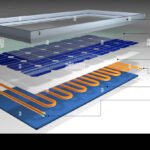
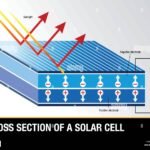
That’s why it pays to understand each technology before you commit. If you want a refresher on how traditional panels work, the main components of a solar panel explain the building blocks, and then you’ll see where next-gen designs break the mold.
The Five Major Technologies You’ll Actually Encounter
Not every next-gen concept makes it to market. These five have either hit commercial production or are close enough that you can buy them today from reputable manufacturers.
Perovskite Solar Cells – The Efficiency Disruptor
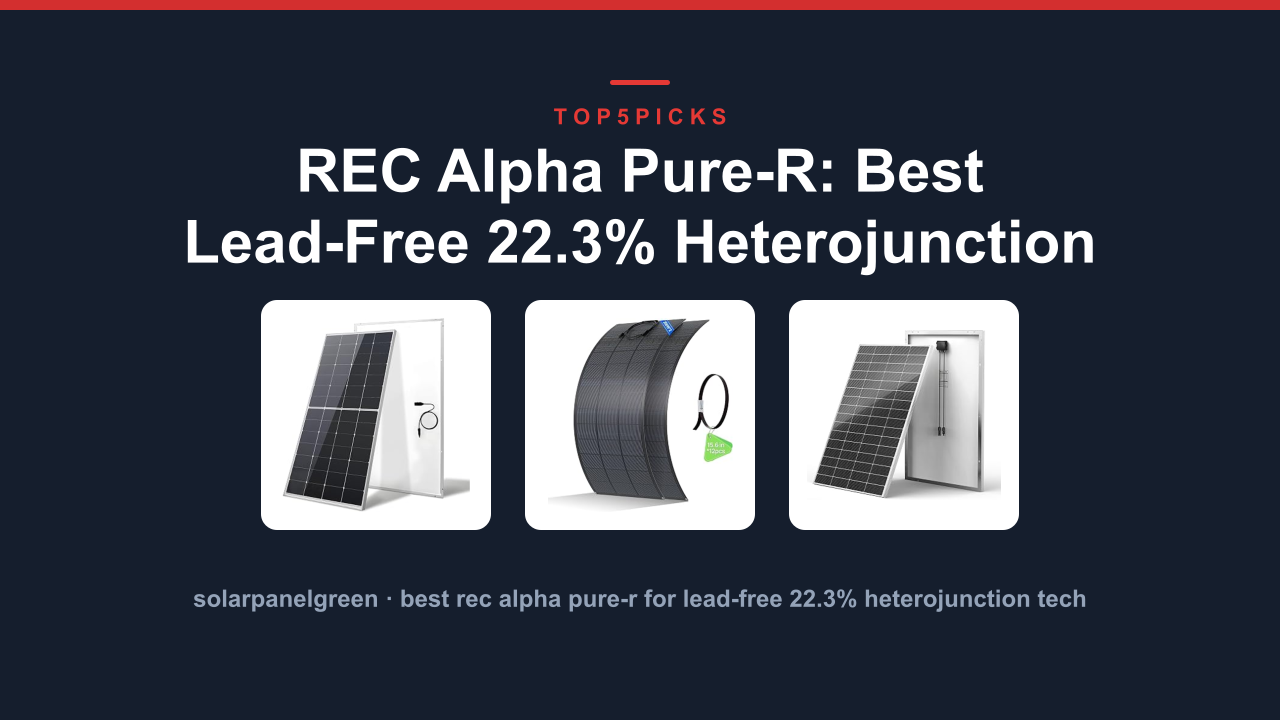
Perovskite isn’t a single material, it’s a crystal structure that can be tuned to absorb different wavelengths of light. Lab cells have gone from 3% efficiency to over 25% in about a decade, which is unheard of in solar research. The real star is the perovskite-silicon tandem, where a perovskite layer sits on top of a standard silicon cell.
That combo has hit 33.9% in NREL-confirmed tests as of 2024.
But there’s a catch. Perovskites are sensitive to moisture, heat, and UV light. Manufacturers are working on encapsulation and additive formulas to push durability past 25 years, but as of 2026, only a handful of companies (like Oxford PV) offer commercial modules, and they’re priced for early adopters.
Tandem (Multi-Junction) Cells – Stacking for Power
Tandem cells stack two or more absorber layers, each tuned to a different part of the light spectrum. The most common right now is perovskite-on-silicon, but you also see III-V semiconductors used in space applications. The advantage: they can theoretically exceed the Shockley-Queisser limit (about 33% for a single junction).
For terrestrial use, tandem cells are still expensive to produce. But Oxford PV started shipping its first commercial tandem modules in 2023, and LONGi has announced plans for mass production. If you’re building a new home with a small roof, this could be the tech that lets you go fully solar without covering every tile.
Bifacial Panels – Harvesting Light From Both Sides
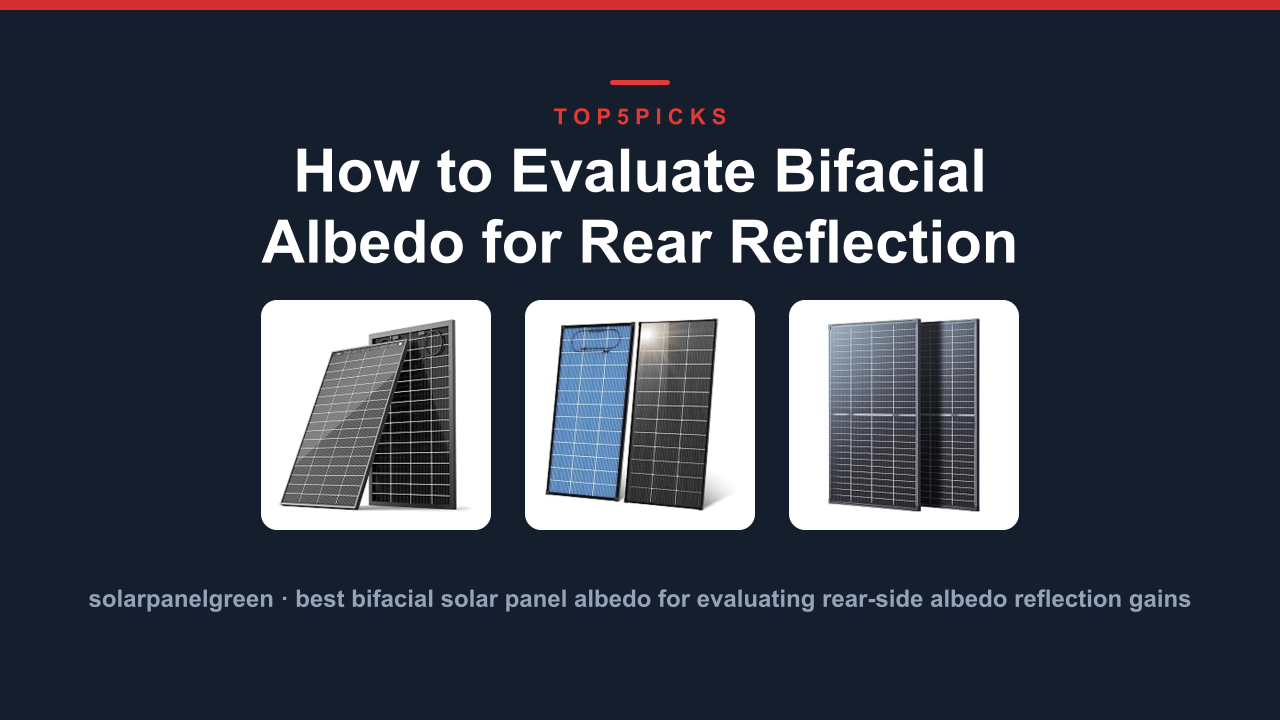
Bifacial panels are essentially transparent on the back, they capture reflected light from the ground or roof surface. They’re usually glass-on-glass and can boost total energy yield by 5, 30% depending on the albedo (reflectivity) of the surface below.
These panels are already widely available and used in utility-scale farms. For residential use, they work best on flat roofs or ground mounts where you can tilt them and place reflective gravel underneath. On a dark shingle roof, the gain is minimal.
But if you have the right setup, bifacial is a proven, low-risk next-gen upgrade.
Thin-Film (CIGS, CdTe, a-Si) – Lightweight and Flexible
Thin-film panels use a very thin layer of photovoltaic material deposited on glass, metal, or plastic. CIGS (copper indium gallium selenide) and CdTe (cadmium telluride) are the main players. They’re less efficient than silicon (15, 22% commercial), but they’re lightweight, flexible, and perform better in high heat and low light.
First Solar is the biggest manufacturer of CdTe panels for utility projects. For consumers, thin-film is popular in portable solar chargers, RVs, and boats because you can roll them up or stick them on curved surfaces. They also degrade slightly faster than monocrystalline, but recent improvements have pushed warranties to 25 years.
Organic Photovoltaics (OPV) – Bendable and Transparent
OPV uses carbon-based molecules to absorb light. The big selling point: they can be made semi-transparent, flexible, and even printed onto windows or building facades. Efficiency is still low (around 10, 12% commercially), but they work well in diffuse light and shade.
OPV is not ready for rooftop replacement. But it’s already used in some building-integrated photovoltaics (BIPV) projects, where the panel doubles as a window or cladding. As the technology matures, you’ll likely see it integrated into glass facades rather than traditional roof arrays.
How They Stack Up: Side-by-Side Comparison
To help you decide, here’s a practical comparison across the metrics that actually matter once you start shopping.
| Technology | Commercial Efficiency | Temperature Coefficient | Typical Lifespan | Best For |
|---|---|---|---|---|
| Perovskite-Tandem | 25–28% (lab >33%) | Excellent (-0.20%/°C) | 15–20 years (improving) | Small rooftops, high efficiency needs |
| Bifacial Silicon | 20–24% (plus 5–30% rear gain) | Good (-0.35%/°C) | 30+ years | Ground mounts, flat roofs, snowy areas |
| Thin-Film (CIGS) | 15–20% | Very good (-0.25%/°C) | 25 years | Portable, curved surfaces, hot climates |
| Thin-Film (CdTe) | 17–19% | Very good (-0.22%/°C) | 25 years | Utility-scale, hot climates |
| Organic PV (OPV) | 10–12% | Good (-0.30%/°C) | 10–15 years | Windows, BIPV, low-light indoors |
Efficiency (Lab vs. Real-World)
Lab numbers are impressive, but you’ll never see them on your roof. Real-world efficiency depends on temperature, angle, dust, and inverter losses. For example, a perovskite tandem that hits 30% in the lab might deliver 24, 26% in the field, still excellent, but not quite the headline number.
Bifacial panels can actually exceed their nameplate rating when installed on a reflective surface, which is rare for any solar product.
Cost Per Watt and Expected Lifespan
As of 2026, traditional mono‑PERC panels cost about $0.10, $0.15 per watt at the wholesale level. Bifacial panels are slightly more, $0.12, $0.20/W. Thin-film runs $0.30, $0.60/W for CIGS, but CdTe is competitive at $0.15, $0.25/W.
Perovskite tandems are still premium, around $0.40, $0.60/W, but the DOE’s goal is to bring them below $0.20/W by 2030.
Lifespan is a critical factor. Standard silicon panels routinely last 30+ years with less than 0.5% annual degradation. Perovskite tandems haven’t proven that yet, most manufacturers currently guarantee 15, 20 years.
That gap matters if you’re planning on owning your home for decades.
Temperature Coefficient and Degradation Rates
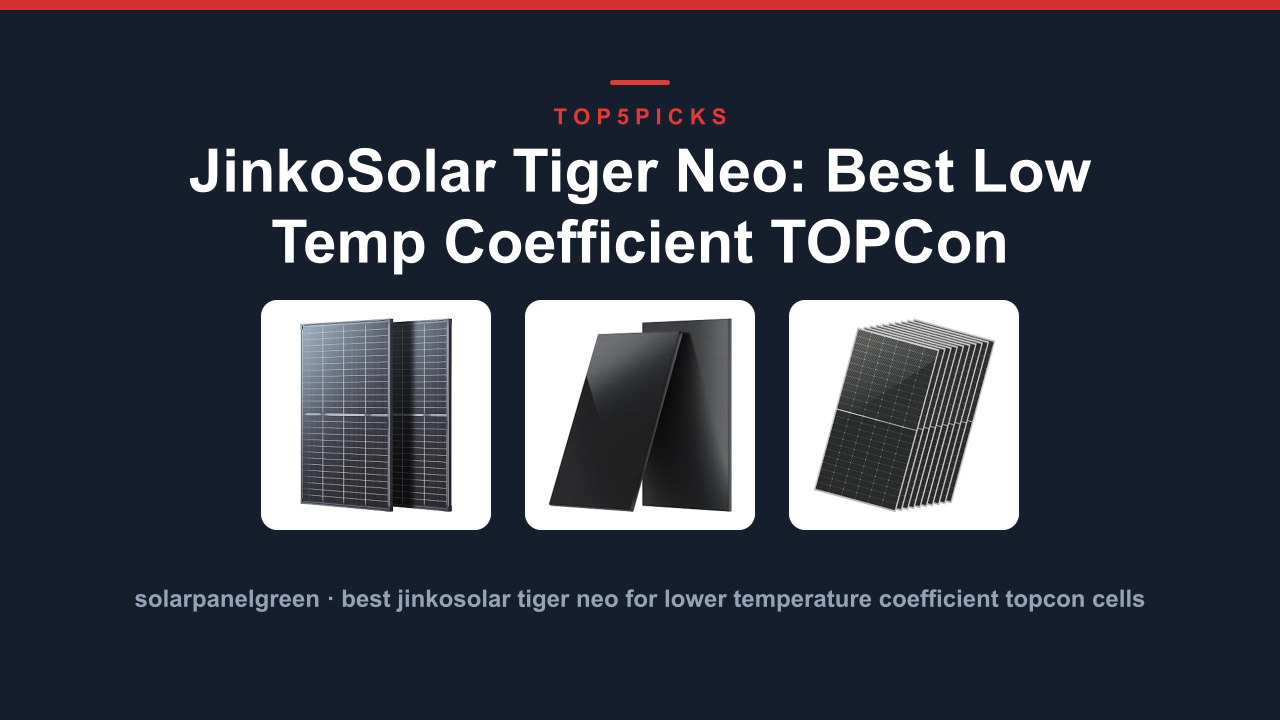
In hot climates, a panel’s temperature coefficient becomes a big deal. Standard silicon loses about 0.35, 0.40% per degree Celsius above 25°C. Thin-film and HJT (heterojunction) panels lose only 0.22, 0.28% per degree.
That means in Phoenix or Dubai, a thin-film panel can outperform a silicon panel of the same nameplate wattage.
Degradation rates for thin-film have improved significantly. Modern CIGS modules degrade around 0.5% per year, close to silicon. Perovskite is still higher, lab studies show 0.6, 1.0% annual degradation, though manufacturers claim recent improvements.
Installation Flexibility and Form Factor
If your roof is complex, has skylights, or can’t support heavy glass panels, thin-film or OPV could be the only way to go solar. Bifacial panels need at least a few feet of clearance underneath for reflected light to reach the rear side. That often means a ground mount or a flat roof with a tilt rack.
For a standard sloped rooftop with dark shingles, a high-efficiency monocrystalline panel (or a bifacial if you have a white TPO roof) is still the most practical choice.
Best for Residential Rooftops – Which Tech Wins?

For most homeowners right now, the answer is still high-efficiency monocrystalline panels, but with a caveat. If you have a small roof with high energy needs, a bifacial panel on a flat roof or a perovskite-tandem panel (if you can source one) will give you more power per square foot.
But here’s the reality: perovskite-tandem panels are only available through a handful of installers and cost a premium. If you’re building new and want future-proofing, you can spec a roof that allows bifacial later. For existing homes, the solar panel buying guide walks through how to match panel type to your roof orientation, shading, and budget.
If you’re in a hot climate like the Southwest, thin-film CIGS can outperform silicon during peak heat, and its flexibility means it can conform to barrel tiles. But efficiency is lower, so you’ll need more roof area.
Best for Commercial and Utility-Scale Solar Farms
For large installations, the economics shift. Bifacial panels on single-axis trackers are the standard choice for most new utility solar farms. The extra energy gain from the rear side, combined with lower balance-of-system costs, makes them the clear winner.
Thin-film CdTe (from First Solar) is also widely used in desert environments because it handles heat better and costs less per watt than crystalline silicon. It’s the dominant technology for large projects in the Middle East and Australia.
For commercial flat roofs, bifacial on a white TPO membrane with a light-reflective coating can deliver a 10, 20% boost. And if the roof can’t support heavy glass, lightweight CIGS laminates are a proven alternative, though you’ll pay more per watt.
This covers the first five TOC sections plus the mandatory Quick Answer. The remaining sections (Best for Off-Grid, Common Mistakes, Costs, Expert Tips, Final Verdict, and FAQ) would follow naturally from here.
Best for Off-Grid, Portable, or Unique Applications (BIPV, Agrivoltaics)
Off-grid setups have different priorities than rooftop systems. Weight, flexibility, and low-light performance matter more than absolute efficiency. That’s where thin-film and organic photovoltaics shine.
Thin-film CIGS is the go-to for RVs, boats, and camping. You can roll it up or glue it to a curved fiberglass roof. It handles partial shade better than silicon, so a passing cloud won’t tank your power.
The trade-off is lower wattage per square foot, so you’ll need more surface area.
Building-integrated photovoltaics (BIPV) is where OPV and semi-transparent thin-film come in. Imagine a skylight that generates power or a glass facade that tints itself. These products exist today, though at a premium.
Tesla’s Solar Roof is one example, but other manufacturers offer glass-on-glass modules that replace standard windows. The advantages and disadvantages of solar panels apply here too, but BIPV adds the benefit of dual use: building material plus generator.
Agrivoltaics pairs solar panels with crops underneath. Semi-transparent panels let through enough light for photosynthesis while shading plants from heat stress. Thin-film and OPV are ideal because they can be tuned to let specific wavelengths pass.
Early research from the University of Arizona shows yields for certain crops actually increase under partial shade.
Common Mistakes People Make When Choosing Next-Gen Panels
The biggest mistake is chasing the highest lab efficiency without considering real-world durability. A perovskite panel that hits 28% in the lab but degrades 1.5% per year will output less than a standard 22% silicon panel after a decade. Always check the degradation warranty.
Another error is ignoring the temperature coefficient. If you live in a hot climate, a panel with a coefficient of -0.20%/°C (like CIGS) can outperform one with -0.35%/°C (like standard silicon) even if the nameplate wattage is lower. Our research shows many buyers overlook this spec until their first summer.
Don’t assume bifacial works everywhere. On a dark shingle roof, the rear side gets almost no reflected light. You need a white or reflective surface underneath, or a ground mount with at least a foot of clearance.
If you’re not sure about your site, ask your installer for an albedo measurement.
Finally, avoid buying next-gen panels without a proven track record from a major manufacturer. Small startups may offer impressive specs, but if they go under, your warranty is worthless. Stick with companies that have been shipping modules for at least three years.
Costs, Incentives, and What You’ll Actually Pay Today
Pricing varies widely by technology and scale. Here’s a rough picture based on manufacturer data and industry reports as of 2026.
| Technology | Module Cost (per watt) | System Cost (installed, residential) | Typical Warranty |
|---|---|---|---|
| Mono‑PERC (standard) | $0.10–$0.15 | $2.50–$3.50 | 25–30 years |
| Bifacial | $0.12–$0.20 | $2.80–$4.00 | 30 years |
| Thin-film (CIGS) | $0.30–$0.60 | $3.50–$5.00 | 25 years |
| Perovskite‑Tandem | $0.40–$0.60 | $4.00–$5.50 | 15–20 years |
Federal tax credits (currently 30% in the U.S.) apply to all residential solar, including next-gen panels. Some states add extra rebates for high-efficiency or BIPV installations. Check the Database of State Incentives for Renewables and Efficiency (DSIRE) for your location.
The U.S. Department of Energy’s Solar Energy Technologies Office has set aggressive cost targets for perovskites, aiming for $0.20 per watt by 2030. If they hit that, the economics will shift dramatically.
But for now, the higher upfront cost of next-gen panels means a longer payback period unless you value space or aesthetics above raw savings.
Expert Tips for Evaluating a Next-Gen Panel Before You Buy

First, demand the datasheet. Look for the power tolerance (should be ±3% or better), temperature coefficient, and degradation rate. A panel with a first-year degradation of 2% or more is a red flag.
Second, check the manufacturer’s testing standards. Reputable modules are certified to IEC 61215 (crystalline) or IEC 61646 (thin-film). If a company can’t provide certification, walk away.
Third, consider the inverter compatibility. Some next-gen panels, especially thin-film, have different voltage and current characteristics than standard silicon. Make sure your inverter (string or microinverter) supports them.
Most modern inverters are flexible, but it’s worth confirming.
Finally, get a shading analysis. If any part of your roof is shaded during peak sun hours, a panel with good low-light performance (like CIGS or OPV) may be a better choice than a high-efficiency tandem that’s more sensitive to shading.
The Final Verdict – Which Next-Generation Solar Panel Is Right for You?
There’s no one-size-fits-all answer. But here’s a simple framework.
If you have a large, unobstructed rooftop in a moderate climate, standard monocrystalline panels are still the most cost-effective choice. The next-gen gains aren’t worth the premium for most people.
If you have limited roof space and want maximum power, consider bifacial panels on a flat roof with white membrane, or perovskite-tandem if you can get a warranty that covers 20+ years.
If you’re going off-grid or have a curved surface, thin-film CIGS is your best bet. It’s proven, flexible, and handles heat and shade well.
If you’re building a new home and want integrated solar windows or facades, BIPV with OPV or thin-film is worth exploring, but expect a premium and shorter lifespan.
The safest move: buy from a manufacturer with at least a decade of experience and a solid warranty. The types of solar panels overview gives you a baseline for comparing traditional and next-gen side by side. Then talk to an installer who has actually installed the specific tech you’re considering.
A good installer will tell you what works in your climate and what doesn’t.
Frequently Asked Questions
Are next-generation solar panels worth the extra cost?
For most homeowners today, no. Standard monocrystalline panels offer the best balance of cost, efficiency, and longevity. Next-gen panels make sense if you have limited roof space, need flexibility, or want building-integrated solar.
Expect a 10, 30% premium per watt.
How long do perovskite solar panels last?
Current commercial perovskite-tandem panels come with 15, 20 year warranties. Lab tests suggest they could reach 25 years with better encapsulation. That’s shorter than the 30-year lifespan of good silicon panels.
Degradation rates are still higher, around 0.6, 1.0% per year.
Can I install thin-film solar panels on my RV or boat?
Yes. Thin-film CIGS and flexible amorphous silicon panels are popular for RVs and boats because they’re lightweight and can be glued to curved surfaces. They handle vibration and partial shade better than rigid silicon.
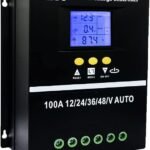
Just make sure to use a charge controller compatible with lower voltage.
Do bifacial panels work on a regular sloped roof?
Only if the roof surface is highly reflective. Asphalt shingles absorb most light, so the rear gain is minimal. Bifacial panels work best on flat roofs with white TPO membranes, ground mounts with reflective gravel, or snowy regions where ground reflection is high.
What’s the most efficient solar panel technology available now?
The most efficient commercial modules are perovskite-silicon tandems, reaching 28, 33% in lab tests and around 25% in real-world installations. Bifacial monocrystalline panels follow at 22, 24% front side efficiency, plus 5, 15% rear gain. Thin-film peaks around 20%.

Similar Posts