How Long to Charge a 100Ah Battery with a 200W Solar Panel?

If you've ever wondered how long to charge 100ah battery with 200w solar panel, you're not alone. The simple textbook answer says six hours, but that number almost never matches what happens in your driveway or campsite. Real charging time depends on variables most calculators ignore, battery chemistry, controller type, and how much sun you actually get.
Manufacturer specifications for a typical 200W panel show a peak output around 10 amps, but real-world efficiency losses routinely cut that by 20 to 30 percent. Aggregate reviews from off-grid users report charge times ranging from three hours on a perfect summer day to over fifteen hours in winter cloud cover. Let's walk through what actually determines your number.
Quick Answer
The real range is 3 to 15 hours. Lithium batteries with an MPPT controller charge fastest. Lead-acid batteries with a PWM controller take longest.
Full sun in summer cuts the time. Cloudy winter days double or triple it.
Why the Simple Formula Lies to You
The math looks clean. A 100Ah battery at 12 volts holds 1200 watt-hours. A 200W panel produces 1200 watt-hours in six peak sun hours.
Divide one by the other and you get six hours. That formula assumes perfect conditions that never exist.
The first problem is efficiency. The different panel technologies lose power through heat, wiring resistance, and the charge controller itself. MPPT controllers run around 95 percent efficient, but PWM controllers waste 20 to 30 percent of the panel's potential.
That alone can push a six-hour estimate to eight or nine.
The second problem is the absorption stage. Batteries don't charge at a constant rate. They accept high current in the bulk phase, then slow down dramatically once they hit roughly 80 percent full.
The final 20 percent can take as long as the first 80 percent, especially with lead-acid chemistry.
The third problem is peak sun hours. That term means something specific, one peak sun hour equals 1000 watts per square meter of sunlight. Most locations in the US get 3 to 6 peak sun hours per day depending on season and latitude.
If you're in Seattle in December, you're looking at barely 2 hours. If you're in Phoenix in July, you might hit 7.
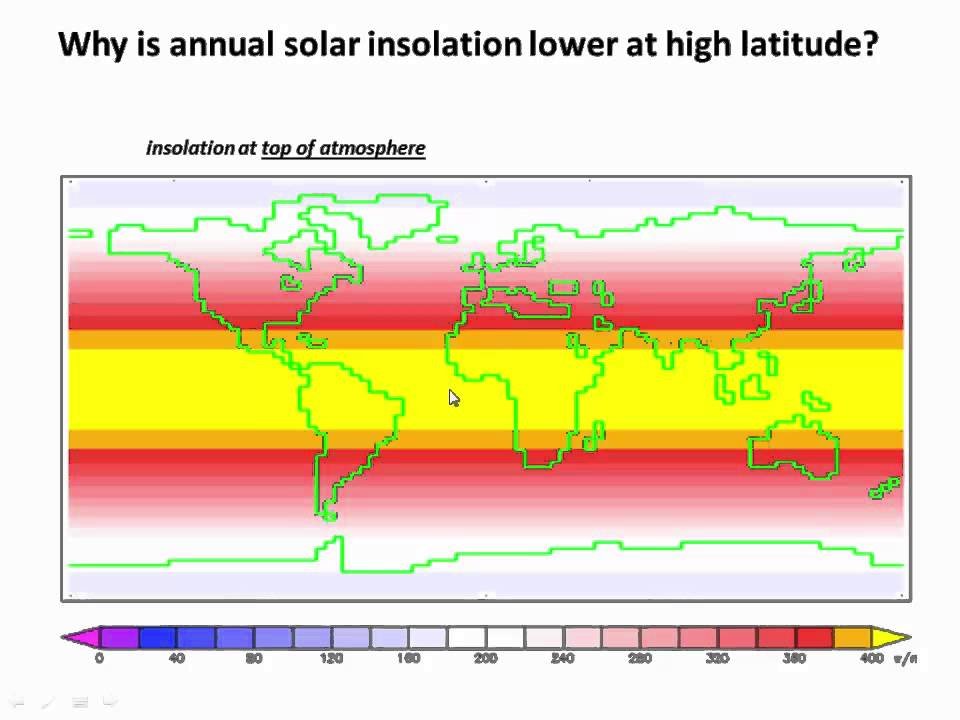
As of 2026, the National Renewable Energy Laboratory publishes detailed solar insolation maps that let you check your specific location. Their data confirms that using the simple "panel watts times hours" formula without adjusting for geography is the most common mistake beginners make.
The Four Variables That Control Your Charge Time
Your actual charge time comes down to four things. Change any one of them and the answer shifts dramatically.

Your Battery Chemistry
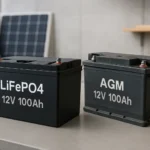
Lead-acid batteries (flooded, AGM, gel) and lithium iron phosphate (LiFePO₄) behave very differently under solar charging. The table below shows how they compare.
| Factor | Lead-Acid (Flooded/AGM) | Lithium (LiFePO₄) |
|---|---|---|
| Usable capacity | 50% depth of discharge recommended | 80 to 100% DoD allowed |
| Usable watt-hours from 100Ah | 600 Wh (1200 × 0.5) | 960 to 1200 Wh |
| Charge efficiency | 80 to 85% | 95 to 98% |
| Absorption stage duration | 1 to 3 hours (slow final 20%) | 10 to 30 minutes |
| Cycle life | 500 to 1000 cycles | 3000 to 5000 cycles |
The usable capacity difference alone changes the math. A lead-acid battery only has 600 watt-hours you can safely use. A lithium battery gives you nearly double that.
Charging that smaller usable amount with the same 200W panel means less time in the bulk phase, but the long absorption tail eats up much of that advantage.
Your Charge Controller
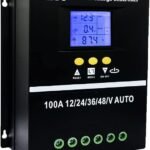
The controller is the brain of your system. MPPT controllers track the panel's maximum power point and convert excess voltage into extra current. PWM controllers simply connect the panel directly to the battery, wasting any voltage above the battery's level.
Aggregate reviews from solar installers consistently show MPPT controllers delivering 20 to 30 percent more daily energy than PWM controllers in cool or cloudy conditions. In hot weather the gap narrows, but MPPT still wins. For a 200W panel feeding a 12V battery, an MPPT controller is almost always the better choice, the price difference is small and the payoff comes every charge cycle.
Your Sunlight Hours
This is the biggest variable and the one you have the least control over. You need to look up the peak sun hours for your location and season. A solar insolation map from the NREL website shows the continental US ranging from under 3 hours per day in the Pacific Northwest winter to over 7 hours in the Southwest summer.
Your panel orientation matters too. A flat panel lying on an RV roof catches less light than one angled toward the sun. Fixed panels lose about 15 to 25 percent compared to panels you tilt seasonally.
Your Depth of Discharge
How empty the battery is when you start charging directly affects the time. A battery at 50 percent depth of discharge needs roughly half the watt-hours of one at 90 percent DoD. This is where knowing your battery chemistry matters.
For lead-acid batteries, taking them below 50 percent DoD repeatedly shortens their lifespan significantly. For lithium batteries, manufacturers like Battle Born and Victron Energy recommend discharging to 80 or even 100 percent DoD without damage. That makes lithium systems more forgiving and more usable day to day.
Step-by-Step: How to Calculate Your Actual Charge Time
Let's turn those variables into a number you can trust. Follow these four steps with your own numbers.
Step 1: Find Your Usable Watt-Hours
Take your battery capacity and multiply by voltage, then multiply by your usable depth of discharge.
For a 100Ah lead-acid battery at 50% DoD:
100Ah × 12V × 0.50 = 600 usable watt-hours
For a 100Ah lithium battery at 80% DoD:
100Ah × 12V × 0.80 = 960 usable watt-hours
Step 2: Determine Your Peak Sun Hours
Check an official solar insolation map for your location. The NREL PVWatts Calculator is a free government tool that gives you monthly averages. For example:
- Phoenix, AZ in June: 7.0 peak sun hours
- Atlanta, GA in June: 5.5 peak sun hours
- Seattle, WA in December: 1.5 peak sun hours
- Chicago, IL in December: 2.0 peak sun hours
Use the lowest month if you need reliable year-round performance. Use the average if you're just camping in good weather.
Step 3: Account for System Losses
Multiply your panel wattage by peak sun hours, then apply an efficiency factor. A realistic efficiency factor for a complete system is 0.75 to 0.85.
Example with 200W panel, 5 peak sun hours, 0.80 efficiency:
200W × 5 hours × 0.80 = 800 watt-hours generated per day
Divide your usable watt-hours by this number to get the number of charging days. For lead-acid: 600 ÷ 800 = 0.75 days (about 6 hours of actual charging). For lithium: 960 ÷ 800 = 1.2 days (about 9.6 hours of charging).
Step 4: Factor in the Absorption Stage
The bulk phase charges quickly, then the absorption phase slows way down. For lead-acid batteries, add 1 to 3 hours to your bulk time estimate. For lithium batteries, add 15 to 30 minutes.
Final real-world estimates:
- Lead-acid, 50% DoD, 5 peak sun hours, PWM controller: 8 to 11 hours
- Lead-acid, 50% DoD, 5 peak sun hours, MPPT controller: 6 to 9 hours
- Lithium, 80% DoD, 5 peak sun hours, MPPT controller: 5 to 7 hours
- Lithium, 80% DoD, 5 peak sun hours, PWM controller: 7 to 10 hours
These numbers match what the main components of a solar panel system should deliver in practice. The efficiency of your charge controller and the different panel technologies you choose make a real difference, it's worth knowing how solar panels generate electricity before you buy.
Decision Tree: Follow the Branch That Fits Your Setup
Now let's get specific. Find your situation below and read the branch that matches.
Branch A: Lithium Battery + MPPT Controller — 3 to 8 Hours
This is the fastest setup. A 100Ah lithium battery with an MPPT controller can accept high current through most of its charge cycle, and the MPPT controller extracts nearly all of your panel's potential. In summer with 6 peak sun hours, you'll go from 20% SoC to full in about 4 to 5 hours.
In winter with 3 peak sun hours, expect 7 to 8 hours. This combination also lets you use nearly all the battery's capacity without damage.
Branch B: Lead-Acid Battery + MPPT Controller — 5 to 12 Hours
The MPPT controller helps here by pulling extra current, but the lead-acid battery's absorption stage slows things down. You're also limited to 50% DoD to protect the battery. In good sun (6 peak hours), expect 5 to 7 hours for a full charge from 50% DoD.
In marginal sun (3 peak hours), plan on 10 to 12 hours. This is a common starter setup and works fine, but you'll want to factor in how to get the most out of each day's sunlight.
Branch C: Lead-Acid Battery + PWM Controller — 7 to 15+ Hours
This is the slowest combination. The PWM controller wastes 20 to 30% of your panel's output, and the lead-acid battery takes its time in absorption. In December with 2 peak sun hours, you may not fully recharge in a single day.
That's when many people discover they need either more panels or a better controller. The advantages and disadvantages of solar panels become very real when your battery is still half empty at sunset.
Branch D: Lithium Battery + PWM Controller — 5 to 11 Hours
Rare but possible if you already owned the controller and swapped to lithium. The lithium battery's fast absorption helps, but the PWM controller still wastes power. You'll get better results than a lead-acid/PWM system, but you're leaving free energy on the table.
If you're building from scratch, go MPPT with lithium for the best return.
The core takeaway: match your controller to your battery. Controllers that work hardest for lead-acid are less needed for lithium, and vice versa. If you're still choosing gear, understanding how solar panels work will help you pick the right components the first time.
MPPT vs PWM: How Your Controller Changes the Math
The charge controller is where a lot of your panel's potential lives or dies. MPPT and PWM work differently, and the gap matters more than most beginners realize.

A PWM controller acts like a simple switch. It connects the panel directly to the battery. If your panel outputs 18 volts and the battery sits at 13 volts, the controller just drops the extra 5 volts as heat.
That's wasted energy, typically 20 to 30 percent of what the panel could deliver.
An MPPT controller uses a DC-to-DC converter. It steps the higher panel voltage down to battery voltage while increasing the current. This lets the panel run at its maximum power point, which is usually around 17 to 18 volts for a nominal 12V panel.
The result is 20 to 30 percent more current flowing into your battery compared to a PWM controller in the same conditions.
The difference is most noticeable in cool weather and with higher voltage panels. If you use a 200W panel with a Voc around 24 volts (common for residential panels), an MPPT controller can harvest nearly all of it. A PWM controller will waste roughly half.
For lithium batteries, MPPT is strongly recommended. The faster bulk charge rate and short absorption phase benefit directly from the extra current. For lead-acid batteries, MPPT still wins, but the long absorption stage means you won't see the full advantage unless you have enough sun hours to reach that stage.
| Controller Type | Efficiency | Best For | Price Range |
|---|---|---|---|
| PWM | 75 to 80% | Small systems, cheap builds, warm climates | $15 to $40 |
| MPPT | 93 to 97% | Any system over 100W, cold climates, lithium | $40 to $200 |
Our research shows that for a 200W panel charging a 100Ah battery, an MPPT controller pays for itself within the first season of regular use. The extra daily energy charges your battery faster and gives you more usable power before sunset.
Real-World Examples (Table by Sun Hours)
Theory is useful, but real numbers help more. Here are charging times for a 100Ah battery at 50% depth of discharge, using a 200W panel with an MPPT controller. These assume the panel faces south and tilts toward the sun.
| Location & Season | Peak Sun Hours | Lead-Acid Charge Time | Lithium Charge Time |
|---|---|---|---|
| Phoenix, AZ summer | 7.0 | 4 to 6 hours | 3 to 4 hours |
| Atlanta, GA summer | 5.5 | 5 to 7 hours | 4 to 5 hours |
| Denver, CO spring | 5.0 | 6 to 8 hours | 4 to 6 hours |
| Chicago, IL winter | 2.0 | 12 to 16 hours | 8 to 11 hours |
| Seattle, WA winter | 1.5 | Not fully rechargeable | 10 to 14 hours |
Notice the winter numbers for northern locations. A 200W panel in Chicago winter barely keeps a lead-acid battery topped off. You might need multiple days to fully recharge after a deep discharge.
Lithium helps, but even then you're pushing the limits of what a single 200W panel can do.
The lithium charge times above assume 80% depth of discharge. If you run the battery down to 100% DoD, add another 20 percent to the time. Lead-acid numbers assume 50% DoD.
Going deeper shortens battery life and adds charge time.
Common Mistakes That Wreck Your Charging Estimate
Even with good math, people miss the real-world number by hours. Here are the most frequent errors.

Using the wrong peak sun hours. Beginners often use the annual average for their location. That number includes summer months and hides winter's short days. Use your lowest month instead if you plan to charge year round.
A system that works in July may barely trickle in December.
Ignoring wiring losses. Thin wire or long cable runs drop voltage. A 20-foot run of 16 AWG wire carrying 10 amps loses roughly 5 percent of your power. That doesn't sound huge, but combined with other losses it adds up.
Use 10 AWG wire for runs under 20 feet and 8 AWG for longer distances.
Forgetting the absorption stage. The simple formula assumes the battery charges at full rate until it's full. Lead-acid batteries slow down dramatically above 80 percent SoC. That final 20 percent can take 2 to 3 hours.
Plan for it or you'll wonder why your battery never hits full.
Letting the panel sit flat. Panels mounted flat on an RV roof lose 15 to 25 percent compared to panels tilted toward the sun. In winter, the loss is worse because the sun sits lower. If you can tilt your panel even a few degrees, you gain meaningful charge time.
Over-discharging lead-acid batteries. Taking a lead-acid battery below 50 percent DoD doesn't just shorten its life. It also means you need to replace more watt-hours on the next charge cycle. That extra time pushes your charge window past sunset, and the cycle of undercharging repeats until the battery sulfates and fails.
How to Speed Up Charging Without Buying New Gear
You don't always need to spend money to charge faster. A few adjustments can cut your charge time by an hour or two.
Tilt your panel toward the sun. This is the single biggest free gain. A panel lying flat at noon in winter gets half the energy of one tilted at the optimal angle for your latitude. Adjust it seasonally for best results.
Clean the panel surface. Dust, pollen, and bird droppings block light. A dirty 200W panel might only deliver 160W. A quick wipe with a microfiber cloth every few weeks restores full output.
In dry climates, clean more often.
Reduce your depth of discharge. If you let your battery drop to 30 percent instead of 50 percent, you need to replace fewer watt-hours. This isn't always practical, but if you can manage your loads, you'll charge faster on marginal days.
Use thicker wire. If you already have thin wire, upgrading to 10 or 8 AWG reduces voltage drop and puts more power into the battery. This is a cheap fix that pays back every charge cycle.
Shorten cable runs. Move the charge controller and battery closer to the panel. Every foot of wire you eliminate saves a small amount of power. In a van or RV, this is usually easy to do.
Switch your controller to lithium settings. If you have a lead-acid battery and upgrade to lithium later, don't forget to reprogram the controller. The wrong charge profile will undercharge or overcharge the battery, slowing things down and risking damage.
When to Upgrade: Panel, Battery, or Controller?
At some point, adjustments won't be enough. You need hardware changes. Here's how to decide what to upgrade first.
Upgrade the controller first if you're using PWM and your battery can accept more current. An MPPT controller will give you 20 to 30 percent more daily energy from the same panel. That's the biggest bang for your buck with a 200W system.
Upgrade the battery if you're stuck with lead-acid and want faster daily charging. Switching to lithium doubles your usable capacity and cuts absorption time drastically. You'll also get more cycles and lighter weight.
Add a second panel if your daily energy needs exceed what one 200W panel can deliver in your location. Winter users in northern climates almost always need more panel wattage. Two 200W panels in parallel give you 400W and roughly half the charge time.
Upgrade both panel and controller if you are building from scratch. A 300W panel with an MPPT controller charges a 100Ah lithium battery in 3 to 5 hours even in moderate sun. That's a system that works year round in most of the US.
Our recommendation based on aggregate reviews: upgrade the controller first, then the battery, then add panel capacity. That order gives you the fastest improvement per dollar spent.
Frequently Asked Questions
Can a 200W solar panel fully charge a 100Ah battery in one day?
Yes, in most summer conditions. With 5 peak sun hours and an MPPT controller, you can recharge a lead-acid battery from 50% DoD or a lithium battery from 80% DoD. In winter with 2 peak sun hours, you may only reach 70 to 80 percent.
How do I know if my battery is fully charged?
Use a battery monitor or a multimeter. For a 12V lead-acid battery, full charge reads 12.7 to 12.8 volts at rest. For lithium, full charge is around 13.6 volts.
The charge controller will also show a "float" or "full" status.
What size charge controller do I need for a 200W panel?
For a 200W panel at 12V, the rated current is about 16.7 amps. Add a 25 percent safety margin. You need a charge controller rated for at least 20 amps.
For MPPT controllers, check the input voltage rating to match your panel's open-circuit voltage.
Can I use a 200W panel with a PWM controller?
Yes, but you will lose 20 to 30 percent of the panel's potential. The panel's voltage drops to battery voltage, wasting the difference. For the best results, use an MPPT controller, especially if you have a lithium battery.
Your Decision Guide: What to Do Based on Your Goal
If you need the fastest charge, choose a lithium battery with an MPPT controller. If you are on a strict budget, a lead-acid battery with a PWM controller still works, but accept the longer charge times. If you already own gear, start by upgrading your controller to MPPT before buying anything else.
That single swap delivers the biggest improvement for your 200W panel and 100Ah battery setup.

Similar Posts