Solar Panel Lifespan in Arizona: What to Expect

If you live in Arizona and you're weighing up solar, the biggest question usually lands first: how long do solar panels last in Arizona? It makes sense. You're looking at a serious investment, and you want to know how many years that investment will actually produce power before you have to swap things out or write a big cheque again.
In our research, pulling together manufacturer specs and climate-specific studies from labs like the National Renewable Energy Laboratory, the answer is more nuanced than the standard 25-year warranty sticker suggests. Arizona's extreme heat pushes panels harder than almost anywhere else in the country. Let's walk through what that means for your rooftop, year by year.
Quick Answer
Solar panels in Arizona typically last 25 to 30 years. The heat accelerates their gradual power loss. Most panels still produce at 75% to 85% after 25 years.
The inverter usually needs replacement around year 12 to 15. Budget panels fail faster than premium ones.
Image source: YouTube / Phoenix West Valley Homes
Why Accuracy Matters for Arizona Solar Lifespan
You've probably seen the national numbers: "Solar panels last 25 to 30 years." That's true for a temperate climate like Ohio or Oregon. But Arizona is not Ohio. Your panels bake in 110°F ambient temperatures that push internal cell temps past 160°F.
That changes everything.
Getting the right number matters for three reasons:
- Your payback math. If you think panels will run at full output for 30 years but they've lost 20% by year 20, your ROI shrinks.
- Replacement timing. You need to budget for inverter swaps and eventual re-roofing. Underestimating lifespan leaves you flat-footed.
- Warranty traps. Some manufacturers fine-print their warranties to exclude "excessive heat exposure." You might think you're covered when you're not.
We've seen homeowners in Phoenix buy budget-tier panels based on a 25-year warranty, only to hit 60% of original output by year 12. The panel was "working." But it wasn't working well. Knowing the real numbers up front helps you pick the right gear and plan for the long haul.
If you want to understand the full picture before committing, it's worth weighing the real trade-offs of going solar against the upfront cost.
The Real Numbers: How Long Solar Panels Actually Last in Arizona
Let's get specific. Aggregate research from NREL and university studies in desert climates gives us a reliable range for Arizona:
| Metric | National Average | Arizona (Phoenix/Tucson corridor) |
|---|---|---|
| Expected lifespan | 30–40 years | 25–30 years |
| Annual degradation rate | 0.5% average | 0.5%–0.8% |
| Output after 25 years | 85%–90% | 75%–85% |
| Inverter lifespan | 12–15 years | 10–13 years |
| Panel warranty relevance | Covers full term for most climates | Check fine-print for heat exclusions |
The big takeaway is the degradation rate. A panel losing 0.5% per year drops to 87.5% output after 25 years. At 0.8% per year, you're at 80%.
That 7.5% gap adds up to real kilowatt-hours over a decade. It's the difference between a system that still feels "new" at year 20 and one that's limping.
We also need to talk about the end of life. A solar panel doesn't suddenly stop working. It fades.
You'll start noticing that your meter runs slower than it used to on sunny days. The question isn't "will it die." The question is "will it still earn its keep."
Manufacturer performance warranties are the best yardstick. A quality Tier 1 panel from a reputable brand will guarantee 80% to 85% output at year 25 or even year 30. Budget panels often only guarantee 75%.
And they're more likely to degrade faster in Arizona's heat. That's why choosing the right system from the start matters so much. A solid buying guide that covers panel quality tiers can help you avoid expensive mistakes.
Why Arizona's Climate Kills Panels Faster (The Science in Plain English)
Arizona does four things to your solar panels that most of the country doesn't. Let's break each one down.
Heat and Degradation: The Temperature Coefficient Effect
Every solar panel has a temperature coefficient. That's a number that tells you how much output drops per degree above 77°F (25°C). A typical coefficient is -0.35% per degree.
So when your panel hits 160°F (71°C), it's almost 16°C above the standard. That means roughly 5.6% lost output immediately, just from heat.
But heat doesn't just reduce output day to day. It accelerates the chemical breakdown inside the cells over years. Higher sustained temperatures speed up the degradation rate.
Panels in Phoenix degrade about 20% to 40% faster than the national average.
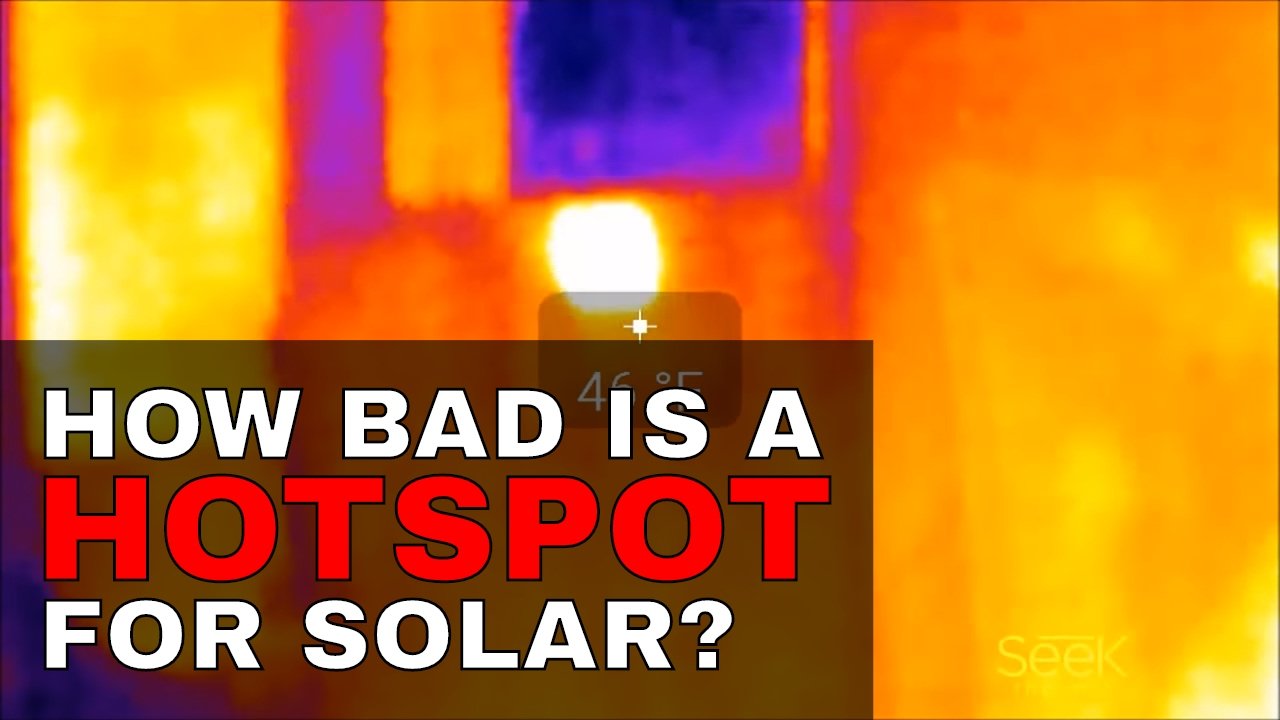
Image source: YouTube / Steve's Solar Garage
UV Exposure and Backsheet Deterioration
Arizona gets intense UV year round. That ultraviolet light attacks the backsheet of the panel, the protective layer on the underside. Over time, the backsheet can become brittle or develop cracks.
Once moisture gets in, cell corrosion follows.
The best panels use UV-stabilised backsheets designed for desert conditions. Budget panels often skip that grade of material. You might pay less upfront, but you'll pay for it in year 10 when the backsheet starts flaking.
Thermal Cycling: The Day-Night Desert Stress Factor
Here's a factor people overlook. Arizona swings from 110°F during the day to 75°F at night in summer. That's a 35°F temperature swing every single day.
Those cycles expand and contract the panel materials, stressing the solder joints and the cell interconnects.
Over thousands of cycles, microcracks develop. You can't see them with the naked eye, but they reduce output. Thermal imaging shows them clearly.
A panel that's been through 15 Arizona summers often has more microcracks than a 25-year-old panel in Seattle.
Dust, Sand, and Soiling: Hidden Abrasive Damage
Monsoon season kicks up dust and sand that settles on your panels. It blocks light. It also acts like sandpaper during cleaning if you're not careful.
Abrasive cleaning can scratch the glass and create tiny grooves that trap dirt and reduce transparency over time.
The real issue is that dust accumulates faster in Arizona than in rainier climates, and you'll need to clean more often. That's fine. But aggressive scrubbing with dry brushes or harsh tools speeds up wear.
Gentle rinsing with deionized water and a soft brush is the way to go.
If you're interested in the basic science behind them and how heat affects that process, it's worth understanding how the photovoltaic effect actually works. That background helps you see why temperature matters so much.
The Three Panel Types and Their Arizona Lifespan Differences
Not all solar panels are built the same. In Arizona, the differences get magnified fast.
Monocrystalline (Tier 1 vs. Budget)
Monocrystalline panels are the most efficient and generally the longest lasting. But there's a split.
Tier 1 monocrystalline panels from established manufacturers use high-grade silicon and robust encapsulation. They have stronger backsheets, better bypass diodes, and tighter quality control. In Arizona, they're the safest bet.
Expect 0.5% to 0.6% degradation yearly, with a realistic lifespan of 28 to 32 years.
Budget monocrystalline panels use the same basic technology but skimp on materials. Lower grade encapsulants degrade faster in UV. Weaker frames flex more under thermal stress.
These panels can hit 0.8% to 1.0% degradation in Arizona, dropping to 75% output by year 20. They might "last" 25 years, but they won't produce well past year 20.
Polycrystalline
Polycrystalline panels are slightly less efficient and historically a bit cheaper. Their degradation rate in heat is similar to budget monocrystalline, around 0.7% to 0.9% per year in Arizona. They can still make sense for large ground mounts where space isn't tight.
But for a rooftop where you're paying for installation either way, the efficiency gap usually makes monocrystalline a better long-term play.
Thin-Film
Thin-film panels degrade faster than crystalline panels in all climates. In Arizona, they're a tough sell. Degradation can run 1% to 2% per year.
You could lose half your output by year 15. Some thin-film products are designed for hot climates and do better, but you'd need to check the specific temperature-adjusted warranty carefully.
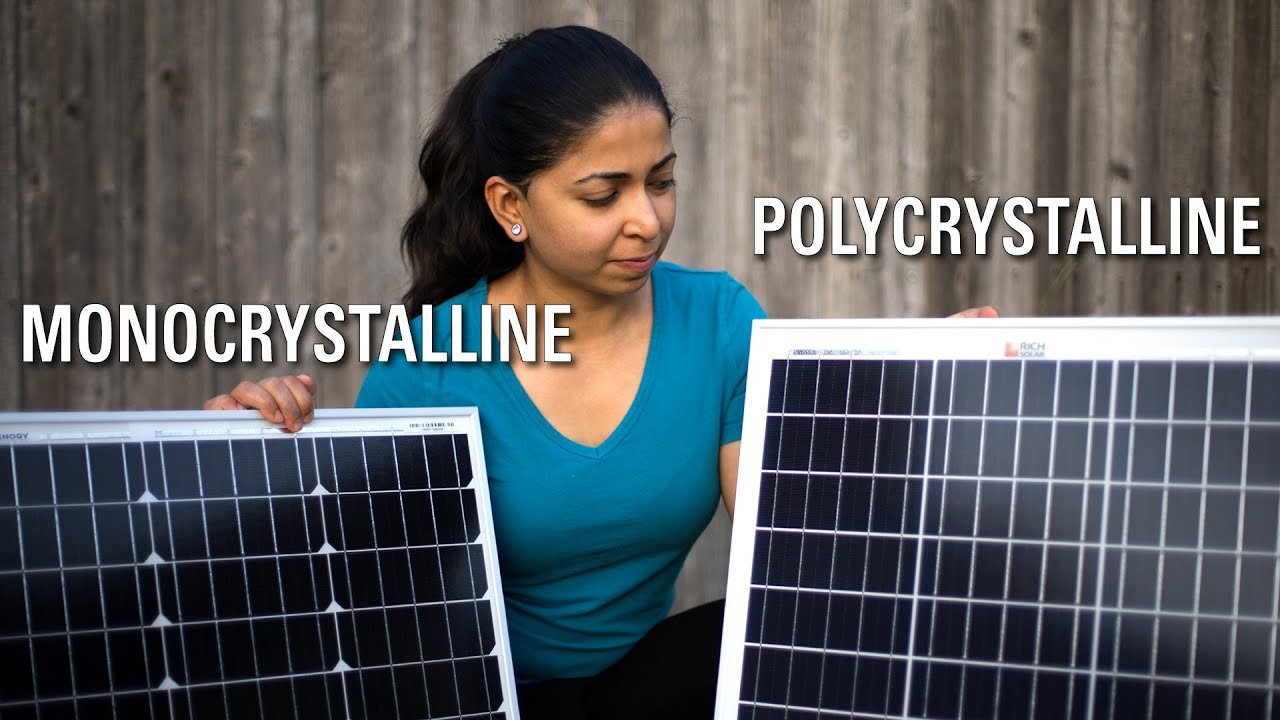
Image source: YouTube / Belinda Carr
A quick rule of thumb: if you're in Arizona, stick with Tier 1 monocrystalline from a brand with a strong warranty and a track record in desert regions. Your available options include brands like REC, SunPower, LG (discontinued but still available used or in some inventory), Panasonic, and Q Cells. Each has different temperature coefficients and warranty terms, so compare those numbers directly.
The Weakest Link: How Inverters and Components Fail First
Your solar panels might be built to last 30 years. But the inverter powering them almost certainly won't. In fact, the inverter is the first major component to fail in most Arizona systems.
Microinverters vs. String Inverters in Desert Heat
String inverters sit on a wall, usually shaded by the house or in a garage. They're out of direct sunlight. That helps.
They still get hot, but they're not baking on the roof. A good string inverter lasts 12 to 15 years in Arizona, sometimes a little longer if kept cool.
Microinverters live under each panel, right on the roof. They bake. Ambient air under a panel in July can hit 140°F.
Microinverters have electronics inside that don't love those temperatures. Most manufacturers rate them for 25 years, but real-world data from Arizona installations suggests they start failing around year 10 to 13. The failure rate spikes after that.
The tradeoff isn't simple. Microinverters let you monitor each panel individually and perform better in partial shade. But you have 20+ microinverters on your roof, each a potential failure point.
When one dies, you lose that panel's output until you service it. String inverters are one unit, easier to replace, but a single failure kills the whole array.
Our advice: budget for at least one inverter replacement in the life of your system, possibly two. That's $1,000 to $3,000 depending on the type and size. Plan for it and you won't be shocked when the monitoring app goes dark.
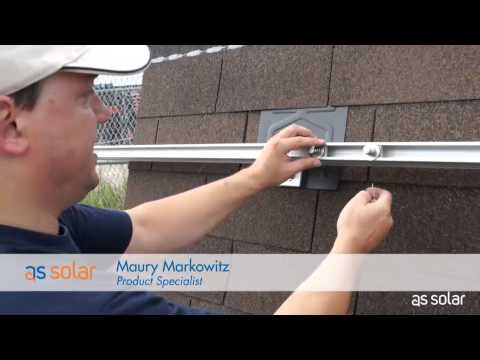
Image source: YouTube / ASSolarinc
Racking Corrosion and Mounting Fatigue
The racking system that holds your panels is often overlooked. It's metal. It's exposed to heat, dust, and occasional monsoon rain.
In Arizona's dry climate, corrosion is less of a worry than in coastal areas. But the thermal expansion cycles stress the mounting clamps and rails. Over 20 years, bolts can loosen.
Clips can fatigue.
A quality racking system from a reputable manufacturer, installed with proper torque, handles this fine. But cheap racking from no-name brands has been known to fail in thermal cycling tests. If your installer cheapens out on the racking, you might face a repair bill even if your panels are still healthy.
Understanding how these systems are built and which parts matter most helps you ask the right questions during installation. The mounting hardware is not the place to cut corners.
As of 2026, the solar industry has better data than ever on Arizona-specific performance. Manufacturers are starting to offer "desert rated" panels and inverters with higher temperature tolerances. If you're buying new, look for those ratings explicitly.
They're worth the premium.
The Real-World Timeline: Year 1 to Year 30
Let's map out what actually happens to an Arizona solar system over its life. This timeline assumes you installed a quality Tier 1 monocrystalline system with microinverters.
Years 1–5: The Honeymoon Period
Everything runs great. Your panels produce close to their rated output. The monitoring app shows healthy numbers.
You might see a small dip in summer when roof temps peak, but that's normal. No failures yet.
The main task during this window is simple. Keep the panels clean. Watch the app for any sudden drop on a single panel, which could mean a microinverter failure or a wiring issue.
Most manufacturers cover defects fully in the first five years.
Years 6–15: The Slow Fade and Inverter Replacement Window
Output starts drifting down. You likely won't notice it by eye, but year-over-year comparisons in your monitoring app will show the trend. A 0.5% to 0.6% drop per year means you've lost about 3% to 6% by year 10.
Still fine. Still generating well.
The bigger event is the inverter. Microinverters start failing in this window. String inverters usually hold up better, but they're not immune.
Budget for a replacement around year 12. If you have a string inverter, you might get to year 15 before it dies. Have a plan and some cash set aside.
Years 16–25: End of Warranty, Reduced Output, Decision Time
Your original warranty is either expiring or has already expired. The panels are still working, but they're at 80% to 85% of original output. The system is still making power, just less of it.
This is when you start thinking about the roof. If your roof needs replacing, you'll have to uninstall and reinstall the panels. That's a real cost.
Some homeowners use this moment to upgrade the panels and inverters at the same time, getting a fresh system with better efficiency.
Years 25+: When to Replace vs. Let It Ride
If the panels are still producing and the inverter is still working, there's no rule that says you must replace them at year 25. Many Arizona systems run well into year 30. The question is economics.
Compare your current output to what a new system would produce. If your old panels are making 75% of their original power and your utility rates have gone up, a new system might pay for itself in 8 to 10 years. If your old system is still covering most of your usage, let it ride.
Common Mistakes That Shorten Panel Life in Arizona
We've seen homeowners make the same errors repeatedly. Here are the ones that cost the most.
Skimping on Airflow During Installation
Panels need airflow underneath to stay cool. If an installer mounts them flush against the roof without a gap, heat builds up. That extra heat accelerates degradation.
Proper racking leaves a 4 to 6 inch gap. That gap lets hot air escape and keeps panels cooler by 5 to 10 degrees. It matters.
Ignoring the Roof Replacement Timing
If your roof is 15 years old when you install solar, you'll likely need a new roof before the panels reach 25 years. Uninstalling and reinstalling panels costs $2,000 to $5,000 depending on system size. Some homeowners skip it and let the roof leak, which damages the panels and the attic.
Plan ahead.
Choosing the Cheapest Installer Without Heat Data
A low bid often means the installer is using budget panels or cutting corners on racking and wiring. In Arizona, those shortcuts show up fast. We've seen systems with undersized wiring that overheated and melted.
We've seen racking that failed after 10 years of thermal cycling. Pay for a quality installer with Arizona-specific experience.
Maintenance That Actually Extends Lifespan in Arizona
You don't need to baby your solar system. But a few simple habits can add years to its productive life.
Cleaning Frequency and Technique
Clean your panels at least twice a year. Once before the summer heat hits, and once after monsoon season. In dusty areas, three times a year is better.
Use deionized water and a soft brush or squeegee. Hard water leaves mineral deposits that block light. Dry scrubbing scratches the glass.
If you're on a budget, a garden hose and a gentle spray works fine. Just avoid high pressure washers that can force water under the panel seals.

Image source: YouTube / Solar Panel Cleaning Friends
Thermal Imaging Inspections
Every 5 years, pay a professional to do a thermal imaging scan of your array. They'll find hot spots, microcrack clusters, and failing diodes that you can't see with your eyes. Catching a bad panel early lets you replace it before it drags down the whole string or causes a fire risk.
Monitoring Degradation Through Your App
Your monitoring app logs daily production. Use it. Compare the same month year over year.
If you see a sudden drop on one panel, that's a problem. If the whole system is declining faster than 0.6% per year, something is wrong. You can catch inverter failures and soiling issues this way before they become major.
The Financial Reality: Payback, Replacement Costs, and Net Metering
Let's talk money. Your solar system is an investment. The numbers need to work.
Payback Period in Arizona vs. National Average
Arizona has excellent sun. The average payback period for a residential system is 6 to 10 years. That's faster than the national average of 8 to 12 years.
Your actual payback depends on your utility rates, your electricity usage, and how much of the federal tax credit you can claim.
If you're with APS or SRP, check their current net metering rates. APS has moved to a lower export rate for new customers. That extends your payback period.
If you're on an older plan, you're locked in for a while. Don't assume today's payback will be the same for someone installing next year.
Inverter Replacement Budget (Year 10–15)
Set aside $1,500 to $3,000 for an inverter replacement. If you have microinverters, you might replace them piecemeal as they fail. If you have a string inverter, you'll replace the whole unit at once.
Either way, it's a real cost that you need to plan for.
Net Metering Changes and System Life Planning
Net metering rules in Arizona have changed. New customers get less credit for the power they send to the grid. That reduces the financial benefit of solar.
If you're planning a system now, run the numbers under the current rate structure. Don't assume future rates will be the same.
When to Replace vs. Repair vs. Add More Panels
So your system is 18 years old. The inverter died. The panels are at 82% output.
What do you do?
Replace the inverter only if the panels are still producing well and your roof is in good shape. That's the cheapest option.
Replace the panels and inverter if the panels are degraded and your roof is due for replacement. You get a fresh warranty and better efficiency. The cost is higher, but the long-term economics often work out.
Add more panels if you have roof space and your inverter can handle extra capacity. This is a good option if your current system is undersized and you want to cover more of your usage. Just make sure the new panels match the voltage and current specs of your existing inverter.
The right choice depends on your specific situation. If you're looking at a 15-year-old system, it's worth getting a professional assessment. They can run the numbers and tell you which path makes sense.
Decision Guide for Arizona Homeowners
Here's how to apply everything we've covered to your specific situation.
You're Buying New Solar Today. Go with Tier 1 monocrystalline panels and a string inverter mounted in a shaded garage. That combination gives you the longest lifespan and the lowest replacement cost when the inverter eventually fails. Budget for an inverter swap around year 12.
You Have a 10, 15 Year Old System. Start watching your degradation data. If output has dropped more than 10%, get a thermal imaging inspection. If your inverter is original, assume it could fail anytime.
Start setting aside money now, not when it dies.
You're Considering a Lease or PPA. Read the fine print carefully. Many leases lock you into a 20 year term, but if the panels degrade faster than expected, you're still paying the same monthly rate. You own nothing at the end.
In Arizona's climate, owning your system usually makes more financial sense.
You're Selling a Home with Solar. A well maintained system with documented output history adds value. A system that's 15 years old with no maintenance records raises questions. If you're selling, have the system inspected and transfer the warranty properly.
Frequently Asked Questions
Does insurance cover solar panel damage from hail in Arizona?
Most standard homeowners policies cover hail damage to solar panels. Check your deductible first. It might not be worth filing a claim for a single damaged panel.
Can I replace just one panel if it fails?
Yes, if you can find a matching panel. After 5 years, your original model might be discontinued. You can use a different panel as long as the electrical specs are similar.
It's not ideal, but it works.
How much does it cost to remove and reinstall panels for a new roof?
Expect to pay $2,000 to $5,000 depending on system size and roof complexity. This is why installing solar on a roof that needs replacement soon is a bad idea.
Do solar panels increase homeowners insurance in Arizona?
Typically no. Most insurers don't charge more for rooftop solar. But if your system adds significant value, you may want to increase your coverage limits.
What happens to solar panels in an Arizona monsoon?
High winds can damage panels if the racking isn't installed properly. Properly installed systems handle monsoon gusts fine. Loose panels or poor mounting is the real risk.
Final Verdict: What to Expect and How to Plan
Plan for 25 to 30 years of production from quality panels in Arizona. Budget one inverter replacement around year 12. Clean panels twice a year.
Replace the roof before installing solar, not after. If you do those things, your system will serve you well through its full life. And when year 25 comes, you'll have the data and the budget to decide whether to refresh or let it ride.

Similar Posts