Foldable Solar Panels Explained: Pros, Cons & How They Work
So you're looking into foldable solar panels. Maybe you've seen them pop up in camping gear catalogs or tucked next to power stations at outdoor retailers. They look neat, compact, and almost too convenient to actually work.
The honest truth is that Foldable Solar Panels Explained in a practical way means understanding where they shine and where they fall flat, because they're not a one-size-fits-all solution.
Our research shows that a typical 100W foldable panel in real-world conditions delivers about 70 to 85 watts on a clear sunny day at noon. That's not a defect. It's physics.
Angle, temperature, cloud cover, and even the color of the ground all affect output. Understanding those numbers before you buy is the difference between a great experience and a disappointing one. Let's walk through what these panels actually are, how they stack up against alternatives, and whether one belongs in your setup as of 2026.
Quick Answer
A foldable solar panel is a portable photovoltaic panel that collapses into a compact carrying case. It converts sunlight into DC electricity. You connect it to a battery, power station, or device.
Real-world output runs 15 to 30 percent below the rated wattage. They excel for camping, RV travel, and emergency backup where permanent panels don't fit.
Why This Comparison Matters
The portable solar market has exploded over the last few years. You can grab a cheap 100W foldable panel for under a hundred bucks or spend four times that on a premium brand. Both claim the same wattage.
One will last a season. The other might serve you for a decade.
The real question isn't whether foldable panels work. It's whether they work for your specific situation. A backpacker carrying a 50W panel up a mountain has completely different needs than an RV owner setting up a 200W array at a campsite for a week.
The wrong choice means either carrying dead weight or running out of power halfway through your trip.
This comparison exists because manufacturers don't make the tradeoffs obvious. They sell you on wattage and portability. What they don't tell you is how that wattage drops when the panel gets hot, how the built-in charge controller might be wasting 20 percent of your power, or that the USB ports on the panel itself are often too slow to charge a modern phone at full speed.
Understanding these differences is what separates a smart investment from a regrettable impulse buy. We'll break down the options, the real specs, and the use cases so you can decide with your eyes open.
What Exactly Is a Foldable Solar Panel? (And How It's Different)
At its core, a foldable solar panel is a collection of monocrystalline or polycrystalline solar cells wired together inside a flexible, fabric-covered casing. The casing allows the whole thing to fold down into a manageable size, typically with a handle or strap for carrying.
The critical difference from a standard rigid panel is the tradeoff. Rigid panels use a thick aluminum frame and tempered glass. They're durable, efficient, and designed to sit on a roof for 25 years.
Foldable panels swap that ruggedness for portability. They use a lightweight polymer backing, a fabric cover, and thinner cells that can bend slightly without breaking.
This design choice comes with real consequences. Foldable panels are less efficient per square foot than rigid ones. They also tend to run hotter because the fabric backing traps heat, and heat reduces solar cell efficiency by roughly 0.3 to 0.5 percent per degree Celsius above 25°C.
On a hot summer roof, that's a noticeable loss.
But they also do something rigid panels can't. They pack down small enough to fit in a duffel bag. You can prop them against a tree, lay them on a car hood, or hang them from a tent.
That flexibility in placement is the entire point.
If you're curious how these compare structurally to the standard rooftop setup, the different panel designs available covers the physical differences in more detail.
The Main Types: Monocrystalline vs. Polycrystalline Foldable Panels
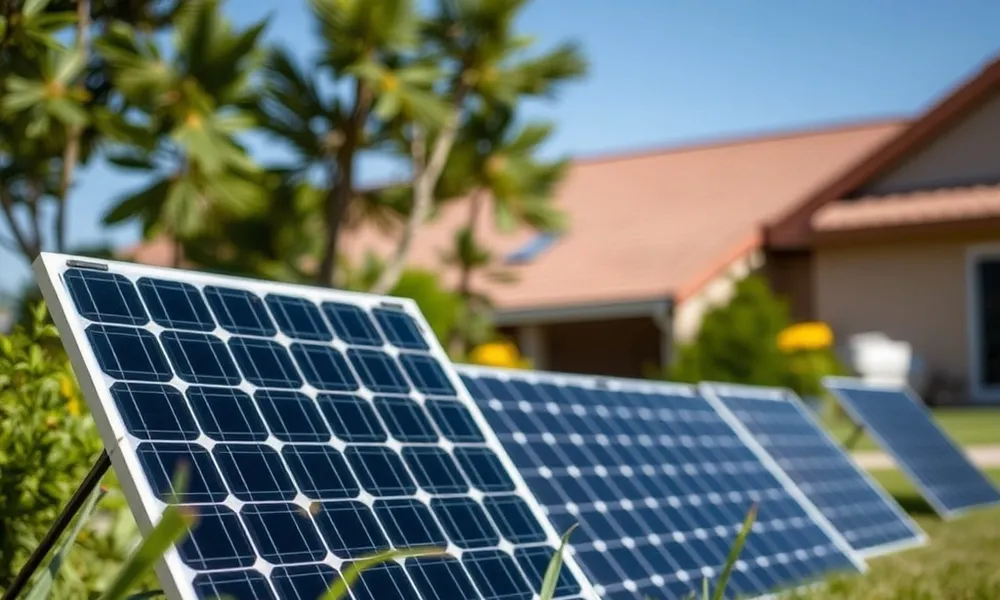
Almost every foldable solar panel on the market today uses monocrystalline cells. Polycrystalline panels exist, but they're becoming rare in the portable space for good reason.
Monocrystalline Panels
Monocrystalline cells come from a single silicon crystal. They're darker in color, usually black or very dark blue, with a uniform appearance. Their efficiency typically falls between 19 and 23 percent.
For a foldable panel, that matters because surface area is limited. Higher efficiency means more power from the same unfolded footprint.
Most reputable brands use monocrystalline cells. They handle partial shading better than polycrystalline due to better bypass diode integration. They also degrade slower over time, which matters for a panel you might use heavily for several years.
Polycrystalline Panels
Polycrystalline cells are made from multiple silicon fragments melted together. They're lighter blue with a speckled look. Their efficiency sits around 15 to 17 percent.
You'll sometimes find them in budget foldable panels sold at big-box retailers.
The lower efficiency means you need a larger panel area to get the same wattage. That's the opposite of what you want in a portable design. The tradeoff is price.
Polycrystalline panels are cheaper to produce, and that savings sometimes passes to the buyer.
Our recommendation is straightforward. For a foldable panel, go monocrystalline. The extra efficiency directly translates to a smaller pack size for the same power output.
The price premium is worth it for anything you plan to carry more than a few feet.
What's Inside: Key Components and What to Look For
A foldable solar panel is more than just cells and fabric. Several components determine whether it'll serve you well or frustrate you.
Solar Cells
The cells themselves are the obvious starting point. Look for monocrystalline cells with at least 21 percent efficiency. Higher is better.
Some premium panels now reach 23 or 24 percent. The cell layout matters too. Panels with half-cut cells perform better in partial shade because they reduce the impact of a shaded section on the overall string.
Bypass Diodes
Bypass diodes are small components that allow current to flow around shaded or damaged cells. Without them, shading a single cell can drop the entire panel's output by 50 percent or more. Good foldable panels have at least one bypass diode per cell string.
The best panels have two or three.
Charge Controller
Some foldable panels come with a built-in charge controller. Others are bare panels that require an external controller. Both approaches have valid use cases.
A built-in controller adds convenience. Plug the panel into your battery and it handles the voltage regulation. The downside is that these built-in controllers are almost always PWM (Pulse Width Modulation) rather than MPPT (Maximum Power Point Tracking).
PWM controllers are simpler and cheaper, but they waste 20 to 30 percent of the panel's potential power compared to an MPPT controller.
An external MPPT controller recovers that lost power. It's an extra box to carry and an extra connection to make, but it pays off in real charging speed, especially when the light isn't perfect.
Connectors and Cables
The connection type between the panel and your battery or power station matters more than most people realize. Anderson Powerpole connectors are common on portable panels because they're rugged and polarity-safe. MC4 connectors are the standard for larger solar installations.
Some panels use a simple DC barrel plug.
Pay attention to cable length. A panel with a short pigtail might force you to place your battery in direct sun or awkward positions. Five feet is the minimum.
Ten to fifteen feet is better for flexibility in placement.
For a deeper look at how these pieces fit together into a complete system, the guide on essential solar panel components walks through each part in detail.
Fabric and Frame
The outer material is your panel's first defense against the elements. Look for ETFE (ethylene tetrafluoroethylene) coating over the cells. It lets more light through than cheaper PET (polyethylene terephthalate) and lasts longer under UV exposure.
The outer fabric should be ripstop nylon or similar durable material. A panel that tears after a few trips is a panel that fails.
Real-World Performance: What You'll Actually Get vs. The Sticker Wattage
This is where foldable panels earn either praise or frustration. The wattage printed on the box is measured under standard test conditions: 1000 watts per square meter of light, a cell temperature of 25°C, and specific air mass. Those conditions almost never happen in real use.
Here's what aggregate reviews and manufacturer spec sheets reveal about actual performance:
| Rated Wattage | Typical Real-World Output (Clear Noon Sun) | Conditions That Drop It Further |
|---|---|---|
| 50W | 35–42W | Clouds, heat over 30°C, suboptimal angle |
| 100W | 70–85W | Same factors plus voltage drop from long cable runs |
| 200W | 140–170W | Heat buildup on dark surfaces, poor ventilation |
| 300W | 210–255W | Requires near-perfect alignment and cool ambient temps |
Several factors explain the gap.
Heat is the biggest hidden enemy. A foldable panel laid flat on the ground on a 35°C day can easily reach 60°C internal temperature. At that point, cell efficiency drops by roughly 10 to 15 percent compared to the 25°C test conditions. Propping the panel up to allow airflow underneath helps significantly.
Angle matters enormously. The ideal angle is perpendicular to the sun's rays. That changes throughout the day. A panel lying flat on the ground loses 15 to 25 percent of potential energy compared to one angled toward the sun at the correct tilt.
Cloud cover is obvious but often underestimated. Thin high cloud can cut output by 30 percent. Thick overcast can drop it by 80 percent or more. A foldable panel in full shade produces near zero usable power.
Cable voltage drop hits portable setups hard. If your panel uses a long, thin cable to reach a power station inside a tent or vehicle, you're losing voltage before it ever reaches the battery. A 10-amp current through 20 feet of 14 AWG wire drops roughly 0.5 volts. That's significant for a 12V system.
The practical takeaway is straightforward. Size your panel for the worst conditions you'll encounter, not the best. If you need 100W of actual charging power, buy a 150W or 200W panel.
The oversizing compensates for real-world losses and ensures you actually get usable power when conditions aren't perfect.
To understand how that energy gets turned into usable electricity in the first place, it helps to know the basic process of energy conversion.
Foldable vs. Rigid vs. Flexible: Which One Actually Fits Your Life?
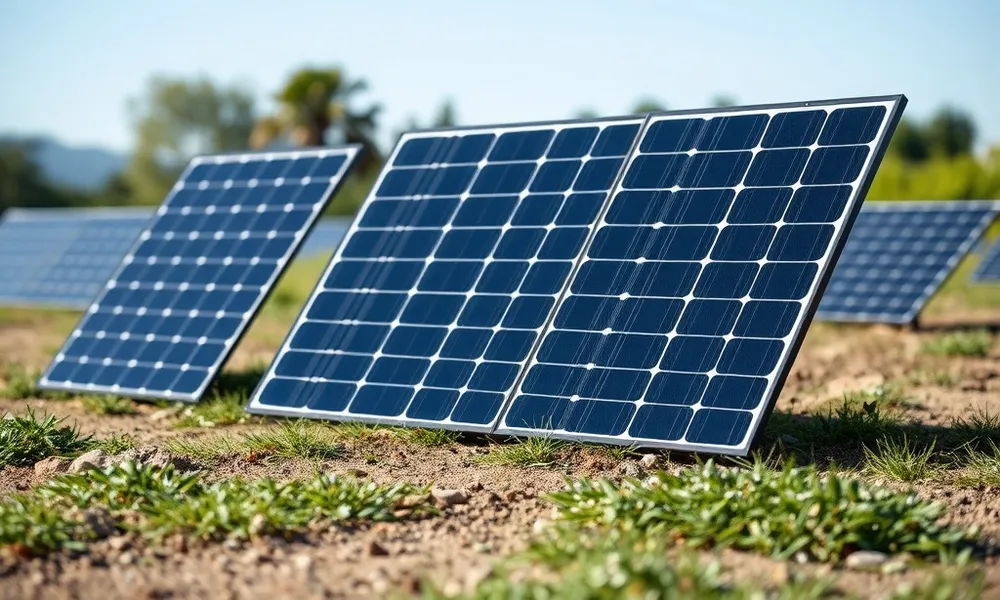
This is the fork in the road. Foldable panels are one of three portable options, and each serves a completely different purpose.
Rigid Panels
Rigid panels are the standard glass-and-aluminum units you see on rooftops and RV roofs. They're the most efficient option, typically 20 to 23 percent, and they last 25 to 30 years. The tradeoff is weight and bulk.
A single 100W rigid panel weighs about 15 to 20 pounds and measures roughly 40 by 27 inches. You can't fold it. You can't easily store it in a car trunk without careful handling.
Best for: permanent installations, roof-mounted RV systems, and anyone who values maximum power per dollar over portability.
Flexible Panels
Flexible panels use thin-film or lightweight monocrystalline cells bonded to a bendable backing. They can curve slightly to match a van roof or a boat deck. They're lighter than rigid panels but less efficient, usually 15 to 18 percent.
Their lifespan is shorter, typically 5 to 10 years, because the materials degrade faster under UV and heat.
Best for: curved surfaces where rigid panels won't fit, weight-sensitive builds like vans, and low-profile installations where you don't want something protruding.
Foldable Panels
Foldable panels sit in the middle. They're less efficient than rigid (19 to 22 percent on average) but far more portable. They don't require permanent mounting.
You can deploy them in minutes and pack them away just as fast. They're the best choice when your power source needs to be mobile, not permanent.
Best for: camping, overlanding, emergency kits, and anyone who needs solar power in multiple locations.
The real deciding factor is how often you move. If you park in one spot for weeks at a time, the permanent setup of a rooftop solar array wins on efficiency and convenience. If you're hiking or traveling weekly, foldable is the only practical option.
Best Use Cases: Who Should Buy a Foldable Panel (And Who Shouldn't)
Foldable panels are a tool with a specific job. They're excellent for some situations and a poor fit for others.
Great Fit
- Car campers and overlanders. You drive to a site, set up camp, unfold the panel, and plug it into a power station. It charges while you hike or cook. Pack it up when you leave.
- Backpackers with ultralight gear. A 50W foldable panel weighing under 4 pounds can keep a phone, camera, and headlamp charged on multi-day trips. Every ounce matters, and foldable panels deliver power without the weight of a generator.
- Emergency preparedness. Keep a foldable panel in your trunk or emergency kit. When the power grid goes down, you have a way to charge radios, phones, and small medical devices without fuel.
- Van lifers and RV travelers. A foldable panel lets you chase shade or adjust your angle throughout the day. You can park in the trees and place the panel in a sunny clearing 20 feet away.
Poor Fit
- Full-time off-grid homes. You need consistent, high-wattage power day after day. A permanent rooftop array with battery storage is cheaper per watt and far more reliable.
- Heavy power users. Running a fridge, a microwave, and a laptop setup draws 500 to 1500 watt-hours per day. A foldable panel array can meet that, but you'll need several large panels and a robust controller. At that point, a permanent system makes more sense.
- Anyone in a very shady location. Foldable panels need direct sunlight. If your campsite is under thick tree canopy, you'll get almost nothing. Rigid panels mounted above your vehicle might catch the sun, but a foldable panel on the ground won't.
The boundary is clear. If you need power in one place permanently, go rigid. If you need power wherever you happen to be, go foldable.
Side-by-Side: Popular Wattage Classes Compared (50W, 100W, 200W, 300W)
Wattage is the headline number, but the real story is how each class fits a specific use case.
| Wattage | Typical Folded Size | Weight | Real-World Output | Best For |
|---|---|---|---|---|
| 50W | 15" x 12" x 2" | 3-4 lbs | 35-42W | Backpacking, phone/tablet charging, emergency radio |
| 100W | 20" x 15" x 2" | 5-7 lbs | 70-85W | Weekend car camping, small power station (200-300Wh) |
| 200W | 24" x 20" x 3" | 10-14 lbs | 140-170W | RV travel, larger power station (500-1000Wh), fridge + lights |
| 300W | 30" x 24" x 3" | 15-20 lbs | 210-255W | Extended off-grid stays, heavy power use, multiple devices |
50W Panels
These are backpacker territory. They weigh next to nothing and pack small enough to slide into a daypack. Real-world output is enough to charge a phone twice and a tablet once per day of good sun.
They're not suitable for running appliances or charging a large power station.
100W Panels
The most popular size for a reason. A 100W panel pairs well with a 200 to 300 watt-hour portable power station. You can recharge the station in a day of good sun and then use that stored power to run lights, charge devices, and even power a small cooler fan.
It's the sweet spot for weekend camping trips.
200W Panels
This is where serious camping power begins. A 200W panel can keep a 500 to 1000 watt-hour power station topped off while you run a 12V fridge intermittently, charge laptops and phones, and run LED lights. It's the typical choice for RV owners who don't have roof-mounted panels.
300W Panels
These are heavy and bulky. They're for extended off-grid stays where you need real energy. A 300W panel can run a small fridge continuously during daylight and charge a large battery bank at the same time.
The tradeoff is that they're awkward to move and set up alone.
Common Mistakes That Kill Performance or Damage Your Panel
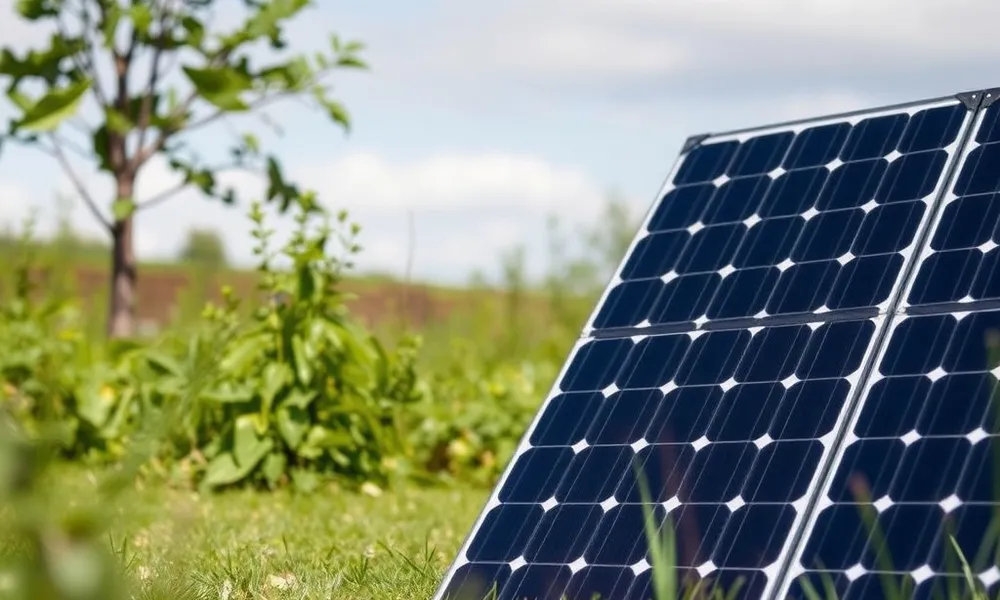
Even a good panel performs poorly if you make these errors.
Laying It Flat on the Ground
This is the most common mistake. A flat panel loses 15 to 25 percent of potential output compared to a panel angled toward the sun. On top of that, laying it on grass or dark ground traps heat, further reducing efficiency.
Always prop it up at an angle.
Ignoring Partial Shade
A single leaf or branch casting a shadow across a small section of the panel can drop output by 50 percent or more depending on the cell layout. Position the panel so no part is shaded during your peak charging hours. Move it as the sun shifts.
Using the Built-In USB Ports
Most foldable panels include USB-A ports for direct device charging. They're almost always limited to 5V at 2.4A or less. That's enough to trickle-charge a phone but far too slow for a tablet or power station.
Use the main power output through a proper charge controller instead.
Over-tightening the Fold
Folding the panel too tightly or storing it with sharp creases can crack the cells over time. The fabric backing protects them, but repeated tight folding eventually causes micro-fractures. The key difference between different panel construction methods affects how much bending they tolerate.
Connecting Backward
Reverse polarity can damage both the panel and the connected device. Most quality panels have protection diodes, but relying on that is sloppy. Always double-check the positive and negative terminals before connecting.
Setup and Positioning: How to Get the Most Out of Your Panel
Getting full power from a foldable panel isn't complicated, but it requires attention to three factors.
Angle
The panel surface should be perpendicular to the sun's rays. A simple rule: point the panel directly at the sun. In the northern hemisphere, that means facing south.
The tilt angle should roughly equal your latitude. If you're at 40 degrees north, tilt the panel at about 40 degrees from horizontal.
For multi-day trips, adjust the angle once in the morning and once in the early afternoon. That's enough to keep output within 10 percent of the theoretical maximum.
Orientation
Face the panel toward the equator. For most of the US and Europe, that's south. For Australia and South America, it's north.
A compass app on your phone is good enough for rough alignment.
Airflow
Heat kills efficiency. Prop the panel up off the ground so air can circulate underneath. A gap of 6 to 12 inches is enough.
If the panel has a built-in kickstand, use it. If not, lean it against a rock, cooler, or backpack. Just make sure it's stable and won't blow over in a gust.
Maintenance and Storage: Making Your Panel Last
Keep the panel clean. Dust, pollen, and bird droppings block light. Wipe the surface with a damp microfiber cloth every few uses.
Never use abrasive cleaners or scratch at the cells.
Store it flat or loosely rolled. Creasing the same fold lines repeatedly can crack the internal cells. Keep it in a dry place away from direct heat when not in use.
Moisture inside the fabric can cause corrosion on the connectors over time.
Pricing and What You're Really Paying For
Foldable panels range from roughly $1.50 to $3.00 per watt. A 100W panel might cost $150 on the low end and $300 for a premium brand.
The price difference comes down to cell quality, ETFE coating versus PET, the type of charge controller, and the durability of the fabric and zippers. Cheap panels often use lower-grade cells that degrade faster and deliver less power in real conditions. Verified buyer feedback consistently shows that spending a bit more upfront leads to a panel that lasts several years longer.
The Verdict: Is a Foldable Solar Panel Right for You?
If you need power on the move, yes. If you need power in one fixed spot, no.
Foldable panels are a fantastic tool for camping, travel, and emergency preparedness. They're not a replacement for a permanent rooftop system. Size your panel for real-world conditions, not the sticker number.
Prop it up. Keep it clean. Connect it through a good charge controller.
Do those things, and a foldable panel will serve you well for years.
Frequently Asked Questions
Can I charge a power station and a device at the same time?
Yes, most panels with multiple outputs allow simultaneous charging. But the total power splits between the ports. A phone plugged into the USB port steals wattage from the main output.
For fastest charging, focus on one device at a time.
How long does a foldable solar panel last?
With proper care, expect 3 to 5 years of frequent use and 8 to 10 years with light use. The cells themselves last longer, but the fabric and connectors wear out first. Store it flat and dry to maximize lifespan.
Do I need a charge controller with a foldable panel?
Yes, if you're charging a battery. The panel's raw voltage fluctuates. A controller regulates it to prevent overcharging.
Some panels have a built-in controller. If yours doesn't, add an external one. Without it, you risk damaging your battery.
Can I use a foldable panel in winter?
Yes, but expect lower output. Shorter days and lower sun angle reduce total energy collected. Cold temperatures actually improve cell efficiency slightly, but the reduced light outweighs that benefit.
Snow on the panel blocks all output. Brush it off carefully.
Are foldable panels waterproof?
Most have an IP65 or IP67 rating. IP65 means they resist rain and splashes. IP67 means they can handle brief submersion.
The connectors are usually the weak point. Keep them dry and covered when not in use.

Similar Posts