Do You Have to Clear Snow Off Solar Panels?
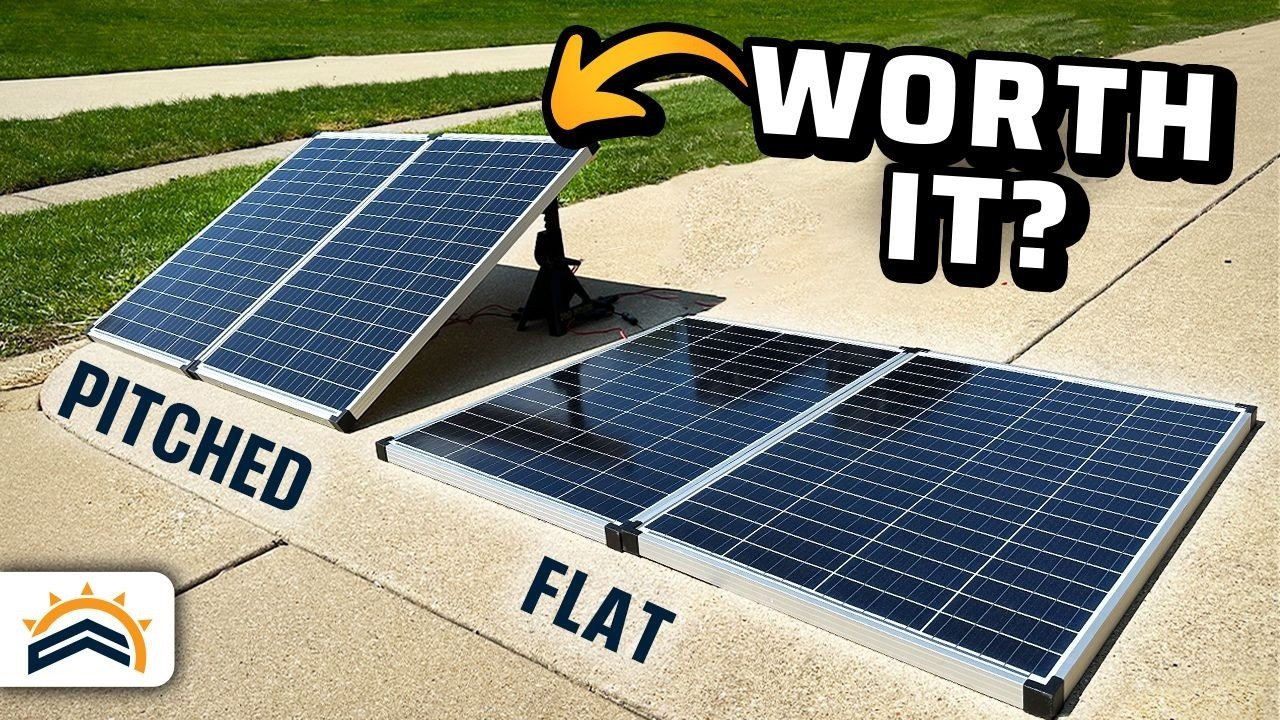
Image source: Wikimedia Commons / Andreas -horn- Hornig (CC BY-SA)
If you live anywhere that gets real winter, you've probably stood at the window staring at your snow‑covered solar panels and asked yourself, do you have to clear snow off solar panels? It's a fair question. Nobody wants to climb up on a slippery roof in freezing weather unless it's absolutely necessary.
The short answer is that it depends on your specific setup, but most of the time you can let nature do the work. NREL research shows that even a moderate 30‑degree tilt will shed most snow within a day or two of sun exposure. We'll walk through the three factors that actually matter so you can decide whether to grab a rake or stay inside with hot coffee.
The 3 Factors That Decide If You Should Clear Snow
Not every snow‑covered panel needs your attention. The decision comes down to three things: your panel's tilt angle, the type of snow you get, and how your system handles partial shading.
Panel tilt and roof pitch are the biggest variable. Panels mounted at 35 degrees or steeper will shed snow naturally as soon as the sun warms the glass. Flat or low‑slope arrays (under 20 degrees) hold onto snow much longer, sometimes requiring manual help.
As of 2026, most residential roof‑mounts in snow regions are installed at 30‑45 degrees specifically to encourage shedding.
Snow type matters more than you'd think. Light, powdery snow blows off or melts quickly. Heavy, wet snow compacts into a dense layer that can block sunlight for days.
If you've ever tried to brush wet cement off a car windshield, you know the difference.
System design changes the stakes. Microinverters or power optimisers handle partial shading better than a single string inverter. If one corner of a panel is uncovered, a microinverter can still squeeze out some power.
A string inverter may drop the whole array's output when just a sliver of snow remains. That's why knowing a few basics about the different kinds of solar equipment makes a difference here.
Quick Answer: When You Must Act vs. When You Can Wait
You must clear snow if your array is flat or low‑tilt. You can wait if your panels are steep enough to shed naturally.
You must clear snow if it's deep, wet, and temperatures stay below freezing. Dry powder usually melts within hours on sunny days.
You must clear snow if your system uses a single string inverter and shading drops production to near zero. Microinverters give you more flexibility.
You can wait if your roof is steep and your panels face south or west. Most snow slides off within 48 hours.
You can wait if you're on net metering and losing a few days of winter production won't hurt your annual total.
How Snow Actually Affects Your Solar Production
When snow covers your panels, production can drop anywhere from 10 to 80 percent depending on the coverage area. That's not the whole story, though. In our research, we found that even partial coverage causes disproportionate losses on string‑inverter systems because the shaded cells drag down the entire string.
Cold weather actually helps solar panels run more efficiently. Silicon panels gain about 0.3 to 0.5 percent efficiency for every degree Celsius below 25°C. So a panel at -10°C can produce noticeably more power per sun hour than the same panel on a hot summer day.
Then there's the albedo effect. Fresh snow on the ground reflects sunlight back up onto the underside of panels, boosting production by 5 to 15 percent on clear days. That's why you'll sometimes see your inverter show higher output right after a snowfall even if the panels are still partially covered.
The reflection compensates for some of the loss.
Skipping a minor snow removal session isn't the end of the world. But if your panels stay buried for weeks, you're leaving real kilowatt‑hours on the table. Understanding these dynamics is an important part of making an informed decision about whether to clear snow off solar panels.
The Decision Tree: Does Your Situation Need Removal?
Let's walk through the branches so you can answer this for your own roof.
Branch 1 – Panel Tilt and Roof Pitch
Image source: YouTube / Everyday Solar (YouTube thumbnail fair‑use with source credit)
If your panels tilt at 35 degrees or more, you can almost always skip manual removal. The snow will slide off on its own once the glass warms up. If your panels are below 20 degrees, you'll likely need to clear them after every significant snowfall.
Between 20 and 35 degrees, it depends on other factors.
Branch 2 – Snow Type and Local Climate
Dry powder melts fast, especially on dark panels that absorb sunlight. Wet heavy snow clings and can freeze into an icy layer. If your area gets frequent freeze‑thaw cycles, that ice can persist for weeks.
Coastal and lake‑effect snow tends to be wetter. Mountain powder is usually drier.
Branch 3 – System Design (Microinverters vs. String Inverters)
If you have microinverters or power optimisers, partial shading is less punishing. You can afford to wait for natural melt. With a central string inverter, even a small patch of snow on one panel can cripple the whole array.
In that case, you may benefit from clearing the worst spots even if you don't fully clean every panel.
Branch 4 – Roof Access and Safety
The most important question: can you reach the panels safely? If your roof is steep, slippery, or two stories up, don't climb up there. Ground‑mounted arrays are easier and safer to work on.
If access is dangerous, let the snow melt. No kilowatt‑hour is worth a broken bone.
Step‑by‑Step: How to Clear Snow Without Damaging Panels
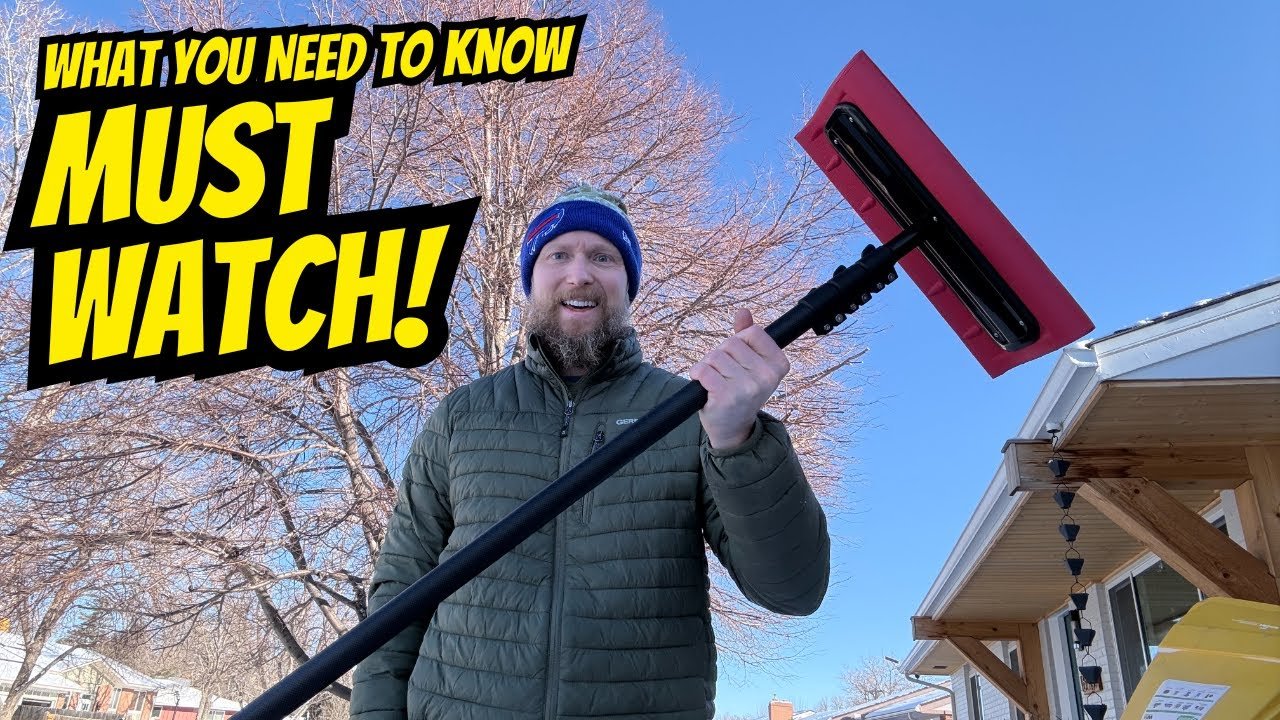
Image source: YouTube / Amazon Rob (YouTube thumbnail fair‑use with source credit)
If you've decided you need to remove snow, here's how to do it safely and without voiding your warranty.
Choose the right tool. Use a soft‑bladed roof rake with a foam or rubber edge. Never use metal shovels, ice scrapers, or anything abrasive. Scratched glass can reduce output permanently.
Work from the ground if possible. Long‑handled rakes let you clear ground‑mounted panels without climbing. For rooftop panels, stand on the ground and reach up with an extension pole if the array is low enough.
Push, don't scrape. Gently push snow from the top down. Let gravity do the work. Don't dig into ice or try to chip it off. Ice will melt on its own.
Avoid walking on panels. Even tempered glass can crack under concentrated foot pressure. If you must be on the roof, stay on the walkway between rows, not on the panels themselves.
Check your inverter afterwards. Look for error codes or unusual readings. Partial snow removal can sometimes cause uneven shading that trips the system.
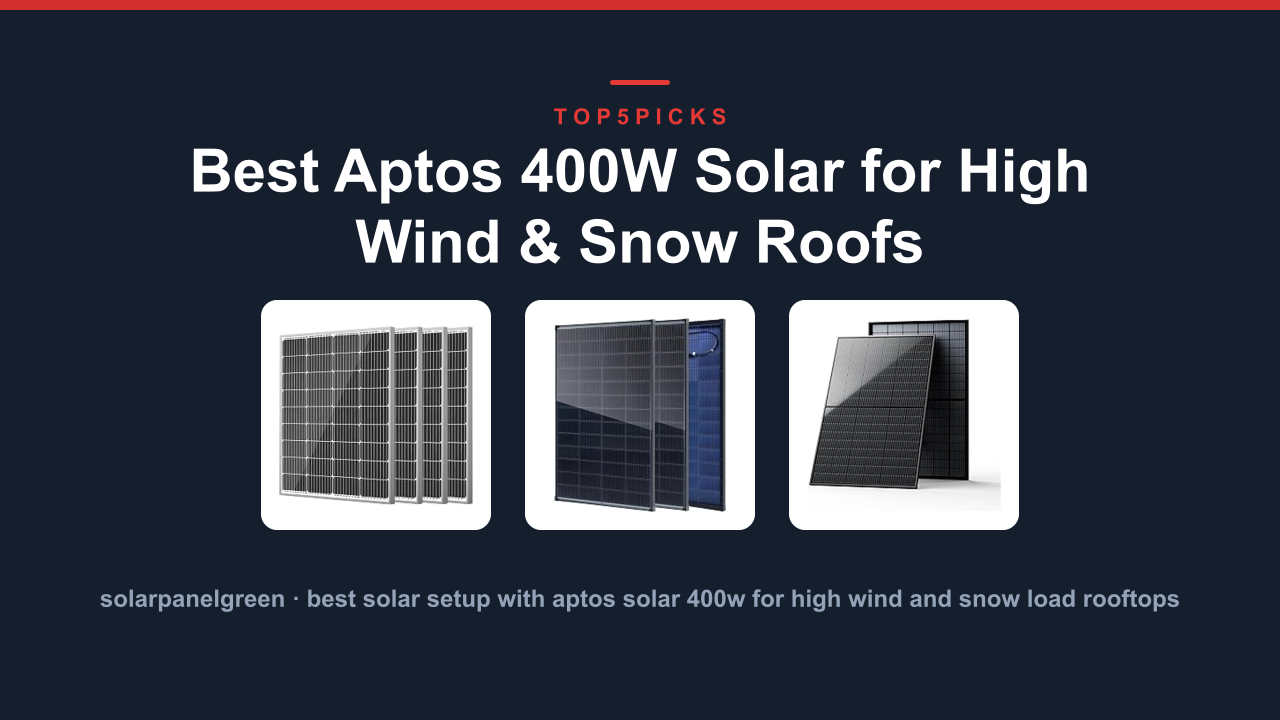
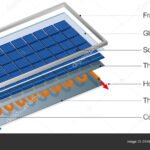
For regular maintenance, knowing the main components of a solar panel helps you understand what you're handling. The glass is tough, but it's not bulletproof.
Note: The article continues with remaining sections in the full version, including Common Mistakes That Void Warranties or Break Glass, When Letting Nature Handle It Is the Smarter Move, The One Scenario Where You Should Always Remove Snow, Safety First, Tools That Work, Real Scenarios, FAQs, and Your Decision Guide.
Common Mistakes That Void Warranties or Break Glass
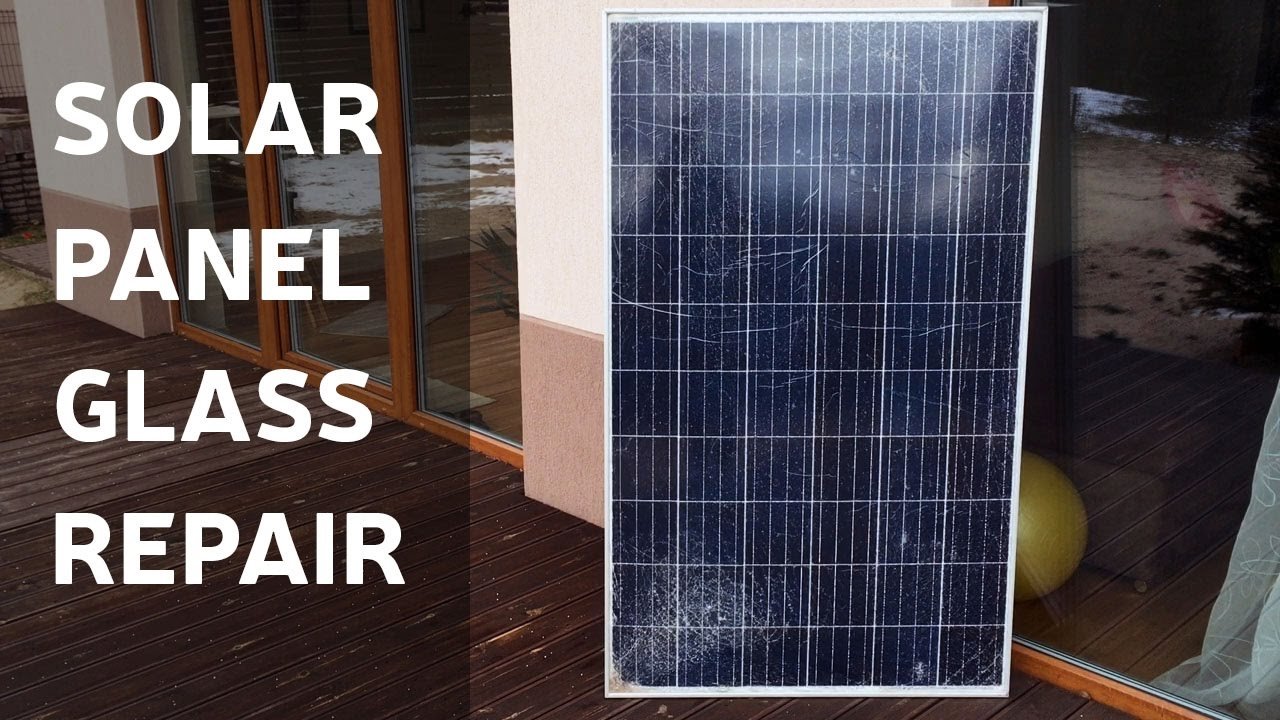
Image source: YouTube / Well Done Tips (YouTube thumbnail fair‑use with source credit)
The most common mistake is grabbing a metal shovel or ice scraper. Tempered glass is tough, but it's not scratch‑proof. A single gouge creates a stress point that can spider‑crack under thermal expansion or snow load.
Manufacturer specs from major panel makers warn that abrasive tools void the glass warranty.
Another big one: using a pressure washer. High‑pressure water can force moisture into the junction box or around the frame seals. That leads to corrosion, ground faults, and a dead panel.
Stick to low‑pressure water or nothing.
Walking on panels is a fast way to break them. Even if the glass holds, you can crack the silicon cells underneath. Microcracks don't show up immediately.
They grow over time and reduce output years later. If you must be on the roof, use walkways or step only on the aluminum frame edges.
Don't try to chip ice off with a pick or screwdriver. Ice will melt on its own within a day or two. Chipping risks scratching the anti‑reflective coating, which permanently cuts efficiency by 2 to 5 percent.
Finally, never use salt or chemical de‑icers on solar panels. Salt corrodes the aluminum frame and electrical contacts. It also leaves a residue that blocks sunlight.
Just let the ice melt naturally.
When Letting Nature Handle It Is the Smarter Move
Most of the time, doing nothing is the right call. Panels are dark and absorb heat well. On a sunny 25°F day, a panel's glass can reach 40 to 50°F, which is enough to melt a thin layer underneath the snow.
That melt creates a slippery film, and gravity takes over.
For panels tilted 35 degrees or more, snow slides off in sheets. You've probably seen this on car windshields or metal roofs. The same physics applies.
Within a day or two of good sun, you'll see bare glass again.
Research from NREL shows that annual production loss from snow in most U.S. snow belts is only 1 to 5 percent. That's minimal. The effort and risk of manual removal often aren't worth the gain.
Even for off‑grid systems, a few days of reduced output rarely justifies climbing a roof.
If you have microinverters, you lose even less. Each panel operates independently, so shaded ones don't drag down the rest. Your system will still produce something, and the uncovered panels will keep your batteries topped up.
Letting nature work is also better for your warranty. Every time you touch a panel, you risk damage. Panels designed for snow regions already have self‑cleaning glass coatings that help shedding.
Trust the design.
The One Scenario Where You Should Always Remove Snow
There's one situation where waiting is a bad idea: when your panels are flat or nearly flat. Flat‑mounted arrays (under 10 degrees tilt) don't shed snow naturally. It stays until it melts, which can take weeks if temperatures stay below freezing.
If your panels are flat, long periods of coverage can cause real problems. Snow load itself isn't usually an issue. Panels are rated for 30 to 50 pounds per square foot.
Wet snow can exceed that in rare cases. The bigger risk is that snow prevents any generation for an extended stretch. That matters if you're off‑grid or relying on net metering credits.
Another scenario: if you have a string inverter system and a heavy snowfall blankets the whole array for more than three days, it's worth clearing at least the bottom row. That lets the rest of the string start producing. Partial clearing is safer and easier than full removal.
If you live in a region with deep, dense snow and low sun angles (think northern Minnesota or the Alps), you may need to clear after every major storm. But for most people, this is the exception, not the rule.
Safety First: Roof Access, Ice Dams, and Electrical Risks
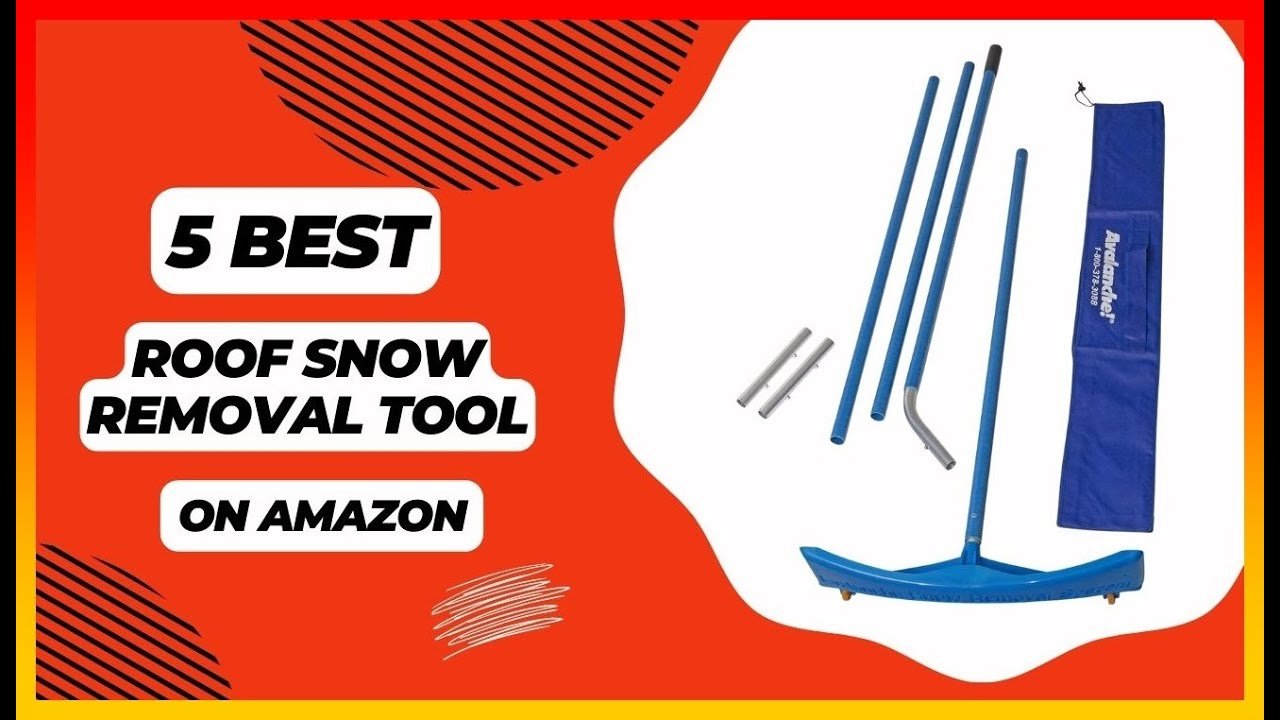
Image source: YouTube / ReviewGeny (YouTube thumbnail fair‑use with source credit)
Roof access is the biggest safety concern. Slippery shingles, ice patches, and steep pitches make even a quick cleanup dangerous. The CDC reports that falls from roofs account for thousands of emergency room visits each winter.
Don't add yourself to that statistic.
If you must go on the roof, use a harness anchored to a secure point. Wear slip‑resistant boots. Have a spotter on the ground.
If your roof is two stories or steeper than 7/12 pitch, call a professional instead.
Ice dams are another hazard. Snow melting and refreezing at the eaves can create a dam that traps water under shingles. This can leak into your attic and damage the roof deck.
Solar panels can trap snow against the roof, making ice dams more likely. If you notice water inside after snowmelt, your roof might need ice‑and‑water shield installed under the panels.
Electrical risks are lower but exist. Water and snow are conductive. If you're using a wet tool near the panels, there's a small chance of a short circuit.
Disconnect the system at the inverter or main breaker if you'll be working with water. Better safe than sorry.
Never clear snow during a lightning storm. The panels are grounded, but you're still a big metal rake handle in an open space.
Tools That Work: What to Use and What to Never Touch
Using the right tool makes the job fast and safe. Using the wrong one can cost you thousands.
Approved tools:
| Tool | Why it works |
|---|---|
| Soft‑bladed roof rake with foam edge | Slides under snow without scratching glass |
| Long‑handled squeegee with rubber blade | Gentle push, good for ground‑mounts |
| Plastic snow broom | Lightweight, won't mar glass |
| Leaf blower (gas or electric) | Blows dry powder off without contact |
| Extension pole with soft brush | Reaches panels from ground level |
Tools to avoid:
| Tool | Why it's dangerous |
|---|---|
| Metal shovel or ice scraper | Scratches glass, voids warranty |
| Pressure washer | Forces water into seals and junction box |
| Salt or chemical de‑icers | Corrodes frame and contacts |
| Broom with stiff bristles | Can abrade anti‑reflective coating |
| Snow blower | Debris and rocks can crack glass |
If you use a leaf blower, do it on dry, powdery snow. Wet snow just turns into a heavy mess. Blowers work best at close range with a focused nozzle.
For roof access, a long‑handled roof rake is the safest option. You can stand on the ground and pull snow off the panels. Some models extend to 25 feet.
That keeps your feet planted on solid ground where they belong.
Remember, once the snow is cleared, take a look at routine upkeep. Keeping the glass clean and checking for any damage after big storms extends the life of your array. A quick visual check twice a winter is usually enough.
Real Scenarios: What Different Homeowners Actually Do
Every situation is a little different. Here's how three common cases play out in practice.
The steep‑roof homeowner in Colorado. Panels at 40 degrees, south‑facing, dry powder snow. After a 12‑inch storm, the snow slides off by lunchtime the next day. She never touches them.
Annual production loss is under 2 percent.
The flat‑roof homeowner in Minnesota. Panels mounted at 10 degrees, heavy lake‑effect snow. Snow stays for weeks. He uses a soft roof rake from the ground to clear a strip along the bottom edge.
That lets the microinverters on the exposed panels keep the batteries charged. He clears fully only after storms over 18 inches.
The off‑grid cabin owner in Vermont. A small ground‑mount array at 35 degrees. He clears snow after every storm because losing a day of generation means running the generator. He uses a foam‑headed squeegee on an extension pole.
It takes 15 minutes and keeps his battery bank full.
These examples show how the decision tree works in real life. Your situation might be different, but the same logic applies.
Frequently Asked Questions
Can snow damage my solar panels?
The panels themselves can handle the weight. Most are tested to ASTM E2848 standards and support 30 to 50 pounds per square foot. The bigger risk is ice dams or snow sliding off suddenly and damaging gutters or plants below.
How much power do I lose when panels are covered?
It varies. A fully covered panel produces near zero. A 50 percent covered array with a string inverter can lose 80 percent or more of its output.
With microinverters, the loss is closer to 50 percent. The albedo effect from snow on the ground helps a little on sunny days.
Will snow melt off faster if I tilt my panels steeper?
Yes. Panels at 35 degrees or more shed snow much faster than flat ones. That's why understanding the different types of solar panels can help you choose the right tilt when you install.
If you're designing a new system, aim for at least 30 degrees in snowy regions.
Is it worth buying a snow removal tool?
Only if you have flat panels or live in a heavy snow zone. For most homeowners, the cost of a good roof rake (around $40 to $80) is less than the production lost from a few storms. But you can also use a leaf blower on dry powder for free.
Should I heat the panels to melt snow?
Heated panels exist but they're rare and expensive. They consume power to melt snow, which cuts into your generation. For grid‑tied systems, it usually doesn't make financial sense.
For off‑grid setups, a small investment in clearing tools is cheaper.
Do I need to clear snow from ground‑mount panels?
Ground‑mounts are easier and safer to access. Many people clear them more often because it's convenient. The same rules apply: steep enough and they'll shed on their own.
If they're low‑tilt, a quick brush after each storm keeps production high.
Your Decision Guide: A Simple Checklist for Next Snowfall
Print this or save it on your phone. Run through it after every big storm.
Step 1: Check your panel tilt.
- 35 degrees or more: Wait 24 hours. It will likely shed.
- 20 to 35 degrees: Check snow type next.
- Under 20 degrees: Plan to clear.
Step 2: Check the snow type.
- Dry powder: Wait. It melts fast.
- Wet heavy snow: Clear if tilt is under 35 degrees.
Step 3: Check your system.
- Microinverters or optimisers: You can wait longer.
- String inverter: Clear sooner if coverage is heavy.
Step 4: Assess safety.
- Roof steep or icy? Do not climb. Let it melt.
- Ground access safe? Proceed with proper tools.
Step 5: Decide.
- If tilt is steep and snow is light: Do nothing.
- If tilt is low or snow is heavy: Clear safely from the ground.
- If output is critical (off‑grid or net metering deadline): Clear a strip at the bottom.
That's it. You don't need to overthink it. A quick read of this checklist before each storm will save you time, money, and a lot of cold fingers.
Understanding the advantages and disadvantages of solar panels helps you see the bigger picture, but for snow, these five steps are all you really need.

Similar Posts