Bifacial vs Monocrystalline: Which Solar Panel Wins?
You're standing in the solar aisle, and the choice between bifacial and monocrystalline panels feels like a coin flip. It's not. The decision comes down to one thing: where you're putting them.
Bifacial vs Monocrystalline Solar Panels isn't a battle of which is "better" in some absolute sense. It's about matching the right technology to your specific roof, budget, and sunlight conditions.
Manufacturer specifications indicate that bifacial panels can capture 5 to 30 percent more energy from the rear side, but only if the surface underneath reflects light well. Monocrystalline panels, by contrast, are the industry standard for efficiency and reliability on any roof type. As of 2026, both technologies have matured to the point where the wrong choice can cost you hundreds in missed savings over a 25-year lifespan.
Let's walk through the decision so you don't leave money on the table.
Quick Answer
Bifacial panels capture sunlight from both sides. Monocrystalline panels only collect from the front. Bifacial panels work best on reflective surfaces like white roofs or ground mounts.
Monocrystalline panels are better for dark asphalt roofs with limited space. Your choice depends on your roof material, budget, and local climate.
Why This Choice Confuses So Many Homeowners
The solar industry loves throwing acronyms and efficiency numbers at you. PERC, TOPCon, HJT, bifacial gain, temperature coefficient. It gets overwhelming fast.
But the core question is simpler than it seems: do you have a surface that reflects light well, or don't you?
Here's where most people get tripped up. They see a bifacial panel advertised with "30 percent more energy" and assume it's always the better buy. That number only applies under ideal conditions.
Think white gravel ground mount with a high tilt angle. On a standard asphalt shingle roof, that gain drops to 5 to 10 percent. Sometimes less.
The confusion also comes from the fact that both panel types use monocrystalline cells. A bifacial panel is still made from monocrystalline silicon. The difference is the backside.
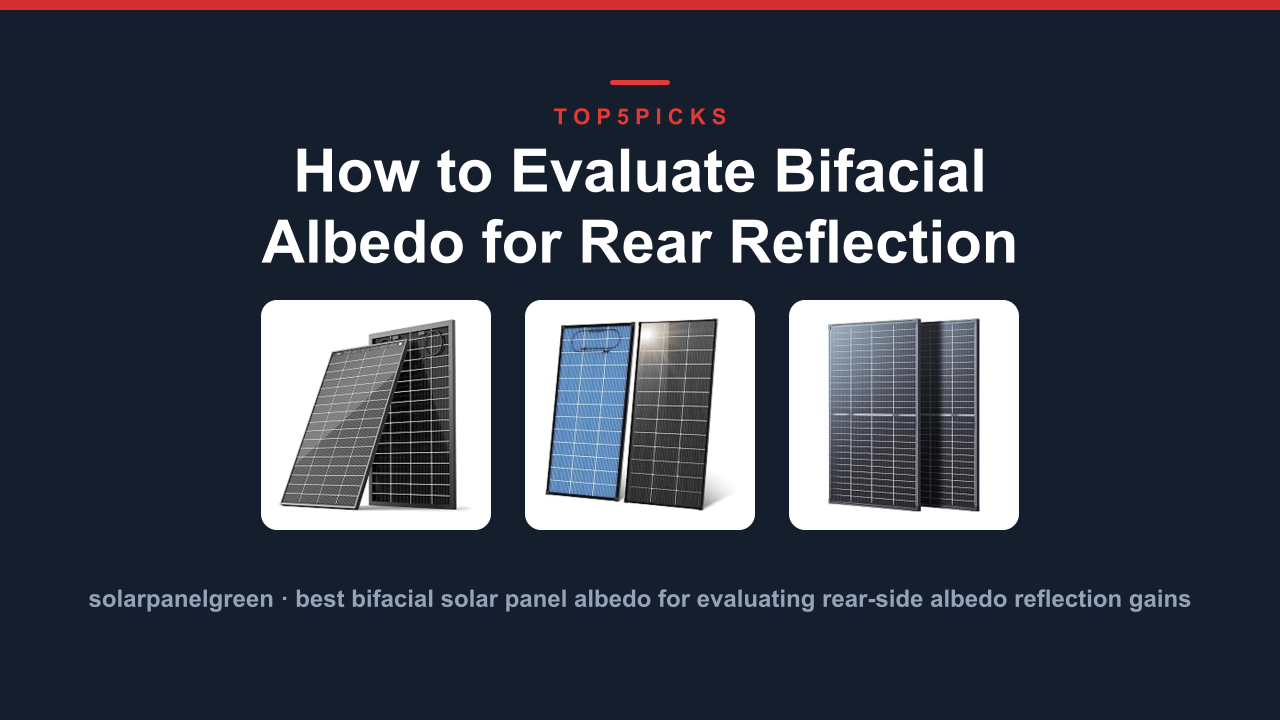
Bifacial panels have a transparent backsheet or glass on both sides, letting light pass through to the rear cells. Standard monocrystalline panels have an opaque backsheet that blocks all rear light.
So you're not really choosing between two completely different technologies. You're choosing whether the extra cost of a transparent back is worth it for your specific installation.
Quick Answer
Bifacial panels collect light from both sides. Monocrystalline panels collect from one side only. Bifacial panels produce 5 to 30 percent more energy on reflective surfaces.
Monocrystalline panels are more efficient per square foot. Choose bifacial for ground mounts, white roofs, or snowy climates. Choose monocrystalline for dark asphalt roofs with limited space.
What Makes a Panel "Bifacial" or "Monocrystalline" (Plain English)
Let's clear up the biggest misunderstanding first. Every modern high-efficiency solar panel uses monocrystalline silicon cells. That includes most bifacial panels on the market today.
The "monocrystalline" label refers to the type of silicon crystal in the cells. The "bifacial" label refers to the panel's construction.
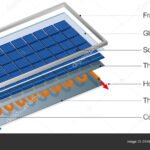
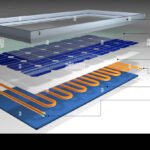
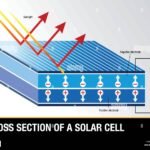
A standard monocrystalline panel has a single layer of cells mounted on an opaque backsheet. That backsheet is usually white or black. Light hits the front, passes through the glass, hits the cells, and generates electricity.
Anything that hits the back is wasted.
A bifacial panel uses the same monocrystalline cells but replaces the opaque backsheet with a transparent layer. Some use glass on both sides. Others use a clear polymer backsheet.
This lets light reach the cells from the rear. When sunlight reflects off the ground, roof, or snow, those rear cells capture it and add to your total output.
The key spec to understand is bifacial gain. That's the percentage of extra energy the rear side produces compared to the front alone. Manufacturer specifications typically list this as a range.
A common rating is "bifacial factor 70 to 80 percent," meaning the rear side produces 70 to 80 percent as much power as the front under ideal reflection. Real-world gain depends entirely on your installation surface.
The Decision Tree
This is where we get practical. Instead of comparing spec sheets, let's walk through five questions that will tell you exactly which panel type fits your situation.
Step 1: What's Your Roof Surface?
This is the single most important factor. Bifacial panels need reflected light to work. The amount of reflection depends on your roof's albedo, which is a fancy word for how much light bounces off a surface.
Here's a quick reference for common roof materials:
| Roof Surface | Albedo (Reflectivity) | Bifacial Gain Potential |
|---|---|---|
| White TPO / PVC (flat roof) | 0.60 to 0.85 | 15 to 30 percent |
| Light gravel | 0.30 to 0.50 | 10 to 20 percent |
| Metal (light color) | 0.25 to 0.40 | 8 to 15 percent |
| Concrete tile | 0.20 to 0.35 | 5 to 12 percent |
| Green grass (ground mount) | 0.15 to 0.25 | 5 to 10 percent |
| Dark asphalt shingles | 0.08 to 0.15 | 2 to 5 percent |
| Dark clay tile | 0.05 to 0.10 | 1 to 3 percent |
If your roof is dark asphalt shingles, bifacial panels will give you almost no benefit. You're paying extra for a feature you can't use. Stick with standard monocrystalline.
If you have a white flat roof or a ground mount over light gravel or grass, bifacial panels can deliver meaningful extra energy.
Step 2: Ground Mount or Rooftop?
Ground mounts are the ideal scenario for bifacial panels. You can tilt them at the perfect angle. You can raise them high enough for good rear airflow and light access.
You can even install reflective ground cover underneath to boost gain.
Rooftop installations are trickier. Most residential roofs have a low pitch, especially in warmer climates. A low tilt angle means less light reaches the rear of the panel.
Plus, the roof itself blocks half the rear surface. Only the bottom edge of the panel gets significant reflected light.
The exception is flat roofs. If you mount bifacial panels on a flat roof with a white membrane, you can tilt them up on racks and capture good rear reflection. That's a strong use case.
Step 3: How Much Space Do You Have?
Monocrystalline panels are the most efficient per square foot. If you have limited roof space and need to maximize power from every inch, standard monocrystalline is your best bet. You'll get the highest wattage from the smallest area.
Bifacial panels are slightly less efficient on the front side because some light passes through to the rear. The front cell density is often a bit lower to allow rear light penetration. That means for the same physical panel size, a bifacial panel might produce slightly less front-side power than a top-tier monocrystalline panel.
But if you have plenty of space, the total energy yield from bifacial panels can exceed monocrystalline over the course of a year. The rear gain more than makes up for the slight front-side reduction.
Step 4: What's Your Budget Per Watt?
Bifacial panels cost more upfront. As of 2026, expect to pay 10 to 20 percent more per watt for bifacial compared to standard monocrystalline. That premium covers the extra glass, the transparent backsheet, and the specialized mounting hardware.
Here's a rough cost comparison:
| Panel Type | Cost Per Watt (Installed) | Typical System Cost (6kW) |
|---|---|---|
| Standard monocrystalline | $0.80 to $1.00 | $4,800 to $6,000 |
| Premium monocrystalline (high efficiency) | $1.00 to $1.20 | $6,000 to $7,200 |
| Bifacial (glass-on-glass) | $0.90 to $1.30 | $5,400 to $7,800 |
| Bifacial with tracker | $1.20 to $1.60 | $7,200 to $9,600 |
The question is whether the extra energy over 25 years justifies the higher upfront cost. On a ground mount with good reflection, bifacial panels can pay back the premium in 3 to 5 years. On a dark roof, you may never recoup it.
Step 5: Do You Live in a Snowy Region?
This is where bifacial panels really shine. Snow on the ground is highly reflective, with an albedo of 0.80 to 0.90. That's nearly perfect for rear-side energy capture.
Plus, snow on the front of the panel melts faster with bifacial panels because the rear-side warmth helps clear the surface.
In northern climates like Minnesota, Canada, or Scandinavia, bifacial panels can produce significant winter energy that standard panels miss. Aggregate reviews from installers in snowy regions report 20 to 30 percent higher winter production from bifacial arrays compared to identical monocrystalline systems.
If you live in a place with regular snowfall and have a ground mount or a roof that sheds snow well, bifacial panels are worth serious consideration.
When Bifacial Is the Clear Winner
Let's paint a picture of the ideal bifacial installation. You have a flat commercial roof with a white TPO membrane. You mount the panels on tilt racks at 15 to 20 degrees.
The white surface reflects light up to the rear of the panels. You get 15 to 25 percent extra energy for a 10 to 15 percent higher upfront cost. That's a solid return.
Or you have a ground mount in an open field. You install bifacial panels on a single-axis tracker that follows the sun. The tracker keeps the panels at an optimal angle all day.
The ground beneath is light grass or gravel. Your bifacial gain hits 20 to 30 percent. This is the highest-yield residential solar configuration available as of 2026.
Bifacial is also the right choice for solar carports. The panels are elevated, allowing light to reach the rear from both sides. The open structure underneath provides excellent ventilation, which improves efficiency.
And the glass-on-glass construction looks clean and modern.
When Monocrystalline Makes More Sense
Standard monocrystalline panels are the workhorses of residential solar. They're proven, reliable, and cost-effective. Here's when you should stick with them.
Your roof is dark asphalt shingles. This covers the majority of US homes. The dark surface absorbs light instead of reflecting it.
Your bifacial gain would be negligible. You'd pay extra for nothing.
You have limited roof space. Monocrystalline panels offer the highest efficiency per square foot. If you need 6kW of power but only have 300 square feet of usable roof, you want the most efficient panels available.
That's standard monocrystalline, not bifacial.
You're on a tight budget. The lower upfront cost of monocrystalline panels means a faster payback period. If you're financing your system, the monthly payments will be lower.
The extra energy from bifacial panels might not offset the higher loan amount within your ownership timeframe.
You have a complex roof with multiple angles, dormers, and chimneys. Shading from roof features kills bifacial gain. If parts of your array are shaded during different times of day, the rear-side benefit drops significantly.
Standard monocrystalline panels handle partial shading better because they don't rely on rear light collection.

Similar Posts