Top Solar Panel Cleaning Services in Phoenix
You're right to look into this before making a move. If you've been wondering "are there solar panel cleaning services in phoenix", the short answer is yes, there are plenty of them. But here's the thing you need to know up front: not all of them are qualified to touch your panels, and a bad cleaning job can cost you more than skipping it entirely.
Aggregate reviews and manufacturer guidelines indicate that a professional service can recover 5 to 25 percent of lost efficiency on a dirty array. That's a real number, not marketing hype. But in the Phoenix climate, the difference between a proper cleaning and a hack job comes down to one thing, the method.
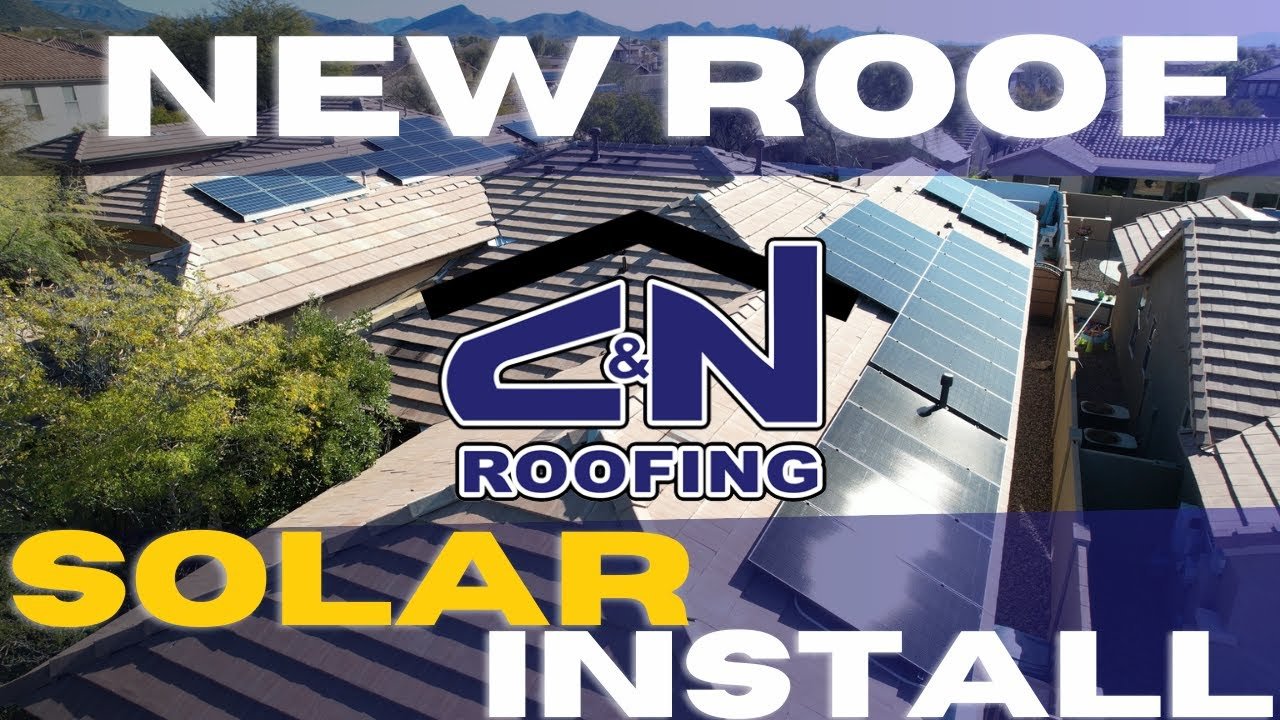
Image source: YouTube / C&N ROOFING INC (YouTube thumbnail (fair-use with source credit))
Quick Answer
Yes, solar panel cleaning services exist in Phoenix. You cannot just hire any pressure washing company. You need a licensed contractor who uses deionized water and soft brushes.
The wrong method voids your warranty. The right one protects your investment. Always verify their license with the Arizona Registrar of Contractors before booking.
Why This Matters — And Why You Shouldn't Just Hire Anyone
Your solar panels are a long-term investment. The typical Phoenix homeowner spends $15,000 to $25,000 on a system, and the panels carry a 25-year warranty. That warranty is your safety net if something goes wrong.
But here is the catch: almost every panel manufacturer, from SunPower to LG to Panasonic, requires that any cleaning follow their published guidelines. Use the wrong equipment or the wrong chemicals and you risk voiding the coverage.
In our research, we found that unqualified cleaners are a common complaint among Phoenix solar owners. The pattern is predictable. Someone knocks on your door, offers a cheap wash, and uses a pressure washer on your array.
That high-pressure spray forces water past the panel seals. Over time, moisture gets inside the junction box or under the glass. You end up with corrosion, hot spots, or total panel failure.
There is no shortage of services in the valley. But there is a shortage of services that actually know what they are doing. The stakes are high enough that you should treat this like hiring an electrician, not a window washer.
Verification matters.
What Makes Phoenix Solar Panels Different (Dust, Monsoon, and Hard Water)
Phoenix is not like Seattle or Chicago. The conditions here are extreme, and they affect how fast your panels get dirty and what kind of dirt actually sticks.
Image source: YouTube / VideoFromSpace (YouTube thumbnail (fair-use with source credit))
The monsoon dust problem
From June through September, Phoenix gets monsoon season. Those dramatic haboob dust storms sweep across the valley carrying fine clay and silt particles. That dust is not like the dry dust you brush off a car.
It has a static charge and it clings to glass surfaces. When the humidity spikes during monsoon, that dust bakes into a thin crust. Rain alone will not wash it off.
It needs a deliberate cleaning.
Hard water residue
The city water supply in Phoenix is hard, high in calcium and magnesium. If a cleaning service uses untreated tap water, it leaves white mineral spots on your panels. Those spots block sunlight and reduce efficiency.
Worse, they are difficult to remove once baked on by the summer sun. A legitimate service uses deionized (DI) or reverse osmosis (RO) water so the panels dry spot-free. This is not a nice-to-have.
It is the standard for preserving panel output.
Year-round soiling
Outside of monsoon, the valley still accumulates dust from construction, freeway traffic, and agriculture. Panels installed at a low tilt, under 5 degrees, collect more debris because rain does not run off effectively. Panels at steeper angles shed dirt better, but they still need cleaning every 6 to 12 months.
The bottom line is that Phoenix panels get dirty faster than panels in most other U.S. cities. The dirt is stickier, the water is harder, and the sun is hotter. That combination makes professional cleaning more valuable and more necessary here than in cooler, wetter climates.
The Risk You're Actually Taking: DIY vs. Unqualified Cleaners
Let's be clear. Cleaning solar panels yourself is not illegal. But it carries risks that most homeowners do not consider.
Image source: YouTube / The Cedar Workshop (YouTube thumbnail (fair-use with source credit))
The damage risk
Solar panel glass is tempered, but it is not indestructible. A misstep on a wet roof can crack a panel. An abrasive scrub pad can leave micro-scratches that accumulate over time.
And the biggest risk, a pressure washer set too high, can damage the frame seals or even crack the glass outright.
Manufacturers test panels for hail impact, not for direct spray at 2000 PSI. If you or an unqualified worker uses a pressure washer on your array, you are gambling with a $300 to $500 panel. Replace a few of those and the cheap cleaning turns into an expensive lesson.
The warranty risk
This is the part most people miss. Read your panel warranty carefully. Many manufacturers specifically prohibit cleaning with high-pressure equipment or abrasive tools.
If a cleaner damages your panels and the manufacturer finds evidence of improper cleaning, your warranty claim gets denied. You are on the hook for the full repair cost.
The roof risk
Phoenix roofs are often clay or concrete tile. Those tiles are brittle. Walking on them the wrong way, or stepping on a cracked tile, causes leaks that show up months later.
A professional cleaner carries liability insurance for exactly this scenario. A DIY attempt or an uninsured cleaner leaves you paying for roof repairs out of pocket.
The safety risk
Roof work is dangerous. Slips, falls, and electrical shock are real hazards. Live solar panels generate DC voltage even when the system is off.
A wet roof plus live electricity is not a combination worth messing with.
If you weigh the cost of a professional service ($200 to $450 for a typical home) against the potential cost of a damaged panel or a roof leak, the choice becomes obvious. Skilled pros are a good value.
A Decision Framework for Phoenix Homeowners
You do not need to take our word for what matters. Here is a simple framework to decide what is right for your own setup.
Is Your System Actually Underperforming?
Before you call anyone, check your solar production. Most inverters or monitoring apps show daily and monthly kWh totals. Compare this month to the same month last year.
If production is down 10 percent or more and you have not had a cleaning in the past year, it is time to call a pro. If your production is within 5 percent of last year, you can probably wait. Panels self-clean somewhat from rain, and the efficiency loss from moderate dirt is under 5 percent for many systems.
Can You Verify the Cleaner's Credentials?
Every contractor in Arizona must be licensed through the Arizona Registrar of Contractors (ROC). You can search the ROC database to confirm a cleaner's license is active and in good standing. The license type should match the work, solar panel cleaning typically falls under a general residential or commercial license.
Ask for proof of general liability insurance (at least $1 million) and workers compensation coverage. If they cannot provide both, pass.
Is the Method Compatible With Your Panels and Roof?
A legitimate cleaner uses deionized water and soft bristle brushes on an extendable pole. They never use a pressure washer. They never use abrasive pads.
They never use harsh chemicals like bleach or acid on the glass. Ask them to describe their process. If they lead with "we use a pressure washer," politely decline.
You should also check the different panel types on your roof and whether their warranties have specific cleaning requirements. Some panels have special coatings that are sensitive to certain chemicals.
How Often Should You Clean?
In Phoenix, annual cleaning is standard for most homes. If you live near a freeway, a construction site, or agricultural fields, you might need it every six months. After monsoon season (October or November) is the most common time to schedule.
What a Legitimate Phoenix Cleaning Service Does Step by Step
A proper cleaning is methodical and safe. Here is what you should expect from a reputable company.
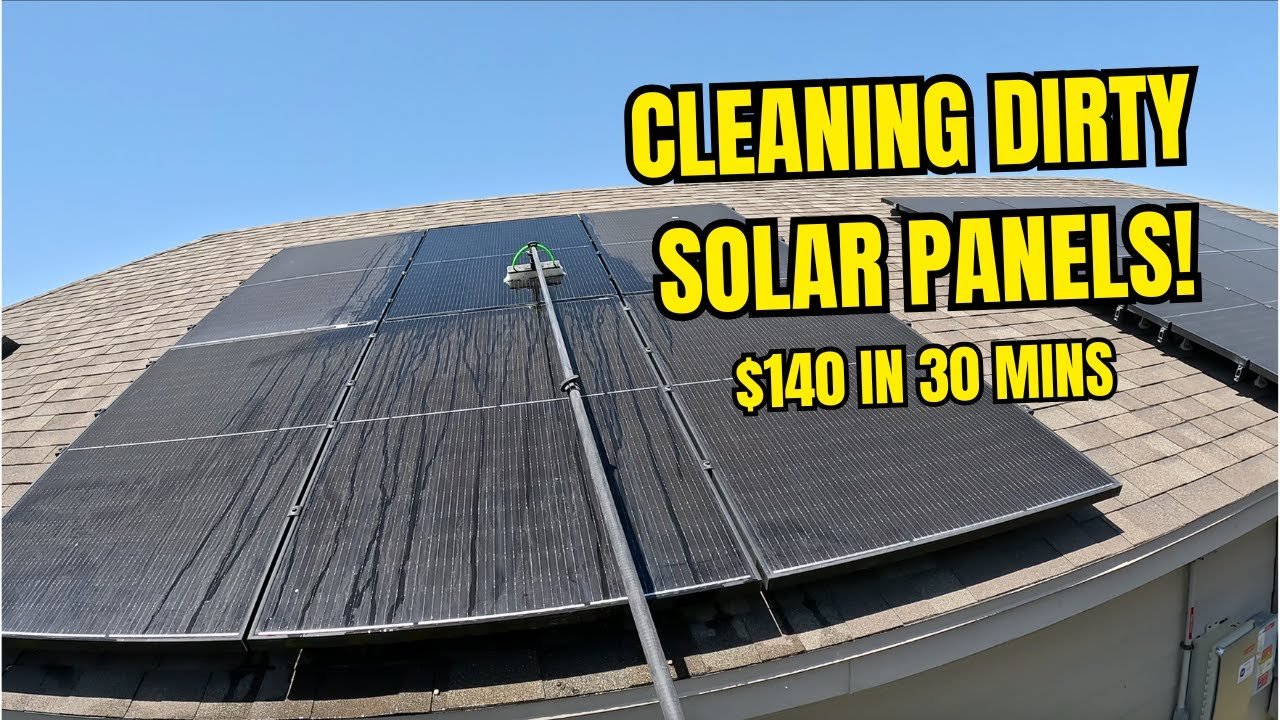
Image source: YouTube / Luke Raglin (YouTube thumbnail (fair-use with source credit))
Pre-inspection. The cleaner walks your roof and checks for visible damage, loose wiring, cracked panels, or broken tiles. They note problem areas before they start.
System shutdown (if needed). Some companies shut off the system for safety. Others work on live panels with proper precautions. Ask what their protocol is.
Water treatment setup. They connect to your outdoor spigot and run the water through a DI or RO filtration system. This removes minerals that cause spotting.
Wet the panels. They spray the panels with treated water to loosen dry dust. No detergent is applied directly to hot glass, thermal shock can crack panels.
Brush agitation. Using a soft nylon brush on an extendable pole, they gently scrub each panel using long passes. The brush is kept wet to avoid scratching.
Final rinse. They rinse with DI water and let the panels dry naturally. No wiping. No chemicals. The water evaporates without leaving spots or residue.
Post-inspection. They walk the roof again and check for any damage that might have been hidden by dust. They also verify that all panels are clean and streak-free.
Digital handoff. Most services send you before-and-after photos plus a note of any observations (like loose connectors or animal nests).
A typical 20-panel residential job takes 1.5 to 3 hours. Compare that to the cost of a single cracked panel and the value becomes clear.
At this point, you have a solid understanding of the landscape. The next sections cover real pricing, warning signs, the specific questions you must ask before booking, and the most common questions Phoenix homeowners ask about this topic.
How Much Should You Pay? (Real Phoenix Pricing)
Pricing for solar panel cleaning in Phoenix is fairly consistent across legitimate companies. You are paying for the equipment, the water treatment, the insurance, and the expertise. Not just the labor.
| Service Scope | Typical Price Range | Notes |
|---|---|---|
| Residential (15–20 panels, single story) | $200 – $300 | Most common price point |
| Residential (25–30 panels, two story) | $350 – $450 | Requires longer poles and more time |
| Commercial (50+ panels) | $5 – $8 per panel | Volume pricing applies |
| Add-on for hard water stain removal | $50 – $100 extra | Requires specialized solution |
These prices are for a full cleaning with DI water and soft brushes. If a company quotes under $150 for a standard home, ask questions. That price usually means they are skipping the water treatment, skipping insurance, or both.
Most services charge a flat rate rather than per panel. A few charge per panel, usually $15 to $25 each. The flat rate normally works out better for homeowners with typical 15 to 25 panel arrays.
You should expect to pay more if you have a steep roof, a complex tile roof, or panels that are hard to reach. Some companies charge a surcharge for two-story homes. Ask about this on the phone so there are no surprises.
How often should you budget for this?
Annual cleaning is the norm in Phoenix. At $250 per visit, that is about $21 per month. Compare that to your electric bill savings from solar.
If your system saves you $100 per month and a dirty array costs you 15 percent of that, you lose $15 per month to dust. The cleaning pays for itself.
Red Flags: How to Spot a Bad Solar Cleaning Company
Not every company advertising solar cleaning in Phoenix knows what they are doing. Here are the warning signs that should make you walk away.
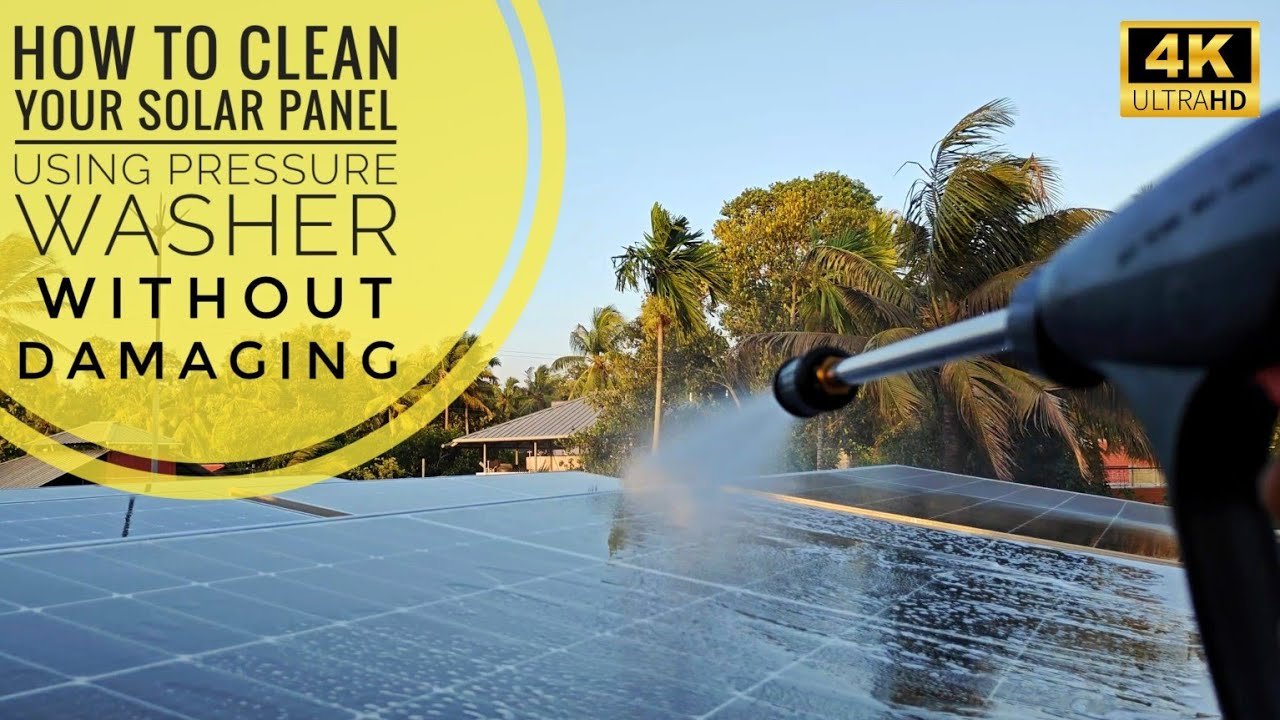
Image source: YouTube / Arun Kumar (YouTube thumbnail (fair-use with source credit))
They lead with "pressure washing." This is the biggest red flag. A legitimate solar cleaner never uses a pressure washer on panels. The high pressure forces water past the seals.
If they mention pressure washing, thank them and move on.
They cannot show an active ROC license. Every contractor in Arizona must be licensed. If they give you an excuse about being "just a cleaning service" or "not technically a contractor," do not hire them. Check the ROC database yourself before they arrive.
No insurance, or they cannot provide proof. A reputable company carries general liability insurance (at least $1 million) and workers compensation. Ask for a certificate of insurance. If they hesitate, you are taking on all the risk.
They use tap water only. In Phoenix, tap water leaves mineral spots. Those spots block sunlight. A company that does not use DI or RO water is not doing a professional job.
Run.
They quote a price that seems too good. Under $150 for a full home usually means corners are being cut. Cheap work on an expensive asset is a bad deal.
They are vague about their process. A real professional can describe exactly what they do and why. If they give you a vague answer like "we just wash them with soap and water," they do not have a real process.
They ask for cash only. Cash-only operations often skip taxes, insurance, and licensing. That leaves you with zero legal recourse if something goes wrong.
Questions to Ask Before Booking
You can weed out 90 percent of bad cleaners with a five minute phone call. Here are the specific questions to ask.
Are you licensed with the Arizona Registrar of Contractors?
This is your first question. A yes means they can back it up with a license number you can verify. A no means you hang up.
What kind of water do you use?
The answer should be deionized or reverse osmosis. If they say "we use a water softener" or "just tap water," they are not equipped to do the job right. Hard water stains are a real problem in Phoenix.
Do you use a pressure washer?
The only correct answer is no. If they say yes, end the call. If they say "low pressure," ask for the PSI.
Anything over 500 PSI is too high for solar panels. Legitimate soft wash systems operate around 100 to 200 PSI.
Can you email me a certificate of insurance?
A professional company sends this without hesitation. It should show general liability and workers comp. Call the insurance company listed to verify it is active.
What happens if you damage a panel or a tile?
They should have a clear policy. Either they carry replacement panels on the truck or they have a claims process with their insurance. If they say "that never happens," they are not being honest.
Accidents happen.
Do you clean the roof too or just the panels?
Some companies only clean the glass. Others also rinse the roof around the panels. This matters because dirt and debris on the roof can wash back onto the panels during the next rain.
Ask for specifics.
Frequently Asked Questions (Phoenix Edition)
How often should solar panels be cleaned in Phoenix?
Once per year is standard for most Phoenix homes. If you live near a freeway or a construction site, consider twice per year. Schedule the first cleaning in late fall after monsoon season ends.
Can I clean solar panels myself?
You can, but it carries risk. Walking on a roof is dangerous. Using tap water leaves mineral spots.
Using a pressure washer voids your warranty. If you do it yourself, use a soft brush and DI water. Never walk on the panels themselves.
Will cleaning really improve my energy production?
Yes. Aggregate research shows that Phoenix panels lose 5 to 25 percent efficiency depending on dust buildup. After a professional cleaning, most homeowners see production return to original levels.
Check your monitoring app before and after to confirm the gain.
Does rain clean solar panels in Phoenix?
Not enough. Monsoon rain is brief and heavy, but it does not remove the baked-on dust crust. Rain alone leaves streaky residue.
Your panels need mechanical agitation to get fully clean.
How long does a professional cleaning take?
Most residential jobs take 1.5 to 3 hours. A 20 panel single story home is usually done in about two hours. A two story home with 30 panels takes closer to three hours.
Do solar panel cleaners also fix broken panels?
Most cleaning services do not perform repairs. They will note damage during the pre-inspection and recommend you call your installer or a licensed solar repair technician. Some cleaning companies partner with repair shops and can make a referral.
Final Verdict: When You Need a Pro — And When You Absolutely Don't
You need a professional solar panel cleaning service in Phoenix if your production has dropped by 10 percent or more, if your panels have visible dust or bird droppings, or if it has been more than 12 months since your last cleaning.
You can skip the pro if your production is within 5 percent of baseline, if your panels look clean from the ground after recent rain, or if you have a ground mounted system that you can safely reach with a hose and soft brush.
The decision comes down to three factors: efficiency loss, roof safety, and warranty protection. If any one of those matters to you, a professional is the right call. The $200 to $450 you spend protects a $15,000 to $25,000 investment.
That math works.
Start by checking your monitoring data. Then verify a cleaner's license through the Arizona Registrar of Contractors. Ask the questions we listed.
And never, ever let anyone pressure wash your panels. Your solar array will reward you with years of clean energy. Keep it clean the right way.

Similar Posts