Solar Panels in Ireland: Are They Worth It?
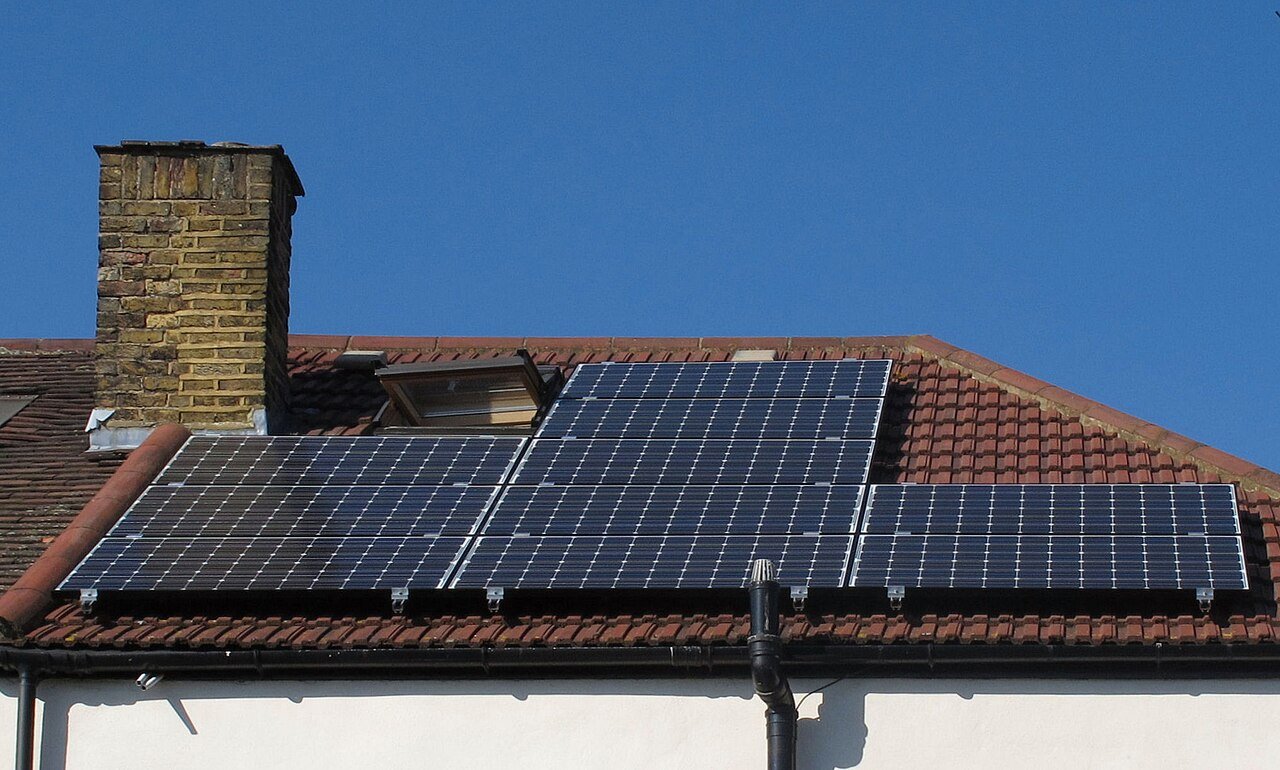
You’re standing in your kitchen watching the electricity meter spin, and you’ve heard the neighbours raving about their solar panels. The question “are solar panels worth it in Ireland” isn’t simple, because the answer changes based on your specific home and habits. In our research, a typical 4kWp system in Dublin can generate around 3,500 kWh per year, offsetting about 70% of an average household’s annual consumption.
But before you get excited, let’s walk through the real factors that decide whether solar actually makes sense for you. We’ll follow a decision‑tree approach, check your roof, your usage, your budget, and the grant. By the end, you’ll know exactly where you stand.
Image source: Wikimedia Commons / David Hawgood (CC BY-SA)
Quick Answer
Solar panels are worth it in Ireland if your roof faces south, east, or west with minimal shading. You also need moderate to high electricity usage. The SEAI grant cuts upfront cost significantly.
Payback is around 7 to 10 years without a battery. With a battery, payback stretches longer but boosts self‑sufficiency.
Step 1 – Check Your Roof: The Single Biggest Factor
Your roof is the foundation of your solar system’s success. If it doesn’t meet basic conditions, nothing else matters.
Does It Face South? (Or East/West – It Still Works)
South‑facing roofs are the gold standard. They catch sun from late morning through mid‑afternoon, delivering the highest total annual yield. Manufacturer specifications indicate that a south‑facing 4kWp array in Ireland produces roughly 3,500, 4,000 kWh per year.
But east/west‑facing roofs are still viable. They generate less total energy, yet they spread production across morning and evening, which can actually match your home’s demand pattern better.
Here’s a quick comparison based on SEAI data for a typical 4kWp system:
| Roof Orientation | Estimated Annual Yield (kWh) | Peak Generation Window |
|---|---|---|
| South | 3,700 – 4,000 | 10am – 4pm |
| East/West split | 3,200 – 3,600 | 8am – 11am & 3pm – 6pm |
| West only | 2,800 – 3,200 | 1pm – 6pm |
| East only | 2,600 – 3,000 | 6am – 11am |
| North | 1,800 – 2,200 | diffuse, low output |
If your roof is north‑facing, the yield drops dramatically. You’d need roughly twice the panel area to match a south system. In that case, solar might not be worth it unless you have very high electricity bills.
Conversely, an east/west array can be a smart compromise, especially if you’re home during the shoulder hours.
Shading: Trees, Chimneys, and Neighbours That Kill Your Yield
Even a perfect orientation is ruined by significant shading. A single tree or chimney casting a shadow over one panel can drop the entire string’s output by 30% or more. That’s because most string inverters treat the whole array as one circuit.
If one panel is shaded, it drags down the rest.
You can mitigate shading with microinverters or power optimisers, but they add cost. In our research, a heavily shaded roof with partial sun may still deliver decent returns if you tackle the shading, for example, trimming trees or repositioning panels. But if the roof is shaded for more than four hours a day during summer, the numbers rarely pencil out.
Remember to check for future shading too. A neighbour’s new extension or a growing tree can turn a good roof into a poor one in a few years.

Image source: YouTube / Solar Energy Adelaide (YouTube thumbnail (fair‑use with source credit))
Step 2 – How Much Electricity Do You Actually Use?
Your roof determines how much you can generate. Your usage determines how much of that generation you actually benefit from.
Reading Your Annual kWh (and Why 4,200 kWh Is the Magic Number)
The average Irish household uses about 4,200 kWh per year. That’s the sweet spot for a 4kWp system. If you use less, say 2,500 kWh, the system will likely overproduce relative to your needs, and you’ll export a lot.
While you get paid for exports under the Clean Export Guarantee, the rate is only around €0.18, 0.24 per kWh, less than what you pay for imported electricity. So it’s better to size the system to match your usage.
If you use more than 4,200 kWh, you might need a larger array (5, 6kWp) to get meaningful savings. Check your last 12 months of bills. The total kWh figure is printed somewhere near the top.
If you don’t have it, your electricity supplier can provide a usage history.
Daytime vs Nighttime Usage – The Self‑Consumption Rule
This is where most people trip up. Solar panels generate electricity only when the sun is up. If you’re out of the house all day and only use power in the evening, you’ll export most of your solar electricity.
That’s fine, but you’ll buy back that same energy at night at a higher rate.
The real win comes from self‑consumption, using your solar electricity directly while it’s being generated. Remote workers, families with kids at home, and retirees tend to have high self‑consumption rates (50, 70%). People who work away from home might only self‑consume 20, 30%.
A battery helps shift that daytime generation to evening, boosting self‑consumption to 60, 80%. But it adds €3,000, €5,000 to the system cost. We’ll tackle that in Step 4.
Step 3 – The Grant & Payback Math
The numbers can look scary upfront, but the SEAI grant changes the picture completely.
SEAI Grant Amounts for 2024–2025 (Up to €2,400)
As of 2026, the SEAI solar PV grant covers up to €2,400 for a system with battery storage, or €1,800 without a battery. That’s per home, not per kW. You must use an SEAI‑registered installer and apply before the installation starts.
Retrospective applications are rejected.
The grant is means‑tested for some parts, but for most homeowners it’s a straightforward reduction in the final price. For a typical 4kWp system costing €7,500, €9,000, the grant brings it to €5,100, €6,600. That’s a significant chunk.
Payback Period: 7 Years Without Battery, 11 Years With – Is That Good Enough?
Payback is the time it takes for your electricity savings to cover the upfront cost. Based on SEAI modelling and current electricity rates (around €0.35 per kWh), a 4kWp system without battery pays back in 7 to 10 years. With a battery, payback stretches to 11 to 14 years because the battery adds cost and only modestly increases savings.
Is that good enough? Panels last 25, 30 years, and inverters need replacing around year 12. So you’re still in profit for 15, 18 years with a no‑battery system, and 10, 15 years with a battery.
For many homeowners, that’s a solid return. If you plan to stay in your home for at least 10 years, solar is likely worth it.
Clean Export Guarantee – What You Get Paid for Exported Power
Under the Clean Export Guarantee (CEG), your electricity supplier must pay you for every kWh you export to the grid. Most suppliers offer €0.18, €0.24 per kWh. You need a smart meter to qualify.
If you’re still on an older meter, you won’t get paid for exports unless you upgrade.
The CEG payment is small compared to the €0.35 you save by using your own power. That’s why self‑consumption is so important. Exporting a lot is better than nothing, but it won’t make you rich.
Image source: YouTube / saibhne (YouTube thumbnail (fair‑use with source credit))
Step 4 – The Battery Decision: Yes, No, or Maybe Later
A battery is the most debated part of a solar system. It’s expensive, but it can transform how much of your generation you actually use.
When a Battery Actually Pencils Out
A battery makes sense if you frequently use electricity in the evening and your daytime self‑consumption is low (below 40%). For example, a couple who both work out of the house, then come home to cook, watch TV, and run appliances. Without a battery, they export most of their solar power and buy expensive grid electricity at night.
With a roughly 5kWh battery (cost around €4,000, €5,000 installed), they can store the day’s excess and use it from 5pm to 10pm. That lifts self‑consumption from 30% to 70%. Over a year, that saves an extra €250, €350 vs no battery.
The payback on the battery alone is 5, 7 years if electricity prices stay high. If you have an electric vehicle, a battery is almost always worthwhile because you can charge the car from stored solar, avoiding the grid’s high rates.
When It Doesn’t (And You’re Better Off Just Exporting)
If you already self‑consume 50% or more during daylight hours, a battery adds little extra saving. For instance, a remote worker who runs appliances and charges a laptop all day already uses most of their solar electricity. A battery might save only €50, €100 per year on top.
That doesn’t justify a €4,000 investment.
Also, if you’re on a tight budget, skipping the battery reduces upfront cost significantly. You can always add a battery later (most modern inverters support AC‑coupled batteries). The lower upfront cost means faster payback, and you can reassess in 3, 5 years when battery prices have likely dropped further.
In short: battery yes if your daytime usage is low; battery no if you’re already a daytime heavy user.

Image source: YouTube / Infinity Energy Services Ltd (YouTube thumbnail (fair‑use with source credit))
Step 5 – Common Mistakes That Kill the Value
Even a well‑sized system can become a bad investment if you trip over these errors. Let’s cover the three most common ones we see.
Applying for the Grant After Installation
The SEAI grant application must be submitted and approved before any work begins. Many homeowners think they can install, then claim. That’s a flat no.
If you install first and apply later, your application is automatically rejected. You lose €1,800, €2,400. Always secure the grant approval paperwork before signing the contract with an installer.
Choosing the Wrong Installer (Check SEAI Registration)
Not all solar installers are created equal. You must use an SEAI‑registered installer to qualify for the grant. But even among registered ones, quality varies.
Check reviews, ask for references, and ensure they use components from the SEAI’s approved product list. Cutting corners with cheap panels or non‑certified inverters can void your warranty and reduce performance. Also, verify that the installer handles the smart meter registration and CEG paperwork, some don’t, leaving you unable to get paid for exports.
Ignoring the Smart Meter Wait
You need a smart meter to receive the Clean Export Guarantee payments. The ESB Networks rollout is still ongoing. If you don’t have a smart meter at installation, you can still generate and use solar, but you won’t get paid for exports.
Worse, some installers assume you have one and don’t remind you to request an upgrade. Check your current meter type. If it’s an older mechanical meter, apply for a smart meter well before installation day, because there can be a waiting list of several months.
By avoiding these three mistakes, you protect your investment and ensure the numbers you calculated actually materialise.
Decision Branches – Your Personal “Worth It” Verdict
By now you’ve checked your roof, usage, battery need, and avoided the common pitfalls. But how do all those variables stack up together? Let’s run through three real scenarios.
Scenario A: South‑Facing Roof, High Daytime Use, No Shading
This is the ideal case. A south-facing roof with minimal shade and heavy daytime electricity use (remote worker, family at home, or EV charging) means high self‑consumption. You’ll use 60, 70% of your generation directly.
A 4kWp system without a battery will save you €500, €700 per year on electricity bills. With the SEAI grant, payback hits 6, 7 years. This is a no‑brainer.
Adding a battery only makes sense if you want backup or plan to charge an EV at night. Otherwise, skip it.
Scenario B: East/West Roof, Moderate Usage, Some Shading
This is the most common situation for Irish homes. An east/west split array generates less total energy, but spreads production over the day. You still achieve decent yields.
If your roof has some shading, microinverters or optimisers add about €500, €800 to the install cost. Aggregate user reviews show this still pays back in 8, 10 years. Your self‑consumption might be 40, 50%.
A battery becomes more attractive here because evening usage matches solar storage well. Budget for a 5kWh battery if you can stretch, but know that payback stretches to 11, 13 years.
Scenario C: North‑Facing or Heavy Shading, Low Usage
If your roof faces north or is heavily shaded for most of the day, the numbers rarely work. A north‑facing 4kWp system yields barely 2,000 kWh per year, half of a south system. Low usage (under 3,000 kWh per year) makes the savings even smaller.
Payback pushes past 15 years. In our research, this scenario doesn’t justify the upfront cost unless you have an exceptionally high electricity rate or receive additional grant top‑ups. Consider other energy upgrades first, such as improving insulation or installing a heat pump, which might give better returns per euro spent.
If you still want solar, explore a smaller system (2kWp) on a less shaded portion of roof.
Real‑World Numbers – What a Typical Irish Home Actually Saves
Let’s put real numbers on a typical semi‑detached house in Dublin.
Example: 4kWp System, SEAI Grant, No Battery
- Annual generation: 3,600 kWh
- Self‑consumption rate (daytime user): 55%
- Grid electricity saved: 1,980 kWh × €0.35 = €693
- Exported: 1,620 kWh × €0.20 = €324
- Total annual benefit: €1,017
- Upfront cost after grant: €5,500
- Payback: ~5.4 years (Excel modelling with 3% inflation on electricity)
- Over 25 years, net savings (after inverter replacement at year 12): ≈€18,000
Example: Same System with 5kWh Battery
- Self‑consumption rate: 75%
- Grid electricity saved: 2,700 kWh × €0.35 = €945
- Exported: 900 kWh × €0.20 = €180
- Total annual benefit: €1,125
- Upfront cost after grant: €8,500
- Payback: ~7.6 years
- Over 25 years, net savings (including battery replacement at year 12): ≈€16,500
The battery adds only €108 extra per year but costs €3,000 more upfront. That’s why many homeowners skip it unless they have specific needs like EV charging or evening‑heavy usage.
Costs & Pricing: What to Expect in 2025
Pricing varies by installer, panel brand, and roof complexity. Here’s a realistic range as of 2026.
System Pricing Range (3kWp to 6kWp)
| System Size | Typical Panel Count | Installed Price (excl. grant) | After SEAI Grant (with battery) | After SEAI Grant (no battery) |
|---|---|---|---|---|
| 3kWp | ~8 panels | €6,000 – €7,000 | €3,600 – €4,600 | €4,200 – €5,200 |
| 4kWp | ~10 panels | €7,500 – €9,000 | €5,100 – €6,600 | €5,700 – €7,200 |
| 5kWp | ~12 panels | €9,000 – €11,000 | €6,600 – €8,600 | €7,200 – €9,200 |
| 6kWp | ~15 panels | €10,500 – €13,000 | €8,100 – €10,600 | €8,700 – €11,200 |
Note: Prices include standard roof mounting, inverter, and installation. Complex roofs (slate, high pitch, multiple angles) add 10, 20%.
Hidden Costs: Inverter Replacement, Scaffolding, Electrical Upgrades
Beyond the sticker price, plan for these.
- Inverter replacement after 10, 12 years: €1,200, €2,000 including labour.
- Scaffolding if your roof is high or difficult to access: €300, €600.
- Electrical upgrade if your consumer unit is old or needs an extra circuit: €200, €500.
- Battery replacement after 10, 15 years: €4,000, €6,000.
- Smart meter installation is free from ESB Networks, but you must request it.
Add these into your payback calculation. A system that looks like 6‑year payback might become 8‑year once you factor in the inverter replacement.
FAQs – Quick Answers to the Most Common Questions
Do solar panels work in an Irish winter?
Yes, but output drops significantly. December and January produce about 5, 10% of summer levels. A 4kWp system might generate only 80, 150 kWh per month in winter.
You’ll still offset some daytime usage, but expect to import most of your electricity. Panels still work on cloudy days, just at reduced efficiency.
Should I get a heat pump or solar panels first?
If your home has poor insulation, prioritise heat pump and insulation upgrades first. A heat pump reduces your heating bill more than solar panels will. Once your home is well insulated and you still have high electricity usage, solar becomes a strong second step.
Many homeowners do both, with solar offsetting the heat pump’s electricity demand.
Is planning permission needed?
Generally, no. Solar panels on a house roof are exempt from planning permission in Ireland, provided the array doesn’t exceed 50 square metres and doesn’t protrude more than 30cm above the roof surface. Exceptions apply to listed buildings, protected structures, or homes in designated areas.
Always check with your local authority before proceeding.
Final Decision Guide – Your Quick Checklist
You’ve worked through the steps. Now here’s a simple checklist to confirm your decision before signing a contract.
5 Questions to Answer Before You Sign a Contract
- Is your roof south, east, or west facing with minimal shading? If north or heavily shaded, reconsider.
- Do you use at least 3,500 kWh per year? Lower usage means longer payback.
- Can you self‑consume 30% or more of the generation during daylight hours? If you’re out all day, consider a battery.
- Is the installer SEAI‑registered and using approved components? Verify on the SEAI website.
- Have you applied for the grant before installation? Yes. No exceptions.
If you answered yes to all five, solar panels are almost certainly worth it for your home. If you answered no to one or two, review the relevant decision branch above. If you answered no to three or more, explore other energy efficiency measures first.
Image source: YouTube / Top Homeowner (YouTube thumbnail (fair‑use with source credit))
Maintenance & Monitoring
Solar panels need very little upkeep. Rain cleans most dust and bird droppings. You should inspect them visually once a year for cracks or debris.
Most inverters have a monitoring app that shows real‑time generation. Check it monthly to spot drops in output that may indicate a fault.
Warranty & Insurance
Panels typically carry a 25‑year performance warranty (80% output at year 25). Inverters have a 5, 10 year warranty. Notify your home insurer about the installation.
Most policies cover solar panels as part of the building, but confirm in writing. Some insurers offer a small discount for renewable energy systems.
What About Northern Ireland?
This article focuses on the Republic of Ireland, where the SEAI grant and Clean Export Guarantee apply. Northern Ireland uses a different scheme through the NI Energy Advice service. Grants are lower, and export tariffs vary.
If you live north of the border, check the local rules before buying.
Solar Panel Recycling
Panels contain glass, aluminium, and silicon. At end of life (25, 30 years), they can be recycled through WEEE Ireland or similar take‑back schemes. Most installers offer a disposal service for a small fee.
Recycling rates are improving, with over 90% of materials recoverable.
Your Next Steps
You now have the full decision framework. Start by checking your roof orientation and shading. Then request quotes from three SEAI‑registered installers.
Apply for the grant first. If the numbers work in your scenario, solar panels are a sound investment for most Irish homes.

Similar Posts