Are Solar Panels Worth It in Houston?

Are solar panels worth it in Houston? If you've asked that question, you're not alone. It's one of the biggest financial decisions a homeowner can make, and the answer depends on a lot more than just how sunny the city is.
Get it right, and you could save thousands over the life of your system. Get it wrong, and you're stuck with panels that underperform or a contract that eats away at your savings.
As of 2026, the federal Investment Tax Credit covers 30% of your total installation cost. That's a strong incentive, but it's not the whole story. Houston's heat, humidity, utility policies, and local installer quality all play a huge role in whether solar actually pays off for you.
Let's walk through what you really need to know before making a move.
Quick Answer
Solar panels are worth it for most Houston homeowners. Payback typically ranges from 8 to 15 years. Total savings over 25 years can exceed $30,000.
Your results depend on roof condition, energy use, and installer quality. Get at least three quotes before committing.
Why Accuracy Matters When Deciding About Solar in Houston
This isn't a question you want to answer with a generic calculator you found online. Houston has its own set of rules, and they change the math in big ways.
The first problem is the sales pitch. Solar companies operate on commissions, and some will promise you savings that don't hold up under real Houston conditions. They might exaggerate how much sun you get on a yearly basis or gloss over how CenterPoint handles net metering.
A few bad numbers and your decision flips from "buy" to "pass."
Our research shows that homeowners who skip the due diligence phase often end up with systems that produce 15 to 20% less than what was quoted. That's thousands of dollars in lost savings over the system's life. The accuracy of your quote matters because the decision is expensive and hard to reverse.
Additionally, the installation quality in Houston varies wildly. A poorly installed system can cause roof leaks, void your roof warranty, or even create fire hazards if the wiring isn't done right. This is not a purchase where "good enough" works.
You need the right numbers and the right installer.
Image source: YouTube / KHOU 11 (YouTube thumbnail (fair-use with source credit))
The Real Numbers: Solar Costs, Savings, and Payback Periods in Houston
If you want a straight answer, you need straight numbers. Here's what the market looks like for a typical Houston home as of 2026.
A typical 8 kW system costs between $20,000 and $25,000 before any incentives. After the 30% federal tax credit, that drops to $14,000 to $17,500. Add in the Texas property tax exemption, the added home value from solar doesn't increase your taxes, and the deal gets even better.
| Item | Typical Value |
|---|---|
| System size (kW) | 8 kW |
| Average cost per watt | $2.80 |
| Total cost (before tax credit) | $22,400 |
| Federal tax credit (30%) | -$6,720 |
| Net cost after credit | $15,680 |
| Average monthly savings | $140 – $220 |
| Typical payback period | 8 – 14 years |
| Net savings over 25 years | $25,000 – $45,000 |
Your actual numbers will vary. Homes with high electricity usage and good south-facing roofs can hit the high end of that savings range. Homes with partial shading or older roofs might land closer to the low end.
The key number to focus on is payback period. If you plan to stay in your home for less time than it takes to break even, solar might not be the right move financially. Most Houston homeowners who go solar plan to stay put for at least 10 years.
For those who want to understand how these systems actually work before committing, our guide on the basic process of converting sunlight explains the technology behind the numbers.
How Houston's Heat, Clouds, and Hail Change the Math
Solar panels hate heat. That's a fact most salespeople won't lead with. Panels are tested at 25°C (77°F), but Houston regularly sees temperatures above 95°F in summer.
For every degree above 25°C, panel efficiency drops. It's called the temperature coefficient, and it matters a lot in this climate.
Typical monocrystalline panels lose about 0.3 to 0.4% of their output per degree Celsius above 25°C. At 95°F (35°C), that's a 3 to 4% efficiency loss on top of everything else. On the hottest Houston days, that loss can hit 5% or more.
You won't see the lab-tested output numbers most of the time.
Clouds also play a role. Houston averages 163 sunny days per year. That's less than Phoenix or Los Angeles.
While you still get plenty of light on partly cloudy days, the total annual energy production is lower than what the national solar averages suggest.
Hail is another factor. Houston gets severe storms, and large hail can crack panels. Most decent panels carry a hail rating and a product warranty, but you want to check that coverage carefully.
Some insurance policies require you to add a rider for solar panels, or they won't cover storm damage.
Our analysis of how panels actually work in different climates confirms that temperature management is a key factor in long-term performance. If your installer doesn't account for Houston's heat in their quote, you'll end up with inflated savings projections.

Image source: YouTube / Renewable_Tek (YouTube thumbnail (fair-use with source credit))
CenterPoint Net Metering — What You Actually Get Paid
Net metering is what makes solar financially viable for most homeowners. When your panels produce more electricity than you use, the excess flows back to the grid, and CenterPoint credits your account. But here's where it gets tricky: the credit rate is not the same as the retail rate you pay.
In Houston, CenterPoint's net metering program pays you the "avoided-cost rate." As of 2026, that's roughly 8 to 9 cents per kilowatt-hour (kWh). Meanwhile, you're paying your retail electricity provider around 12 to 14 cents per kWh for the power you pull from the grid. That's a gap of about 4 to 5 cents per kWh.
What does that mean in practice? Every kWh you send to the grid earns you less than what you would have paid to buy it. So you still want to use as much of your solar power directly as possible.
That's called self-consumption, and it's the most valuable way to use your system.
The billing structure also matters. CenterPoint calculates your net consumption on a monthly basis. Any excess credits at the end of the month roll over, but those credits expire at the end of the billing year.
So if you generate a lot in spring and fall but use less, you might lose some of those credits. A good installer will size your system so you don't overproduce by too much.
The Texas Public Utility Commission sets the rules for net metering. Those rules can change, which is a risk you should be aware of. Future policy shifts could lower the credit rate further or change how credits are calculated.

Image source: YouTube / Sustainable Every Day (YouTube thumbnail (fair-use with source credit))
Solar-Only vs Solar + Battery — Which Setup Works for Houston
This is one of the most common decisions Houston homeowners face. Do you just go solar, or do you add battery storage? The answer depends on your goals.
Solar-only systems are simpler and cheaper. You save on your electric bill during the day, and you pull from the grid at night. No battery means lower upfront cost and a faster payback period.
If your main goal is to reduce your monthly bills, this setup makes sense.
Solar plus battery adds a significant cost. A single battery installation runs $10,000 to $15,000 installed. That pushes your total system cost well past $30,000 before incentives.
But it gives you backup power when the grid goes down. For Houston, where storms and extreme weather cause frequent outages, that's a real benefit.
| Factor | Solar-Only | Solar + Battery |
|---|---|---|
| Upfront cost (8 kW system) | $15,000 – $17,500 after tax credit | $25,000 – $32,000 after tax credit |
| Backup power during outage | No | Yes |
| Self-consumption | Limited to daytime | Full |
| Payback period | 8 – 14 years | 12 – 18 years |
| Best for | Bill reduction, lower initial cost | Energy independence, outage protection |
The battery also increases your self-consumption. You store excess daytime power and use it at night instead of selling it to CenterPoint at the avoided-cost rate. That improves the economics, but it takes a long time to recover the additional investment.
For most Houston homeowners, the practical move is to start with solar-only and add a battery later if needed. Battery prices are dropping, and more financing options are available every year. But if you absolutely need backup power for medical equipment or work-from-home reliability, the battery is worth the premium.
If you want to explore a full breakdown of the main parts of a solar system before choosing a setup, that guide covers inverters, panels, and monitoring, all of which affect how a battery integrates with your system.
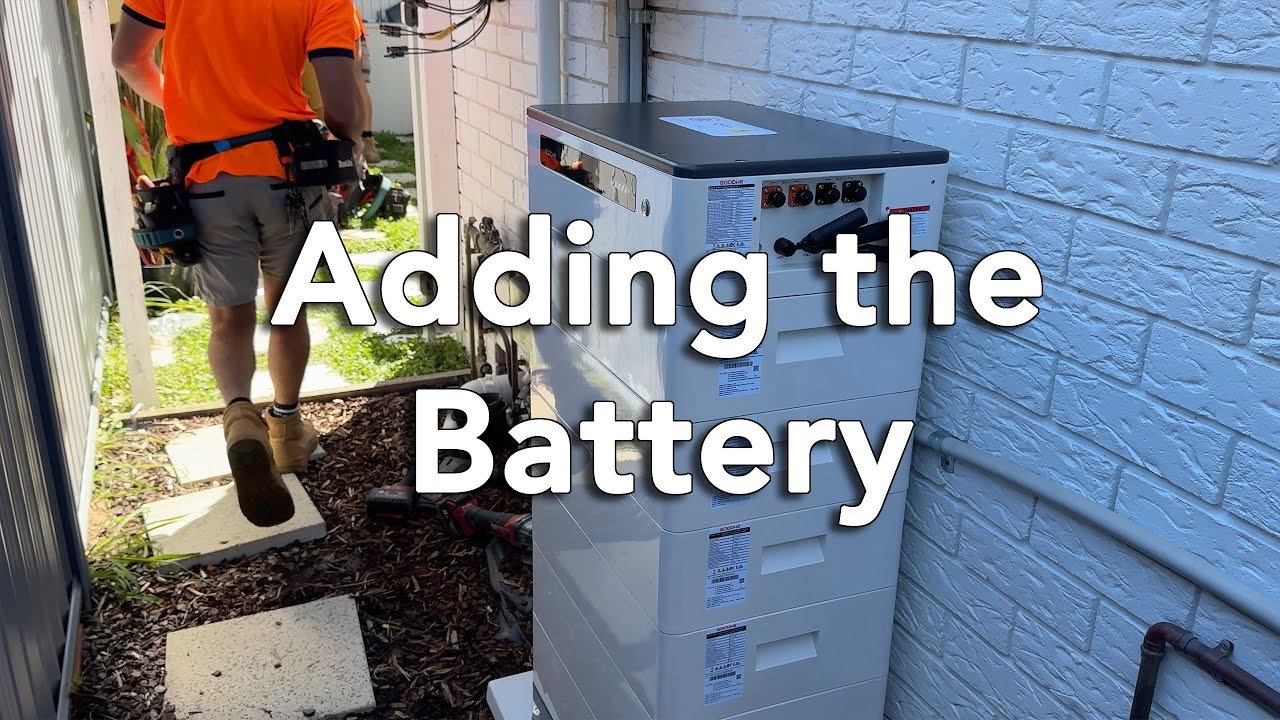
Image source: YouTube / Designer James Treble (YouTube thumbnail (fair-use with source credit))
The Hidden Risks: Roof Age, Insurance, HOAs, and Bad Installers
Three factors can kill a solar deal before you even get started. Let's look at each one.
Roof age is the biggest surprise for most homeowners. Solar panels last 25 to 30 years. If your roof is over 10 years old, you'll likely need to replace it before or alongside the solar installation.
That adds $8,000 to $15,000 to your total cost. Some installers will try to install on an aging roof anyway, but that's a bad idea. You don't want to pay $2,000 to remove and reinstall panels just to replace shingles a few years later.
Homeowner insurance is another hurdle. Not all policies automatically cover solar panels. Some insurers treat them as an add-on structure.
Others exclude storm damage entirely. Before you sign anything, call your insurance agent and ask if they cover solar panel replacement after hail or wind damage. If they don't, factor in the cost of a separate rider or a new policy.
HOA restrictions can also block your plans. Texas has a Solar Rights Law that limits what HOAs can do, but they still have some control over panel placement, color, and visibility. Get written approval from your HOA before you pay any deposits.
It's easier to address upfront than to fight after installation.
Bad installers are perhaps the biggest risk. Houston has no shortage of solar companies, but quality varies enormously. Aggregated reviews report common problems with poor roof penetration seals, unprofessional wiring, and companies that disappear before warranty claims come due.
Always check that your installer holds a valid Texas electrical license and has been in business for at least five years.
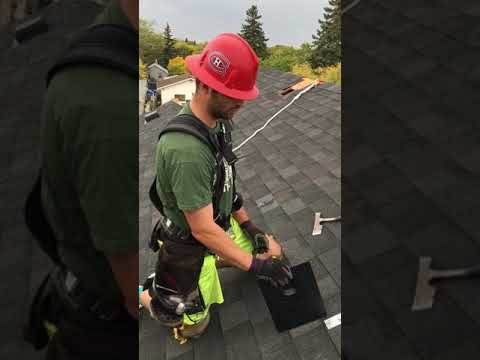
Image source: YouTube / Prairie Sun Solar (YouTube thumbnail (fair-use with source credit))
When Solar Is Worth It in Houston (And When It's Not)
Solar is worth it if you meet most of these conditions. Your monthly electric bill is over $150 and likely to rise. Your roof faces south or west with minimal shade.
You plan to stay in your home for at least 10 years. You have good credit and can access reasonable financing. Your roof is in good condition or you're already planning a replacement.
If those fit, the numbers usually work. A $150 monthly bill saved over 25 years adds up to $45,000 in avoided costs. Even after subtracting the system cost, you come out ahead.
Solar is not worth it if any of these apply. Your roof needs replacement and you can't afford both at once. You plan to move within 5 years.
Your home has heavy shade from trees or neighboring buildings. Your credit score makes financing expensive. Or you live in an area with frequent power outages and no battery budget.
In those cases, the payback stretches too long or the system never earns its cost.
Another situation where solar falls flat is when your electricity bill is already low. If you're paying $80 a month or less, the savings won't justify the upfront cost. You'd be better off putting that money into insulation or energy-efficient appliances first.
Our comprehensive guide on the pros and cons of solar power covers additional scenarios where the technology might or might not make sense for your specific situation.
How to Get and Compare Quotes the Right Way
Getting accurate quotes is the most critical step. Here's the process we recommend based on years of research into the Houston market.
Step 1: Get at least three quotes. Do not accept the first offer. National companies often quote differently than local ones. You want a range so you can spot outliers.
Step 2: Compare the same metrics. Every quote should show the total system size in kW, the number of panels, the panel model, the inverter type, the estimated annual production in kWh, and the total cost before and after tax credits. If a quote skips any of these, ask why.
Step 3: Ask about the production estimate. Request the software output that generated the number. Most installers use the National Renewable Energy Laboratory's PVWatts tool or a similar platform. The quote should show the assumptions about roof orientation, tilt, shading, and location.
Compare those assumptions to your actual roof.
Step 4: Check the warranty details. Product warranty (25 years), performance warranty (25 years), and workmanship warranty (at least 10 years) should all be clearly stated. If the workmanship warranty is only 2 years, walk away.
Step 5: Read the contract's fine print. Watch for escalation clauses in leases or PPAs. Some contracts include annual escalators of 2 to 3%. That can eat away your savings over time.
| What to Compare | Why It Matters |
|---|---|
| Cost per watt | Standard benchmark for pricing fairness |
| Panel brand + model | Affects long-term output and warranty coverage |
| Inverter type | String vs microinverter affects shading tolerance |
| Annual production estimate | Must match your roof conditions |
| Workmanship warranty | Protection against poor installation |
If you want to understand what separates a quality panel from a budget option, our breakdown of the different panel technologies gives you the specifics to ask the right questions.
Your Personal Decision Guide for Going Solar in Houston
This section helps you map your situation to a recommendation. Find the scenario that fits you best.
Scenario A: High bills, good roof, long stay. You spend $200+ monthly on electricity. Your roof is less than 10 years old and faces south. You plan to stay 15 years.
Recommendation: buy solar with a loan or cash. Payback hits in 8 to 10 years. Total savings exceed $30,000.
Scenario B: Moderate bills, decent roof, medium stay. You spend $120 to $180 monthly. Your roof has some aging but is still sound. You plan to stay 7 to 10 years.
Recommendation: buy solar with a low-interest loan. Target a system that covers 80% of your usage. Payback lands around 10 to 12 years.
You break even before you move.
Scenario C: Low bills, old roof, uncertain stay. You spend under $100 monthly. Your roof needs replacement in 5 years. You might move in 5 years.
Recommendation: skip solar for now. Put your money into roof replacement and efficiency upgrades. Revisit solar after you stabilize your situation.
Scenario D: Frequent outages, want backup, can afford battery. You lose power several times a year. You need reliability for work or medical needs. You have the budget for battery storage.
Recommendation: solar plus battery. The backup value justifies the extra cost even if pure financial payback is longer.
Common Solar Mistakes Houston Homeowners Make
We've seen the same patterns repeat. Here's what to avoid.
Mistake 1: Choosing the cheapest installer. Low price often means low quality. Cheap installers use budget panels, skip proper roof sealing, and offer short workmanship warranties. A system that leaks or fails early costs more than the difference you saved.
Mistake 2: Ignoring the temperature coefficient. Not all panels handle heat the same way. Some premium panels have better temperature coefficients, meaning they lose less output in Houston's summer heat. A slightly more expensive panel can outperform a budget panel in total lifetime production.
Mistake 3: Oversizing the system. Bigger isn't always better. If your system produces far more than you use, you sell excess at the avoided-cost rate (8 to 9 cents) instead of saving your retail rate (12 to 14 cents). The extra production earns less value.
Size your system to cover 80 to 100% of your usage, not 150%.
Mistake 4: Forgetting to check the monitoring platform. Most systems include software that shows real-time production. Some platforms are better than others. Make sure you understand how to access your data.
Without monitoring, you won't know if your system is underperforming.
Mistake 5: Signing a lease without understanding the escalator. Some solar leases increase your payment by 2.9% every year. Over 20 years, that's a 76% increase from your starting payment. Read the contract carefully, and if possible, choose a 0% escalator or buy the system outright.
Federal Tax Credit and Texas Solar Exemptions (2025)
The federal Investment Tax Credit covers 30% of your total system cost with no cap. That applies to systems installed through 2032. After that, it drops to 26% in 2033 and 22% in 2034.
Texas adds two important exemptions. Solar equipment is exempt from state sales tax. And any increase in your home's value from solar panels is exempt from property tax.
That saves you hundreds per year in ongoing taxes.
You claim the federal credit using IRS Form 5695. Make sure you have enough tax liability to use the full credit. If you owe less than the credit amount, the remainder rolls over to the next tax year.
Frequently Asked Questions
How much does solar cost in Houston?
A typical 8 kW system costs $20,000 to $25,000 before the federal tax credit. After the 30% credit, you pay $14,000 to $17,500. Financing adds interest costs over time.
How long does it take to break even on solar in Houston?
Payback periods range from 8 to 14 years for most homeowners. Your actual payback depends on system size, electricity rates, roof conditions, and financing terms.
Does CenterPoint pay you for solar power?
CenterPoint credits excess production at the avoided cost rate, roughly 8 to 9 cents per kWh. That's lower than the retail rate you pay. Unused credits roll over monthly but expire at the end of the billing year.
Should I lease or buy solar panels in Houston?
Buying with cash or a loan gives you the best long term savings. Leases and PPAs offer lower upfront costs but lock you into contracts with escalators and lower total savings.
Is solar worth it with an HOA in Houston?
Texas law protects your right to install solar panels. Your HOA can still regulate placement, color, and visibility. Get written approval before signing any contract to avoid disputes later.

Similar Posts