Amorphous Silicon Solar Panels: A Simple Guide
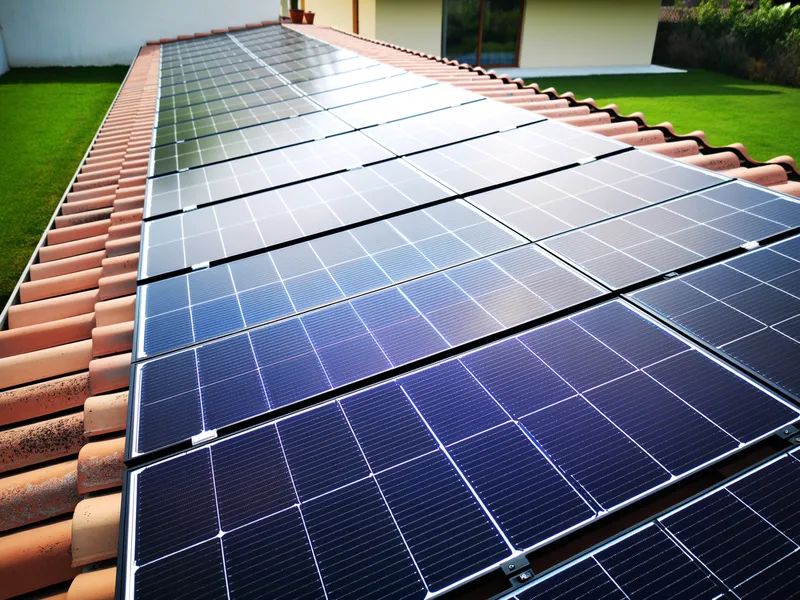
If you're searching for solar panels and keep seeing "amorphous silicon" mentioned, you're probably wondering how these differ from the blue or black panels on most rooftops. Amorphous Silicon Solar Panels are a type of thin-film technology that trades peak efficiency for flexibility, low-light performance, and heat tolerance. They aren't the right pick for every project, but for specific uses, portable power, building-integrated designs, or shady locations, they can be a smarter choice than standard crystalline panels.
Manufacturer specs indicate that a-Si panels typically achieve 6, 10% conversion efficiency, compared to 18, 22% for monocrystalline. However, they perform noticeably better in partial shade and high temperatures, with a temperature coefficient around -0.2% per °C versus roughly -0.4% for crystalline silicon. In our research, that low-light edge makes a real difference in regions with frequent overcast skies or for applications where panels can't face the sun perfectly.
Let's break down exactly what these panels are, who they're for, and how to decide if they fit your situation.
Quick Answer
Amorphous silicon solar panels use a thin non-crystalline silicon layer to generate electricity. They are less efficient but more flexible and perform better in low light than standard panels. They are best for portable devices, curved surfaces, and buildings where weight matters.
They are not ideal for large rooftop systems with limited space.
What Amorphous Silicon Solar Panels Actually Are (and Why They're Different)
The simple explanation: not your standard rooftop panel
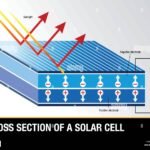
Most solar panels you see are made of crystalline silicon, either monocrystalline (one crystal) or polycrystalline (many crystals). Amorphous silicon is different: instead of a neat crystal lattice, the silicon atoms are arranged in a random, disordered pattern. That "amorphous" structure gives the material unique properties.
Think of it like the difference between a single large ice cube (monocrystalline) and a pile of crushed ice (amorphous). Both are water, but they behave differently. In solar terms, the amorphous version absorbs light more effectively across a wider range of wavelengths, especially in dim conditions.
That's why a-Si panels can still produce usable power on cloudy days or early morning light when crystalline panels would struggle.
How a-Si is made (without the chemistry lecture)
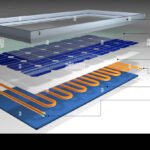
Manufacturers deposit a very thin layer of silicon, about 1 micron thick, roughly one-hundredth the thickness of a human hair, onto a substrate like glass, stainless steel, or flexible plastic. This process, often called plasma-enhanced chemical vapor deposition, allows the panels to be made in a continuous roll.
Because the silicon layer is so thin, the panels are lightweight and can be made flexible. That opens up applications you can't do with rigid crystalline panels: sticking them onto curved RV roofs, draping them over a backpack, or integrating them into building materials like roof tiles or semi-transparent windows.
Why "amorphous" matters for performance
The disordered atomic structure means a-Si has a higher bandgap (around 1.7 eV) compared to crystalline silicon (1.1 eV). In plain language, it captures a different part of the light spectrum more efficiently, particularly indoor light and the blue end of sunlight. That's why a-Si does well under fluorescent lights and why it's used in calculators and outdoor solar lights.
There's a catch, though: the Staebler-Wronski effect. When these panels are first exposed to sunlight, their efficiency drops by about 15, 20% over the first few weeks. After that, it stabilizes.
You have to account for this burn-in period when sizing a system. And in the long run, a-Si panels degrade faster than crystalline ones, typically lasting 10, 20 years compared to 25, 30 years for monocrystalline.
If you want a full comparison of how a-Si stacks up against other types, the broader family of solar technologies is covered in our guide on types of solar panels.
Who Should Even Consider a-Si Panels
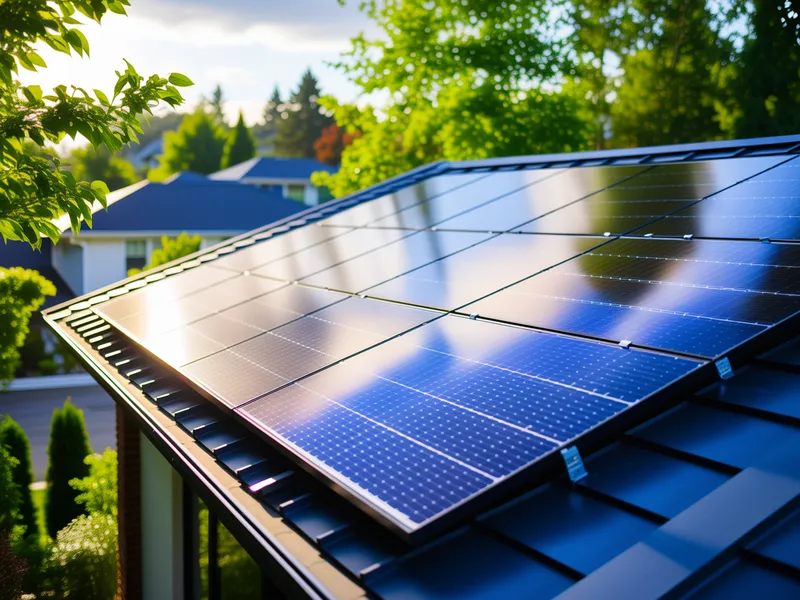
The right candidate: low-light, flexible, or weight-sensitive needs
You're a good fit for a-Si if:
- You need flexibility. Panels that bend to fit curved surfaces, think camper van roofs, boat decks, or fabric solar blankets.
- Your location is shady or cloudy. A-Si keeps producing when others stall. Perfect for a small off-grid shed under a tree or a window-mounted panel in a city.
- Weight is a constraint. Roofs that can't support heavy crystalline panels (old structures, certain flat roofs) benefit from a-Si's lighter load.
- You want building integration. Semi-transparent a-Si can replace glass in windows or skylights while generating power.
The wrong candidate: rooftop space is tight and you want maximum power
You should probably skip a-Si if:
- You have a typical house roof with good sun exposure. Crystalline panels will give you 2, 3 times more watts per square foot.
- You're trying to offset a large portion of your electric bill. The extra area needed would require far more roof space than you have.
- You want the longest warranty and highest resale value. Crystalline panels dominate those metrics.
Quick self-check: three questions to ask yourself right now
- Is my available area limited? If yes, a-Si is probably not your best option.
- Am I dealing with low light, partial shade, or high heat? If yes, a-Si becomes more attractive.
- Does the panel need to be portable or flexible? If yes, a-Si is one of your best choices.
The trade-offs between different panel types are discussed further in our article on the advantages and disadvantages of solar panels.
Measure Your Conditions: Light, Temperature, and Available Space
How much real sun do you get?
A-Si's advantage shines in diffuse light, overcast skies, morning/evening light, and north-facing installations. If you live in the Pacific Northwest, northern Europe, or a city with lots of cloud cover, a-Si could actually outperform crystalline over the course of a year in terms of total energy harvested per watt of capacity.
But in direct, full sun, crystalline wins decisively. If your location averages 5+ peak sun hours per day (typical in much of the southern US or Mediterranean), a-Si will need about twice the array area to produce the same daily energy.
Temperature matters more than you think
Heat kills crystalline panel performance. Their efficiency drops about 0.4, 0.5% per degree Celsius above 25°C. A-Si's temperature coefficient is roughly half that, around -0.2% per °C.
That means on a hot summer day (say, 40°C surface temperature), a monocrystalline panel might lose 6% of its rated power, while a-Si loses only 3%. A modest difference, but it adds up over the life of the system.
The space equation
Here's a rough rule of thumb: to produce 100 watts under standard test conditions, a monocrystalline panel needs about 5, 6 square feet. A polycrystalline panel needs 7, 8 square feet. An a-Si panel needs about 10, 14 square feet.
That's a huge difference if you're working with limited roof space. But if you have plenty of area, a ground mount, a large flat roof, or a portable blanket that can be unrolled, then the size penalty doesn't matter.
To understand exactly how panels convert sunlight into power under different conditions, see our guide on how solar panels generate electricity.
Step-by-Step Decision Tree: Is a-Si Right for Your Project?
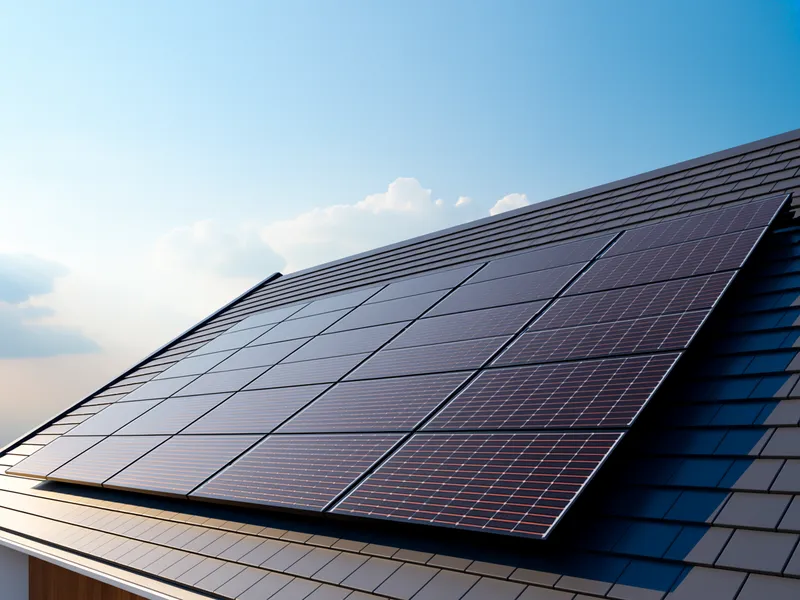
Follow the branch that matches your situation.
Branch 1: Portable / camping / RV use
You need lightweight, packable power. A-Si solar blankets and foldable panels are popular here. They roll up small and weigh very little.
The trade-off: you need more area to charge the same battery. If you're backpacking, a smaller foldable a-Si blanket can charge a phone or power bank. For an RV, a-Si flexible panels adhere directly to the roof curve, no racking, and they handle partial shading better if the roof has vents or AC units casting shadows.
Verdict: If portability and flexibility are your priority, a-Si is excellent.
Branch 2: Building-integrated or architectural application
You're designing a building and want solar integrated into the structure, maybe roof tiles that look like slates or semi-transparent panels that serve as windows. A-Si can be deposited directly onto glass, making it one of the few transparent or semi-transparent solar options. It's also lighter, so the roof structure may not need reinforcement.
Verdict: For BIPV, a-Si is often the best fit.
Branch 3: Off-grid cabin or small stationary system
You have a small structure with modest power needs (lights, a fan, charging electronics). If the cabin is shaded by trees or receives only 2-3 peak sun hours, a-Si's low-light performance can be a real asset. Plus, a few extra panels to compensate for lower efficiency won't break the budget.
Verdict: Consider a-Si if shade is an issue; otherwise, crystalline is simpler and cheaper per watt.
Branch 4: Grid-tied home rooftop
This is the most common scenario and where a-Si usually falls short. Most grid-tied homes have limited roof space and want maximum energy. Crystalline panels deliver far more power per square foot, have longer warranties, and are easier to find.
Verdict: Skip a-Si for grid-tied rooftops unless you have a truly unusual situation (e.g., weight limit or heritage roof restrictions).
For a full overview of the buying process for any project, refer to our solar panel buying guide.
Common Mistakes People Make When Choosing Thin-Film Panels
Mistake 1: Confusing a-Si with other thin-film types
Thin-film includes a-Si, CIGS (copper indium gallium selenide), and CdTe (cadmium telluride). They are not the same. CIGS is more efficient but uses exotic materials; CdTe is cheap but contains toxic cadmium.
A-Si is non-toxic and simpler to manufacture. People sometimes assume all thin-film is equal, not true. If you want flexibility and low toxicity, a-Si is the safer choice among thin-film options.
Mistake 2: Ignoring the Staebler-Wronski effect
That first-season power drop catches many off guard. They buy a 100W panel, see 80W output after a few weeks, and think the panel is defective or was mislabeled. It's not, it's expected.
You must size your system accounting for this stabilized output, not the initial peak.
Mistake 3: Using the wrong charge controller
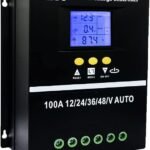
A-Si panels produce a different current profile than crystalline panels. They have lower current and higher voltage per cell. Many budget PWM charge controllers don't handle them well.
A quality MPPT controller that can adjust to the panel's optimal voltage point is almost always recommended.
Mistake 4: Buying old stock without checking degradation
Because a-Si degrades faster, panels manufactured years ago may already have lost 20, 30% of their capacity. Check manufacturing date and, if possible, measure open-circuit voltage and short-circuit current before buying. Used a-Si panels are often a poor deal, the price discount rarely compensates for the lost power.
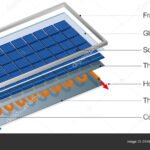
Understanding the key components that affect panel longevity, like encapsulation and junction box quality, can help avoid poor purchases. Our breakdown of the main components of a solar panel covers those details.
We've covered the fundamentals, the candidate profile, the conditions that matter, the decision branches, and the common pitfalls. The next sections will walk through who should buy versus skip, a practical buying guide, installation tips, maintenance, FAQs, and a final decision guide. But at this point, you already have a solid framework for deciding whether amorphous silicon solar panels make sense for your project.
Who Should Buy (and Who Should Skip)
Best suited for: portable, flexible, low-light, and BIPV projects
You're a strong candidate for a-Si if any of these describe your situation:
- You need a panel that bends. Flexible a-Si panels conform to curved RV roofs, boat decks, or tent surfaces. Rigid crystalline panels can't do that.
- Your site is shaded or cloudy. A-Si's low-light performance means it out-harvests crystalline per watt in diffuse conditions. If your roof faces north or you're under tree cover, a-Si may edge ahead.
- Weight is a problem. Old or lightly built roofs can't handle 20 kg of glass and aluminum per panel. A-Si panels weigh about one-third as much.
- You're integrating solar into a building. Semi-transparent a-Si panels can replace window glazing or skylights. No other solar type offers that aesthetic option at scale.
Better alternatives for: high-power rooftop systems
If you have clear, unshaded roof space and want maximum energy per square foot, stick with monocrystalline or polycrystalline. They deliver 2, 3 times more power per panel, last 25, 30 years, and have better warranties. A-Si would require roughly double the roof area for the same output.
That rarely makes sense on a typical home.
Honest trade-offs by use case
| Use Case | a-Si Good? | Why or Why Not |
|---|---|---|
| Portable camping blanket | Yes | Light, flexible, works in dim light |
| Full-home rooftop | No | Too much area needed |
| Off-grid cabin (shaded) | Yes | Low-light advantage wins |
| Boat or RV | Yes | Curved surface, partial shade |
| Grid-tied residential | Rarely | Efficiency and warranty gaps |
| Building-integrated | Yes | Semi-transparency, light weight |
How to Choose and Buy a-Si Panels: A Practical Guide
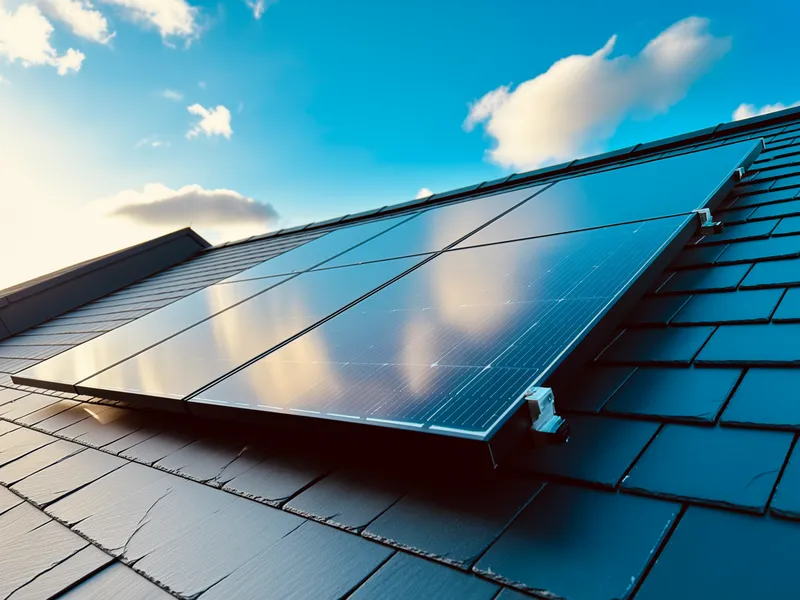
What to look for in specifications
Check three numbers before buying:
- Stabilized power rating, Some manufacturers list initial peak power. Always look for the stabilized wattage after the Staebler-Wronski burn-in. That's the real output you'll get.
- Temperature coefficient, A good a-Si panel will have -0.2% per °C or better. Anything above -0.3% is poor for thin-film.
- Warranty length, Most a-Si warranties run 5, 10 years, compared to 25 years for crystalline. If a seller offers only 2 years, walk away.
Single-junction vs. multi-junction: which one do you need?
Single-junction a-Si is simpler and cheaper. It works fine for portable chargers and small off-grid kits. Multi-junction (tandem or triple-junction) stacks different light-absorbing layers to capture more of the spectrum.
Efficiency jumps to 10, 14%, but cost rises too. For larger stationary systems where every watt matters, multi-junction is worth the premium.
Trustworthy manufacturers and what to avoid
Kaneka remains a reliable name for a-Si panels, particularly for BIPV. As of 2026, most residential-scale a-Si is produced by a handful of Chinese and Japanese manufacturers. Avoid no-name panels sold at flea-market prices, they often ship with unverified ratings and degraded output.
Stick with brands that provide IEC 61646 certification documentation.
New vs. used panels: the degradation reality check
Used a-Si panels are a gamble. A panel that's been in the field for 5 years may have already lost 25, 30% of its original capacity. The price rarely compensates for that loss.
If budget is tight, a small new a-Si panel will often outperform a larger used one over its lifetime.
Installation and Setup Tips (Without the Headaches)
Mounting flexible panels without damaging them
Flexible a-Si panels have a thin coating and delicate substrate. Never step on them or drag them across rough surfaces. Use manufacturer-supplied adhesive pads or grommets.
Leave a small air gap underneath for cooling, panels that are glued flat to a hot roof can overheat and degrade faster.
Wiring correctly for small arrays
A-Si panels have a higher voltage per cell than crystalline. That means a typical 100W flexible panel may output around 20, 24V, compared to 18V for a comparable crystalline panel. If you connect them in series, keep the total voltage under your charge controller's max input.
Many MPPT controllers handle this fine, but check the specs first.
Charge controller settings that actually work with a-Si
A high-quality MPPT charge controller is strongly recommended. The controller must adjust to the panel's maximum power point, which shifts more with temperature and light levels on a-Si than on crystalline. PWM controllers will lose a significant portion of your potential harvest.
Look for a controller that explicitly supports thin-film or has adjustable MPPT parameters. Aggregate user reviews report a 20, 30% improvement in daily harvest when switching from PWM to MPPT with a-Si panels.
Allowing for the burn-in period
Do not expect full rated output in the first month. The panel will stabilize after 2, 6 weeks of regular sunlight exposure. During that period, output may drop 15, 20%.
Once stabilized, it stays fairly consistent for years. The U.S. Department of Energy's Photovoltaic Research page confirms this light-induced degradation is normal for a-Si (source: energy.gov/eere/solar/thin-film-solar-panels).
Plan your system around the stabilized wattage to avoid surprises.
Long-Term Maintenance and Real-World Lifespan
How long do a-Si panels really last?
Manufacturer warranties typically cover 10 years, but real-world performance often holds up for 15, 20 years in mild climates. In hot, humid environments, degradation accelerates. The encapsulation can yellow or delaminate, reducing output.
For comparison, crystalline panels commonly last 25, 30 years with minimal degradation.
Cleaning techniques that won't scratch the coating
A-Si's thin coating is more prone to scratching than the thick glass of crystalline panels. Use only a soft cloth or sponge with plain water. No abrasive cleaners, no pressure washers, no scrubbing with brushes.
For flexible panels, rinse gently and pat dry. Scratches create hot spots that shorten panel life.
Monitoring degradation over time
Once a year, measure the panel's open-circuit voltage and short-circuit current on a clear day near noon. Compare to the original specification sheet if you kept it. A drop of more than 20% from the stabilized rating suggests the panel is nearing end of life.
Keep a simple log, it helps decide when to replace.
When to replace vs. supplement
If an old a-Si panel still produces 70% or more of its stabilized rating, it's often cheaper to keep it and add a new panel in parallel (with an appropriate blocking diode) than to rip it out. But if output has dropped below 50%, the cost of wiring and mounting a replacement is usually worth it.
Frequently Asked Questions (the Ones People Actually Ask)
Can I mix a-Si panels with crystalline panels in the same system?
Yes, but not on the same string. Different voltage and current curves will cause mismatch losses. Wire them in parallel with separate charge controllers, or use a combiner box with blocking diodes.
Our guide on how solar panels work covers series vs. parallel wiring in more detail.
Do a-Si panels work indoors?
Yes, and better than crystalline. Their higher bandgap captures fluorescent and LED lighting more efficiently. That's why small a-Si cells power calculators and garden lights.
A larger a-Si panel placed in a bright south-facing window can trickle-charge a battery for small electronics.
Why did my new a-Si panel perform badly at first?
That's the Staebler-Wronski effect. The panel loses 15, 20% of its initial output in the first few weeks. It's not defective.
Give it 2, 6 weeks of regular sunlight exposure, and the output will stabilize. After that, the panel performs consistently for many years.
Are a-Si panels worth it in 2025 and beyond?
For portable, flexible, or building-integrated uses, yes. For standard rooftop solar, no. Crystalline panels have gotten cheaper and more efficient every year, widening the gap.
But a-Si's unique properties, flexibility, low-light performance, semi-transparency, keep it relevant for specific niches.
Your Final Decision Guide: What to Do Next
Quick reference table by use case
| Your Situation | Best Panel Type | Why |
|---|---|---|
| Portable camping / hiking | a-Si | Light, flexible, works in low light |
| RV or boat with curved roof | a-Si | Conforms to surface, handles shading |
| Off-grid cabin under trees | a-Si | Low-light harvest beats crystalline |
| Full-home rooftop (good sun) | Monocrystalline | Highest efficiency per square foot |
| Building-integrated (windows) | a-Si | Semi-transparency, lightweight |
| Small balcony system | a-Si | Lightweight, no heavy racking needed |
One-sentence verdict for each scenario
If you need flexibility, portability, or building integration, amorphous silicon is a smart, specialized tool. If you want maximum power from limited roof space, go with crystalline. For shaded or cloudy locations, a-Si's low-light edge can actually outperform crystalline over a full year.
The technology isn't for everyone, but for the right project it's still the best choice in its niche.
Where to go for more help
Our solar panel buying guide covers the full decision process for any project. The types of solar panels article gives a broader comparison across all thin-film and crystalline options. If you're still unsure about the basics, start with how solar panels work to understand the fundamentals before choosing.

Similar Posts