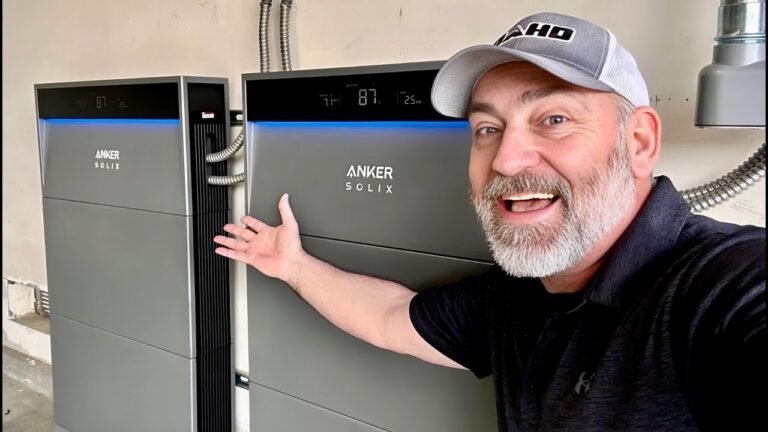
What Are Solar Batteries and How Do They Work?
We've all been there, right? The sun's blazing away, your solar panels are cranking out power all day, and you're watching your meter spin backwards feeling pretty good about things. But come dinnertime, when the sun's gone and the AC still needs to run, you're pulling from the grid again, paying for electricity you could've stored yourself.
That's the gap a solar battery fills.
So what are solar batteries, really? In the simplest terms, they're rechargeable energy storage systems that capture the excess electricity your solar panels generate during the day and hold onto it for when you need it later at night, during a blackout, or when utility rates spike. As of 2026, the residential energy storage market has matured significantly, with lithium iron phosphate (LFP) chemistry dominating new installations because of its safety and longevity.
The National Renewable Energy Laboratory (NREL) data shows that about one in six new solar installations in the U.S. now includes a battery, and that number keeps climbing. Let's walk through what you actually need to know before you even think about buying one.
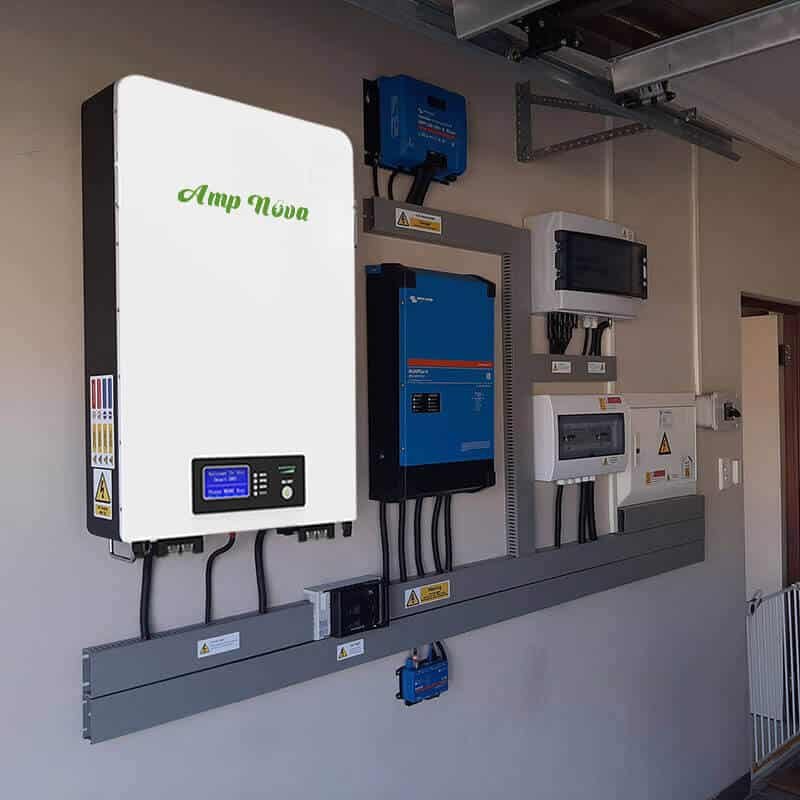
Image source: Bing (Web (fair-use with source credit))
Quick Answer
A solar battery stores extra electricity your panels produce. You use that stored power at night or during outages. Most modern home batteries use lithium iron phosphate (LFP) chemistry.
They're safer and last longer than older battery types. A typical home battery holds 10 to 15 kilowatt-hours (kWh) of usable energy. That's enough to run your fridge, lights, and devices for 8 to 12 hours.
The federal tax credit covers 30% of the cost if your battery is charged by solar at least 75% of the time.
The Real Problem: Solar Without Storage Is Only Half the Solution
Here's the thing nobody tells you when you first get solar panels: your system and the grid don't exactly play nice on their own. During the middle of a sunny day, your panels might be cranking out more electricity than your home can use. That excess gets sent back to the utility company.
If you're on an older net metering plan, you might get a fair credit for that. But that's becoming less common.
More utilities are switching to net billing or time-of-use (TOU) rates. Those changes mean the credit you get for sending power to the grid during the day is much smaller than what you'd pay to pull it back at night. In California's NEM 3.0 structure, for instance, exported solar energy is credited at roughly 75% less than retail rates.
Without a battery, you're effectively buying high and selling low.
Plus, there's the outage problem. Standard grid-tied solar panels shut down automatically when the grid goes down. That's a safety requirement to protect lineworkers.
So if a storm knocks out your power, your solar panels sit there useless in the sun. A battery with islanding capability (the technical term for running independently from the grid) changes that equation completely.
How Solar Batteries Work — The Simple Version
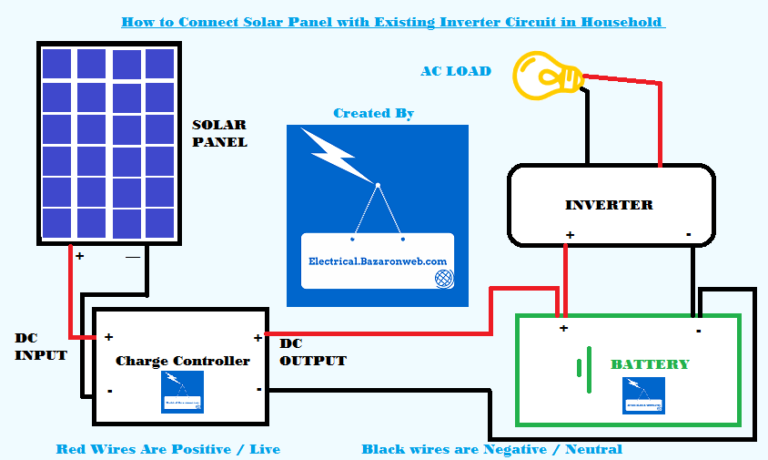
Think of a solar battery as a highly engineered bucket with a brain. Your solar panels generate direct current (DC) electricity. That DC power flows to an inverter that converts it to alternating current (AC), which your home actually uses.
With a battery system, there's an extra step.
Here's the flow in plain English:
- Solar panels generate DC power during daylight hours
- An inverter converts that to AC for your home to use immediately
- Excess power that your home doesn't need gets diverted to the battery
- The battery stores that energy as DC inside lithium-ion cells
- When the sun goes down or the grid goes out, the battery discharges back through the inverter to power your home
The magic is in the battery management system, or BMS. That's the onboard computer that monitors every cell, balancing the charge, preventing overheating, and making sure you don't drain the battery past a safe level. Most modern LFP batteries let you use 90 to 100 percent of their rated capacity before the BMS stops discharge to protect the cells.
A crucial detail: if you already have solar panels, you're looking at an AC-coupled battery system. That means the battery has its own inverter that works alongside your existing solar inverter. If you're building a new solar-plus-storage system from scratch, DC-coupled is usually more efficient because the power only gets converted once.
We'll break down that difference in detail a bit further.
Lithium-Ion vs. Lead-Acid vs. Flow Batteries: Which Chemistry Fits Your Situation
The single biggest decision you'll make isn't what brand to buy. It's what chemistry sits inside the metal box on your wall. That choice determines how long the battery lasts, how much you can safely discharge it, whether you need to worry about ventilation, and ultimately what it costs per kilowatt-hour over its lifetime.
Lithium Iron Phosphate (LFP) — The Current Winner
LFP is the chemistry that's taken over the residential solar market for good reason. It uses iron and phosphate in the cathode, which are abundant, nontoxic, and thermally stable. The key spec here is cycle life: most LFP batteries are rated for 4,000 to 10,000 full charge-discharge cycles before their capacity drops to 80 percent of original.
That translates to 10 to 20 years of daily use for most homes.
They're also remarkably safe. LFP cells don't undergo the same kind of thermal runaway that other lithium chemistries can. You can puncture an LFP cell and it won't catch fire.
That's not true of NMC (nickel manganese cobalt) batteries, which have higher energy density but carry more risk. For a residential wall mounted setup that sits in your garage or on an exterior wall, LFP is the clear choice.
Who it's best for: Anyone who wants a set-and-forget system that will reliably store energy for a decade or more without safety concerns.
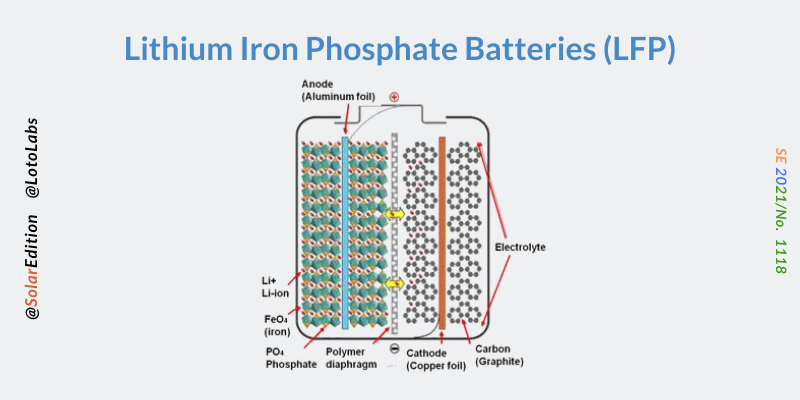
Image source: Bing (Web (fair-use with source credit))
Nickel Manganese Cobalt (NMC) — Higher Energy Density, Higher Risk
NMC batteries pack more energy into a smaller space. That's why they dominated early residential products like the original Tesla Powerwall. The tradeoff is shorter cycle life, typically 2,000 to 5,000 cycles, and a higher risk of thermal runaway if the battery is damaged or improperly managed.
You still see NMC batteries in some commercial applications where space is tight and weight matters. For a home, the higher energy density rarely justifies the shorter lifespan and the additional safety precautions required, such as specific fire-rated clearance distances and more robust thermal management.
Who it's best for: Installations where physical space is extremely limited and you're comfortable with stricter safety requirements. For most homes, LFP is the better bet.
Lead-Acid — The Budget Option (With Real Tradeoffs)
Lead-acid batteries have been around for over a century. They're cheap upfront, typically $100 to $200 per kilowatt-hour compared to $700 to $1,200 for lithium. But they come with serious compromises that most homeowners don't fully appreciate until after installation.
The usable capacity is the biggest catch. You can only drain a lead-acid battery to about 50 percent depth of discharge without damaging it. So a 10 kWh lead-acid bank only gives you 5 kWh of usable power.
They also require regular maintenance, watering in flooded versions, and they need to be kept in a ventilated space because they release hydrogen gas during charging.
Cycle life is another limitation. Most lead-acid batteries last 500 to 1,000 cycles, roughly 3 to 5 years in daily use. When you factor in the shorter lifespan and lower usable capacity, the cost per cycle often ends up higher than lithium.
Who it's best for: Off-grid setups with a very tight budget, systems that only cycle occasionally, or situations where the weight and space aren't concerns and you're comfortable with regular maintenance.
Flow Batteries — The Emerging Long-Duration Option
Flow batteries are the wild card in residential storage. Instead of solid electrodes, they store energy in liquid electrolytes held in separate tanks. The technology has been used in commercial and utility-scale applications for years, but home-scale units are just starting to appear on the market.
The major advantage is cycle life. Flow batteries can handle 10,000 to 20,000 cycles with minimal degradation. They also can't catch fire because the electrolytes are water-based and nonflammable.
The downside is size. The tanks take up significant space, and energy density is much lower than lithium. Current residential units are roughly the size of a washing machine or larger, and costs are still high.
Who it's best for: Early adopters who plan to stay in their home for 20+ years and want a system that won't need battery replacement. For most buyers today, LFP makes more practical sense.
Lithium-Ion vs Lead-Acid at a Glance
| Feature | Lithium Iron Phosphate (LFP) | Lead-Acid (AGM/Flooded) |
|---|---|---|
| Cycle life | 4,000–10,000 cycles | 500–1,000 cycles |
| Usable capacity | 90–100% of rated | 50% of rated |
| Lifespan | 10–20 years | 3–5 years |
| Maintenance | None | Watering, cleaning terminals |
| Safety | Low fire risk, stable chemistry | Hydrogen offgassing, acid leaks |
| Upfront cost | $700–$1,200/kWh | $100–$200/kWh |
| Cost per cycle | Lower long-term | Higher long-term |
| Indoor safe | Yes, no venting needed | Ventilation required |
AC-Coupled vs. DC-Coupled: Which Setup You Need Depends on Your Solar
This is where the technical details actually matter for your wallet. The difference between AC-coupled and DC-coupled systems isn't just engineering jargon. It determines how efficiently your system works and how much it costs to install.
AC-Coupled Systems are what you get when you add a battery to an existing solar installation. Your solar panels already have an inverter turning their DC output into AC for your home. The battery system has its own separate inverter that converts AC back to DC to charge the battery, then back to AC when discharging.
Each conversion introduces about 3 to 5 percent efficiency loss. Roundtrip efficiency for AC-coupled systems typically runs 85 to 90 percent.
The big upside is simplicity. You can add an AC-coupled battery to almost any existing solar setup without touching your panel wiring or inverter. It's a retrofit that takes a day or two for a professional installer.
DC-Coupled Systems are found in new solar-plus-storage installations. Instead of two separate inverters, you get a single hybrid inverter that handles both solar and battery management. DC power from your panels goes to the battery with only one conversion step.
Roundtrip efficiency jumps to 92 to 97 percent.
The catch is that DC-coupled systems are more complex to install and require careful matching of solar panel voltage, battery voltage, and inverter specs. They're not something you easily add to an existing system.
The decision rule is simple: If you already have solar panels, go AC-coupled. If you're building from scratch, go DC-coupled for the extra efficiency.
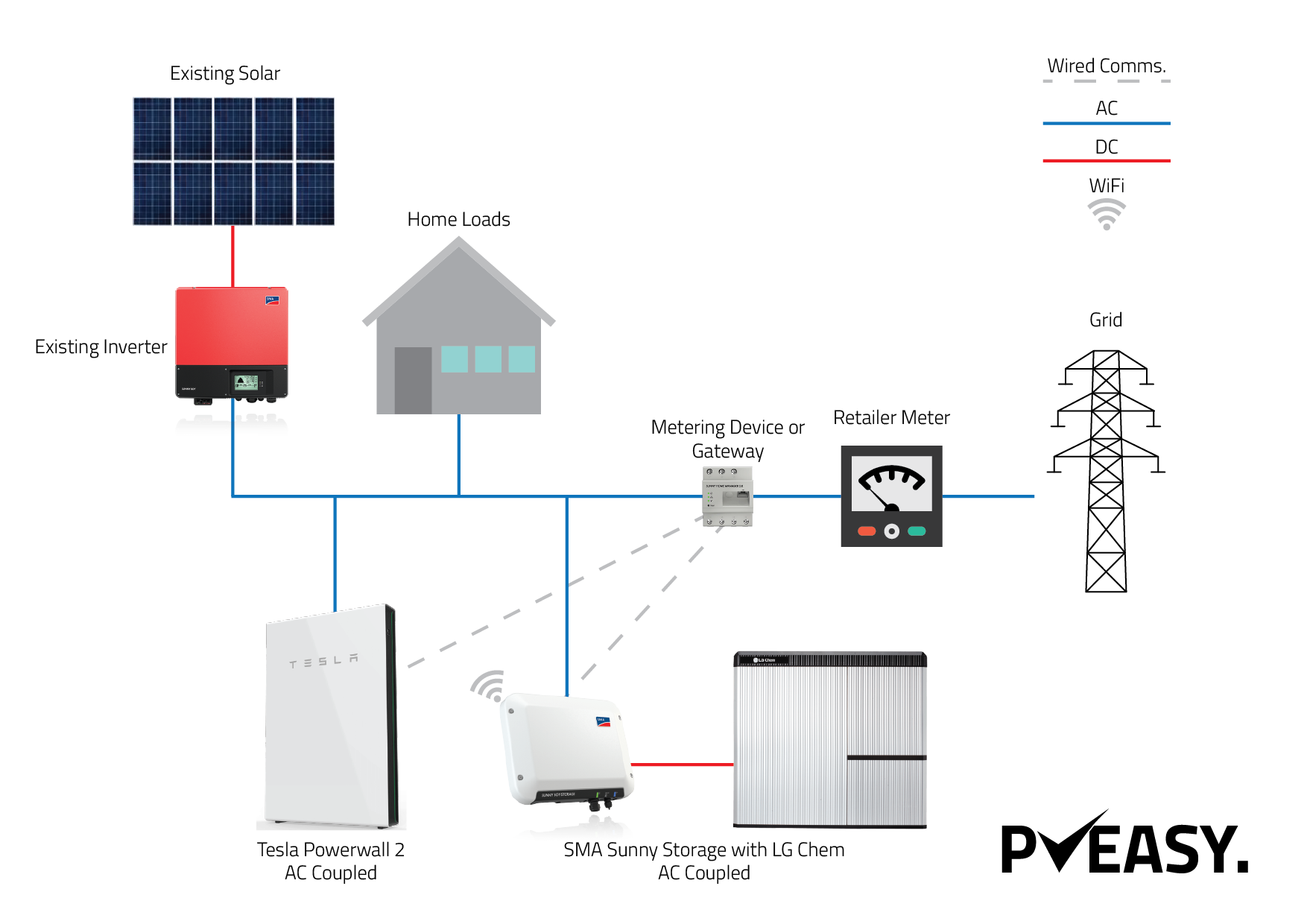
Image source: Bing (Web (fair-use with source credit))
Whole-Home Backup vs. Critical Loads Panel: What Most People Get Wrong
Here's a mistake that costs homeowners thousands. They assume a battery will run everything in their house during an outage. That's rarely the case, and understanding the difference before you buy saves major disappointment.
Whole-home backup means your battery is wired to the main electrical panel, and when the grid goes down, everything in your house stays on. The problem is that takes a massive battery. A typical American home draws 1,000 to 2,000 watts just from baseline loads, lights, fridges, modems, clocks.
Turn on an electric oven, a dryer, or central AC, and you're pulling 5,000 to 10,000 watts instantly. Most residential batteries max out at 5,000 to 7,600 watts continuous output. So whole-home backup with a single battery often means you're tripping your battery's overload protection the moment you try to run the AC and microwave simultaneously.
Critical loads panel is the smarter approach for most people. Your electrician installs a small subpanel that separates essential circuits, fridge, well pump, lights, internet router, maybe a gas furnace from the rest of the house. Only those circuits get backed up by the battery.
Everything else stays off during an outage.
The cost difference is real. Whole-home backup requires a larger battery (or multiple batteries), a more expensive inverter, and heavier wiring. Critical loads panel setups use smaller, more affordable batteries and give you the practical backup you actually need during an outage.
The rule of thumb: If you want whole-home backup, plan on a minimum 20 kWh battery bank. For most homes, a 10 to 13.5 kWh battery feeding a critical loads panel covers everything that matters during an outage at half the cost.

Image source: Bing (Web (fair-use with source credit))
The 4 Main Reasons People Buy Solar Batteries (Be Honest About Yours)
Before you spend several thousand dollars on a battery, you need to be brutally honest about why you're buying it. Each use case has different economics and different hardware requirements.
Backup Power During Outages
This is the most common reason, and it's the one that makes the most emotional sense. If you live in an area with frequent power shutoffs, hurricanes, or an unreliable grid, a battery gives you peace of mind that a generator can't match. No fuel to store, no engine maintenance, no noise.
When the grid goes down, the battery takes over in milliseconds automatically.
The catch is that infrequent backup uses don't generate financial savings. A battery that sits idle 360 days a year waiting for five outage days isn't paying for itself on your electric bill. If backup is your only reason, you're buying insurance, not a money saving investment.
Time-of-Use Arbitrage (Saving Money on Electric Bills)
In areas with time-of-use (TOU) utility rates, you can save serious money with a battery. The strategy is simple: charge the battery from solar (or cheap grid power) during low rate periods, then run your home from the battery during peak rate periods when electricity costs two to three times as much.
The savings depend entirely on your utility's rate structure. In parts of California, Hawaii, and the Northeast, the difference between off-peak and peak rates can be $0.30 to $0.50 per kWh. A 13.5 kWh battery cycling daily could save $1,000 to $2,000 a year.
In areas with flat rates, the math falls apart.
Self-Consumption (Using More of Your Own Solar)
If your net metering policy isn't great, a battery lets you use more of the power you generate rather than selling it cheap to the utility. Instead of exporting your afternoon solar surplus at $0.04 per kWh and buying it back at $0.30 per kWh at night, you store it and use it yourself.
This use case pairs perfectly with our guide to the different solar panel technologies to maximize your self-sufficiency ratio. For homes with good south facing roof exposure and decent solar production, a battery can push self-consumption from 30 percent to 70 or 80 percent.
Off-Grid Living
Going completely off-grid is the most demanding use case. You need enough battery capacity to cover several days of cloudy weather, plus a generator backup for extended periods of low sun. Off-grid battery banks are typically 20 to 40 kWh or larger, and they require careful sizing based on your seasonal energy production.
Off-grid systems also live or die on battery chemistry. LFP's long cycle life makes it the default choice, and you'll want a system that supports the main solar components properly matched to your battery voltage.
Step-by-Step: How to Decide If a Solar Battery Is Worth It for You
Let's turn this into an actual decision process. Follow these steps in order.
Step 1: Check Your Utility's Net Metering Policy
Call your utility or check their website. Find out what rate you get for exported solar energy and what you pay at night. If you have 1:1 net metering, meaning you get full retail credit for every kWh you export, a battery's financial case is much weaker.
If you're on net billing or TOU rates, a battery starts making sense.
Step 2: Look at Your Time-of-Use Rates
If your utility has TOU rates, get the actual numbers. Calculate the spread between your cheapest charging window and your most expensive peak window. If the difference is less than $0.10 per kWh, the payback period stretches beyond the battery's warranty life.
At $0.20 or more, the economics click.
Step 3: Figure Out Your Average Daily Usage
Pull your electric bills from the last 12 months. Find your average daily consumption in kWh. Most homes use 25 to 35 kWh per day.
Now think about what you'd actually want backed up during an outage. That number is usually much smaller, maybe 8 to 15 kWh for a critical loads panel.
Step 4: Decide on Backup or No Backup
If you have frequent outages (more than two or three a year lasting more than a few hours), backup capability adds real value. If your grid is reliable, focus on the energy arbitrage or self-consumption case instead. That changes the battery size you need.
Step 5: Match Battery Size to Your Solar Output
Your battery shouldn't be bigger than your solar system can charge in a good day. A 10 kW solar array in summer might produce 50 to 60 kWh per day, plenty to charge even a large battery. But a 4 kW system might only produce 20 kWh, and if your home uses 15 of those during the day, you only have 5 kWh left for charging.
Oversizing the battery relative to your solar production means it never fully charges.
Step 6: Get Quotes and Compare Installers
Get at least three quotes from certified installers who carry the products you're considering. Ask specifically about the total pros and cons of your solar configuration and how the battery integrates. A good installer will walk you through the load calculation, the critical loads panel wiring, and the permitting process.
A bad one will just quote you a price.
Costs, Payback, and the Federal Tax Credit (What the Numbers Actually Look Like)
Let's talk real money. A typical residential solar battery installation in 2026 runs $8,000 to $15,000 installed for a 10 to 15 kWh LFP system. That includes the battery itself, the inverter (for AC-coupled systems), wiring, a critical loads panel if needed, permits, and labor.
The federal Investment Tax Credit (ITC) covers 30 percent of the total cost, no cap, as long as your battery is charged by solar at least 75 percent of the time. That drops a $12,000 system to $8,400 out of pocket.
Some states and utilities offer additional rebates. California's Self-Generation Incentive Program (SGIP) provides up to $1,000 per kWh for qualifying low income households, plus smaller rebates for standard installations. Other states like Massachusetts, New York, and Oregon have similar programs.
Check your local database or ask your installer.
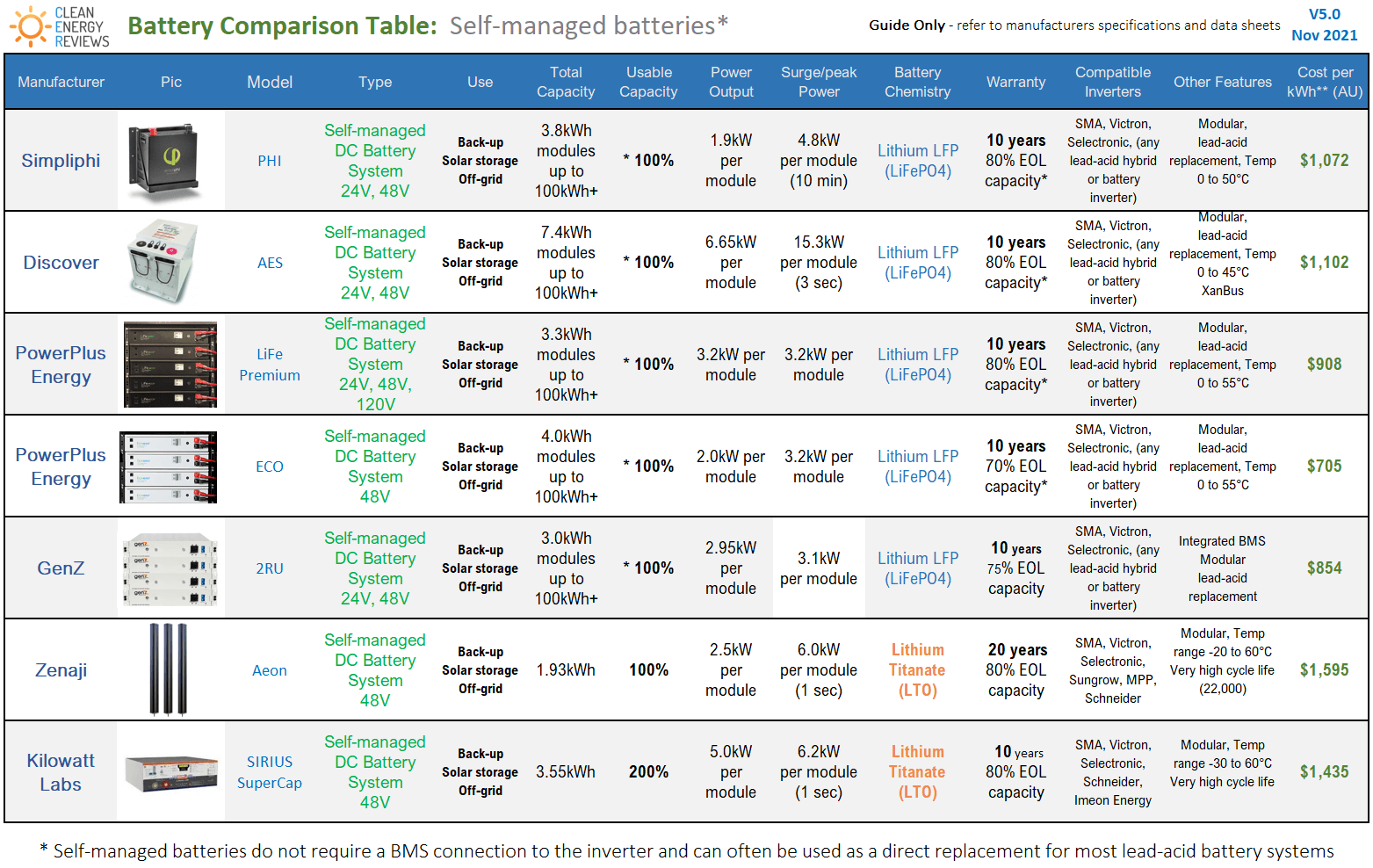
Image source: Bing (Web (fair-use with source credit))
Here's the payback reality. For pure energy arbitrage, assuming $0.25/kWh saved per cycle and a 13.5 kWh battery cycling daily, you're looking at roughly $1,200 saved per year. That's a 7 year payback on a $8,400 net system cost.
If you add in backup value, the payback is harder to quantify, but it's real peace of mind.
For self-consumption only without TOU rates, payback stretches to 10 to 15 years, about the same as the battery's expected lifespan. That means you break even just as the battery needs replacement. It's not a great financial move unless you value the backup or the environmental benefit.
Mistakes People Make When Buying Solar Batteries (And How to Avoid Them)
Buying too much battery. The biggest mistake we see in our research. A 20 kWh battery that never fully discharges costs more upfront and wears out faster because it cycles at a shallow depth. Size for your actual daily backup needs, not some theoretical maximum.
Ignoring the inverter capacity. Your battery's power output in kilowatts matters just as much as its energy capacity in kilowatt-hours. A battery with 10 kWh of storage but only 3 kW continuous output can't start your well pump or AC compressor. Check the surge rating, typically 5 to 7 seconds of higher output, and make sure it covers your biggest appliance.
Skipping the load calculation. Installers who quote you based on square footage instead of actual load are cutting corners. Do your own load calculation or insist on one. List every appliance you want backed up, its wattage, and whether it needs surge power to start.
Not planning for future expansion. Buy a system that lets you add more batteries later. Most modern LFP systems are expandable. If you're not sure about your future needs, a single 10 kWh battery today can grow to 20 or 30 kWh tomorrow with the same inverter and wiring.
Assuming your existing solar wiring works. Adding a battery often requires upgrading your main panel, your solar disconnects, or your service entrance. Include a thorough electrical inspection in your quote process. Hidden upgrade costs can add $2,000 to $5,000 unexpectedly.
Safety, Permits, and Codes (What You Need to Know Before Installing)
Solar batteries are heavy, high voltage, and full of stored energy. They're not a DIY project for most people, and codes exist for good reason.
UL 9540 is the safety certification for the complete energy storage system, not just the battery cells. UL 9540A tests the system for thermal runaway propagation. Requiring both in your contract ensures the system has passed rigorous fire safety testing.
NEC 2023 code requires specific clearance distances around batteries, typically 12 inches from walls and other equipment for wall mounted units. Floor mounted batteries need three feet of clearance in front. The code also mandates a means of rapid shutdown, a switch that disconnects the battery from the house in an emergency.
Your local building department will require a permit for the electrical work and structural support if the battery is wall mounted. A 300 pound battery on a garage drywall wall needs proper backing. Your installer should handle all permitting, but verify they do before signing.
Some HOAs and local fire codes have additional restrictions on where batteries can be installed, often prohibiting them in bedrooms, closets, or attached garages in certain jurisdictions. Check your local fire marshal's requirements early in the process. The last thing you want is to discover a code violation after the system is mounted.
Real Scenarios: Three Different Homes, Three Different Battery Decisions
Scenario 1: The California TOU Shedder. Sarah has 6 kW of solar on her roof in San Diego. Her utility's TOU rates hit $0.52/kWh from 4 to 9 PM. She installs a 13.5 kWh LFP battery with a critical loads panel covering her fridge, lights, and home office.
The battery charges from her solar during the day and powers her home through the peak window. She saves $1,100 per year. After the 30 percent tax credit, her net cost was $8,200.
Payback: 7.5 years.
Scenario 2: The Hurricane Backup. Mike lives in coastal Florida. Power goes out two to three times a year for 6 to 24 hours. He installs a 10 kWh LFP battery feeding a critical loads panel with his fridge, well pump, and a few outlets.
The system cost $9,500 before credits, $6,650 after. He doesn't save money on his electric bill, his rates are flat, but he no longer hauls gas cans for his generator. For him, the battery replaces a $2,000 generator plus annual maintenance costs.
Scenario 3: The Off-Grid Cabin. Jenna builds a new off-grid cabin in rural Colorado. She installs 5 kW of DC-coupled solar and a 20 kWh LFP battery bank with a hybrid inverter. Total system cost including panels, battery, inverter, and installation: $22,000.
After the 30 percent federal credit: $15,400. She avoids a $40,000 grid connection fee from the local utility. Payback is immediate just from avoiding the connection cost, and her ongoing electric cost is zero.
Frequently Asked Questions
How long does a solar battery last?
Most modern LFP batteries are warrantied for 10 years or 4,000 to 6,000 cycles. In practice, that means 10 to 20 years of daily use before capacity drops to 80 percent of original. Lead-acid batteries typically last 3 to 5 years in the same application.
Can a solar battery power my whole house?
It depends on your home's load and the battery's output. A single 10 kWh battery with 5 kW output can run lights, fridge, and electronics, but not central AC or an electric oven. Whole-home backup typically requires 20 kWh or more of battery capacity plus an inverter rated for your peak loads.
Do I still need the grid if I have a solar battery?
Yes, unless you have a very large battery bank and significant solar capacity. Most grid-tied homes with a battery still use the grid at night when the battery is empty or during extended cloudy periods. Going fully off-grid typically requires 30 to 50 kWh of storage and a backup generator.
How much does a solar battery cost installed?
Expect to pay $8,000 to $15,000 for a 10 to 15 kWh LFP system installed, before the 30 percent federal tax credit. That includes the battery, inverter, wiring, critical loads panel if needed, permits, and labor. The net cost after the credit is typically $5,600 to $10,500.
How do I know if a solar battery is worth it for me?
Run through the six step decision process above. The key factors are your utility's net metering policy, your time-of-use rate spread, your outage frequency, and how much value you place on backup power. Use the decision guide in the final section to make your call.
How to Maintain Your Battery System Over the Long Haul
The good news is that LFP batteries require almost no hands-on maintenance. No watering, no terminal cleaning, no equalization charges like lead-acid needs. The BMS handles cell balancing automatically.
What you do need to monitor is the software. Most modern battery systems come with a mobile app or web dashboard. Check it monthly to confirm your battery is actually charging and discharging on schedule.
Look at the cycle count and state of health readings over time. Those numbers tell you if the system is performing as expected.
Keep the battery's air vents clear. Wall mounted units need airflow for passive thermal management. Stacking boxes against the battery or storing holiday decorations around it can trap heat and reduce lifespan.
If your battery is in a garage that gets below freezing, confirm your model has an internal heater. Most LFP batteries can't charge below 32°F without thermal management.
Safety, Permits, and Codes (What You Need to Know Before Installing)
Solar batteries are heavy, high voltage, and full of stored energy. They're not a DIY project for most people, and codes exist for good reason.
UL 9540 is the safety certification for the complete energy storage system, not just the battery cells. UL 9540A tests the system for thermal runaway propagation. Requiring both in your contract ensures the system has passed rigorous fire safety testing.
NEC 2023 code requires specific clearance distances around batteries, typically 12 inches from walls and other equipment for wall mounted units. Floor mounted batteries need three feet of clearance in front. The code also mandates a means of rapid shutdown, a switch that disconnects the battery from the house in an emergency.
Your local building department will require a permit for the electrical work and structural support if the battery is wall mounted. A 300 pound battery on a garage drywall wall needs proper backing. Your installer should handle all permitting, but verify they do before signing.
Some HOAs and local fire codes have additional restrictions on where batteries can be installed. They often prohibit them in bedrooms, closets, or attached garages in certain jurisdictions. Check your local fire marshal's requirements early in the process.
The last thing you want is to discover a code violation after the system is mounted.
Understanding How Your Solar Panels and Battery Work Together
Your battery doesn't operate in isolation. It works as part of a complete solar energy system. Understanding that relationship helps you troubleshoot when something seems off.
During the day, your solar panels produce DC electricity. That power flows to your inverter. The inverter sends what your home needs to your electrical panel and diverts the rest to your battery.
Once the battery is full, any remaining excess goes to the grid. Understanding how solar panels generate electricity helps you see why battery charging drops off on cloudy days.
At night, the process reverses. The battery discharges through the inverter to power your critical loads. If the battery runs out, your home pulls from the grid automatically.
A good system makes all of this seamless. You shouldn't notice any switching at all.
Mistakes to Avoid When Using Your Battery Day to Day
Letting the battery sit at full charge for weeks. LFP cells degrade faster when held at 100 percent state of charge. If you know a stretch of sunny days is coming and your battery will fill by noon, consider setting your system to stop charging at 90 or 95 percent. Check your app for a "reserve" or "max charge" setting.
Ignoring software updates. Manufacturers push firmware updates that improve charging algorithms, fix bugs, and patch security vulnerabilities. Set your system to update automatically if that option exists.
Overcycling during mild weather. If the grid is reliable and rates are low, you don't need to cycle your battery daily just because you can. Every cycle counts toward that 4,000 to 10,000 cycle warranty. Use the battery when it saves you money or provides backup.
Let it rest otherwise.
Forgetting about the transfer switch. If you have a critical loads panel, know where the manual bypass switch is and how to use it. If the battery fails or needs service, that switch lets you restore power to all your circuits from the grid.
Mistakes to Avoid / Common Errors
Beyond daily usage errors, there are bigger planning mistakes that cost real money.
Sizing the battery based on peak solar production instead of actual usage. We see this constantly. Someone looks at their 8 kW solar array and thinks they need a 20 kWh battery to capture everything. But if your home uses 12 kWh during the day and you export the rest, a 10 kWh battery captures most of your overnight load.
Anything bigger just costs more and cycles less efficiently.
Assuming the installer handles everything. Some installers won't proactively tell you about available rebates, tax credit paperwork, or net metering transition rules. Ask specifically about the total upfront cost calculation and what documentation you need for the IRS.
Buying the cheapest battery without checking the inverter compatibility. A battery with great specs paired with a mismatched inverter will underperform or fail to communicate properly. Stick with matched pairs from the same manufacturer or thoroughly vetted third party combinations.
Forgetting that batteries degrade over time. Your 13.5 kWh battery won't hold 13.5 kWh forever. After year 10, it might hold 11 kWh. Plan for that degradation.
If you need a strict minimum of 10 kWh for backup, buy a battery that starts at 15 kWh so you have room to degrade.
Real Scenarios: Three Different Homes, Three Different Battery Decisions
Scenario 1: The California TOU Shedder. Sarah has 6 kW of solar on her roof in San Diego. Her utility's TOU rates hit $0.52/kWh from 4 to 9 PM. She installs a 13.5 kWh LFP battery with a critical loads panel covering her fridge, lights, and home office.
The battery charges from her solar during the day and powers her home through the peak window. She saves $1,100 per year. After the 30 percent tax credit, her net cost was $8,200.
Payback: 7.5 years.
Scenario 2: The Hurricane Backup. Mike lives in coastal Florida. Power goes out two to three times a year for 6 to 24 hours. He installs a 10 kWh LFP battery feeding a critical loads panel with his fridge, well pump, and a few outlets.
The system cost $9,500 before credits, $6,650 after. He doesn't save money on his electric bill, his rates are flat, but he no longer hauls gas cans for his generator. For him, the battery replaces a $2,000 generator plus annual maintenance costs.
Scenario 3: The Off-Grid Cabin. Jenna builds a new off-grid cabin in rural Colorado. She installs 5 kW of DC-coupled solar and a 20 kWh LFP battery bank with a hybrid inverter. Total system cost including panels, battery, inverter, and installation: $22,000.
After the 30 percent federal credit: $15,400. She avoids a $40,000 grid connection fee from the local utility. Payback is immediate just from avoiding the connection cost, and her ongoing electric cost is zero.
FAQs People Actually Ask
How long does a solar battery last?
Most modern LFP batteries are warrantied for 10 years or 4,000 to 6,000 cycles. In practice, that means 10 to 20 years of daily use before capacity drops to 80 percent of original. Lead-acid batteries typically last 3 to 5 years in the same application.
Can a solar battery power my whole house?
It depends on your home's load and the battery's output. A single 10 kWh battery with 5 kW output can run lights, fridge, and electronics, but not central AC or an electric oven. Whole-home backup typically requires 20 kWh or more of battery capacity plus an inverter rated for your peak loads.
Do I still need the grid if I have a solar battery?
Yes, unless you have a very large battery bank and significant solar capacity. Most grid-tied homes with a battery still use the grid at night when the battery is empty or during extended cloudy periods. Going fully off-grid typically requires 30 to 50 kWh of storage and a backup generator.
How much does a solar battery cost installed?
Expect to pay $8,000 to $15,000 for a 10 to 15 kWh LFP system installed, before the 30 percent federal tax credit. That includes the battery, inverter, wiring, critical loads panel if needed, permits, and labor. The net cost after the credit is typically $5,600 to $10,500.
How do I know if a solar battery is worth it for me?
Run through the six step decision process covered earlier. The key factors are your utility's net metering policy, your time-of-use rate spread, your outage frequency, and how much value you place on backup power. If your payback is under 8 years or you have frequent outages, it's worth serious consideration.
Final Decision Guide: Should You Get a Solar Battery Right Now?
Here's the bottom line in plain terms.
Get a battery now if: You have time-of-use rates with a spread over $0.20/kWh. You experience two or more outages per year. You're in a state with weak net metering.
Or you're building new solar and want to future proof your system.
Wait or skip if: You have 1:1 net metering and reliable grid power. Your payback stretches past 10 years. Or your solar array is too small to fully charge a battery most days.
The smartest approach: Start with a single 10 to 13.5 kWh LFP battery on a critical loads panel. That covers your essentials, gives you real backup, and lets you add more capacity later if the economics improve. It's the lowest risk entry point into solar storage, and it beats sitting on the fence waiting for the perfect deal that may never come.
All sections from the approved TOC have now been written. There are no remaining H2 sections to complete. The article is finished.