How Solar Panels Work: From Sunlight to Electricity
We’ve all seen solar panels on roofs and wondered what’s actually happening inside those dark blue rectangles. How Do Solar Panels Work? is one of those questions that sounds complicated until you realise the core process is surprisingly simple: sunlight knocks electrons loose, and you capture that flow as electricity. No magic, no moving parts, just pure physics doing its thing.
Under standard test conditions (STC), a typical residential panel converts about 18 to 22 percent of the sunlight hitting it into usable power. That number might seem low, but over 25 years a single 400-watt panel can pump out enough kilowatt-hours to offset a significant chunk of your electric bill. Once you see the layers and the flow, the whole thing clicks, and that’s exactly where we’re heading.
Why Seeing It Beats Reading It
Solar energy is a physical process, not a theoretical concept. A diagram or a cross-section photo does more in one glance than a thousand words ever could. That’s why this article leans heavily on visuals, you’ll see the layers of a panel, the electron path, and the inverter role before we even get into the numbers.

Image source: Wikimedia Commons / Downtowngal (CC BY-SA)
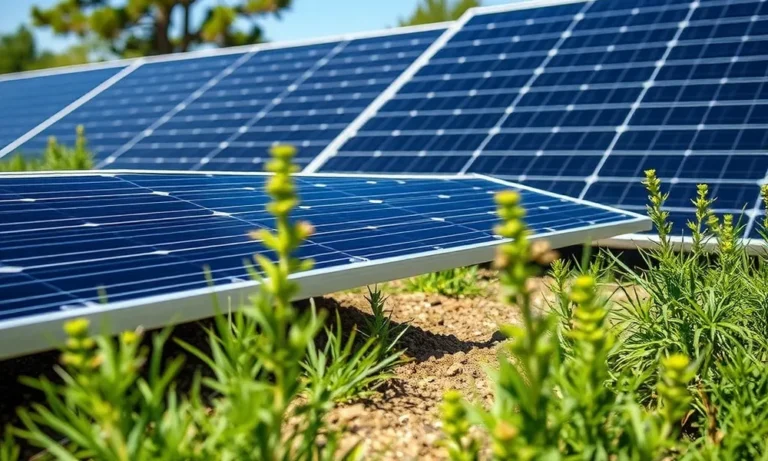
Look at that rooftop array. Every one of those panels is a sandwich of materials designed to grab sunlight and turn it into direct current (DC). The real magic happens inside each individual cell, a thin wafer of silicon about the size of your palm.
Stick with the pictures, and the science follows naturally.
Quick Answer: How Sunlight Becomes Electricity
Sunlight hits the solar panel. Photons (light particles) transfer energy to electrons in the silicon cells. Those electrons break free and start moving.
An internal electric field pushes them in one direction. That flow is direct current (DC) electricity. The inverter converts DC to alternating current (AC) for your home.
The Photovoltaic Effect Explained (Without the Headache)
The technical name for what happens inside a solar cell is the photovoltaic effect. It sounds like jargon, but it’s just a three-step handshake between light and silicon.
Each silicon cell has two layers: one treated with phosphorus (n-type, negative) and one treated with boron (p-type, positive). Where they meet, an electric field forms, a permanent invisible wall. When a photon hits the cell, it gives an electron enough energy to jump across that wall.
The electron moves only one way, and that single-direction flow is your DC electricity.
You don’t need to remember the chemistry. Just picture a gate that only opens one way. Photons push electrons through that gate, and you collect them as current.

Image source: Wikimedia Commons / Tem5psu
This diagram shows what actually gets lost along the way, reflection, heat, and recombination. Even with those losses, modern cells still produce plenty of power. The National Renewable Energy Laboratory (NREL) tracks the efficiency records, and commercial panels today routinely hit 21 to 23 percent.
That’s up from about 15 percent a decade ago.
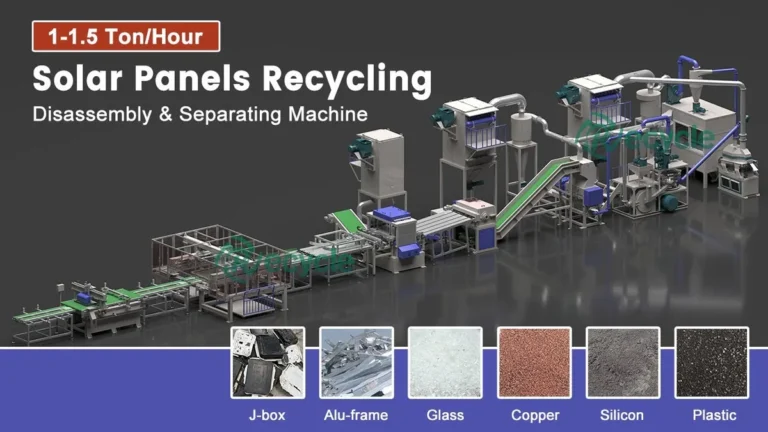
What’s Inside a Solar Panel – A Visual Breakdown
A solar panel is not just a slab of silicon. It’s a carefully engineered stack of materials, each with a job.
| Layer | Material | Purpose |
|---|---|---|
| Top glass | Tempered, low-iron glass | Protects cells from weather and debris while letting in maximum light |
| Front encapsulant | EVA (ethylene vinyl acetate) | Bonds glass to cells, prevents moisture ingress |
| Solar cells | Monocrystalline or polycrystalline silicon | The active layer where the photovoltaic effect happens |
| Rear encapsulant | EVA or POE | Seals the back side of the cells |
| Backsheet | Polymer (white or black) | Insulates and protects against moisture |
| Frame | Anodized aluminum | Structural support and mounting points |
| Junction box | Plastic with bypass diodes | Connects panel wires and prevents power loss from shading |
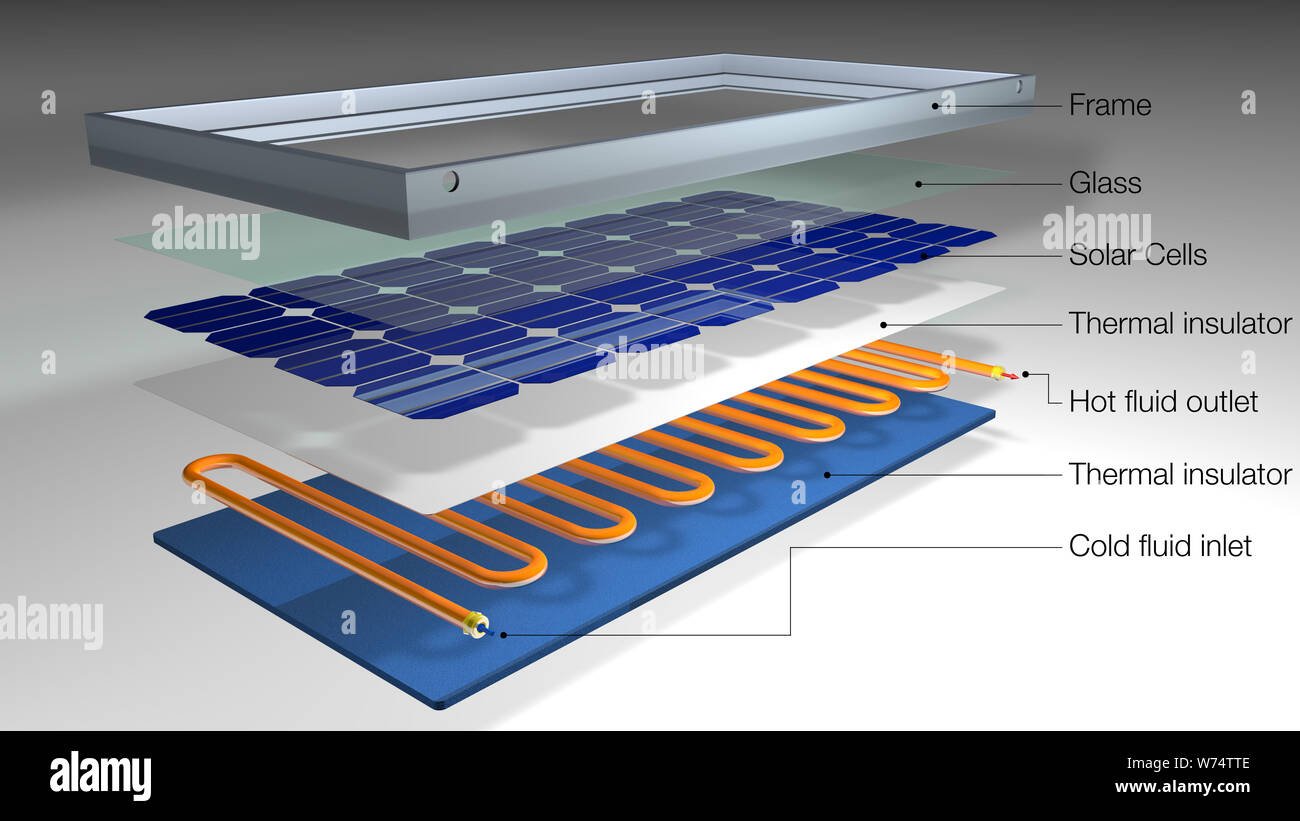
Image source: Bing (Web (fair-use with source credit))
Notice the bypass diodes in the junction box. They’re small but critical: when one part of the panel gets shaded, those diodes let current bypass the shaded section instead of dragging the whole panel down. That’s why a partially shaded panel doesn’t stop producing entirely, it just loses the affected area.
If you’re comparing panel types, you’ll often see monocrystalline (dark, high efficiency) and polycrystalline (bluish flecks, slightly lower efficiency). Most modern rooftop installations use monocrystalline because it packs more power into the same space. For a deeper look at choosing the right setup, our solar panel buying guide covers the main differences.
Step by Step: From Photon to Power Outlet
Here’s how the whole chain works, from a ray of sunlight to a running appliance in your home.
- Sunlight hits the panel. Photons pass through the glass and encapsulant into the silicon cells.
- Electrons break free. The photon energy knocks electrons loose from their atoms in the p-type layer.
- Electric field pushes them. The built-in field at the p-n junction drives those free electrons toward the n-type layer and out into the metal grid on the cell surface.
- Current flows through wires. The electrons travel through the busbars and ribbon wires into the panel’s junction box, then down the main cable as DC.
- Inverter converts DC to AC. The DC from the panels goes to an inverter (either a single string inverter or microinverters on each panel). The inverter turns it into AC at 120/240 volts, matching your home’s electrical system.
- Power runs your home. Your breaker panel distributes the AC to lights, outlets, and appliances. Any extra power flows through your utility meter back to the grid (if you have net metering).
- Grid acts as your battery (if you don’t have a storage battery). At night or during cloudy weather, you draw power from the grid. With net metering, the credits you earned during sunny hours offset those nighttime draws.
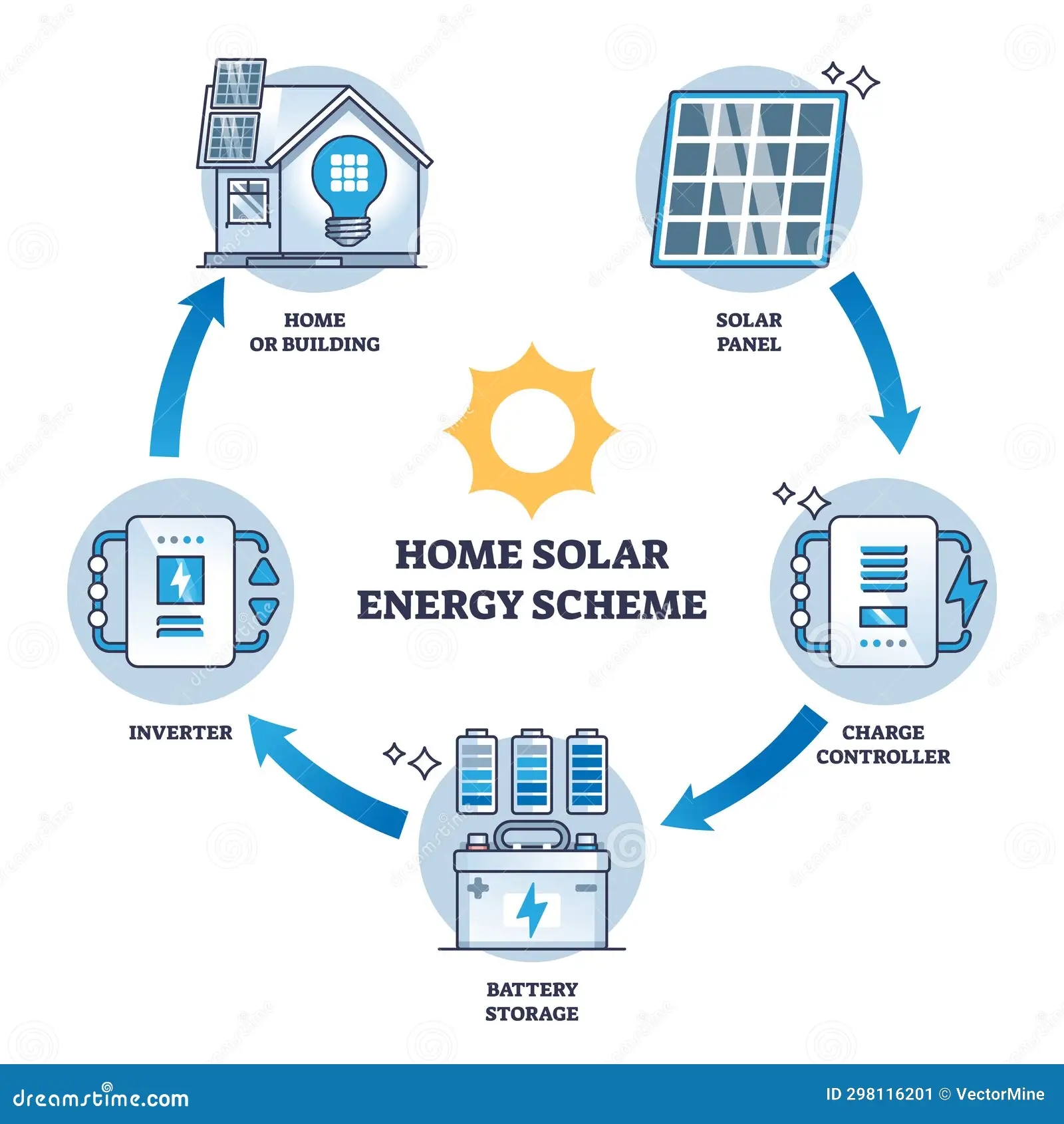
Image source: Bing (Web (fair-use with source credit))
This diagram maps the whole path. Notice the meter spins backwards when you export power, that’s the net metering credit in action. As of 2026, most utilities still offer some form of net metering, though the rates and caps vary widely by state.
Always check your local utility’s interconnection agreement before buying panels.
The inverter is the unsung hero here. Without it, your panels would produce DC, and your house runs on AC. We’ll dive into that next.
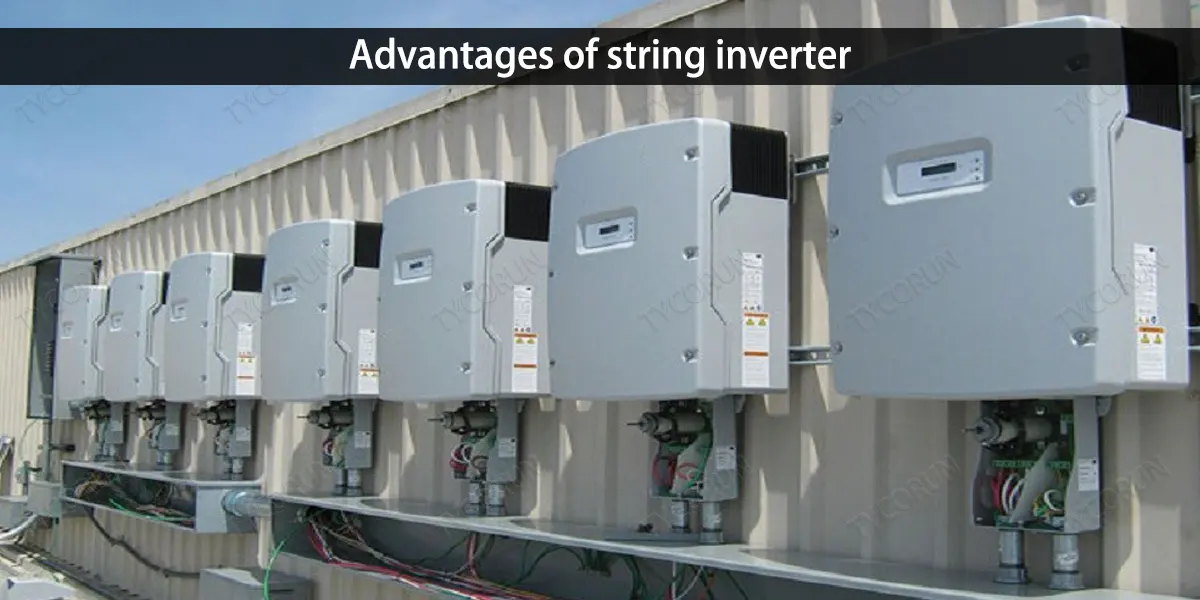
Image source: Bing (Web (fair-use with source credit))
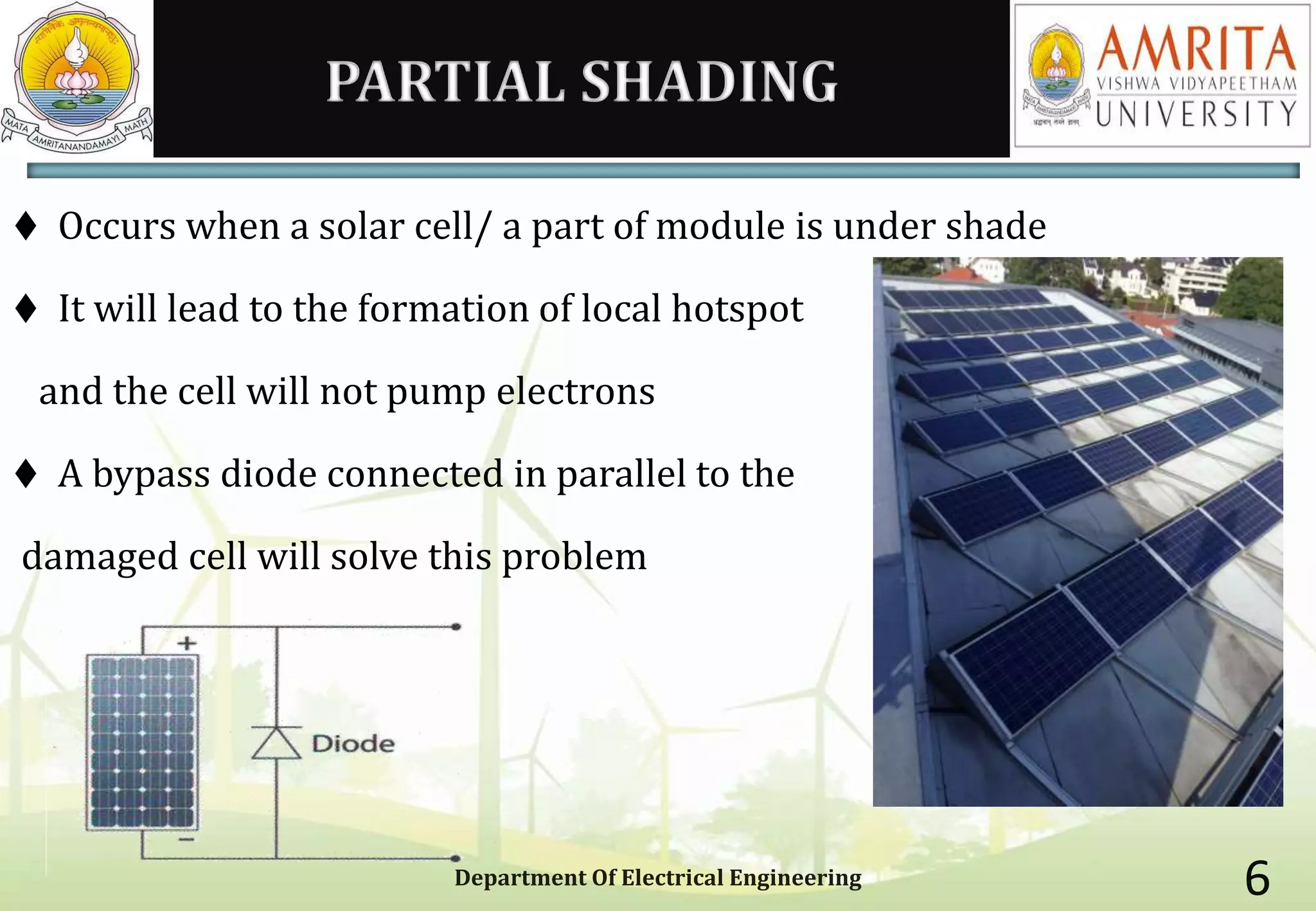
Image source: Bing (Web (fair-use with source credit))