Are Solar Panels Worth It in Washington State?
If you're trying to figure out whether solar panels are worth it in Washington, you've probably run into conflicting advice. One website says the cloudy climate kills the deal. Another says net metering makes it a no-brainer.
The truth lives somewhere in between.
Washington's net metering policy is one of the best in the country. Most utilities here credit you at the full retail rate for every kilowatt-hour you send back to the grid. That single policy changes the math dramatically compared to states where net metering pays you less.
But cloud cover, roof conditions, and your personal energy habits all play a role. Let's walk through the exact factors that decide your answer.
Quick Answer
Yes, for most Washington homeowners. But only if your roof gets decent sun. Your electric bill should be above $100 a month too.
The 30% federal tax credit helps. Washington's sales tax exemption saves more. Full-retail net metering seals the deal.
As of 2026, payback periods range from 8 to 14 years depending on where you live.
The Real Question: Is Solar Worth It for You in Washington?
That's the honest way to frame this. A blanket "yes" or "no" doesn't work here because Washington is not one climate. It's not one utility.
It's not one set of rules.
Western Washington gets about 60 percent more cloud cover than the east side. Seattle averages 152 cloudy days a year. Spokane gets about 175 sunny days.
That difference matters for solar production. But here's the thing most people miss: solar panels work fine on cloudy days. They just produce less.
The real question is whether your specific roof, your specific bill, and your specific timeline line up.
We've seen homeowners in Bellingham with south-facing roofs get a 10-year payback. We've also seen homeowners in Portland (same climate) with shady roofs get a 16-year payback that barely breaks even. The difference is never the panels.
It's the conditions.
The Short Answer (Plus the One Big Catch)
Here's the condensed version. Solar panels are worth it in Washington if you meet three conditions:
- You have a south, east, or west-facing roof with minimal shade
- Your monthly electric bill is at least $100
- You plan to stay in your home for at least 7 years
If you hit all three, you're a strong candidate. The payback period in Washington is typically 8 to 14 years. After that, you get free electricity for another 12 to 17 years (panels last 25 to 30 years).
| Factor | Good News | Bad News |
|---|---|---|
| Net metering | Full retail rate, most utilities | Some utilities have caps |
| Federal tax credit | 30% off, no cap | Must have tax liability |
| State sales tax exemption | Saves 8 to 10% on equipment | Only applies to equipment |
| Property tax exemption | No increase in assessed value | Must apply for it |
| Cloud cover | Panels still work | 20 to 30% less production than sunny states |
The one big catch? Washington's electricity is already cheap. The average rate is about 10 to 12 cents per kilowatt-hour.
That's lower than the national average. Cheap power means a longer payback period than you'd get in California or Massachusetts. But rates are rising 2 to 3 percent a year.
That tilts the long-term math in your favor.
What Makes Washington Different — The Good, the Bad, and the Cloudy
Washington is a solar paradox. It has some of the best renewable energy policies in the country. It also has some of the cloudiest skies.
Let's separate the real factors from the myths.

Why Western WA and Eastern WA Are Basically Two Different Stories
The Cascade Mountains create a rain shadow effect. Eastern Washington gets significantly more sun. Spokane and the Tri-Cities get about 1,300 to 1,500 kilowatt-hours per year per kilowatt of solar installed.
Seattle gets about 1,000 to 1,200. That's a 20 to 30 percent difference in production.
But here's the thing. Even in Seattle, solar works. Germany is one of the world leaders in solar adoption.
Germany gets less sun than Seattle. The technology has improved. Modern monocrystalline panels perform well in diffuse light.
You don't need direct noon sun to get value.
The Net Metering Advantage Most States Don't Have
Net metering is the secret weapon for Washington solar owners. Most utilities here credit you at the full retail rate. That means every kilowatt-hour you send to the grid is worth the same as one you buy from the utility.
In many other states, net metering pays you at a lower wholesale rate. That difference can add years to your payback period.
Washington's net metering also has no monthly cap on what you can send back. Some states limit the system size or the total number of participants. Washington's utilities do have overall program caps, but they're not reached in most areas yet.
Just check with your specific utility. Puget Sound Energy, Seattle City Light, Avista, and Snohomish PUD all have slightly different policies.
The 5 Personal Factors That Decide Your Answer
Forget generic online calculators. Your personal situation drives the real answer. Here are the five factors that matter most.
Your Monthly Electric Bill (The #1 Factor)
This is the biggest variable. If you pay $150 a month for electricity, solar can save you $1,500 to $1,800 a year. That's a 10-year payback on a $15,000 system after the tax credit.
If you pay $60 a month, the savings are too small to justify the upfront cost. The math just doesn't work.
Your Roof: Age, Angle, and Shade
Your roof needs to be in good shape for the next 25 years. If it's 15 years old and needs replacing soon, you should do the roof first. Otherwise you'll pay to remove and reinstall the panels later.
The ideal roof faces south and has a pitch between 20 and 40 degrees. East and west-facing roofs work too, but you lose about 15 to 20 percent production. North-facing roofs are usually not worth it.
Shade is the biggest killer. A single tree shading one panel can drop the whole system's output if you have a string inverter. Microinverters help with this, but they cost more.
If you have heavy tree cover, solar might not be right for you.
How Long You Plan to Stay in Your Home
Solar is a long-term investment. The payback period in Washington is 8 to 14 years. If you plan to sell in 5 years, you might not recoup the cost.
But solar does add to home resale value. Studies show a 3 to 4 percent premium for homes with owned solar panels. Leased panels are a different story.
They can complicate a sale.
Your Utility Company Matters More Than You Think
Net metering policies vary by utility. Some utilities have annual true-up periods. Others have monthly caps.
Puget Sound Energy, for example, has a net metering cap that's close to being reached in some areas. If the cap is hit, later solar adopters might get a lower rate. Check your utility's current policy before you commit.
Whether You're Willing to Finance vs. Pay Cash
You can pay cash, take a solar loan, or lease the panels. Cash gives you the best return. You capture the full 30% tax credit and all the savings.
A loan works too, but the interest reduces your net savings. Leases and power purchase agreements (PPAs) are the weakest option. You don't own the panels, you don't get the tax credit, and the savings are smaller.
If you can't pay cash, a credit union solar loan is usually the smartest move.
The Decision Tree: Should You Go Solar or Wait?
Here's a simple framework to decide. Find your situation and follow the branch.
Branch 1: High Bill + Good Roof → Likely Yes
If your electric bill is over $150 a month and your roof gets 5 or more hours of sun a day, solar is a strong investment. You'll likely see a payback of 8 to 12 years. Get three quotes and compare.
The numbers speak for themselves.
Branch 2: Low Bill + Shady Roof → Probably Not Right Now
If your bill is under $80 a month and your roof is shaded by trees, solar won't pencil out. Focus on energy efficiency first. Upgrade your insulation.
Switch to LED bulbs. Replace old appliances. Those steps will lower your bill further and make solar less attractive.
Branch 3: Planning to Sell in 5 Years → It's Complicated
If you plan to move soon, solar might still make sense if you pay cash. You'll get some of the value back in the sale price. Leased panels are a red flag for buyers.
If you're selling soon, avoid a lease. If you're buying a home with solar, check whether the panels are owned or leased.
Branch 4: New Roof Needed Soon → Do Both or Do Neither
If your roof is 15 years old or older, replace it before installing solar. A roof lasts 25 to 30 years. Solar panels last 25 to 30 years.
You want them to age together. If you can't afford both, wait on solar until you can replace the roof. Otherwise you'll pay for a double removal and reinstall.
Real Washington Numbers: What You'll Actually Pay and Save
Let's talk dollars and cents. The numbers vary by location, but we can give you a realistic range based on aggregate data from Washington installations.
System Cost After Incentives
The average solar system in Washington is 6 to 8 kilowatts. Before incentives, you're looking at $15,000 to $28,000. After the 30% federal tax credit, that drops to $10,500 to $19,600.
The Washington sales tax exemption saves another 8 to 10% on equipment costs. That's roughly $1,200 to $2,800 more in savings.
| System Size | Gross Cost | After Federal Tax Credit | After WA Sales Tax Exemption |
|---|---|---|---|
| 6 kW | $15,000-$18,000 | $10,500-$12,600 | $9,500-$11,500 |
| 8 kW | $20,000-$24,000 | $14,000-$16,800 | $12,700-$15,300 |
| 10 kW | $25,000-$28,000 | $17,500-$19,600 | $15,900-$17,800 |
Payback Period by Region (Western vs. Eastern WA)
Payback depends on sun exposure and electricity rates. In Western Washington, expect 10 to 14 years. In Eastern Washington, expect 8 to 12 years.
The difference is driven by the extra 200 to 300 hours of peak sun per year on the east side.
25-Year Total Savings Estimate
Over 25 years, a typical 7 kW system in Washington saves $20,000 to $35,000. That assumes a 2% annual electricity rate increase. If rates rise faster, your savings grow.
If they stay flat, your savings shrink. The U.S. Energy Information Administration reports that Washington electricity rates have risen about 2.3% annually over the last decade.
That trend supports the higher end of the estimate.
The Biggest Mistakes Washington Homeowners Make
We've seen the same errors repeat. Here are the ones to avoid.
Not checking net metering caps first. Some utilities have limited spots. If you buy panels and the cap is reached, you get a lower rate for exported power. Call your utility before you sign anything.
Skipping the roof inspection. A roofer can spot issues you can't see. Old flashing, weak decking, or hidden leaks can turn a simple install into a nightmare. Fix the roof first.
Leasing instead of buying. Leases look easy with zero upfront cost. But you don't own the panels. You don't get the tax credit.
Your monthly savings are smaller. And when you sell the house, the buyer has to take over the lease. Many buyers walk away.
Choosing the cheapest installer. Price matters, but so does quality. A bad install can cause roof leaks, electrical issues, and poor production. Check licenses through the Washington Department of Labor and Industries.
Read reviews on multiple platforms. Get at least three quotes.
Forgetting about HOA rules. Washington has a solar access law (RCW 64.38) that limits HOA restrictions. But you still need to check your covenants. Some HOAs have specific rules about panel placement or visibility.
Get approval in writing before you install.
Solar Panel Types: What Works Best in the Pacific Northwest
Not all panels perform the same in cloudy conditions. Here's what you need to know.
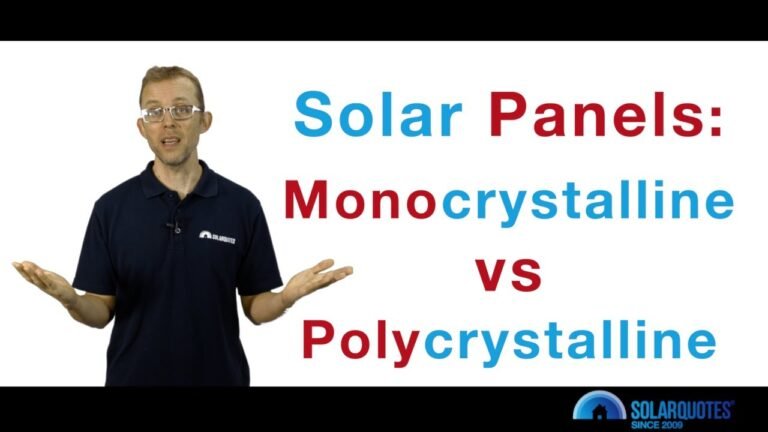
Monocrystalline panels are the best choice for Washington. They have higher efficiency (18 to 22%) and better low-light performance than polycrystalline or thin-film panels. In cloudy weather, they capture more of the diffuse light that sneaks through the overcast.
Polycrystalline panels are cheaper but less efficient (15 to 18%). They work fine in direct sun but lose more production in overcast conditions. For Washington's climate, the extra cost of monocrystalline is worth it.
Thin-film panels are lightweight and flexible. They work well in low light too. But they need more roof space for the same output.
Most residential installations skip them.
For a deeper breakdown of panel types, including efficiency ratings and temperature coefficients, check out our guide on types of solar panels. It covers the specifics that matter for your climate.
Microinverters vs. string inverters is another key choice. String inverters are cheaper. But if one panel is shaded, the whole string drops.
Microinverters let each panel operate independently. In Washington's tree-filled neighborhoods, microinverters often make more sense.
Solar + Battery: Worth It in Washington or Not?
Batteries are popular but often unnecessary in Washington. Here's why.
Net metering at full retail rate means the grid acts as your virtual battery. You send excess power during the day. You pull it back at night.
No battery needed. You get the same value either way.
A battery costs $8,000 to $15,000 installed. That adds years to your payback period. In Washington, the typical payback on a battery alone is 15 to 20 years.
That's longer than the warranty on most batteries.
When does a battery make sense? Three scenarios. You live in an area with frequent power outages.
You have time-of-use rates that charge more in the evening. Or you want near-total energy independence. Outside those cases, skip the battery and put the money toward more panels.
How to Get Accurate Quotes (Without Getting Ripped Off)
Getting solar quotes is a skill. Here's how to do it right.
Ask for a production estimate in kilowatt-hours per year. Not just a system size. A good installer will use software like Aurora or Helioscope to model your roof's specific sun exposure. If they give you a generic estimate, walk away.
Compare cost per watt. Take the total system cost before incentives and divide by the system size in watts. A fair price in Washington is $2.50 to $3.50 per watt. Above that, you're overpaying.
Check the equipment list. The quote should include exact panel and inverter models. Not just "monocrystalline panels" or "string inverter." You need the brand and model so you can verify specs and warranty.
Ask about the install timeline. Most Washington installations take 1 to 3 days for the physical work. Permitting and utility approval add 4 to 8 weeks. A good installer will give you a realistic timeline and stick to it.
Get a written warranty. Panels should have a 25-year performance warranty. Inverters should have 10 to 25 years depending on the type. Workmanship should be covered for at least 5 years.
Anything less is a red flag.
The Washington-Specific Incentives You Don't Want to Miss
The 30% federal tax credit applies everywhere. But Washington adds two state-level benefits that boost the deal.
First, the sales tax exemption. Solar equipment is exempt from Washington's 8 to 10% sales tax. That saves you roughly $1,200 to $2,800 on a typical system.
Your installer handles the paperwork.
Second, the property tax exemption. Solar panels add value to your home. Normally that would raise your property taxes.
Washington exempts that added value. You pay no extra tax on the increased assessment.
To claim the exemption, submit a simple form to your county assessor after installation. It's usually one page. Don't skip this step.
The savings add up over the life of the system.
Quick Decision Guide: Your Next Steps Based on Your Situation
Here's your action plan depending on where you stand.
If your bill is high and your roof is sunny. Get three quotes. Compare cost per watt. Check that the installer uses monocrystalline panels and microinverters if you have shade.
Apply for permits. Install. Claim your tax credits.
If your bill is low or your roof is shady. Skip solar for now. Spend your money on energy efficiency instead. Add attic insulation.
Upgrade to a heat pump. Replace old windows. Those upgrades lower your bill more per dollar than solar would.
If you need a new roof soon. Replace the roof first. Then install solar. The two investments work best when they share a 25 to 30 year lifespan.
If you can't afford both, wait on solar.
If you're planning to sell within 5 years. Pay cash for a small system. Don't lease. A well-placed owned system adds resale value.
A lease scares off buyers.
If you're not sure about your numbers. Use the National Renewable Energy Laboratory's PVWatts calculator. Enter your address. It gives a production estimate in minutes.
Then plug that number into a simple payback calculator. That's your starting point.
Frequently Asked Questions
How much does solar cost in Washington after incentives?
A typical 7 kW system costs $10,500 to $15,000 after the 30% federal tax credit and the sales tax exemption. Your exact cost depends on your roof, installer, and equipment choices.
Do solar panels work in cloudy weather?
Yes. Modern monocrystalline panels produce 50 to 70% of their rated output in overcast conditions. Washington's net metering policy means you bank credits on sunny days to cover cloudy periods.
What is the payback period for solar in Washington?
Expect 8 to 14 years depending on your location. Eastern Washington tends toward the faster end. Western Washington leans slower.
After payback, you get free electricity for another 12 to 17 years.
Can I get solar with no upfront cost?
Yes, through a lease or power purchase agreement. But you won't own the panels. You won't get the tax credit.
Your long-term savings are much smaller. A solar loan from a credit union is a better middle ground.
Does solar increase home value in Washington?
Yes. Studies show a 3 to 4% increase in resale value for owned systems. The property tax exemption means that added value does not increase your tax bill.
Leased systems do not add the same value.
How do I find a good solar installer in Washington?
Check the Washington Department of Labor and Industries for a valid license. Read reviews on multiple platforms. Get at least three quotes.
Ask each for a production estimate using modeling software. Compare cost per watt and equipment brands.