Polycrystalline Solar Panels: How They Work & Benefits
If you’ve been shopping for solar panels, you’ve seen two names everywhere: monocrystalline and polycrystalline. Polycrystalline Solar Panels Explained in plain terms: they’re the blue, speckled panels that cost less per watt than the black ones, but they take up a little more roof space. That tradeoff is exactly why homeowners and installers keep talking about them.
In our research, efficiency for modern polycrystalline panels sits between 15% and 18%, and their temperature coefficient (how much output drops when it’s hot) is often better than monocrystalline. They also have a proven track record, manufacturers have been making them for decades. But is that enough to choose them over the competition?
Let’s break down what really matters.
Why This Comparison Actually Matters (and Who Should Care)
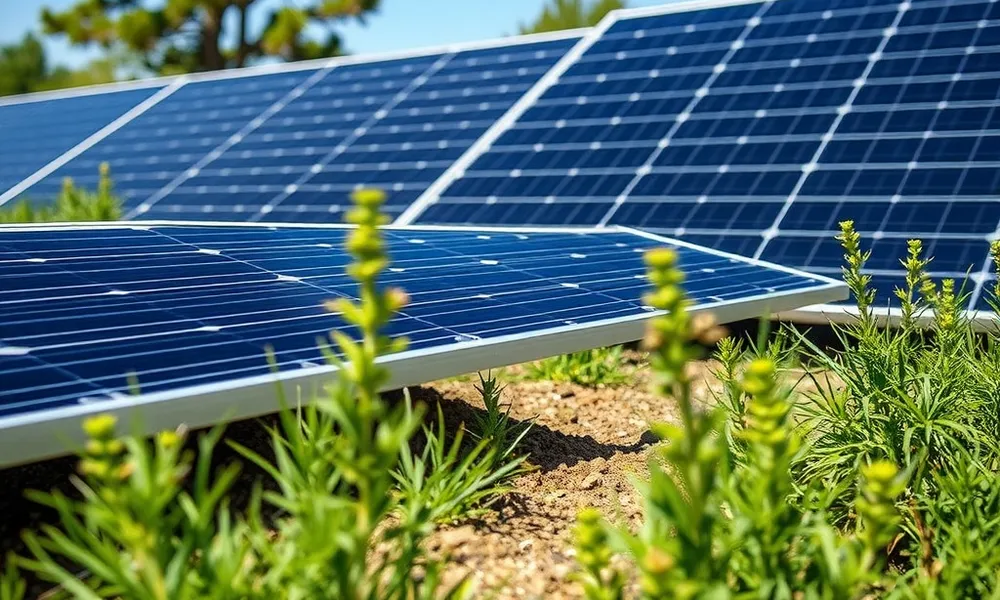
If you’re trying to decide between panel types, the choice isn’t as simple as “black panels are better.” The right pick depends on your roof, your budget, and your goals. Polycrystalline panels make a lot of sense for certain situations and almost no sense for others.
Here’s who should pay close attention:
- Homeowners with large roofs, If you have plenty of space, saving money per watt matters more than squeezing every last watt out of each square foot.
- People on a tighter budget, Polycrystalline modules cost roughly 10 to 20 percent less than monocrystalline of the same wattage. That difference adds up fast.
- Those in hot climates, Because polycrystalline panels have a lower temperature coefficient (around −0.40 %/°C versus −0.45 %/°C for many mono panels), they hold up better when the mercury climbs. On a 95°F day, that small difference can mean measurable extra production.
- Ground‑mounted or commercial systems, When space isn’t a premium and you want the lowest possible cost per kilowatt‑hour, polycrystalline is often the default choice.
On the flip side, if your roof is small, heavily shaded, or has a tricky shape, monocrystalline might be the smarter investment. We’ll get into that head‑to‑head soon.
First, let’s make sure we all know exactly what polycrystalline panels are, no jargon, just the facts.
What Polycrystalline Panels Are – A Quick, Honest Explanation
A polycrystalline solar panel is made from multiple silicon crystals melted together and poured into a square mold. That’s where the name comes from: “poly” means many, “crystalline” refers to the crystal structure. The result is a wafer with a distinct blue, speckled look because light scatters off the grain boundaries between the crystals.
In contrast, monocrystalline panels use a single, pure silicon crystal grown in a lab, sliced into cylindrical wafers, then trimmed into pseudo‑square shapes. That process is more energy‑intensive and wastes some silicon, which is why mono panels cost more. Polycrystalline panels waste less silicon during manufacturing, and the casting process is simpler and cheaper.
So, the core tradeoff: lower manufacturing cost (and lower price for you) at the expense of slightly lower efficiency per square foot. For the same rated wattage, a poly panel will be a little bigger than a mono panel. But for many installations, that extra size is meaningless, your roof has room to spare.
If you want the full picture of how these fit into the broader solar landscape, our guide on the main types of solar panels walks through all three main technologies side‑by‑side.
How Polycrystalline Panels Are Made (and What That Blue Speckled Look Means)
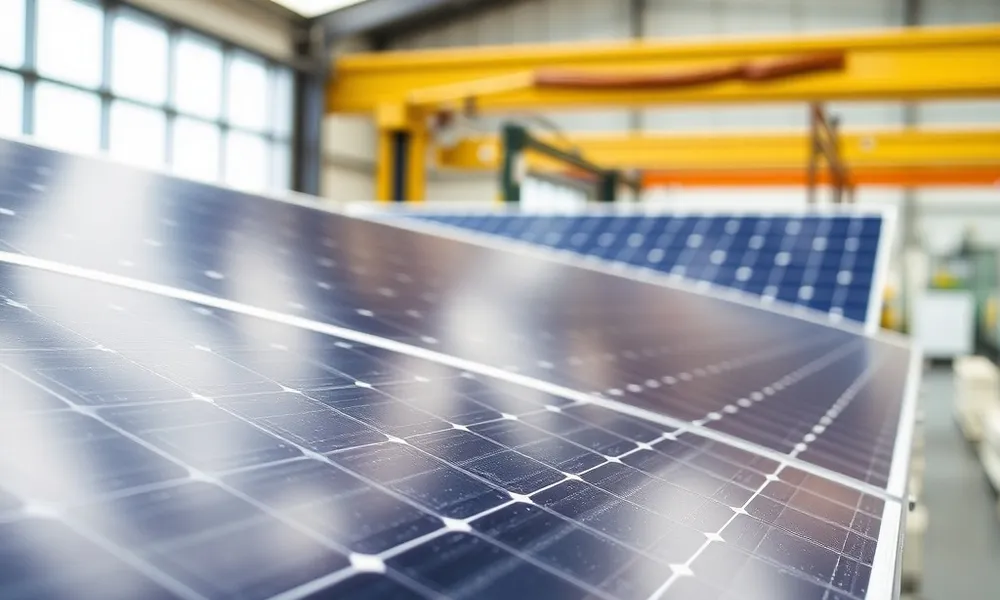
The manufacturing process explains a lot about why poly panels behave the way they do.
- Silicon is heated until it melts into a liquid.
- The molten silicon is poured into a square mold and allowed to cool slowly.
- As it cools, multiple silicon crystals form randomly, creating grain boundaries where the crystals meet.
- The solidified block (called an ingot) is sliced into square wafers using a wire saw.
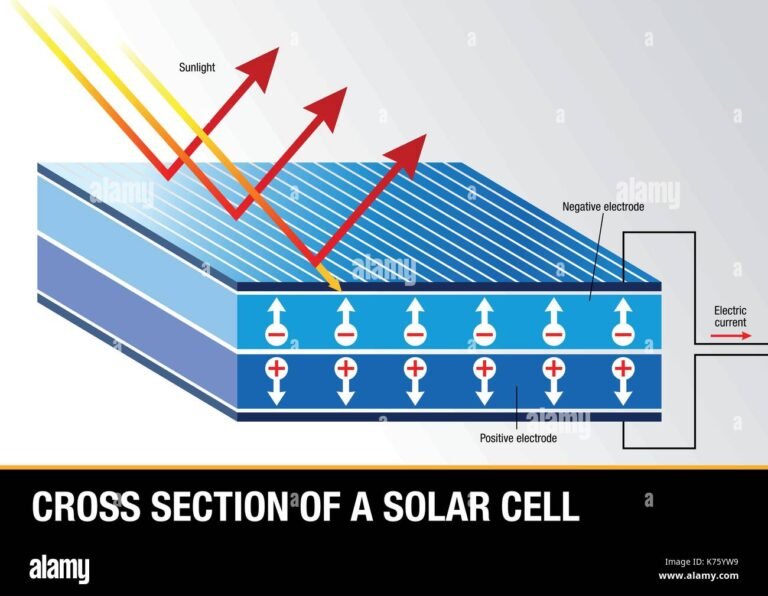
- The wafers are treated, doped (adding a tiny amount of boron or phosphorus to create the positive‑negative junction), and assembled into cells.
- Cells are wired together, laminated under glass, and framed.
The blue color comes from an anti‑reflective coating (usually silicon nitride) applied to the front of each cell. That coating helps the panel absorb more light, but it also reflects blue wavelengths. The speckled pattern you see is light hitting those grain boundaries at different angles, each crystal grain reflects light a little differently, creating that mottled effect.
That random crystal structure also means electrons have to travel through more boundaries before they reach the circuit, which slightly reduces efficiency compared to a single‑crystal mono cell. But the tradeoff is real: the simpler casting process uses less energy and produces less waste, making poly panels more environmentally friendly to manufacture, the energy payback time (the time it takes for the panel to generate the energy used to make it) is typically 1 to 3 years, compared to 2 to 4 years for mono panels.
For a deeper look at what’s inside one of these modules, check out our article on the main components of a solar panel.
The Real Pros and Cons – No Sugarcoating
Let’s lay out the honest strengths and weaknesses. No marketing fluff, just what the specs and real‑world experience show.
Pros:
- Lower cost per watt. This is the main reason people choose poly. As of 2026, you can expect to pay $0.60, $0.90 per watt for poly modules versus $0.80, $1.20 for mono, a savings of roughly 10, 20 percent on the panel cost alone.
- Better temperature coefficient. A typical poly panel loses about 0.40% of output per degree Celsius above 25°C. Many mono panels lose 0.45%/°C or more. In hot climates, poly can actually out‑produce mono on a per‑watt basis during peak heat.
- Thicker, more durable wafers. Polycrystalline wafers are typically around 200 micrometers thick, while mono wafers have been getting thinner (often 160, 180 µm). Thicker wafers are less prone to microcracks during handling, shipping, and installation.
- More sustainable manufacturing. Less silicon waste, lower embodied energy. If the environmental footprint matters to you, poly has a slight edge here.
Cons:
- Lower efficiency per square foot. You’ll need about 5, 10% more roof area to produce the same power as mono panels. On a small roof, that can be a dealbreaker.
- Slightly higher degradation rate. Industry data suggests poly panels degrade at roughly 0.5, 0.7% per year, while high‑quality mono panels often degrade at 0.3, 0.5%. Over 25 years, the difference might be 1, 3% total output, noticeable but not huge.
- Blue speckled look. Some homeowners just prefer the sleek, uniform black of mono panels on their roof. That’s aesthetic, but it can affect curb appeal.
Who wins? If you have the roof space and want the best bang for your buck, poly is a smart choice. If every square inch counts or you want the highest efficiency regardless of cost, mono wins.
Polycrystalline vs. Monocrystalline – The Side‑by‑Side You Came For
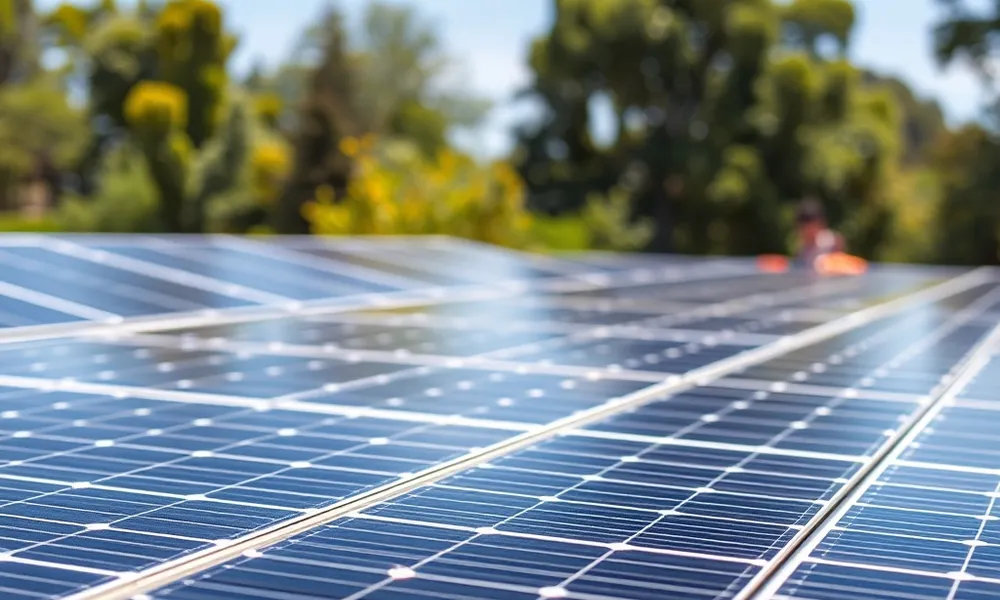
This is the comparison you came for. Let’s line them up across the factors that actually matter to someone buying solar.
Efficiency and Space
| Factor | Polycrystalline | Monocrystalline |
|---|---|---|
| Typical efficiency | 15–18% | 18–22% |
| Watts per panel (common) | 250–350 W | 300–400+ W |
| Area per kW (approximate) | 65–75 sq ft | 55–65 sq ft |
| Best for | Large roofs, ground mounts | Small roofs, maximising output |
If you have a 500 sq ft south‑facing roof, you can fit about 7, 8 kW of mono panels or roughly 6.5, 7.5 kW of poly panels. The difference is about 0.5, 1 kW. For the average home, that is not a dealbreaker unless you are trying to offset 100% of a high electric bill in limited space.
Temperature Performance and Degradation
Temperature matters more than most people realise. Panels are rated at 25°C (77°F), but in summer, roof surface temperatures can hit 65°C (150°F). At 65°C, a panel with a −0.40%/°C coefficient loses 16% of its output.
One with −0.45%/°C loses 18%. That 2% difference adds up over thousands of hot afternoons.
| Metric | Polycrystalline | Monocrystalline |
|---|---|---|
| Temp coefficient (typical) | −0.40%/°C | −0.45%/°C |
| First‑year degradation | ~2–3% | ~1–2% |
| Annual linear degradation | 0.5–0.7% | 0.3–0.5% |
| 25‑year output guarantee | 80–85% | 85–92% |
Note: First‑year degradation is higher because of light‑induced degradation (LID), which affects both types but slightly more in poly. After that, both settle into a steady decline.
Cost Per Watt and Warranty Reality
Module‑only pricing as of 2026 (bulk purchase, 10+ panels):
| Aspect | Polycrystalline | Monocrystalline |
|---|---|---|
| Module cost per watt | $0.60–$0.90 | $0.80–$1.20 |
| Product warranty | 10–12 years typical | 12–25 years typical |
| Performance warranty | 25–30 years (end at 80–85%) | 25–30 years (end at 85–92%) |
| Total module cost for 6 kW | $3,600–$5,400 | $4,800–$7,200 |
The price gap is narrowing. High‑efficiency mono panels (like those with PERC technology) still command a premium, but standard mono panels have come down significantly. Still, poly remains the budget‑friendly option.
Aesthetics – If That Matters to You
We can’t ignore it because plenty of homeowners care. Poly panels are blue with a visible grain pattern. Mono panels are nearly black with a uniform surface.
If your roof is visible from the street, the dark, seamless look of mono is often preferred. Some HOAs even restrict panel color. Check your local rules before deciding.
For a full breakdown of all the tradeoffs (including thin‑film and other options), our advantages and disadvantages of solar panels guide covers every angle.
We’ve covered the core comparison. Next, we’ll look at how poly stacks up against thin‑film, who should actually buy it, common mistakes, pricing specifics, and finally give you a clear verdict. But before we go deeper, if you want a step‑by‑step process for evaluating your own site, our solar panel buying guide is a great next read.
Polycrystalline vs. Thin-Film – When Cheaper Isn’t Better
Thin-film panels are the third major option. They cost even less per watt than polycrystalline, but the tradeoffs are significant enough that most residential installers rarely recommend them.
Here is how the two compare on key factors:
| Factor | Polycrystalline | Thin-Film |
|---|---|---|
| Efficiency | 15–18% | 7–12% (amorphous silicon) to 18–22% (CdTe/CIGS) |
| Area per kW | 65–75 sq ft | 100–180 sq ft (amorphous) |
| Lifespan | 25–30 years | 10–20 years (amorphous degrades faster) |
| Temperature coefficient | −0.40%/°C | −0.20%/°C to −0.30%/°C (better in heat) |
| Common use | Residential, commercial | Utility-scale, portable, building-integrated |
Thin-film panels handle high heat better than any crystalline panel. Their temperature coefficient is roughly half that of poly. But that advantage only matters at scale.
For a typical home roof, the massive space requirement makes thin-film impractical unless you have an abnormally large surface.
The bigger problem is degradation. Amorphous silicon thin-film loses output faster than either crystalline type. Many thin-film modules carry only 10-year product warranties and 20-year performance guarantees.
Compare that to 25-year performance warranties on most poly panels.
There is one scenario where thin-film deserves a look. If you need flexible panels for an RV, boat, or curved roof surface, thin-film can be laminated directly onto the surface. No rigid frame, no racking.
But for a standard home installation, polycrystalline gives you better long-term value without giving up much on cost.
Who Should Buy Polycrystalline Panels (and Who Should Walk Away)
This part is straightforward. It comes down to three questions about your situation.
Buy polycrystalline if:
- You have plenty of roof or ground space. If you can fit 10, 15% more panels without issue, the cost savings are real.
- You want the lowest total system cost. Over a 6 kW system, poly can save you $1,000, $1,800 upfront compared to premium mono panels.
- Your climate runs hot. In places like Phoenix, Las Vegas, or southern Texas, the lower temperature coefficient matters more than the efficiency difference.
- You are installing on a ground mount or a large commercial roof. Space is less of a concern, so economics drive the choice.
Walk away from poly if:
- Your roof is small, shaded, or has a complex layout. Every square foot counts, and mono panels squeeze more watts out of limited space.
- You need the absolute highest efficiency for a future expansion. Mono gives you room to grow without adding more panels later.
- Aesthetics are a priority. If your HOA or personal preference demands all-black panels, poly’s blue speckled look will not work.
- You plan to sell your home soon. Some buyers perceive poly as “inferior” even though the performance gap is small. Mono panels may improve resale appeal.
Our solar panel buying guide walks through the full decision process if you want to evaluate your specific roof conditions step by step.
Common Mistakes People Make When Choosing or Installing Polycrystalline
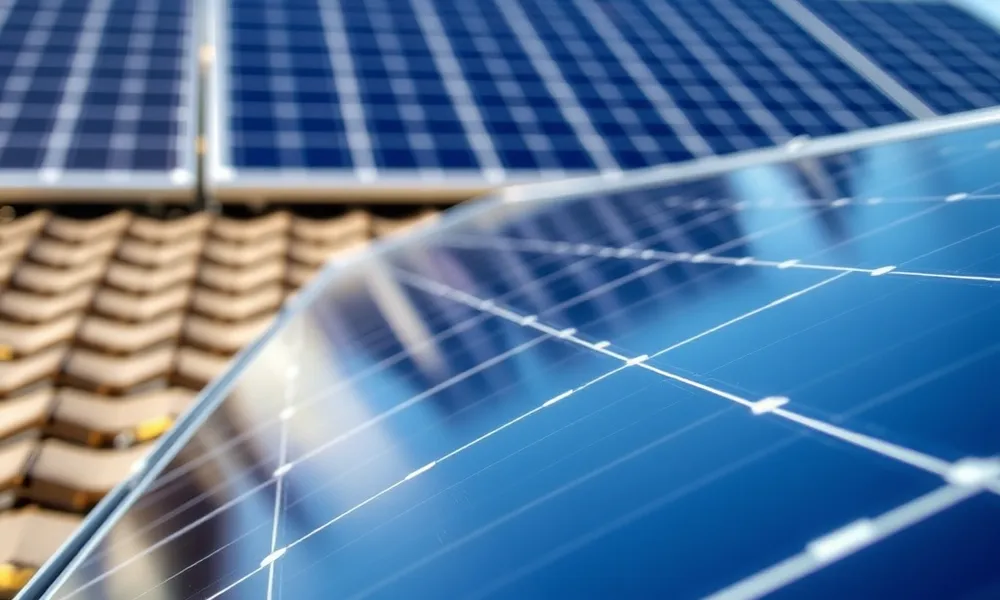
After reviewing hundreds of installs and buyer feedback, a few patterns show up again and again.
Mistake 1: Ignoring the degradation rate.
Buyers see the lower upfront cost and assume both panel types will produce the same output 20 years from now. That is not quite true. Poly degrades faster in the first year and slightly faster year over year.
The difference is small but real. Always check the manufacturer’s output warranty. Look for 25-year guarantees that end at 85% or higher, not 80%.
Mistake 2: Overlooking the temperature coefficient.
Hot climates get an advantage from poly’s better temp coefficient. Cool climates do not. If you live in the Pacific Northwest or the northern UK, you lose that natural edge.
Choose based on your actual weather, not marketing.
Mistake 3: Assuming all poly panels are the same.
Build quality varies dramatically between manufacturers. A Tier 1 brand like Trina Solar or Canadian Solar uses better encapsulation, thicker frames, and more rigorous testing than a no-name budget panel. Those details affect long-term reliability.
Stick with known brands that have been in business for at least a decade.
Mistake 4: Not accounting for snow load.
Polycrystalline panels are generally thicker and more robust than thin-film, but some budget poly modules have thinner glass (3.2 mm instead of 4.0 mm). In heavy snow areas, go with a panel that has a higher static load rating (5400 Pa or better).
Mistake 5: Forgetting about rapid shutdown compliance.
Modern electrical codes in the US (NEC 2017 and later) require module-level rapid shutdown. Most poly panels now come with compatible junction boxes, but older stock might not. Verify that your panels have built-in support for module-level power electronics if needed.
What You’ll Actually Pay – Pricing, Specs, and What’s in the Box
Let’s talk real numbers. Prices fluctuate with silicon supply and global demand, but these are reasonable estimates as of 2026.
Module-only pricing:
| Panel Type | Cost per Watt | 6 kW System (modules only) | 10 kW System |
|---|---|---|---|
| Polycrystalline (standard) | $0.60–$0.90 | $3,600–$5,400 | $6,000–$9,000 |
| Monocrystalline (standard) | $0.80–$1.20 | $4,800–$7,200 | $8,000–$12,000 |
| Monocrystalline (high efficiency) | $1.00–$1.40 | $6,000–$8,400 | $10,000–$14,000 |
Full installed system cost (US average, 2026):
For a 6 kW polycrystalline system, expect a total price of $12,000 to $16,000 before the federal tax credit. That includes panels, inverter (string or microinverters), racking, wiring, labor, and permits. The same size system using mono panels runs about $14,000 to $19,000.
What comes in the box:
Every poly module should include:
- The panel itself (obviously)
- Manufacturer datasheet with electrical specs (Voc, Isc, Vmp, Imp)
- Warranty documentation (product + performance)
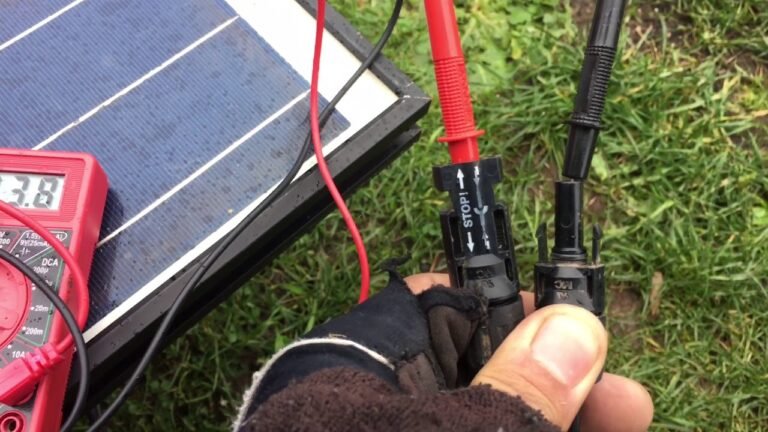
- MC4 connectors or compatible pigtails
Some brands include mounting clips or grounding washers. Most do not. Those are usually part of the racking kit.
Hidden costs to plan for:
- Permitting fees ($200, $500 depending on your city)
- Structural engineering if your roof needs reinforcement
- Electrical panel upgrade if your main panel is outdated
- Tree trimming or removal for shading issues
For a detailed breakdown of every component in a solar system and what each part costs, our piece on the main components of a solar panel goes deeper into inverters, racking, and wiring specifics.
Maintenance and Longevity – What to Expect Over 25 Years
Polycrystalline panels are low maintenance by design. No moving parts, no fluids to change. But a little care goes a long way.
What naturally happens:
Over 25 years, output gradually declines. A typical poly panel loses about 2 to 3 percent in the first year (light-induced degradation, or LID). After that, it drops roughly 0.5 to 0.7 percent per year.
At the end of 25 years, you are looking at 80 to 85 percent of the original rated power.
Compare that to a well-made mono panel, which might end at 85 to 92 percent. The gap is real but not catastrophic. A 6 kW poly system at 80% output still produces 4.8 kW.
That covers most homes’ baseload needs.
What you should actually do:
- Clean panels once or twice a year. Dust, bird droppings, and pollen block light. Rain does a decent job, but dry climates need occasional hosing. Use plain water. No soap unless necessary, no pressure washers.
- Check for microcracks after heavy snow or hail. Poly wafers are thicker than mono, which helps, but large hailstones (1 inch or bigger) can cause hidden cracks. Look for hot spots or visible damage during the annual inspection.
- Inspect wiring and junction boxes. Rodents sometimes chew through cable insulation. Loose connections in the junction box can cause arcing. Check at least every few years.
- Monitor output via your inverter app. A sudden drop in production often signals a failed panel or a string that has gone down. Catch it early and file a warranty claim.
When to worry:
If a panel shows visible delamination (bubbling or peeling of the backsheet), contact the manufacturer immediately. That can lead to moisture ingress and rapid failure. Also watch for PID (potential-induced degradation) symptoms: gradual output loss that cannot be explained by dirt or shade.
Modern poly panels with PID-resistant cells are less prone to this, but older models sometimes struggled.
A properly maintained poly system should easily last 25 years. Many panels continue producing at 70, 80% output well into their 30s. The inverter usually fails before the panels do.
Budget for an inverter replacement around year 12, 15 if you chose a string inverter.
Per the National Renewable Energy Laboratory’s long-term reliability studies, the vast majority of crystalline silicon panels (both poly and mono) perform within warranty limits for their full rated lifespan. The key variable is installation quality, not crystal type.
For the full picture on how solar panels turn sunlight into usable electricity, our guide on how solar panels generate electricity explains the physics and the components that make it happen.
FAQs People Actually Ask (Not the Fluff)
Are polycrystalline solar panels still worth buying in 2026?
Yes, for the right situation. If you have ample roof or ground space and want to save 10 to 20 percent on module costs, polycrystalline panels deliver strong value. They are not obsolete.
They are simply a budget-focused alternative with slightly lower efficiency and a slightly faster degradation rate.
How much roof space do I need for a 6 kW polycrystalline system?
Expect roughly 400 to 450 square feet of clear, unshaded roof area. That is about 65 to 75 square feet per kilowatt. A 6 kW mono system needs roughly 330 to 390 square feet.
Measure your usable south-facing roof space before you commit.
Do polycrystalline panels work well in cold or cloudy climates?
They work fine, but the temperature advantage disappears. In cold climates, mono panels often perform slightly better because their efficiency edge is not offset by heat. In cloudy conditions, both poly and mono produce about 10 to 25 percent of their rated output.
No crystalline panel handles clouds well.
How long do polycrystalline solar panels last?
Manufacturer performance warranties typically cover 25 to 30 years. Real-world data shows most poly panels still produce 80 to 85 percent of their original output at year 25. Physical lifespan is often 30 to 35 years before output drops below a useful level.
Can I mix polycrystalline and monocrystalline panels on the same system?
Technically yes, but it creates complications. Each panel type has different current and voltage curves. Mixing them on the same string reduces overall output.
If you must mix, use separate maximum power point trackers (MPPTs) or microinverters for each type.
Are there any environmental concerns with polycrystalline panels?
The manufacturing process uses less energy than monocrystalline and produces less silicon waste. That is a genuine environmental advantage. However, both types require rare metals like silver in the busbars and silicon itself produces mining waste.
Recycling options are improving. Most manufacturers now accept end-of-life panels for material recovery per EU WEEE Directive standards.
Final Verdict – Is Polycrystalline the Smart Move Right Now?
Here is the honest bottom line. For the average homeowner with adequate roof space, polycrystalline panels are a solid investment. They cost less, perform well in heat, and last for decades.
The efficiency gap with monocrystalline has narrowed to 2 to 4 percent. That difference matters on a tiny roof. On a typical suburban home, it is often irrelevant.
If you are building a ground-mounted array or covering a large commercial roof, polycrystalline is probably the most economical choice available. The cost savings per kilowatt-hour delivered over 25 years are real and measurable.
But if you are optimizing for a small roof, maximum long-term output, or curb appeal, monocrystalline wins. There is no shame in paying extra for those advantages.
The best solar panel is the one that fits your roof, your budget, and your goals. Polycrystalline panels are not the flashiest option. They are not the most efficient.
But for tens of thousands of homeowners, they are the smartest financial decision. That counts for a lot.