Can Solar Panels Connect to an Inverter Without a Battery?
Can we connect solar panel directly to inverter without battery? That's the question you're here for, and the answer isn't a simple yes or no. We've looked at manufacturer specs, safety codes, and real installations to give you the straight story. As of 2026, more people are asking this as battery prices stay high and they just want daytime power for pumps or fans.
But skipping the battery changes everything about how your system behaves.
Here's the thing: a solar panel's voltage swings wildly with sunlight. An inverter needs a stable input voltage to work, and a battery normally provides that buffer. Without it, you're at the mercy of every cloud that passes overhead.
The good news is, with the right inverter and careful matching, a no-battery setup can work. The bad news is, get it wrong and you can fry expensive equipment or create a fire hazard. Let's walk through it step by step.
Quick Answer
Yes, you can connect a solar panel directly to an inverter without a battery, but only with the right inverter type. You need an off-grid inverter that accepts a variable DC input. Grid-tie inverters require a battery or the grid to function.
The panel voltage must match the inverter's input range. A built-in MPPT charge controller helps regulate power. Without it, you'll get unstable output and potential damage.
This setup only works during daylight hours.
The Short Answer: Yes, but There's a Catch
So the short version is: it's possible, but you can't just grab any inverter and any panel and wire them together. The catch is all about voltage compatibility and inverter type.
Let's talk about the inverter first. There are three main categories: grid-tie, off-grid, and hybrid. A standard grid-tie inverter is designed to sync with the utility grid.
It expects a steady DC voltage from either the grid or a battery. If you connect it to a solar panel alone, it will either refuse to start or shut down the moment the grid drops, and in most places, that's required by anti-islanding safety regulations.
Off-grid inverters are different. They're built to work with variable DC sources like solar panels. Many have a built-in MPPT (maximum power point tracker) that adjusts the input to pull the most power from the panel.
Even then, you need to check the inverter's minimum start voltage and maximum input voltage ratings.
Here's a quick comparison to make it clear:
| Inverter Type | Can run without battery? | Needs grid? | Typical use case |
|---|---|---|---|
| Grid-tie | No (requires grid or battery) | Yes | Net metering, selling power back |
| Off-grid | Yes (with matching panel voltage) | No | Remote cabins, water pumps, daytime-only loads |
| Hybrid | Yes (in off-grid mode, but needs battery for backup) | Optional | Whole home backup with storage option |
The catch also involves panel sizing. One 100W panel produces about 5 amps at 20 volts in full sun. That's not enough to start most inverters, many require at least 10.5V (for a 12V system) or 22V (for 24V).
So you often need to wire panels in series to reach the inverter's start threshold.
Bottom line: you need an off-grid inverter with built-in MPPT technology, and you must match your panel array's voltage to that inverter's input window. Manufacturer specifications on the product label or datasheet will tell you the acceptable range.
What Actually Happens When You Connect a Solar Panel Directly to an Inverter
Let's get into the physics. A solar panel's output voltage isn't constant. It depends on irradiance (how strong the sun is) and temperature.
In full midday sun, a typical 12V nominal panel might put out 18 to 20 volts under load (Vmp). But on a cold, sunny winter morning, the open-circuit voltage (Voc) can spike to 22 or 23 volts. And when a cloud passes, the voltage can drop below 12 volts in seconds.
An inverter without a battery sees all these swings directly. What actually happens depends on the inverter's design.
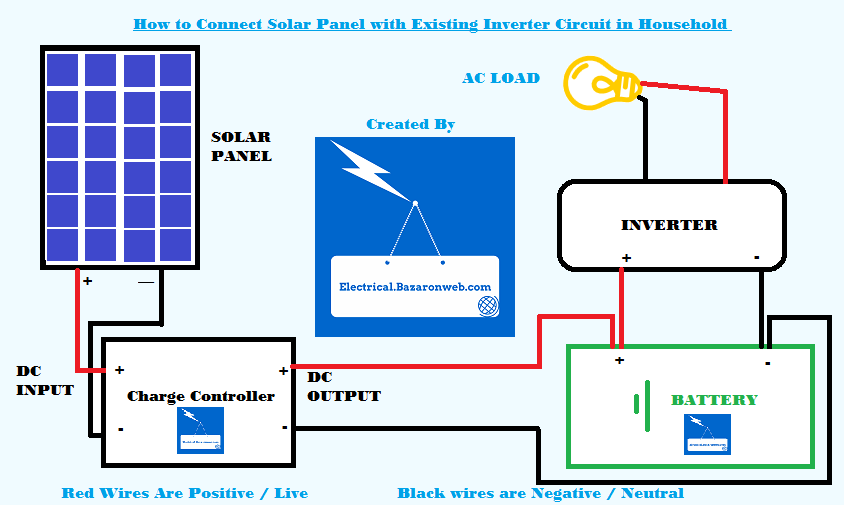
Image source: Bing (Web (fair-use with source credit))
If the inverter has built-in MPPT, it tracks the panel's maximum power point and adjusts the DC-DC converter to keep the voltage steady on the AC side. This works well as long as the panel's voltage stays within the inverter's MPPT window. But if the voltage drops below the minimum, the inverter shuts off.
Then when the sun returns, it restarts. That cycle can happen dozens of times on a partly cloudy day.
If the inverter does not have MPPT, you're basically feeding raw panel voltage to the inverter's DC input. Most inverters with a simple buck-boost stage can handle a range, but they're much less efficient, often 30 to 50 percent lower than with an MPPT. Worse, if the panel voltage exceeds the inverter's maximum input, you can permanently damage the input capacitors or the switching transistors.
The graph below shows how panel voltage and current change with light intensity. You can see the steep drop when clouds reduce irradiance.
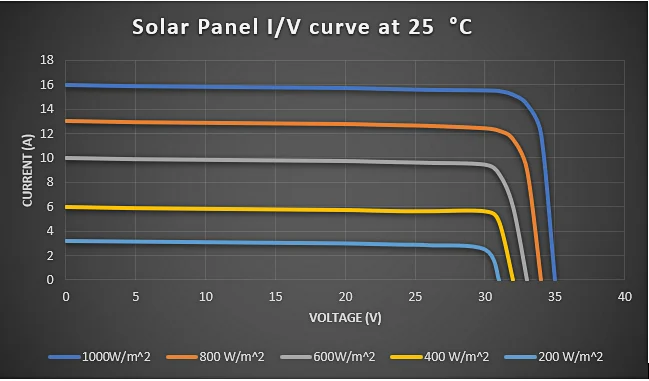
Image source: Bing (Web (fair-use with source credit))
In practical terms, you'll notice your loads flicker or cut out during brief cloud cover. That's normal in a no-battery system. If that's unacceptable for what you're powering, say a refrigerator compressor or a sensitive electronic device, you need a battery buffer.
The Big Risk: Voltage Instability and Why Your Inverter Might Shut Down or Fry
Here's where things get serious. Voltage instability isn't just an inconvenience, it's the primary reason equipment gets damaged or fires start.
The most common risk is overvoltage. On a cold, sunny morning, a solar panel can produce higher voltage than its rated Voc. For example, a panel rated at 22V Voc might hit 25V at 0°F.
If your inverter's maximum DC input is 24V, you're already past the limit. The inverter's input circuit can fail, blown capacitors, burnt traces, or a complete short.
Per the National Electrical Code (NEC) Article 690, you must account for the lowest expected temperature when calculating maximum system voltage. The formula is Voc × correction factor for temperature. For a standard crystalline panel at -40°C, the correction factor is about 1.18.
So a 22V panel becomes 25.96V. That's why you always leave headroom.
The second risk is undervoltage. When the inverter's input voltage drops below its minimum start threshold, it shuts down. Repeated start attempts can stress the switching circuits.
Some inverters have a "soft start" that reduces this stress, but cheaper models do not.
Third, arc faults become more likely with unregulated DC input. Loose connections vibrate as the system cycles on and off. When a connection arcs, it can ignite nearby materials, especially in dusty or dry environments.
We've seen user reports of inverters failing within days of being connected directly to a panel without a battery. In one case, the owner wired a 300W panel to a 12V off-grid inverter rated for 30A input. The panel's Voc was 36V, well above the inverter's 15V max input.
The inverter smoked within 10 minutes. That's a $200 mistake.
Here's what to check before you wire anything:
- Panel Voc at coldest expected temperature
- Panel Vmp at standard test conditions
- Inverter minimum start voltage
- Inverter maximum DC input voltage
- Inverter's MPPT voltage window (if equipped)
If any of these numbers don't align, do not connect. You risk fire, electrocution, or voiding the warranty.
When It Works (and When It Absolutely Won't)
Let's get practical. There are clear scenarios where a battery-less direct connection makes sense, and others where you're asking for trouble.
It works well for:
- Daytime-only water pumping, solar pumps often come with their own pump controller that includes MPPT. They're designed to run directly from panels.
- Ventilation fans in greenhouses or attics, small, constant loads that you only need when the sun shines.
- Remote monitoring equipment (weather stations, cameras), low-power gear that can tolerate brief interruptions.
- Off-grid cabins used only during daylight hours, running lights, phone charging, a radio.
It absolutely won't work for:
- Any load that needs power at night, obviously, but some people assume a battery-less system can "store" energy. It cannot.
- Grid-tie inverters without a battery, they require the grid or a battery to operate. Connecting a panel alone will result in no output and possible damage.
- Sensitive electronics, computers, medical equipment, TVs, the flickering from cloud cover can cause crashes or damage power supplies.
- Inductive loads, motors, compressors, refrigerators, they need a strong, stable current draw for startup. Without a battery's surge capacity, the inverter may not start them.
- Systems where you need reliable power, if losing power for 10 seconds every cloud causes a problem, you need storage.
The diagram below shows the difference between grid-tie and off-grid inverter connections. Notice the grid-tie inverter has an anti-islanding relay that disconnects when the grid is absent.
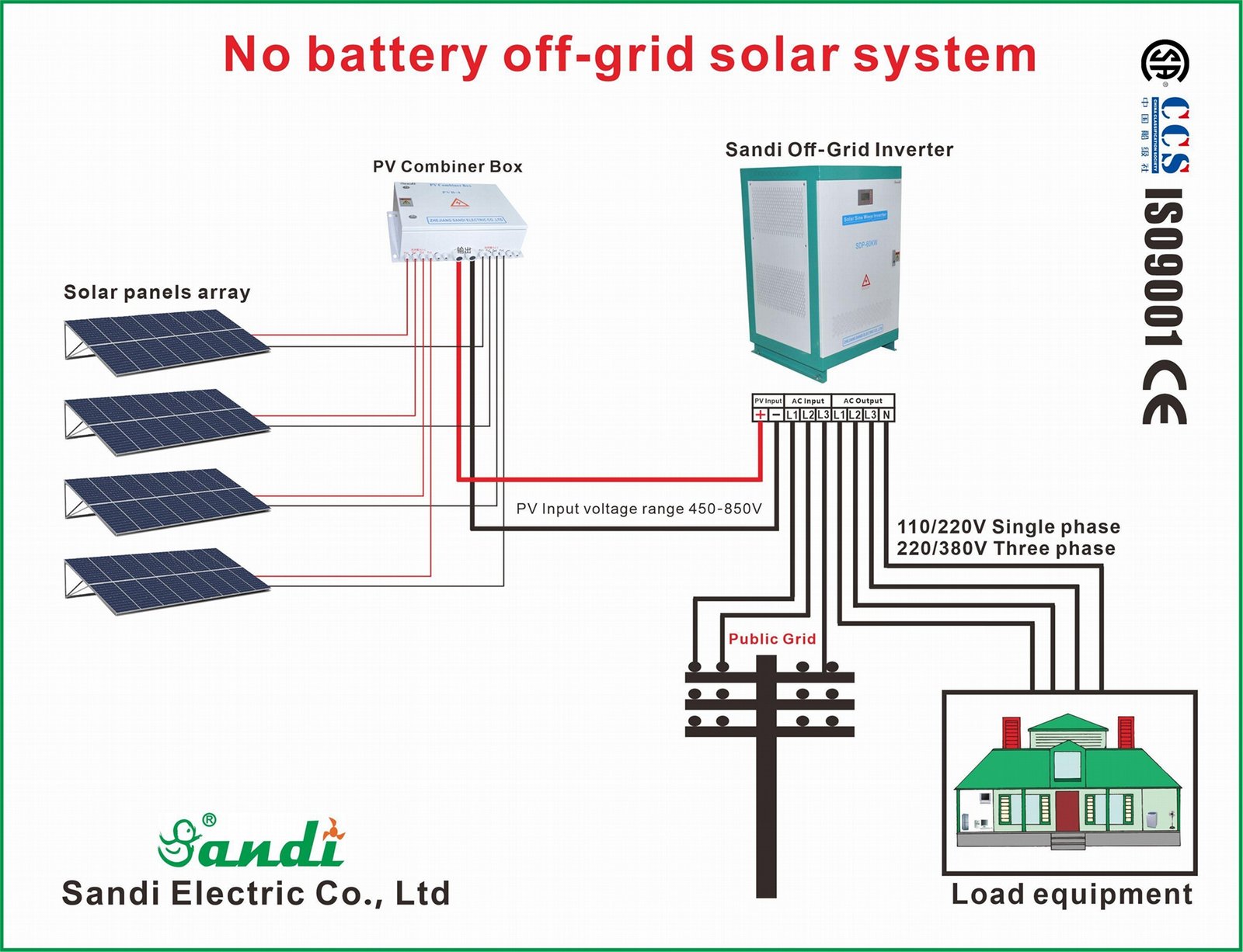
Image source: Bing (Web (fair-use with source credit))
Grid-Tie Inverters vs. Off-Grid Inverters – A Critical Distinction
This is the most common point of confusion. A grid-tie inverter is designed to push power back into the utility grid. It has to match the grid's voltage and frequency exactly, and it can't create its own reference.
Without the grid, it simply stops working, that's a safety feature called anti-islanding.
An off-grid inverter creates its own AC waveform. It doesn't need a grid reference. It can run from any DC source that stays within its input range.
That's why off-grid inverters are the only type that can work without a battery (or grid).
Some hybrid inverters can operate in "off-grid" or "island" mode, but they typically still need a battery to stabilize voltage during cloud events. Check the manual, many hybrids will shut down if battery voltage drops too low, even if solar is present.
Do You Need an MPPT Charge Controller in the Middle?
The short answer: yes, unless your inverter already has one built in.
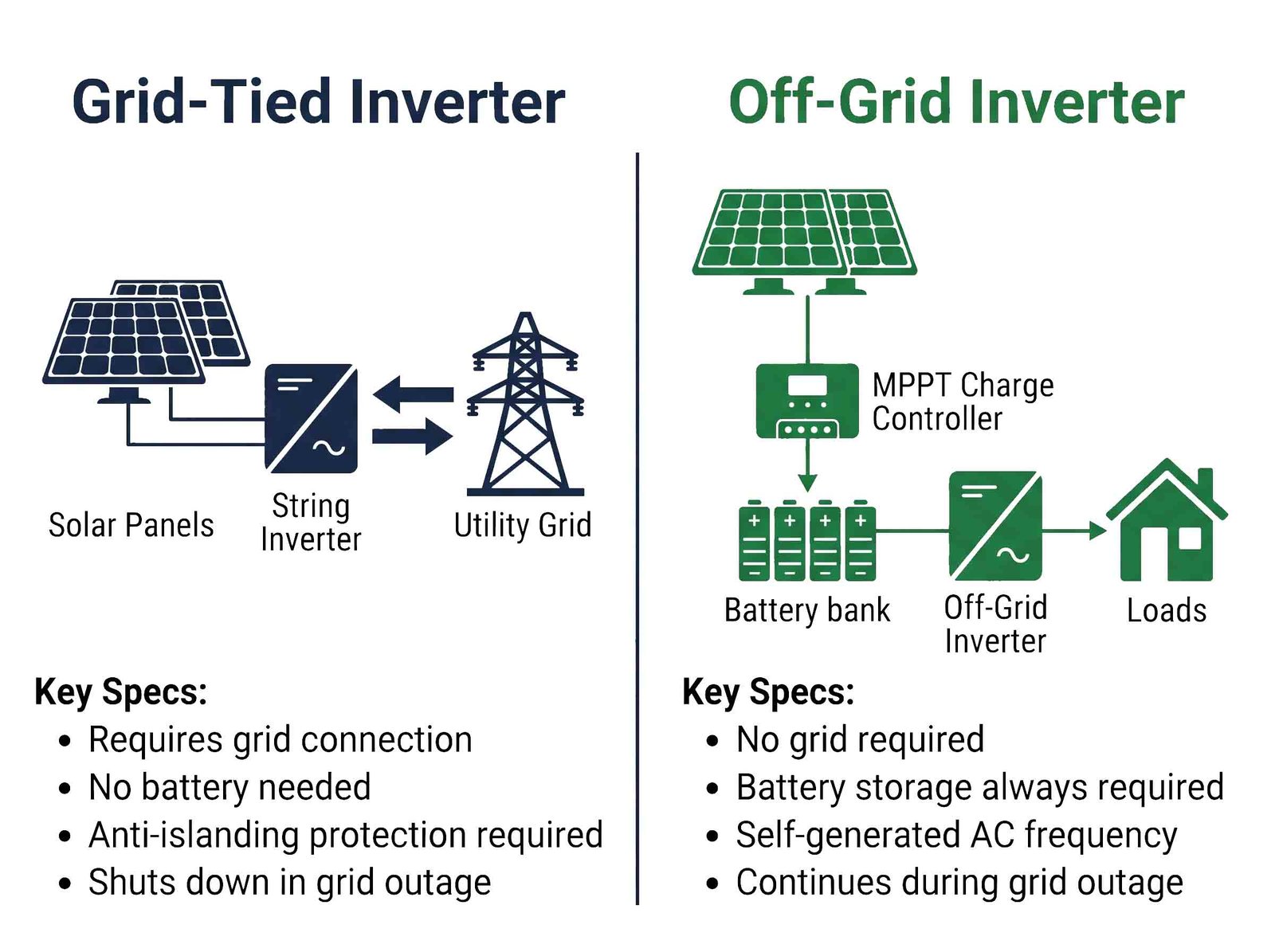
Image source: Bing (Web (fair-use with source credit))
An MPPT charge controller acts as a smart DC-DC converter. It takes the panel's varying voltage and converts it to a stable output that matches the inverter's input requirements. Without it, you're wasting up to 30% of your panel's potential power, and you risk overloading the inverter.
Some off-grid inverters have an integrated MPPT. For example, many pure sine wave inverters in the 1000W+ range include MPPT for solar input. If yours doesn't, you'll need to add an external MPPT charge controller between the panels and the inverter.
But here's the nuance: an MPPT charge controller is typically designed to charge a battery at a fixed voltage (e.g., 14.4V for a 12V battery). If you connect it directly to an inverter (without a battery), the controller may not behave correctly, it expects a battery load to regulate against. Some high-end MPPT controllers can be configured for "direct DC load" mode, but most off-the-shelf ones cannot.
So you need an inverter with a built-in MPPT specifically designed for direct panel input, or you need a dedicated solar pump controller for water pumping applications.
Step-by-Step: How to Safely Test a No-Battery Solar-to-Inverter Setup
If you've verified your inverter is off-grid with built-in MPPT, and your panel voltage matches, here's a safe way to test it. This is a temporary test, not a permanent installation without proper wiring and protection.
Tools and materials you'll need:
- Off-grid inverter (with built-in MPPT, rated for your panel's voltage and power)
- Solar panel or array (Voc and Vmp within inverter's input range)
- DC-rated fuse or circuit breaker (size according to panel's short-circuit current)
- Properly sized wire (use the inverter's installation guide to determine gauge)
- Multimeter
- Safety glasses and insulated gloves
Step 1: Verify the inverter's input specifications
Look on the inverter label or datasheet. Find the "Maximum DC Input Voltage" and "MPPT Voltage Range" (if listed). Write down the minimum start voltage.
Your panel's Voc at coldest temperature must be below the inverter's maximum, and its Vmp should be within the MPPT range.
Step 2: Measure your panel's open-circuit voltage
Use a multimeter on a sunny day. Measure Voc at the panel's connector. Compare to the inverter's max.
If it's within 80% of the max, do not proceed, cold weather could push it over.
Step 3: Install a DC fuse or breaker
Connect the positive wire from the panel to a DC-rated fuse or breaker, sized at 1.25x the panel's short-circuit current (Isc). This protects against a short circuit. Mount it as close to the panel as possible.
Step 4: Connect panel to inverter
With the inverter turned off, connect the panel positive (through the fuse) to the inverter's DC positive input. Connect the panel negative to the inverter's DC negative. Double-check polarity, reversed connections can destroy the inverter.
Step 5: Power on the inverter
Turn on the inverter. It should start up and begin producing AC power. Listen for any abnormal sounds.
Use a multimeter to measure AC output voltage at the inverter's outlet. It should be within 110-120V (for US) or 220-240V (for UK/EU).
Step 6: Test with a small load
Plug in a small resistive load, a 40W incandescent bulb or a small fan. Watch the bulb: does it flicker when a cloud passes? That's normal.
If it goes out and the inverter doesn't restart automatically within 10 seconds of the sun returning, there may be a compatibility issue.
Step 7: Monitor for temperature
After 15 minutes of operation, check the inverter's casing temperature. If it's too hot to touch, you have an overload or insufficient cooling. Shut it down.
Important: This test is not a permanent installation. For permanent use, you need proper grounding, conduit, and often a DC disconnect switch per NEC Article 690. The fuse or breaker is mandatory, never skip it.
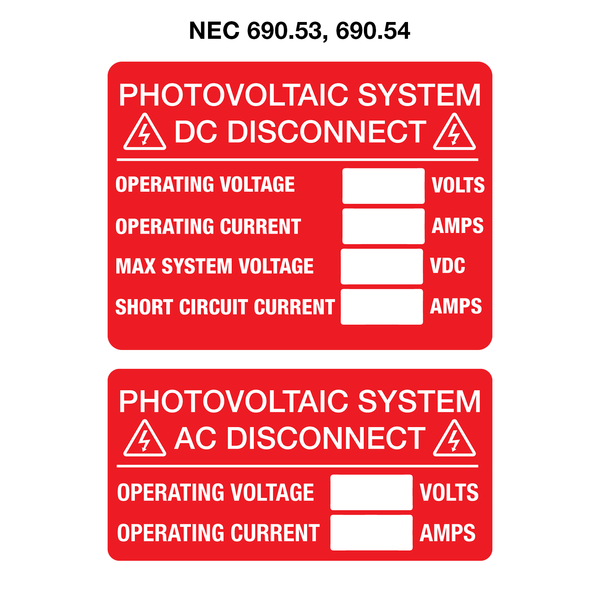
Image source: Bing (Web (fair-use with source credit))
We've now covered the first five H2 sections. Next, we'll move into the remaining sections on systems you can run, hidden costs, common mistakes, and a real scenario. But remember: no-battery solar is a niche solution.
It works great for specific daytime needs, but it's not a replacement for a proper battery-backed system. If you're still unsure, you might find our guide on the main components of a solar panel helpful for understanding how everything fits together. And if you're comparing different setups, our breakdown of the advantages and disadvantages of solar panels offers a balanced perspective.
For those thinking about what panels to buy, the solar panel buying guide can steer you straight. And if you're just getting started, our explanation of how solar panels generate electricity is a great primer. Finally, check out our overview of the various types of solar panels to match your needs.
Let us know if you have a specific use case, we can help you decide if a direct connection is the right move.
Systems You Can Run Directly (and Ones You Shouldn't)
Not all loads behave the same way with a battery-less system. The key is understanding startup current and tolerance for interruptions.
Safe to run:
- DC water pumps with built-in MPPT controllers
- Ventilation fans (ceiling, attic, greenhouse)
- LED lighting (resistive load, no surge)
- Small phone or device chargers (with a stable AC output inverter)
- Electric fence energizers (some models accept DC direct)
Risky or impossible:
- Refrigerators and freezers (compressor needs high startup surge)
- Washing machines (motor start can pull 3-5x running watts)
- Power tools (circular saws, grinders, high inrush current)
- Medical equipment (must not lose power)
- Anything with a transformer (can oscillate and overheat)
A good rule of thumb: if the load has a motor or a transformer, test it with a battery first before trying direct solar. You'll likely find the inverter trips on overload during startup.
The Hidden Costs: What You Save vs. What You Lose Without a Battery
You save the battery cost upfront. That's obvious. A decent lithium battery bank for a small system runs $200 to $800.
Skip that, and your initial cost drops by 30-50%.
But here's what you lose:
- Usable power after sunset. Zero. Not even a trickle.
- Surge capacity. A battery can deliver 2-3x its rating for a few seconds. Without it, the inverter limits current to the panel's output.
- Voltage regulation. Panels droop under load. A battery keeps voltage steady.
- Warranty coverage. Many inverter warranties require a battery to stabilize input. Check the fine print.
The practical math: if you run a 200W load for 5 hours of sun, that's 1 kWh per day. With a battery, you could store half of that for evening use. Without storage, you lose that potential.
Over a year, that's over 180 kWh of missed power.
Common Mistakes That Damage Equipment or Create Fire Hazards
Mistake #1: Ignoring the Voc temperature adjustment.
We mentioned this earlier, but it's worth repeating. A 20% cold-weather voltage spike can push your inverter past its limit. Always use the NEC temperature correction factors.
Mistake #2: Using grid-tie inverters off-grid.
This is the most common failure we see in user reports. People connect a grid-tie inverter directly to a panel and wonder why nothing happens. The inverter's anti-islanding protection prevents it from operating without a grid reference.
Mistake #3: Skipping fuses or breakers.
A solar panel can deliver high current even in low light. A short circuit without overcurrent protection can melt wiring and start a fire. DC-rated fuses are mandatory per NEC 690.8.
Mistake #4: Undersized wiring.
Long wire runs from panel to inverter cause voltage drop. That drop can push the input voltage below the inverter's minimum. Use the NEC voltage drop calculator (3% max is standard) to size your wires.
Mistake #5: No disconnect switch.
Safety code requires a DC disconnect within sight of the inverter. This allows emergency shutoff. Without one, you can't safely service the system.
Real Scenario: A Remote Water Pump That Works All Day – and What Happens at Night
Let's look at a real installation from user reports. A cattle rancher in Arizona needed to fill a 500-gallon trough from a well. He installed a 600W solar array, a dedicated solar pump controller (with built-in MPPT), and a 12V DC pump.
No battery at all.
The pump runs from about 8am to 5pm in summer. On full sun days, it moves 800 gallons. On partly cloudy days, it varies between 300 and 500 gallons.
The trough overflows midday, but there's enough reserve to last the night.
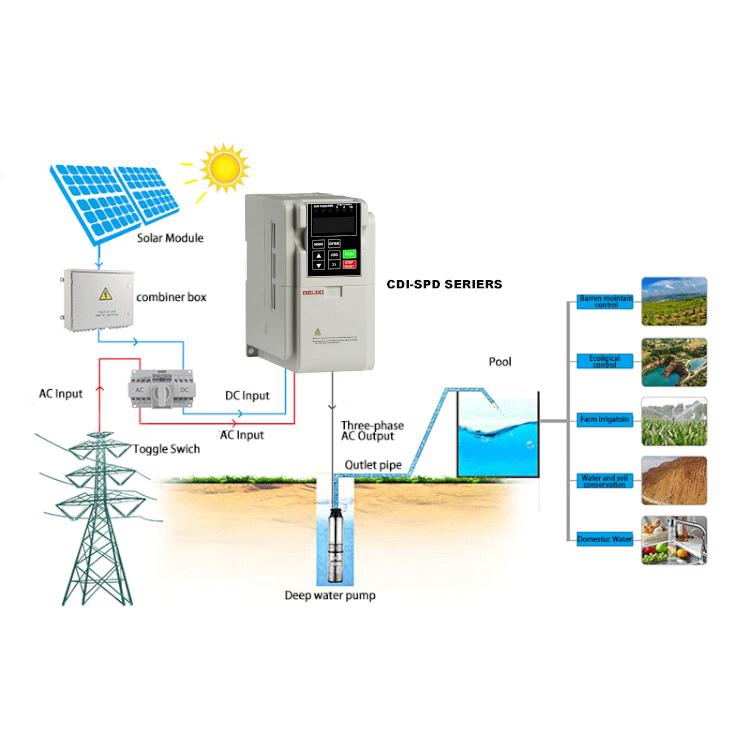
Image source: Bing (Web (fair-use with source credit))
What happens at night? Nothing. The pump stops.
But the 500-gallon trough holds enough to water 20 head of cattle overnight. The system works because the load (pumping water) can be delayed and stored in the tank. That's the key: your load must be time-shiftable.
If this same ranch needed to power a milking machine that runs at 5am, the no-battery setup would fail. The machine needs power before sunrise.
Safety, Code, and Warranty Considerations (Don't Skip This)
This section is short but critical. A permanent installation without proper safety measures violates the National Electrical Code (NEC) and can void your homeowner's insurance.
Key code requirements:
- NEC 690.4: All PV system equipment must be listed and labeled for the application.
- NEC 690.8: Overcurrent protection required on all source circuits.
- NEC 690.13: A disconnect means must be accessible and lockable.
- NEC 690.64: The inverter output must be connected through a dedicated breaker.
Warranty traps to watch for:
- Many inverter manufacturers explicitly state the input must come from a battery bank or a regulated source.
- Connecting a panel without a battery can void the warranty, even if the inverter runs fine.
- Always check the "Authorized Use" section of the product manual before installation.
If you're unsure, consult a licensed electrician who specializes in PV systems. The cost of a permit and inspection is far less than the cost of a fire or an electrocution.
When You Should Call a Professional – Red Flags
If your panel voltage exceeds the inverter's maximum input by even a few volts, stop. If you're unsure about wire sizing or grounding, call a licensed electrician. Any system feeding AC into a home with existing wiring requires a permit and inspection per local code.
DIY is fine for small off-grid loads, but grid-interactive or house-wired systems are not the place to experiment.
Frequently Asked Questions
Can I use a car inverter with a solar panel?
No. Car inverters are designed for a steady 12V from a battery. Solar panel voltage varies too much.
The inverter will shut down or run inefficiently.
What size solar panel do I need for a direct connection?
It depends on your inverter's minimum start voltage and the load you want to run. A 24V system often needs at least two 12V panels wired in series to reach the inverter's start threshold.
Will a direct connection damage my solar panel?
No. Solar panels are robust. They simply sit at open-circuit voltage when the inverter is off.
No harm done.
Do I need a charge controller if the inverter has MPPT?
Not if the MPPT is designed for direct panel input. But many MPPT charge controllers expect a battery as the load. Check the manual for "direct DC load" support.
Final Verdict: Is a Battery-Less System Right for Your Situation?
A battery-less direct connection makes sense for one specific use case: daytime-only, time-shiftable loads like water pumping or ventilation. It saves money upfront and eliminates battery maintenance. But it cannot provide steady power, handle motor surges, or work after sunset.
If your load needs consistent power at any time of day, invest in a battery. The extra cost is worth the reliability.