Solar Panels in Arkansas: Worth the Cost?
If you live in Arkansas and you're wondering whether solar panels actually pay off here, you're asking the right question. The answer isn't a simple yes or no, because your situation, your electric bill, your roof, your utility company, changes everything. That's exactly what we're going to walk through together.
The truth is, Arkansas sits right in the middle of the solar equation. Your electricity rates are below the national average (around $0.11 to $0.12 per kWh as of 2026), but you also get decent sun, roughly 4.5 to 5.0 peak sun hours per day depending on where you are in the state. The 30% federal tax credit is still fully in effect, and that's a game changer.
But Arkansas's net metering rules have shifted in recent years, and that's where most people get confused. Let's break it down step by step so you can actually figure out if solar makes sense for your home.
Quick Answer: Is Solar Worth It in Arkansas? (The Short Version)
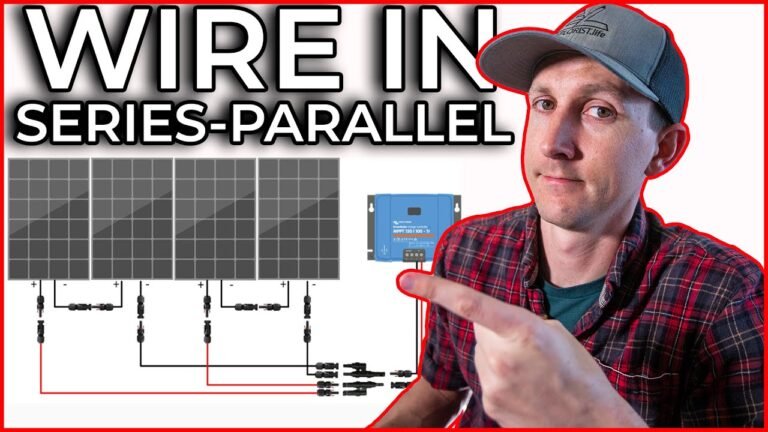
Image source: YouTube / PreReal (YouTube thumbnail (fair-use with source credit))
For most Arkansas homeowners, solar panels are worth it. But only if certain conditions line up.
Here's the quick breakdown. Solar works well if you pay $100 or more per month for electricity, you own your home, and you plan to stay for at least 7 to 10 years. If your roof is in good shape and faces south or west with minimal shade, you're in a strong position.
If you're on a tight budget, leasing or a loan can still work. But cash purchase gives you the best long-term returns.
If you move frequently, have heavy tree cover, or your roof needs replacement soon, it's probably better to wait.
The short answer: it's worth it for the right household. Let's find out if that's you.
What Makes Arkansas Different? — Lower Rates, Net Metering Shifts, and Weather
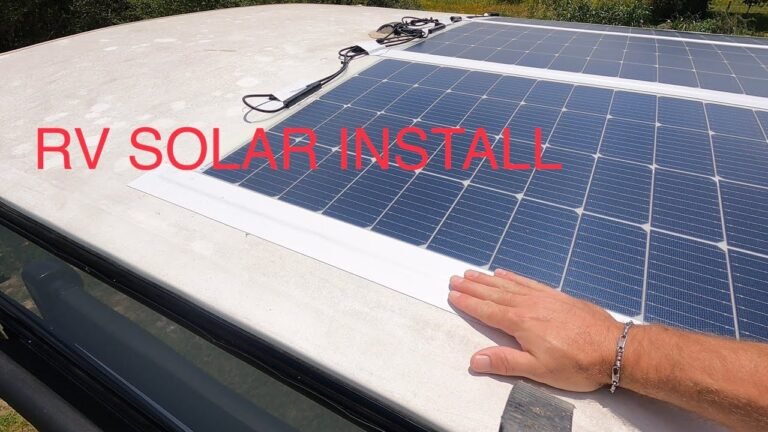
Image source: YouTube / GIS & RS Professionals (YouTube thumbnail (fair-use with source credit))
Arkansas isn't California or Texas when it comes to solar. The state has its own quirks that change the math. Let's look at the three big ones.
Electricity Rates Are Below the National Average
Your electric rate matters more than almost anything else. The lower your rate, the less you save per kilowatt-hour you generate. Arkansas averages around 11 to 12 cents per kWh.
That's about 15% below the national average. It means your payback period will be longer than someone in Massachusetts paying 25 cents per kWh.
But here's the thing. Even at 11 cents, if you use a lot of electricity, the savings add up. A typical Arkansas home uses around 1,200 to 1,500 kWh per month.
That's a $130 to $180 monthly bill. Solar can knock off 60% to 90% of that.
Net Metering Changed in 2019
This is the big one most people miss. In 2019, Arkansas passed Act 464, which changed how net metering works. Before that, utilities paid you the full retail rate for excess power you sent back to the grid.
Now, many utilities credit you at a lower rate, often the avoided cost rate, which is significantly less.
What does that mean for you? It means oversizing your system to bank credits is less valuable than it used to be. You want to size your system to match your actual usage, not exceed it by much.
Some utilities and cooperatives still have better terms, but you need to check your specific provider.
Weather and Climate Factors
Arkansas gets hail, storms, and occasional tornadoes. That matters for panel durability and insurance. Modern solar panels are rated for 1-inch hail at moderate speeds, but severe storms can cause damage.
Your homeowner's insurance should cover it, but you'll want to confirm.
On the positive side, Arkansas has decent sun. The southwest part of the state gets closer to 5 peak sun hours per day. The northeast gets closer to 4.5.
Either way, it's enough to make solar work.
Step 1: Check Your Electric Bill and Annual Usage
This is where you start. Not with a sales pitch or a quote. With your actual numbers.
Find Your Annual Kilowatt-Hour Usage
Look at your electric bill. Find the total kilowatt-hours (kWh) used over the last 12 months. If you don't have a full year, look at a typical month and multiply by 12.
Most Arkansas homes use between 12,000 and 18,000 kWh per year.
Here's a quick table to help you gauge where you stand:
| Annual Usage (kWh) | Monthly Bill (est.) | Solar Potential |
|---|---|---|
| Under 8,000 | Under $80 | Low savings, long payback |
| 8,000 – 12,000 | $80 – $120 | Moderate, worth exploring |
| 12,000 – 18,000 | $120 – $180 | Strong savings potential |
| 18,000+ | $180+ | Excellent candidate |
Know Your Rate Structure
Is your utility using a flat rate or a tiered rate? Some Arkansas utilities charge more per kWh once you pass a certain threshold. If you're in a higher tier, solar saves you even more because you're offsetting your most expensive power.
Look for Time-of-Use Plans
Some utilities in Arkansas use time-of-use rates, where electricity costs more during peak hours (usually late afternoon and early evening). Solar panels produce the most power during those same peak hours, which makes them even more valuable on these plans. If you're on a time-of-use rate, solar tends to pay off faster.
Step 2: Evaluate Your Roof — Age, Orientation, and Shading

Image source: YouTube / JF Legaspi (YouTube thumbnail (fair-use with source credit))
Your roof is the single biggest physical factor in whether solar works for you. Let's check the three main things.
Roof Age and Condition
If your roof is approaching 15 years old or more, you need to think about replacement before installation. Solar panels last 25 to 30 years. You don't want to install them on a roof that will need replacing in 5 years.
Doing that means paying to remove and reinstall the panels, which can cost thousands.
The best approach is to replace your roof first, then install solar. This also gives you a chance to add any structural reinforcements if needed.
Roof Orientation
South-facing roofs are ideal for solar in Arkansas. They capture the most sunlight throughout the day. West-facing roofs are a solid second choice, especially if you're on a time-of-use rate, because they produce power in the late afternoon when rates are highest.
East-facing roofs work but produce less total energy. North-facing roofs are generally not worth it unless you have no other option.
Shading
Arkansas is a wooded state. Heavy tree cover can cut your solar production by 30% to 50% or more. You need to look at your roof's exposure.
If trees shade your roof for most of the day, especially between 10 AM and 4 PM, solar will struggle to pay off.
You can trim or remove trees, but that's an added cost. Some installers offer shade analysis using tools like Solmetric or SunEye, which give you a precise reading of your roof's solar potential. Ask for one before you commit.
Step 3: Understand the Real Costs and Incentives (30% Federal Credit + State Rules)
This is where most people get confused. Let's clear it up.
What Does a Solar System Cost in Arkansas?
A typical residential system in Arkansas runs between 6 kW and 10 kW. The cost before incentives usually falls between $2.50 and $3.50 per watt. That means:
| System Size | Cost Before Tax Credit | Cost After 30% Federal Credit |
|---|---|---|
| 6 kW | $15,000 – $21,000 | $10,500 – $14,700 |
| 8 kW | $20,000 – $28,000 | $14,000 – $19,600 |
| 10 kW | $25,000 – $35,000 | $17,500 – $24,500 |
These are rough estimates. Your actual price depends on your installer, your roof complexity, and your equipment choices.
The Federal Solar Tax Credit (ITC)
This is the biggest incentive. You get 30% of your total system cost back as a federal tax credit. It's not a deduction.
It's a dollar-for-dollar reduction in what you owe the IRS. As of 2026, this credit is still fully in effect.
You need tax liability to claim it. If you owe $5,000 in federal taxes, and your system costs $20,000, you get a $6,000 credit. That covers your full tax bill and leaves $1,000 that rolls over to the next year.
Arkansas State Incentives
Arkansas does not offer a state-level tax credit for solar. There are no significant state rebates either. That's a disadvantage compared to states like New York or Colorado.
But some local utilities and electric cooperatives offer small incentives or low-interest loans. You need to check with your specific utility.
Solar Renewable Energy Certificates (SRECs)
Arkansas does not have a renewable portfolio standard that creates a market for SRECs. So you won't earn extra income from selling credits. The only financial benefit is the power you save and the federal tax credit.
Financing Options
You have three main choices. Cash purchase gives you the best long-term savings. Solar loans let you spread the cost over 10 to 20 years, but you'll pay interest.
Leases and power purchase agreements (PPAs) require no upfront cost, but you don't own the system, and your savings are smaller.
For most Arkansas homeowners, a cash purchase or a low-interest solar loan is the best path. Leases and PPAs are better for people who can't afford the upfront cost or don't want to manage maintenance.
Step 4: Compare Your Financing Options — Cash, Loan, Lease, or PPA
How you pay for solar changes everything. Your long-term savings, your monthly cash flow, and even your home's resale value all depend on this choice.
Cash Purchase
Paying cash is the simplest option. You buy the system outright. You own it from day one.
You get the full 30% federal tax credit applied to your taxes. And your electricity savings start immediately.
The downside is the upfront cost. A typical system runs $15,000 to $25,000 after the tax credit. That's a big chunk of cash.
But over 25 years, cash buyers save the most by far.
Solar Loan
A solar loan lets you spread the cost over 10 to 20 years. You still own the system and get the tax credit. But you pay interest, which reduces your net savings.
Interest rates vary. Some loans offer 0% down with rates around 4% to 8%. Your monthly loan payment should be lower than your old electric bill for the deal to make sense.
If the payment is higher, you're not saving money.
Lease and Power Purchase Agreement (PPA)
With a lease, you don't own the panels. A third party installs and maintains them. You pay a fixed monthly fee for the power they produce.
With a PPA, you pay per kilowatt-hour generated.
No upfront cost is the main appeal. But you don't qualify for the federal tax credit (the installer gets it). Your long-term savings are smaller.
And when you sell your home, buyers may be hesitant to take over the lease.
| Financing Option | Upfront Cost | Ownership | Monthly Savings | Best For |
|---|---|---|---|---|
| Cash | High | Full | Highest | Homeowners with savings, long-term plans |
| Loan | None or low | You own it | Moderate (net of loan payment) | Homeowners who want ownership without full cash upfront |
| Lease / PPA | None | Installer owns | Lower, fixed | Homeowners who don't want maintenance or can't use the tax credit |
For most Arkansas homeowners, a cash purchase or a low-interest loan is the best path. Leases are worth considering only if you can't use the federal tax credit or you plan to move soon.
Step 5: Know Your Utility’s Net Metering Policy (It Varies by Co-op and Provider)
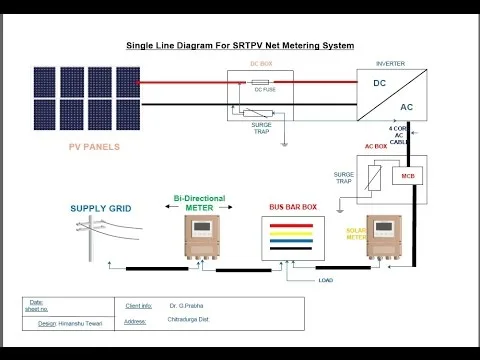
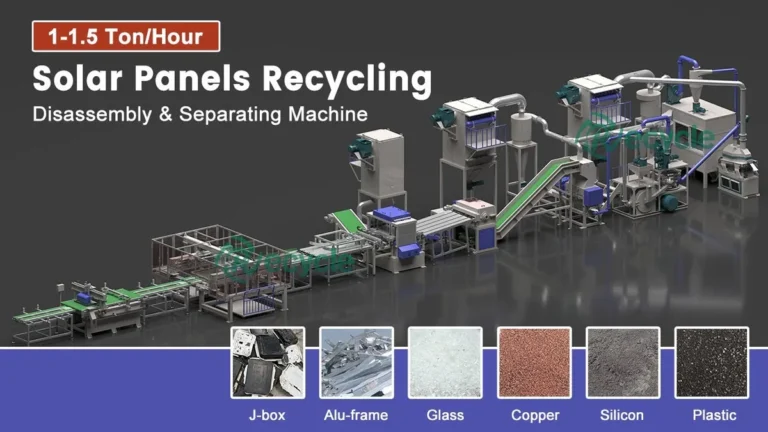
Image source: YouTube / Sustainable Every Day (YouTube thumbnail (fair-use with source credit))
This step trips up more people than any other. Arkansas's net metering rules are not uniform. Your electric co-op may have different terms than Entergy or SWEPCO.
What Is Net Metering?
Net metering is the agreement that lets you send excess solar power to the grid and get credit for it. When your panels produce more than you use, the extra flows to the utility. You earn credits that offset power you pull later, like at night.
Arkansas's Current Rules
Act 464 of 2019 changed the game. Before that, utilities credited you at the full retail rate. Now, many utilities credit excess generation at a lower rate.
The exact rate depends on your utility. Some pay the avoided cost rate, which can be as low as 2 to 4 cents per kWh.
What does that mean? It means you should not oversize your system. Size it to cover your annual usage, not exceed it.
The old strategy of oversizing to bank credits is largely dead in Arkansas.
Check Your Specific Utility
Call your utility or check their website. Ask these questions:
- What rate do you pay for excess solar generation?
- Is it net metering (retail rate) or net billing (avoided cost)?
- Are there caps on system size?
- Do you require a separate meter or interconnection fee?
Some cooperatives have friendlier policies. Others are more restrictive. You need to know before you sign a contract.
What If You Have a Co-op?
Arkansas has many electric cooperatives, and each sets its own rules. Some co-ops still offer near-retail net metering. Others have switched to lower rates.
Ask your co-op directly. If they are vague, ask for a written policy.
Decision Branch — Who Solar Actually Makes Sense For in Arkansas
Let's pull everything together. Based on the steps above, here's who should go solar now.
You Are a Good Candidate If:
- Your electric bill averages $120 or more per month.
- You plan to stay in your home for at least 7 to 10 years.
- Your roof faces south or west with minimal shade.
- Your roof is less than 15 years old or you're ready to replace it.
- You have cash or qualify for a low-interest solar loan.
- Your utility offers reasonable net metering (retail or close to it).
- You can use the federal tax credit (you have enough tax liability).
If you check six or seven of these boxes, solar is likely a smart investment. Your payback period will probably fall between 8 and 12 years. After that, your power is essentially free.
You Are a Strong Candidate If:
- Your electric bill is over $180 per month.
- You are in a higher rate tier or time-of-use plan.
- You own your home outright.
- You are in a sunny area like southwest Arkansas.
In these cases, your payback could be as short as 6 to 8 years. That's an excellent return.
Decision Branch — Who Should Wait or Skip Solar for Now
Not everyone should jump in. Here's who should hold off.
You Should Wait If:
- Your roof is 15+ years old and needs replacement.
- You plan to move within 5 years.
- Your monthly electric bill is under $80.
- Your roof is heavily shaded by trees you can't trim.
- You have insufficient tax liability to claim the federal credit.
You May Want to Skip Solar Entirely If:
- Your utility has net metering that pays near the avoided cost rate (under 3 cents per kWh) and your usage is low.
- You live in a rental property.
- Your HOA has restrictive covenants that ban or limit solar (check before you invest).
- You cannot afford the upfront cost and don't qualify for a favorable loan.
The decision tree is simple. If your numbers don't add up, wait. Prices on solar equipment continue to drop.
The federal tax credit is locked in through 2032. There's no rush.
Common Mistakes Arkansas Homeowners Make When Going Solar
Avoid these pitfalls. They cost people thousands of dollars every year.
Mistake 1: Not Checking Your Utility's Net Metering Policy First
We see this all the time. A homeowner gets a quote, signs a contract, and then discovers their co-op pays 2 cents per kWh for excess power. Suddenly the payback doubles.
Always check net metering before you sign anything.
Mistake 2: Oversizing the System
With older net metering, bigger was better. Now, bigger can mean wasted money. Size your system to match your annual usage, not exceed it.
Aim for 90% to 100% offset, not 120%.
Mistake 3: Ignoring Roof Condition
Installing solar on a roof with 10 years of life left is a mistake. You'll pay to remove and reinstall panels when the roof needs work. Always assess roof age first.
Replace if necessary, then install solar.
Mistake 4: Choosing the Wrong Installer
Not all installers are equal. Some use cheap equipment. Some have poor warranties.
Some disappear after installation. Check reviews, ask for references, and verify licensing. Get at least three quotes.
Mistake 5: Assuming Leases Are the Best Option
Leases sound easy. No upfront cost. But you give up the tax credit and your long-term savings.
Read the fine print. A lease often has an escalator clause that increases your payment each year. Over 25 years, you may end up paying more than your old electric bill.
Mistake 6: Forgetting to Factor in Trees
Trees grow. A sapling that provides no shade today may block your panels in five years. Plan for future growth.
Trim or remove trees before installation if needed.
Real-World Payback Example (Estimated for a Typical Arkansas Home)
Let's run the numbers on a realistic scenario. Say you own a home in central Arkansas. Your annual electric bill is $1,800.
That's about $150 per month.
You install a 7 kW system. Cost before incentives is $21,000. After the 30% federal tax credit, your net cost is $14,700.
The system produces about 9,800 kWh per year. That covers roughly 90% of your usage. Your annual savings hit around $1,600.
Your payback period lands at about 9 years.
Your panels are warrantied for 25 years. That means 16 years of free electricity after payback. Total savings over the system's life approach $25,000 to $30,000.
Final Decision Guide: A Simple Checklist Before You Sign
Use this checklist before you commit to any solar installer.
- Your roof is less than 15 years old or you've budgeted for replacement.
- Your roof faces south or west with minimal shade from 10 AM to 4 PM.
- Your annual electric bill is $1,200 or more.
- You plan to stay in your home for at least 7 years.
- Your utility's net metering policy is clear and acceptable.
- You have tax liability to use the 30% federal credit.
- You've compared at least three quotes from licensed installers.
- You've verified the installer's licensing and warranty terms.
- You've chosen ownership (cash or loan) over a lease or PPA.
If you checked every box, move forward with confidence. If you missed one or two, take a step back and investigate further.
Frequently Asked Questions About Solar Panels in Arkansas
How much does solar cost in Arkansas?
The average cost is $2.50 to $3.50 per watt before incentives. A typical 7 kW system runs $17,500 to $24,500. After the 30% federal tax credit, your net cost is $12,250 to $17,150.
Is net metering still available in Arkansas?
Yes, but it has changed. Act 464 of 2019 allows utilities to credit excess generation at a lower rate. Check with your specific utility.
Some co-ops still offer near-retail credits, while others pay avoided cost rates.
How long does it take for solar panels to pay off in Arkansas?
Most Arkansas homeowners see a payback period of 8 to 12 years. The exact timeline depends on your electric bill, system size, financing, and net metering terms. Homes with higher bills and good sun pay off faster.
Do I need a battery with solar panels in Arkansas?
No, you don't need a battery. Grid-tied solar without a battery works fine. A battery adds backup power during outages but also adds $8,000 to $15,000 to your cost.
It's optional and depends on your needs.
Can I get solar panels installed if I have an HOA?
Yes, but you need to check your HOA covenants. Arkansas law limits HOA restrictions on solar, but some covenants still have reasonable rules about placement and appearance. Review your HOA guidelines before signing a contract.
What happens to my solar panels during a hailstorm?
Modern solar panels are tested to withstand 1-inch hail at moderate speeds. Severe storms can still cause damage. Your homeowner's insurance should cover it.
Check your policy for solar panel coverage before installation.