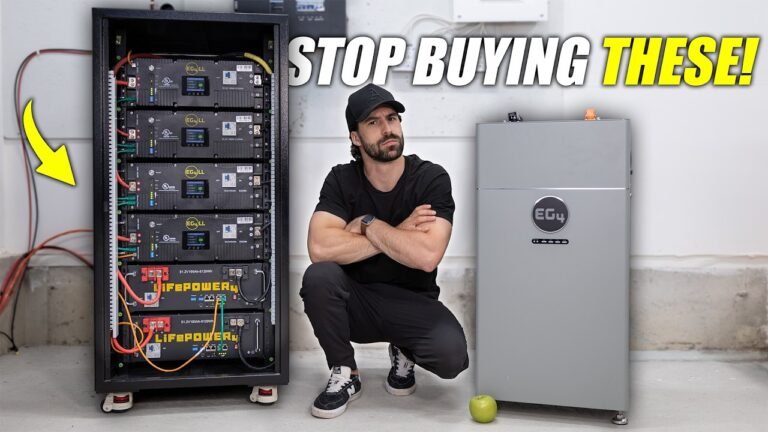
Best Solar Battery: Top Picks for Home Storage
You ask twenty different solar installers what the best battery is, and you'll get twenty different answers. That's not because they're wrong. It's because "best" only makes sense when you plug in your specific situation — your home's electrical setup, your utility's rules, your budget, and what you actually need to keep running when the grid goes dark.
So if you're searching for what is the best solar battery, the honest answer is: the one that fits your house, not the one that won a popularity contest.
Here's what the research and real-world data actually show. As of 2026, the lithium iron phosphate (LFP) chemistry has become the dominant choice for home storage, replacing older nickel manganese cobalt (NMC) batteries in most new installations. LFP batteries last longer, run safer, and handle more charge cycles — typically 6,000 to 10,000 cycles compared to 3,000 to 5,000 for NMC.
That's a decade-plus of daily cycling. But chemistry alone doesn't pick your battery. Your existing solar setup, your outage needs, and your utility rate plan will narrow the field fast.
Let's walk through the branches one at a time.
Quick Answer
The best solar battery for you depends on three things: your existing solar setup, your backup power goals, and your utility rate plan. For most homeowners in 2026, a lithium iron phosphate (LFP) battery with at least 10 kWh usable capacity and a 10-year warranty is the smart baseline. Brands like Tesla, Enphase, and Generac dominate because their ecosystems work cleanly with common inverters.
But if you're off-grid or have time-of-use rates, your pick shifts.
How a Solar Battery Actually Works (and Doesn't Work) in Your Home
A solar battery doesn't "store sunshine" the way most people imagine. It stores DC electricity. Your solar panels produce DC power during the day.
That power either runs your home's loads immediately (through an inverter that converts DC to AC), feeds back to the grid, or charges the battery. At night or during an outage, the battery discharges DC back through the inverter to power your home.
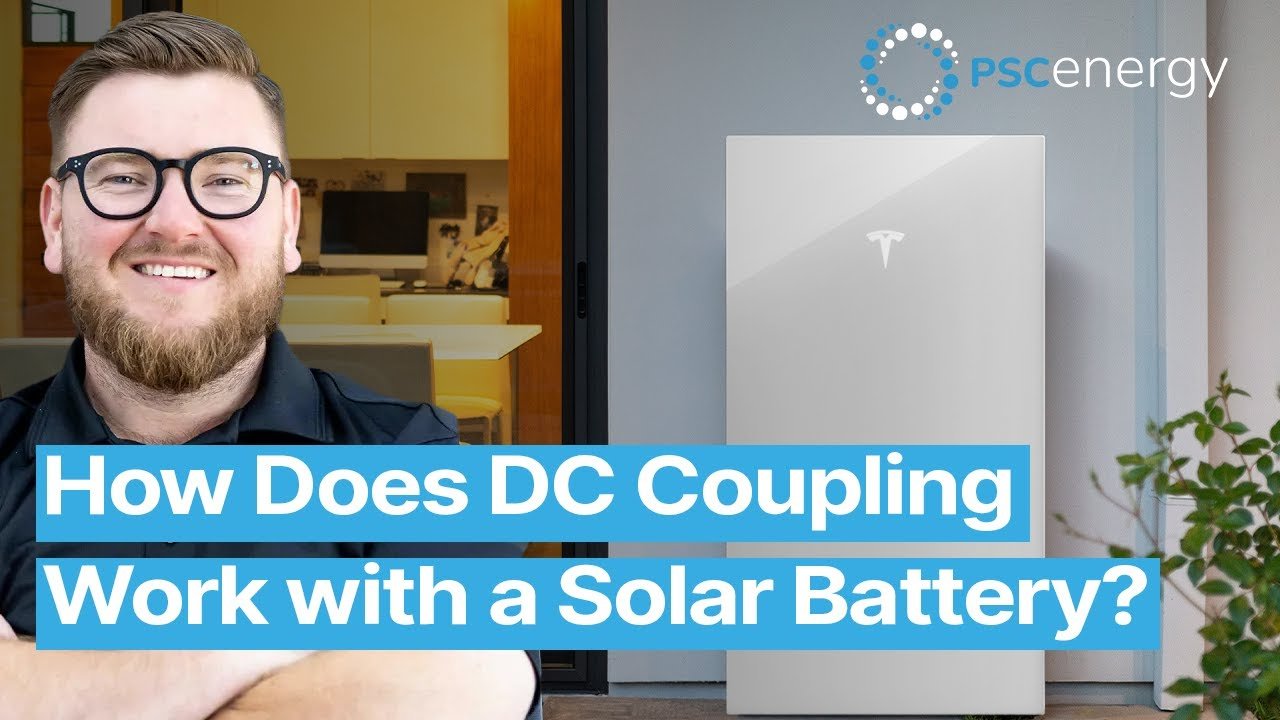
The key distinction that trips up most buyers: AC-coupled versus DC-coupled systems. If you already have solar panels with a standard string inverter, you likely need an AC-coupled battery. That means the battery has its own built-in inverter, and it connects on the AC side of your existing system.
It's simpler to retrofit but slightly less efficient because the solar power goes through two conversions. If you're building a new system or have a hybrid inverter (like the ones from SolarEdge or Enphase), a DC-coupled battery is more efficient — solar DC goes straight into the battery without an extra conversion step.
Per UL 9540 testing standards, the efficiency difference is real. AC-coupled systems typically achieve 88% to 92% round-trip efficiency. DC-coupled systems hit 94% to 97%.
That's not a dealbreaker for most homes, but if you're in a region with expensive electricity, that 5% gap adds up over a decade.
Common misunderstanding: a battery doesn't power your whole house by default
Most installers will tell you that unless you specifically request a whole-home backup solution, the battery connects only to a critical loads panel — a small subpanel that powers essential circuits like refrigerators, lights, internet, and a few outlets. That's intentional. A standard 10 to 13 kWh battery can run a fridge for about 24 hours, but it would drain in 4 hours trying to power your AC unit, electric water heater, and oven simultaneously.
Whole-home backup requires multiple batteries and a larger inverter, which doubles or triples the cost.
The First Fork in the Road: Grid-Tied vs Off-Grid vs Backup-Only
Before you compare battery brands, answer this one question: what relationship do you want with the electric grid?
Grid-tied with backup is the most common setup. Your home stays connected to the utility. The battery charges from solar during the day and discharges during peak rate periods or outages.
You still have grid power as a fallback. This is what 90% of residential solar battery installations look like.
Off-grid means zero utility connection. Every watt your home uses comes from solar panels and battery storage. This requires a much larger battery bank — typically 20 to 40 kWh or more — plus a generator for extended cloudy periods.
The sizing math is completely different here. An off-grid battery needs to handle multiple days of autonomy, not just a few hours.
Backup-only (solar-free) is less common but growing. Some homeowners buy a battery without any solar panels, charging it from the grid during low-rate periods and using it during outages or peak pricing. This works best in places like California or Massachusetts where time-of-use rate differences are dramatic — sometimes 40 cents per kWh difference between off-peak and peak.
The wrong choice here wastes thousands. If you buy an off-grid sized battery for a grid-tied home, you'll never use that capacity and you'll pay for years of unused storage. If you buy a small backup-only battery for an off-grid cabin, you'll drain it by noon and sit in the dark.
Decision Branch 1: Do You Already Have Solar Panels?
This is the single biggest factor that determines which batteries are even compatible with your home. Let's break it into two clear paths.
Path A: You have existing solar panels with a standard inverter
If your solar system uses a traditional string inverter (like SolarEdge HD-Wave, SMA, or Fronius), you need an AC-coupled battery. That limits your options to batteries with their own integrated inverter. The most common choices here are:
- Tesla Powerwall 3 — AC-coupled, 13.5 kWh usable, 5 kW continuous, 11.5 kW peak. Works with almost any inverter. The most popular option nationwide.
- Enphase IQ Battery 5P — AC-coupled, 5 kWh per unit, stackable up to 4 units (20 kWh total). Designed to pair with Enphase microinverters, but installers can make it work with other systems.
- Generac PWRcell — AC-coupled, 9 to 18 kWh, modular. Works with Generac's own inverters or third-party ones.
The advantage of AC-coupled? You don't replace your existing inverter. The installer adds the battery on the AC side, and your solar panels keep working exactly as they did before.
The disadvantage? Slightly lower efficiency as we discussed.
Path B: You're building a new solar system or have a hybrid inverter
If you're starting fresh or your system uses a hybrid inverter (one that handles both solar input and battery charging), you can go DC-coupled. This gives you the highest efficiency and often the lowest total equipment cost because you skip the battery's separate inverter.
DC-coupled options include:
- Tesla Powerwall 3 (also supports DC coupling with Tesla's inverter)
- Enphase IQ Battery 5P (DC-coupled when paired with IQ8 microinverters)
- FranklinWH aPower (paired with FranklinWH's aGate hub)
- Sonnen Evo (DC-coupled, premium brand, long warranty)
Important compatibility check: Even within DC-coupled systems, not every battery works with every inverter. Tesla's system works best with Tesla's own solar equipment. Enphase requires Enphase microinverters.
FranklinWH requires its own aGate hub. If you mix brands, you risk losing functionality like advanced monitoring, firmware updates, or warranty coverage.
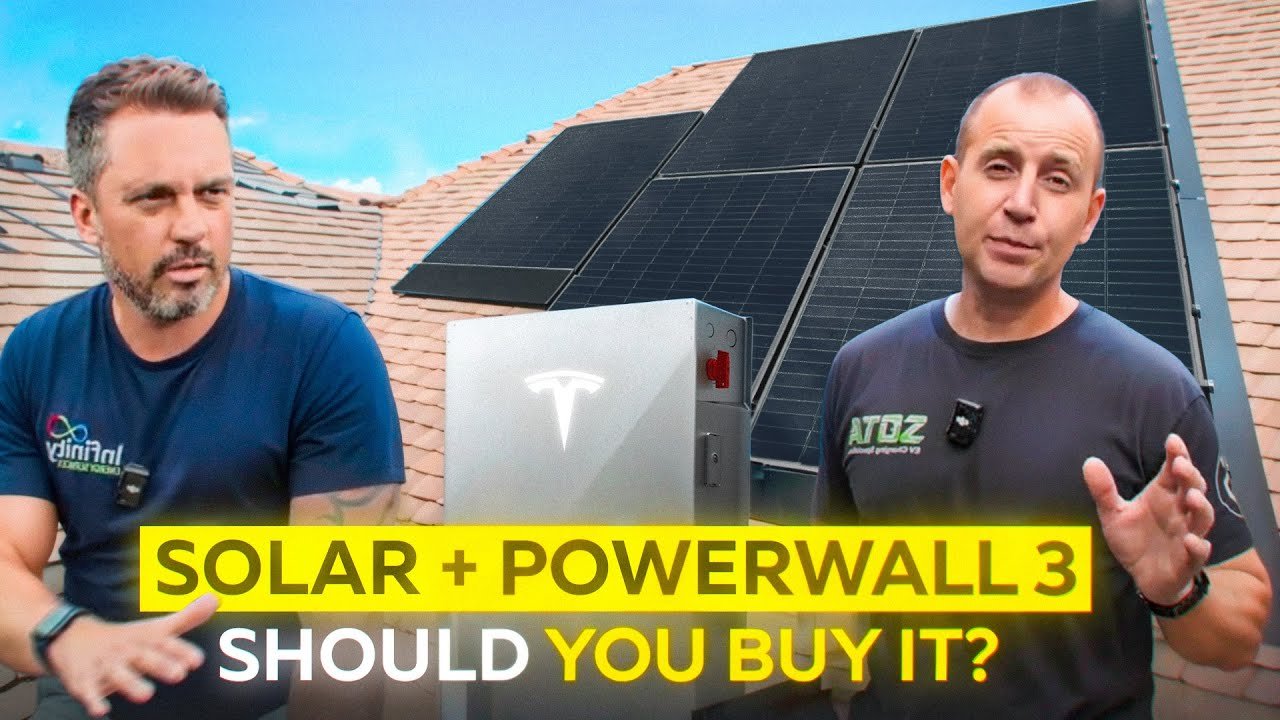
Aggregate installer feedback from 2024 and 2025 consistently shows that compatibility is the number one mistake homeowners make. They buy a battery first, then discover their existing inverter doesn't speak the same language. Always get an installer quote before buying equipment.
They'll tell you exactly what works with your setup.
If you're still wrapping your head around how panels produce power in the first place, it helps to understand the full chain. Our guide on how solar panels generate electricity walks through exactly how sunlight becomes usable AC power — and where the battery fits into that flow.
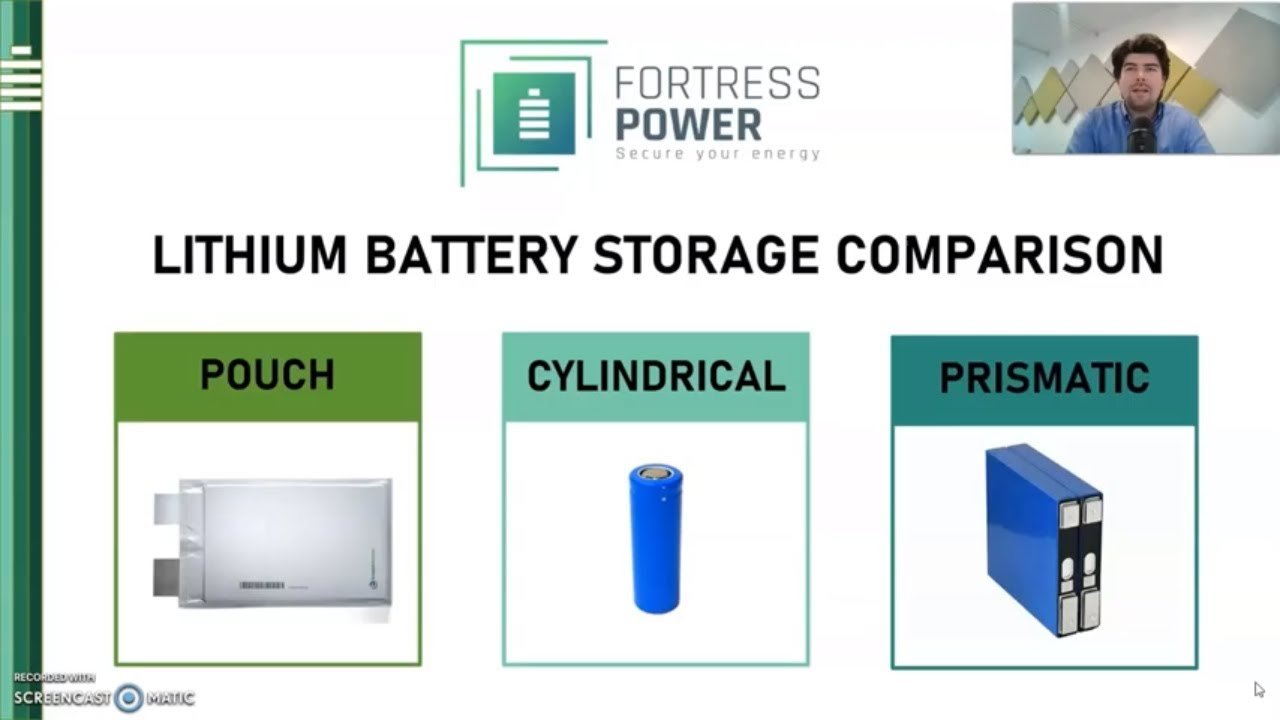
Image source: YouTube / Fortress Power (YouTube thumbnail (fair-use with source credit))
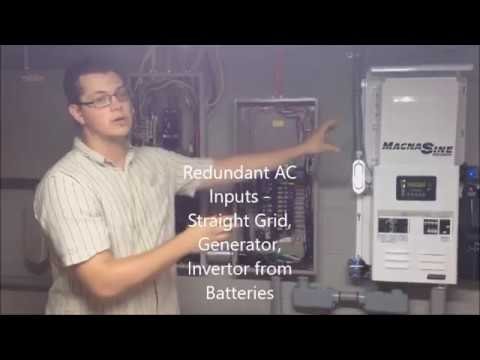
Image source: YouTube / Gain Solar Services (YouTube thumbnail (fair-use with source credit))

Image source: YouTube / GI Energy, No Spin, Just Energy Advice (YouTube thumbnail (fair-use with source credit))