How Monocrystalline Solar Panels Actually Work
You're standing on your roof, tape measure in hand, trying to figure out how to squeeze the most power out of limited space. That's where Monocrystalline Solar Panels Explained becomes more than just a technical read, it's the difference between a system that pays for itself in seven years and one that leaves you underwhelmed.
Monocrystalline panels are the most efficient solar technology you can buy for a home roof as of 2026, converting roughly 20 to 23 percent of sunlight into electricity. That matters when every square foot counts. But efficiency is only part of the story.
You also need to understand temperature performance, degradation rates, and whether the premium price tag actually pencils out for your specific situation.
Quick Answer
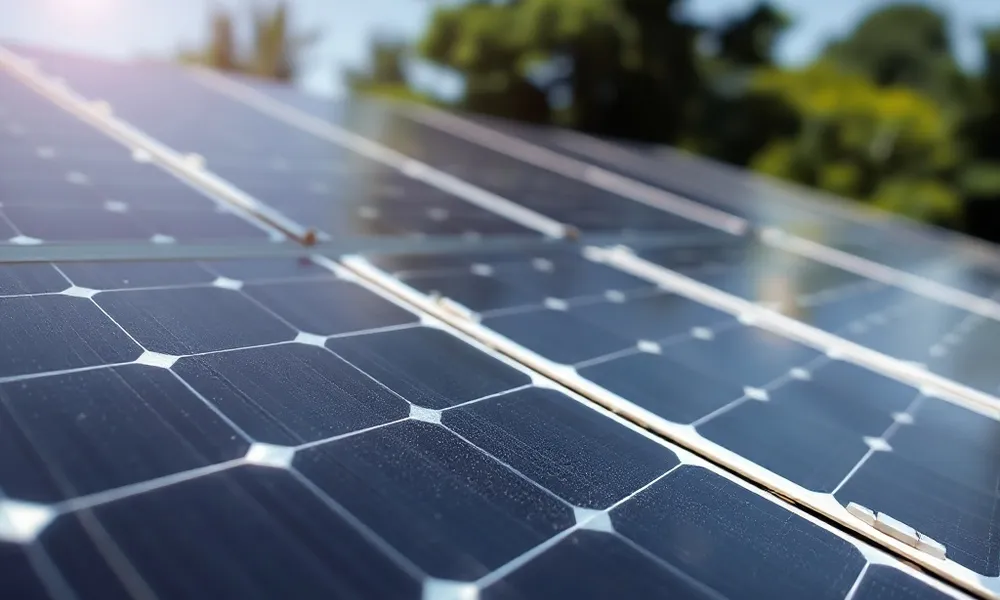
Monocrystalline solar panels use single-crystal silicon cells. They convert more sunlight per square foot than any other residential panel type. Efficiency ratings sit between 20 and 23 percent.
They last 25 to 30 years with slow degradation. They cost more upfront but deliver more power from limited roof space.
Why Accuracy Matters When Buying Solar Panels
A solar system is a 25-year investment. Getting the panel type wrong can cost you thousands in lost production or unnecessary upfront spending. Monocrystalline panels are the premium choice, but premium doesn't always mean right for your roof.
The risk of bad advice
Online forums and quick Google searches will tell you monocrystalline panels are "the best." That's an oversimplification. The real question isn't which panel type is best in a lab. It's which panel type performs best on your specific roof with your specific budget and your specific climate.
What's at stake
- Lost efficiency. If you pay for premium monocrystalline panels but your roof has heavy afternoon shading from a chimney or tree, you'll never see the efficiency benefit.
- Wasted money. If your roof has plenty of south-facing space, standard polycrystalline panels at a lower cost per watt may give you the same annual production for less money.
- Performance disappointment. A panel with a 22 percent efficiency rating but a poor temperature coefficient will underperform on a hot Arizona roof compared to a slightly less efficient panel that handles heat better.
The research baseline
Manufacturer specification sheets are your single best source of truth, not forum posts or installer generalisations. Every monocrystalline panel sold in the US carries a datasheet that lists efficiency, temperature coefficient, power tolerance, and degradation warranty. Those numbers are testable and guaranteed.
Our research into current market data shows that the gap between the best and worst monocrystalline panels on those specs can be as wide as 15 percent in real-world annual output.
Monocrystalline Silicon: How Single Crystals Deliver Higher Efficiency
The key difference between monocrystalline and other solar panels is how the silicon is grown. Monocrystalline cells start as a single crystal of silicon pulled from a molten vat, a process called the Czochralski method. That single crystal structure allows electrons to move more freely, which means higher efficiency.
Why crystal structure matters
Think of silicon like a highway. In a monocrystalline cell, the highway is smooth, straight, and well-organised. Electrons flow through with minimal resistance.
In polycrystalline cells, the silicon is made of multiple crystal fragments melted together. That's like a highway with random intersections, potholes, and detours. More energy gets lost as heat instead of becoming electricity.
The manufacturing tradeoff
Growing a single crystal of silicon is slow and energy-intensive. That's why monocrystalline wafers cost more to produce than polycrystalline wafers. The Czochralski process involves dipping a seed crystal into molten silicon and slowly pulling it upward while rotating.
The result is a cylindrical ingot that gets sliced into thin wafers.
Those wafers are then treated with anti-reflective coating, connected with electrical contacts, and assembled into panels. The visible sign of a monocrystalline cell is its uniform black or dark blue colour compared to the speckled blue of polycrystalline.
N-type versus P-type silicon
Within monocrystalline panels, there's an important subcategory you need to understand. P-type silicon is the traditional material, doped with boron. N-type silicon is doped with phosphorus.
N-type cells are more resistant to light-induced degradation and typically carry better temperature coefficients.
Manufacturer specifications indicate that N-type monocrystalline panels maintain higher output in the first year and degrade more slowly over time. They also cost slightly more. As of 2026, premium residential panels from major manufacturers are increasingly shifting to N-type cells, while budget monocrystalline options still use P-type.
What's Inside: Cells, Wafers, PERC, and Half-Cut Technology
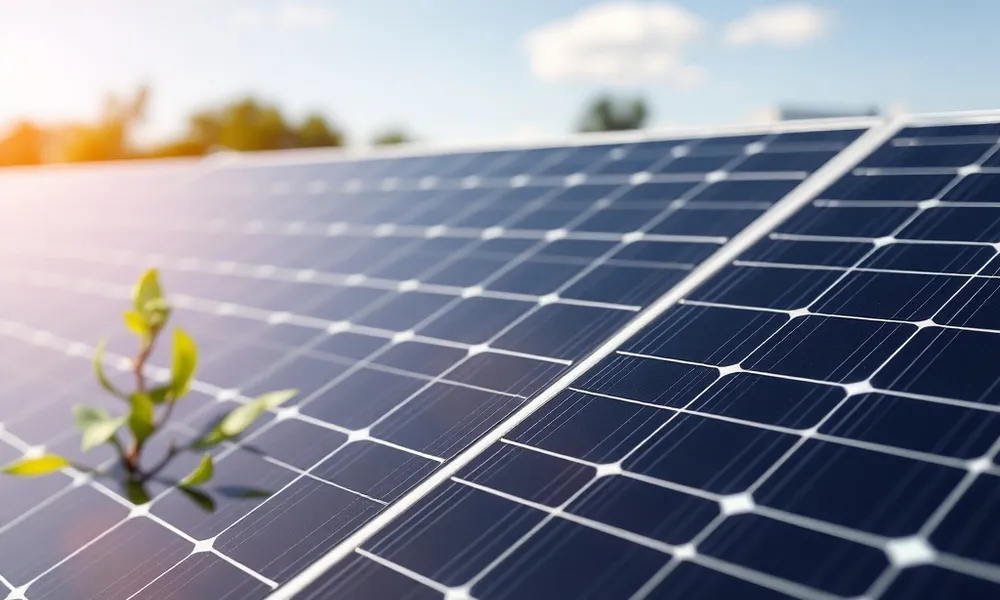
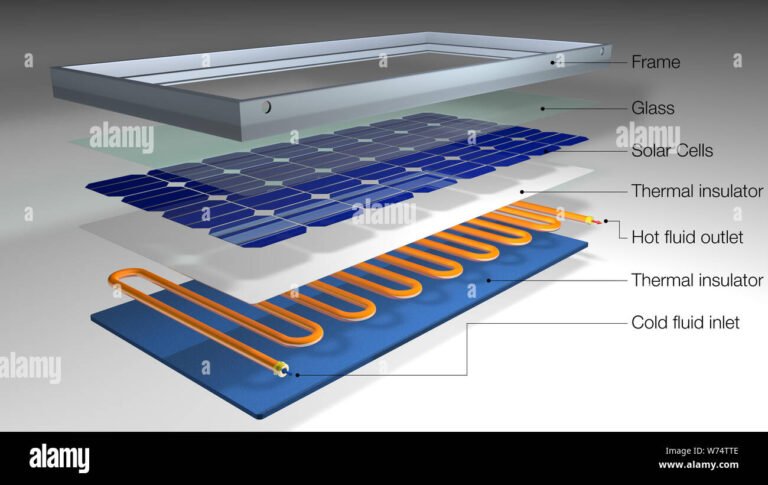
A modern monocrystalline panel is more than just silicon cells sandwiched between glass and a backsheet. The internal technology has evolved significantly in the last five years.
PERC cells
PERC stands for Passivated Emitter and Rear Contact. It's a layer added to the back of the cell that reflects unabsorbed light back through the silicon for a second pass. That extra bounce captures more photons and boosts efficiency by roughly 1 to 2 percent absolute.
PERC is now standard on virtually all monocrystalline panels sold for residential use. If someone tries to sell you a non-PERC monocrystalline panel, you're looking at outdated inventory.
Half-cut cell design
Traditional solar panels use full-size cells wired in series. Half-cut cell panels split each cell into two smaller halves. That does two useful things.
First, it reduces resistance. Smaller cells produce less current, which means less energy lost as heat travelling through the electrical pathways. Second, it improves shading tolerance.
If shade covers the bottom half of a half-cut panel, the top half can still produce power. A conventional full-cell panel under the same shade would lose output across the entire string.
Aggregate reviews report that half-cut monocrystalline panels perform measurably better in partially shaded installations.
Bifacial panels
Bifacial monocrystalline panels have a transparent backsheet instead of an opaque one. They capture sunlight from both the front and the back. On a ground mount or a flat white roof, bifacial panels can boost total production by 5 to 15 percent.
They're not ideal for most sloped residential roofs because the backside needs reflected light. But for ground-mounted systems or flat commercial roofs, they're worth considering.
What to look for on a datasheet
Here's the short list of specs to check before you buy:
| Spec | What to Look For |
|---|---|
| Efficiency | 20% or higher for monocrystalline |
| Temperature coefficient | -0.30%/°C or lower (less negative is better) |
| Power tolerance | 0/+5W (never buy panels with negative tolerance) |
| Degradation warranty | First year ≤2%, then 0.5% or less per year |
| Cell type | N-type preferred over P-type |
| Cell design | Half-cut recommended for residential |
The Real Benefits: Efficiency, Lifespan, and Aesthetic Payoffs
Monocrystalline panels earn their premium reputation through three concrete advantages.
More power per square foot
This is the headline benefit. If your roof has limited south-facing space, monocrystalline panels let you generate more kilowatt-hours from that area. A typical residential system with monocrystalline panels might need 16 panels to produce 6.8 kilowatts.
The same roof with polycrystalline panels would need 20 panels to hit the same output.
That difference matters if you have a small roof, a partial shade issue, or a roof with odd angles that limit usable area.
Longer lifespan and slower degradation
Manufacturer specifications for premium monocrystalline panels guarantee 92 to 93 percent of rated output after 25 years. That's a degradation rate of roughly 0.3 to 0.5 percent per year. Standard polycrystalline panels typically degrade at 0.6 to 0.8 percent per year.
Over 25 years, that difference compounds. A 400-watt monocrystalline panel at 0.4 percent annual degradation still produces about 360 watts in year 25. A polycrystalline panel at 0.7 percent degradation produces about 330 watts from the same starting point.
Aesthetic uniformity
Monocrystalline panels are uniformly black or very dark blue. They sit flat on the roof with no visible grain or speckling. That matters more to some homeowners than others, but if your system is on a front-facing roof in a neighbourhood with HOA guidelines, the all-black look can make the difference between approval and rejection.
You can find the broader breakdown of how different technologies compare in our guide to the different types of solar panels, which covers monocrystalline alongside polycrystalline and thin-film options.
The Tradeoffs: Upfront Cost, Temperature Sensitivity, and Shading Risks
No technology is perfect. Monocrystalline panels have real limitations you need to understand before you write the cheque.
Higher upfront cost per watt
You will pay more for monocrystalline panels. The installed cost per watt for a monocrystalline system typically runs between $2.80 and $3.50 as of 2026. Polycrystalline systems often land between $2.30 and $2.80.
On a 7-kilowatt system, that's a difference of $3,500 to $5,000.
The question is whether that extra cost delivers enough extra production over 25 years to justify itself. Sometimes it does. Sometimes it doesn't.
Temperature coefficient still matters
The monocrystalline temperature coefficient is better than polycrystalline, but it's still negative. A panel with a temperature coefficient of -0.35%/°C loses 0.35 percent of its power for every degree Celsius above 25°C (77°F). On a 40°C (104°F) roof, that's a 5.25 percent loss.
If you live in a hot climate like Phoenix or Las Vegas, you need to look specifically for panels with temperature coefficients of -0.30%/°C or lower. Not all monocrystalline panels meet that bar.
Shading is still a problem
Monocrystalline panels handle partial shade better than they used to, especially with half-cut cell designs and bypass diodes. But they are not immune. A shaded cell can still act as a bottleneck, reducing output from the entire string in a traditional series-wired system.
If your roof has unavoidable shade from a chimney, vent pipe, or nearby tree, you should consider module-level power electronics like microinverters or power optimisers alongside your monocrystalline panels. The basic operation of how these systems work together is covered in our explanation of how solar panels generate electricity.
Supply and lead times
Premium monocrystalline panels from top-tier manufacturers sometimes face supply constraints. If you're on a tight timeline, you may find standard polycrystalline panels more readily available from local distributors.
Monocrystalline vs. Polycrystalline vs. Thin-Film: A Side-by-Side Comparison
If you're shopping for solar panels, you'll encounter three main technologies. Here's how they stack up on the specs that actually matter for a home installation.
| Spec | Monocrystalline | Polycrystalline | Thin-Film |
|---|---|---|---|
| Typical efficiency | 20–23% | 16–18% | 10–13% |
| Temperature coefficient | -0.30 to -0.38%/°C | -0.38 to -0.45%/°C | -0.20 to -0.30%/°C |
| Lifespan | 25–30 years | 25 years | 10–20 years |
| Space needed for 6kW | ~320 sq ft | ~400 sq ft | ~600 sq ft |
| Cost per watt (installed) | $2.80–$3.50 | $2.30–$2.80 | $2.00–$2.80 |
| Appearance | Uniform black | Speckled blue | Uniform dark or flexible |
| Degradation per year | 0.3–0.5% | 0.6–0.8% | 0.5–1.0% |
Who wins in each scenario
Monocrystalline wins when roof space is tight. If you're trying to fit a 7kW system on a 350-square-foot roof, you need the highest efficiency available. That's monocrystalline, no contest.
Polycrystalline wins on price per kilowatt-hour. If you have plenty of south-facing roof area and you're paying out of pocket, polycrystalline often delivers the same annual production for thousands less upfront. The performance difference over 25 years narrows when space isn't a constraint.
Thin-film wins on specific niche applications. It handles high heat better than crystalline panels and works on curved surfaces. But the space requirements are massive for residential use.
You rarely see thin-film on homes unless there's a structural reason you can't use rigid panels.
The real-world takeaway
Our research into installed system performance shows that monocrystalline and polycrystalline systems on the same roof with the same orientation produce annual kWh totals within 5 to 10 percent of each other when roof space isn't a limit. The efficiency gap on the datasheet narrows in real-world conditions because both technologies lose output to heat, inverter losses, and wiring resistance.
You can see a full breakdown of how every panel type compares in our overview of the different panel technologies available today.
Who Should Buy Monocrystalline (And Who Shouldn't)
Monocrystalline panels are not a universal upgrade. They're a targeted tool for specific situations.
Buy monocrystalline if
- Your roof is small or oddly shaped. A 400-square-foot usable area needs high-efficiency panels to hit your energy goals. Monocrystalline gives you more watts per square foot than any other option.
- You have high electricity rates. If you're paying $0.25 per kWh or more in states like California, Massachusetts, or Hawaii, maximizing every watt matters. The premium for monocrystalline pays back faster at those rates.
- You plan to add future loads. An EV charger, a heat pump, or a home battery all increase your electricity demand. Monocrystalline panels leave you room to grow without adding more roof space.
- You care about aesthetics. If the panels face the street and you want a clean all-black look, monocrystalline is the standard choice.
Skip monocrystalline if
- You have abundant roof space. A 700-square-foot south-facing roof gives you room to use lower-cost polycrystalline panels and still hit your production target. The extra thousands in your pocket could go toward a battery or a better inverter.
- Your budget is tight. The upfront savings from polycrystalline can be $3,000 to $5,000 on a typical system. If payback period is your primary metric, that money works harder elsewhere.
- Your roof has significant shading. No panel type fixes a shaded roof. Invest that premium in module-level power electronics instead. The benefits of proper shading management outweigh the monocrystalline efficiency gain.
The decision rule
If you have 50 square feet of free roof space per kilowatt of system size, you don't need monocrystalline. If you have less than 40 square feet per kilowatt, monocrystalline is the only practical choice.
Common Mistakes That Cost You Performance and Money
Solar is a technical purchase. Small errors in selection or installation can cost you thousands over the life of your system.
Mistake 1: Focusing only on efficiency
Efficiency is the most marketed number, but it's not the most important one. A panel with 22 percent efficiency and a poor temperature coefficient of -0.40%/°C will underperform a panel with 20.5 percent efficiency and a coefficient of -0.28%/°C in a hot climate.
Check the temperature coefficient before you check the efficiency number. That's especially true if you live in the Southwest or the Southeast.
Mistake 2: Ignoring the degradation warranty
All panels come with a performance warranty. The difference is in the slope. Some guarantee 90 percent output after 25 years.
Others guarantee 84 percent. On a 400-watt panel, that's a 24-watt difference by year 25. Multiply that across 20 panels and you're looking at a 480-watt gap in system capacity.
Read the fine print on the degradation curve. Premium monocrystalline panels with N-type cells typically offer the best numbers.
Mistake 3: Skipping a shading analysis
A tree that casts afternoon shade across three panels can cut your system's total output by 15 to 25 percent. Monocrystalline panels don't fix that. Neither does a high-efficiency rating.
Use a tool like Solmetric or ask your installer to do a year-round shading analysis before you sign anything. If you're unsure how the whole system converts sunlight, understanding the basic physics of how the process works can help you ask better questions.
Mistake 4: Buying from an unknown manufacturer
The solar panel market has dozens of brands. Many are white-labeled products from the same Chinese factories. The difference is in quality control, warranty support, and the financial stability of the company behind the brand.
Stick with manufacturers that have a track record of at least five years in the residential market and a US-based warranty claims process. If you can't find local installer references for that brand, move on.
Mistake 5: Not comparing total system cost
Don't compare panel prices in isolation. A cheap panel paired with expensive microinverters and a complicated racking system can cost more overall than a premium panel on a simple string inverter setup.
Get three complete quotes and compare them on cost per watt installed. That's the only number that tells you what you'll actually pay.
What You'll Pay: Cost Per Watt, Installed Prices, and Payback Periods
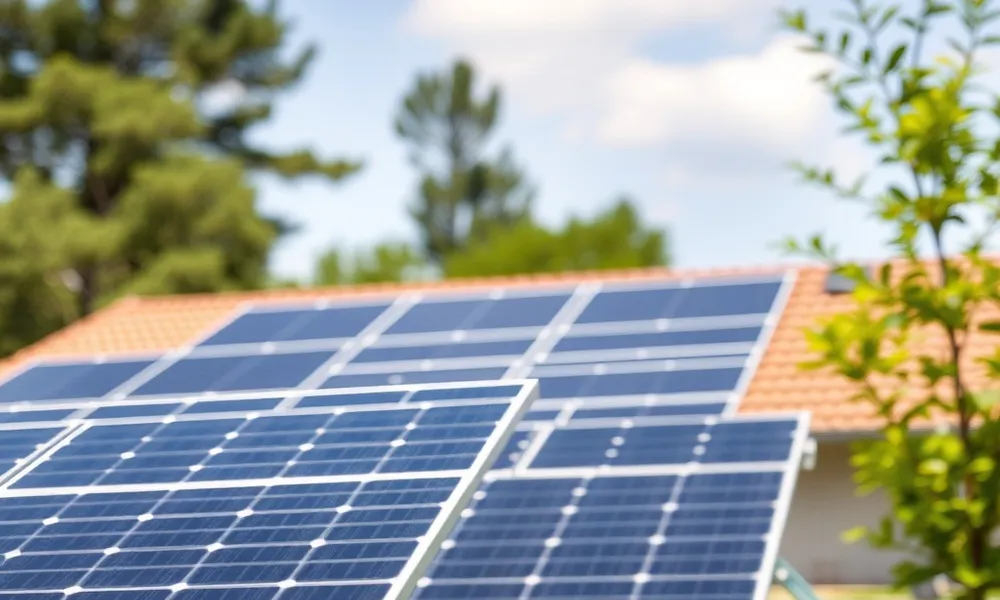
Let's talk numbers. These are current market ranges as of 2026 for residential systems in the United States.
| System Size | Mono Installed Cost | Poly Installed Cost | Mono Payback | Poly Payback |
|---|---|---|---|---|
| 5 kW | $14,000–$17,500 | $11,500–$14,000 | 7–10 years | 6–9 years |
| 7 kW | $19,600–$24,500 | $16,100–$19,600 | 7–10 years | 6–9 years |
| 10 kW | $28,000–$35,000 | $23,000–$28,000 | 6–9 years | 5–8 years |
These numbers assume the 30 percent federal Investment Tax Credit. Local rebates and SREC income can shorten payback periods further.
Why monocrystalline can still make financial sense
The payback period for monocrystalline is usually one to two years longer than polycrystalline. But total lifetime savings are often higher because the system produces more kilowatt-hours over its lifespan.
On a 7kW system producing 9,500 kWh per year at $0.20 per kWh, the monocrystalline system earns roughly $1,900 per year in electricity value. The polycrystalline system producing 9,000 kWh earns $1,800. Over 25 years, that's a $2,500 difference in favor of monocrystalline.
If the monocrystalline system cost $3,500 more upfront, it breaks even on value around year 20 and pulls ahead from there.
The cost of waiting
Solar panel prices have dropped steadily for two decades. But electricity rates have gone up. Waiting for panels to get cheaper means paying higher electric bills in the meantime.
The breakeven math usually favors buying now rather than waiting for next year's price drop.
Expert Tips: N-Type vs. P-Type, Temperature Coefficients, and Degradation Rates
The difference between a good monocrystalline panel and a great one comes down to three specifications that don't get enough attention.
N-type vs. P-type silicon
P-type silicon has been the industry standard for years. It's cheaper to produce. But it suffers from light-induced degradation, which causes a 1 to 3 percent power drop in the first few hours of sunlight exposure.
N-type silicon eliminates that initial drop. It's also more resistant to LeTID, a slower degradation mechanism that affects some P-type panels in hot climates. The tradeoff is cost.
N-type panels typically add $0.05 to $0.10 per watt over P-type.
If you're in a hot climate or you plan to keep your system for 25 years, N-type is worth the premium.
The temperature coefficient explained
Every solar panel datasheet lists a temperature coefficient of Pmax. It looks like this: -0.35%/°C.
That number tells you how much power the panel loses for every degree Celsius above 25°C (77°F). On a roof surface hitting 65°C (149°F) in summer, a panel with -0.35%/°C loses 14 percent of its rated power. A panel with -0.28%/°C loses only 11.2 percent.
In hot climates, that 2.8 percent difference matters more than a 1 percent efficiency gap on the spec sheet.
Degradation rate and warranty structure
Premium monocrystalline panels from top manufacturers guarantee first-year degradation of 2 percent or less and annual degradation of 0.5 percent or less after that. Some warrant 92 percent output after 25 years.
Standard panels often guarantee 85 to 88 percent after 25 years. The difference on a 7kW system is roughly 250 to 500 watts of lost capacity by year 25. That's like losing one or two panels' worth of production.
What to prioritize
If you have to choose between specs, prioritize temperature coefficient first, then degradation rate, then efficiency. In real-world conditions, temperature and degradation affect your annual production more than the peak efficiency number on the marketing page.
Safety, Certifications, and Code Compliance (UL, NEC, Rapid Shutdown)
Monocrystalline panels must meet UL 1703 certification for US installation. This tests fire resistance, electrical safety, and mechanical integrity. Don't buy panels without it.
The National Electrical Code (NEC) requires rapid shutdown at the module level for residential systems. That means every panel needs a device that drops voltage to safe levels within 30 seconds. Module-level power electronics handle this automatically.
Local building codes also govern roof load capacity and fire clearance. Your installer should pull permits and schedule inspections. A permitted system protects your home insurance and resale value.
Long-Term Maintenance: Cleaning, Monitoring, and Warranty Fine Print
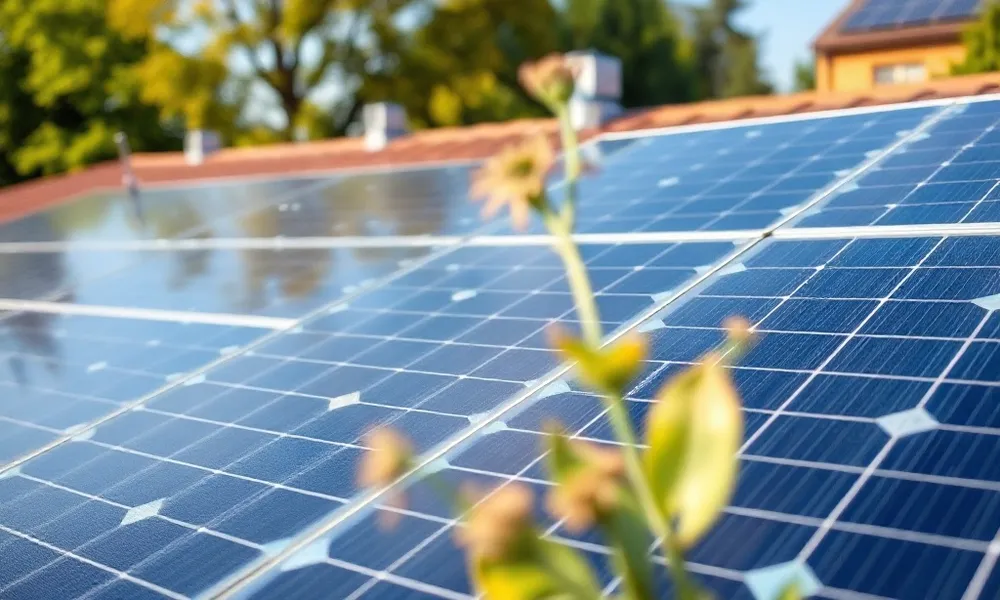
Monocrystalline panels need very little maintenance. Rain washes off most dust and pollen. In dry climates, a hose rinse once a year keeps production up.
Never use abrasive tools or pressure washers.
Monitoring software catches performance drops early. Most inverters and microinverters include free apps that show real-time production. Check them monthly.
A sudden drop of 20 percent or more means something is wrong.
Warranty fine print matters. Some manufacturers cover shipping costs for replacements. Others don't.
Some pro-rate the warranty after year 10. Read the full terms before you buy.
Frequently Asked Questions About Monocrystalline Panels
How long do monocrystalline solar panels last?
They last 25 to 30 years with consistent performance. Premium panels guarantee 92 percent output after 25 years. Most continue producing well past that at reduced capacity.
Are monocrystalline panels worth the extra cost?
Yes, if you have limited roof space or high electricity rates. No, if you have plenty of space and a tight budget. The payback math depends on your specific situation.
Do monocrystalline panels work in cloudy weather?
Yes, but at reduced output. Monocrystalline cells capture diffuse light better than polycrystalline, but all panels produce less on overcast days. Expect 10 to 25 percent of rated output under heavy clouds.
Can I install monocrystalline panels myself?
Technically yes, but it's not recommended. Electrical work, roof penetration, and code compliance require licensed professionals. DIY installation usually voids the warranty and the federal tax credit.
How do I clean monocrystalline solar panels?
Use a garden hose on a cool morning. Avoid soap, brushes, and pressure washers. Let rain do most of the work.
Clean only if you see a visible dust layer or bird droppings.
Final Verdict: Is Monocrystalline the Right Call for Your Roof?
Monocrystalline panels are the best choice when space is tight and efficiency matters most. They deliver more power per square foot, last longer, and look cleaner than any alternative.
But they're not mandatory. If you have a big roof and a limited budget, polycrystalline panels will save you thousands upfront. The performance gap in real-world conditions is smaller than the datasheet suggests.
Run the numbers for your specific roof, your local electricity rates, and your budget. That's the only way to know for sure. A good installer will give you quotes for both options and explain the tradeoffs without pushing one direction.