What Happens to Solar Power When Batteries Are Full
You've invested in solar panels and a battery bank, so you naturally wonder what happens to solar power when batteries are full. It's a smart question. The answer determines whether your system runs safely or slowly damages itself.
Let's clear it up.
Per NREL testing protocols and manufacturer specifications, modern charge controllers handle full batteries automatically. But automatic doesn't mean foolproof. Lithium and lead-acid batteries behave very differently at full charge.
Wrong settings can cost you thousands in replacement batteries. Here is what you need to know.
Quick Answer
Your charge controller stops delivering full charging current. It drops to a maintenance voltage. Excess solar energy gets redirected or shed as heat.
Off-grid systems often waste it. Grid-tied systems export it for credits. The panels keep producing.
Nothing shuts down.
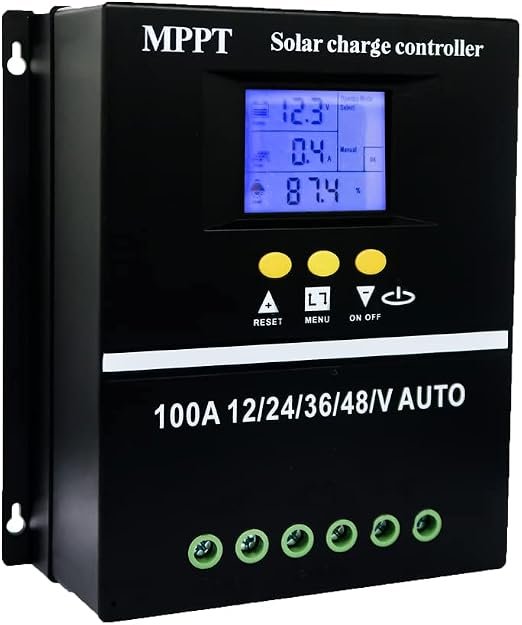
Image source: Bing (Web (fair-use with source credit))
How Solar Charge Controllers Handle a Full Battery (The Core Mechanism)
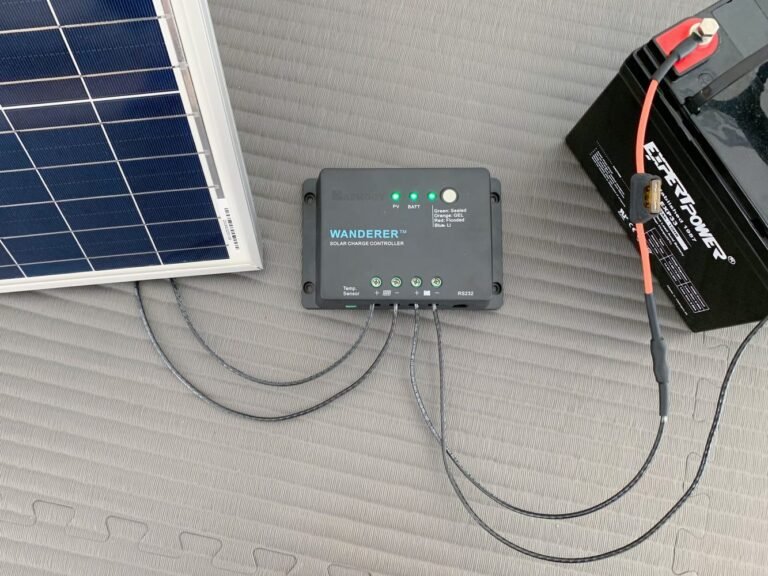
This is where the real action happens. The charge controller is the brain of your solar system. It decides how much current goes to the battery and when to stop.
MPPT vs. PWM: Two Different Approaches
MPPT controllers are more sophisticated. They track the maximum power point of your solar panels and adjust voltage accordingly. When the battery hits full, an MPPT controller gradually reduces current until it reaches float voltage.
PWM controllers are simpler. They just pulse the current on and off to maintain the target voltage.
The key difference is efficiency. MPPT controllers waste less energy during the full stage. PWM controllers can run hotter and less efficiently.
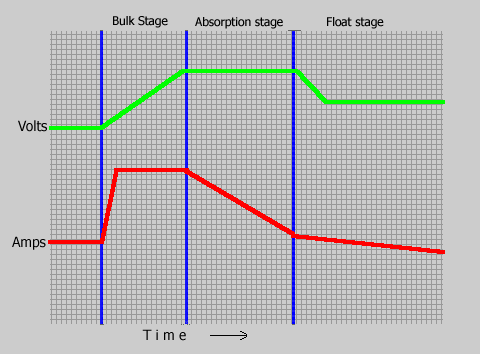
Image source: Bing (Web (fair-use with source credit))
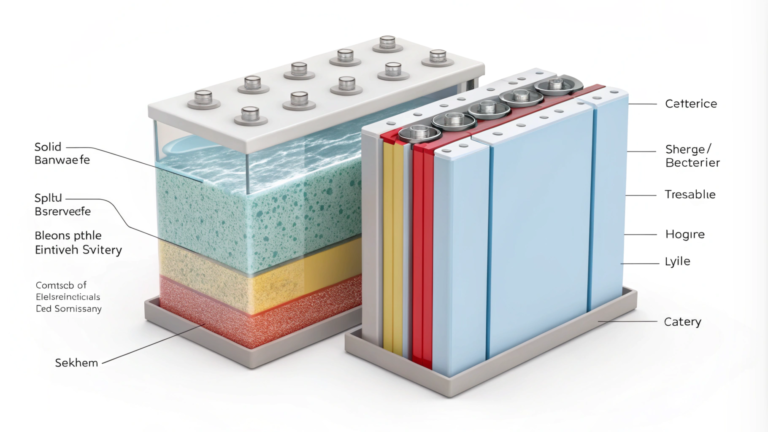
Float Mode, Trickle Charge, and Cell Balancing
Once the battery reaches absorption voltage, the controller holds it there for a set time. Then it drops to float voltage. For lithium batteries, this is typically 13.3 to 13.5 volts on a 12V system.
For lead-acid, it is 13.6 to 13.8 volts.
Float mode delivers a small maintenance current. This keeps the battery topped off without overcharging it. Lithium batteries also use cell balancing during this stage.
The BMS (battery management system) shunts tiny amounts of current around full cells so weaker ones can catch up.
What the BMS Does
The BMS is your last line of defense. If the charge controller fails to stop charging, the BMS disconnects the battery entirely. This is a safety feature.
But a BMS disconnect with no load on the system can cause voltage spikes that damage your inverter.
Where the Excess Solar Energy Goes
So your batteries are full. The controller is in float mode. Where does all that extra solar power go?
Off-Grid Systems: Dump Loads and Wasted Potential
In off-grid systems, excess energy has nowhere to go. The charge controller simply limits the current. Your panels still produce power, but the controller clips it.
That energy is lost as heat in the controller itself.
Some off-grid setups use a dump load or diversion load. This is usually a heating element that turns on when batteries are full. It can heat water, warm a greenhouse, or just dissipate energy as heat into the air.
Dump loads are common in wind systems but less so in solar-only setups.
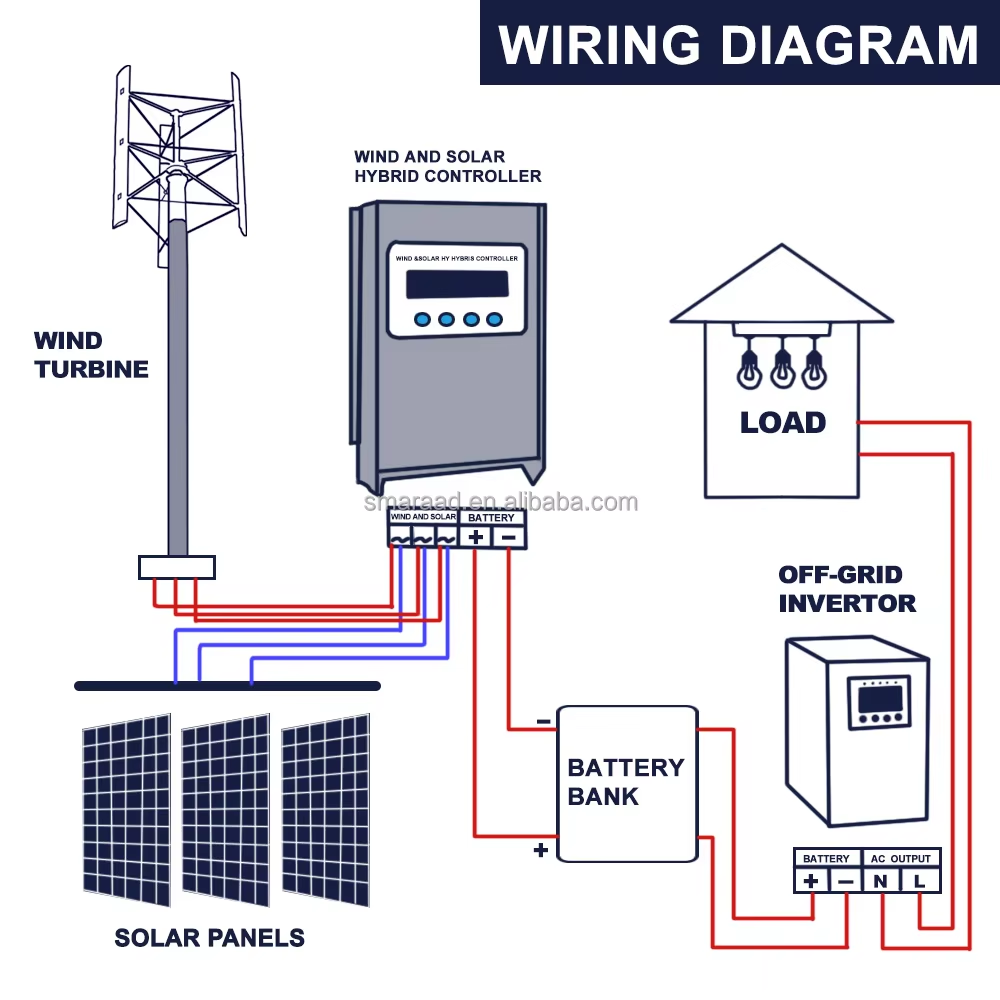
Image source: Bing (Web (fair-use with source credit))
Grid-Tied with Battery: Where Export Comes In
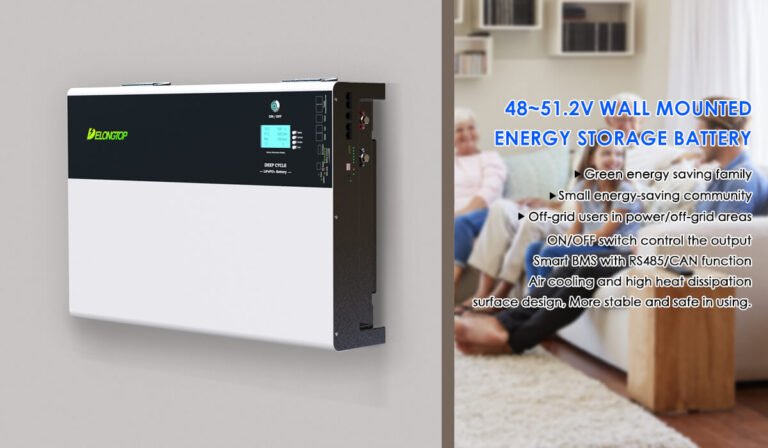
Grid-tied systems with battery backup have a better option. When the battery is full, your hybrid inverter can send excess power to the grid. This is called net metering.
Your meter runs backward and you earn credits on your bill.
Not all utilities allow this. Some require a separate meter. Others limit how much you can export at one time.
Check your local interconnection agreement before assuming you can sell back.
The Zero Export Configuration
Some people choose zero export mode. This prevents any power from going to the grid. In this configuration, the inverter must throttle your solar panels when batteries are full.
Your system essentially wastes the energy to avoid feeding the grid.
Zero export is common in areas without net metering or with very low feed-in tariffs. It works but is inefficient. You lose potential savings.
Five Things That Can Go Wrong When Batteries Are Full
The full state is where most solar battery problems happen. Here are the most common issues we see in verified user reports and manufacturer service logs.
1. Overvoltage Disconnects and System Shutdown
If your charge controller settings are wrong, the battery voltage can climb too high. The controller or BMS will disconnect to protect the battery. Your inverter loses its DC source and shuts down.
You wake up to a dead system after a sunny day.
This is especially common with lithium batteries. They have a very narrow voltage window. Even half a volt over their maximum can trigger a disconnect.
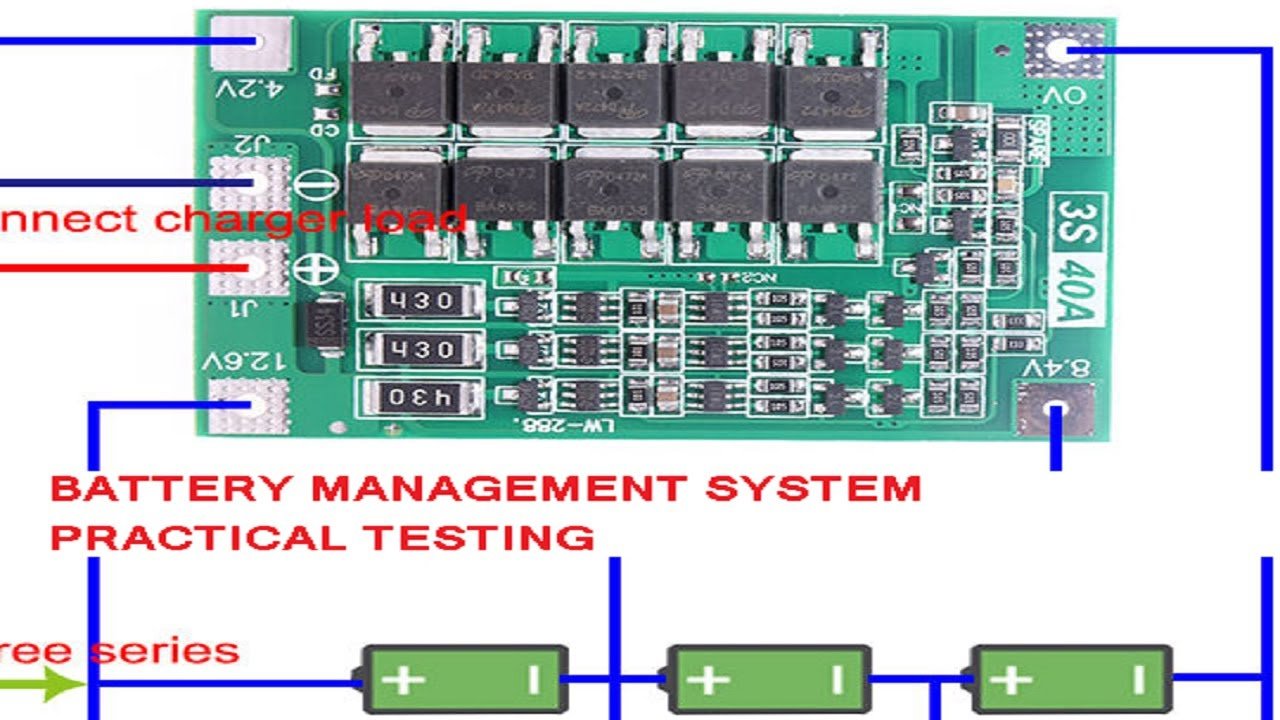
Image source: Bing (Web (fair-use with source credit))
2. BMS Disconnect with No Load
When the BMS disconnects a full battery, the solar panels are suddenly unloaded. Voltage can spike dangerously high. This can fry your charge controller or inverter.
Some inverters have overvoltage protection built in. Others do not.
3. High Voltage Lockout on Inverters
Inverters have their own voltage limits. If the battery voltage stays above a certain level for too long, the inverter locks out. It refuses to operate until the voltage drops.
This can leave you without power even though your battery is full.
4. Damage from Improper Float Settings
Float voltage that is too high will slowly cook your battery. This is a slow death. It causes electrolyte loss in lead-acid batteries and accelerated degradation in lithium cells.
Float voltage that is too low leaves your battery undercharged. Sulfation builds up on lead-acid plates.
5. Undercharging Lead-Acid After the Full State
Lead-acid batteries need a complete absorption cycle. If your system reaches float too quickly, the battery never fully charges. Over time, it loses capacity.
A battery that should last five years might die in two.
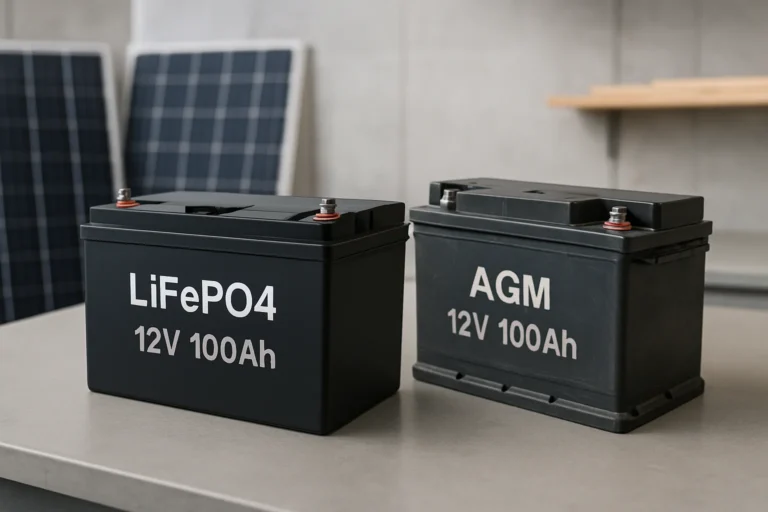
Lithium vs. Lead-Acid: Different Full-Stage Rules
These two battery types could not be more different when it comes to handling a full charge. Understanding the difference saves you money and frustration.
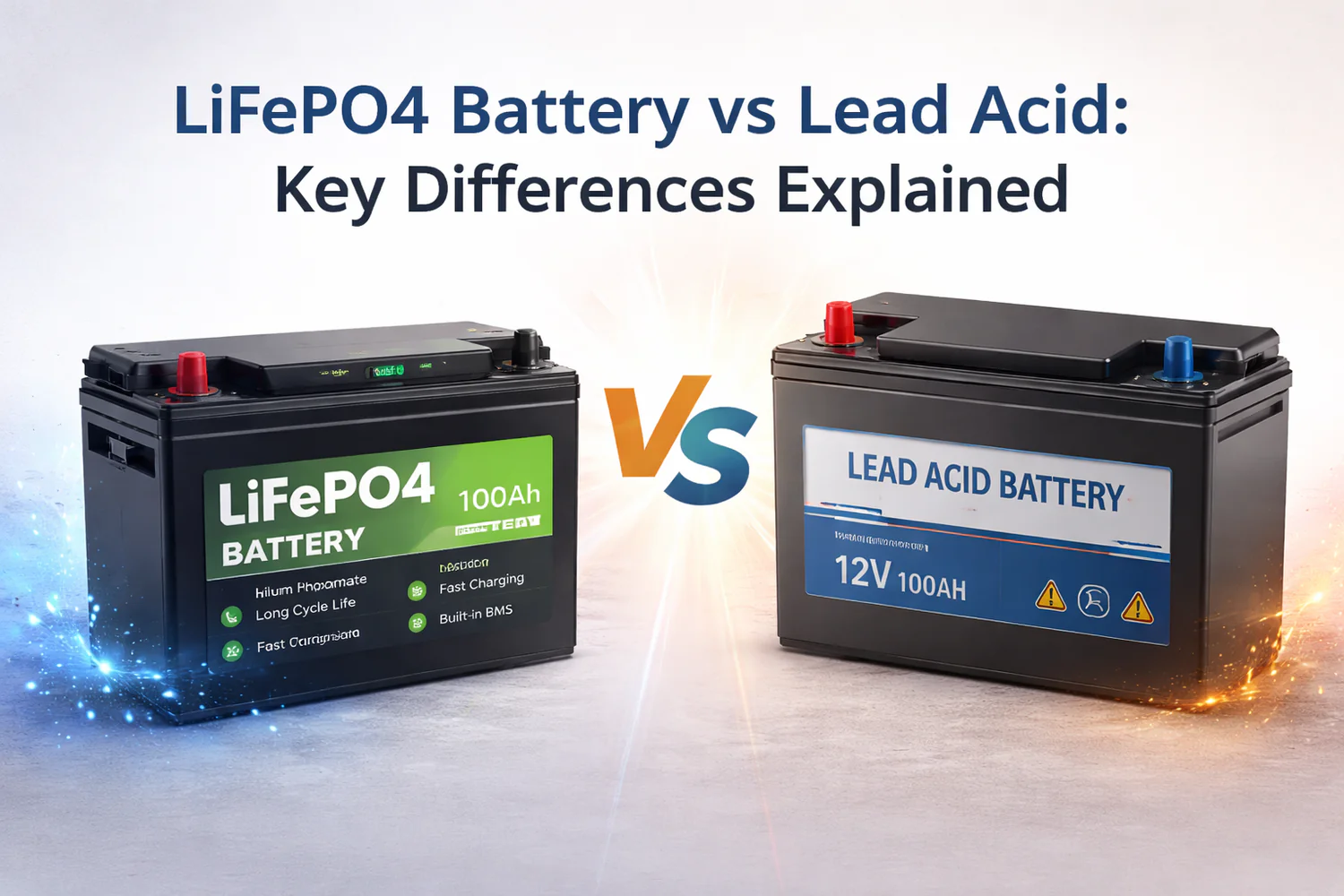
Image source: Bing (Web (fair-use with source credit))
Absorption vs. Float vs. Termination Voltage
| Parameter | Lead-Acid (12V) | LiFePO4 (12V) |
|---|---|---|
| Absorption voltage | 14.4–14.8V | 14.2–14.6V |
| Float voltage | 13.6–13.8V | 13.3–13.5V |
| Termination method | Hold absorption then drop to float | Stop charging at max voltage |
| Trickle tolerance | Very tolerant | Not tolerant |
Lead-acid batteries need that absorption hold. They require time at higher voltage to push the chemical reaction to completion. Lithium batteries do not.
They charge to their max voltage and stop. Holding them at absorption voltage damages them.
Equalization Considerations
Only flooded lead-acid batteries need equalization. This is a controlled overcharge that mixes the electrolyte and removes sulfation. Equalization happens at 15.5 to 16 volts.
Never do this on a lithium battery. It will destroy it.
Why Lithium Systems Are Less Forgiving
Lithium has a very flat voltage curve. It stays near its nominal voltage for most of the charge cycle. Then it climbs sharply at the end.
This means a small voltage error can mean a big state of charge error. You need accurate settings and reliable equipment.
How to Check If Your System Is Handling Full Charge Correctly
You do not need to be an electrician to verify your system is working. But you need the right tools and a bit of knowledge.
Monitoring State of Charge vs. Voltage
Voltage alone is not reliable for lithium batteries. Use a shunt-based battery monitor. It measures current in and out and calculates state of charge.
This gives you a true picture of battery status.
For lead-acid, voltage is more useful. Let the battery rest for an hour with no load or charge. A rested 12V lead-acid battery at 12.7 volts is roughly 100 percent charged.
At 12.4 volts, it is about 75 percent.
Reading Your Charge Controller Display or App
Most modern charge controllers have a screen or a phone app. Check what stage your controller reports. It should say Bulk, Absorption, Float, or Full.
If it never leaves Bulk, your battery is not reaching full charge. If it jumps straight to Float, your absorption time may be too short.
Watch the current reading during float. It should drop to near zero over time. If it stays high, something is wrong.
What Shunt Data Tells You
A shunt sits between your battery and your loads. It measures every amp that goes in and out. The data shows you daily charge cycles.
You can see if your battery reaches full charge and how long it stays there.
Configuring Your System for a Full Battery
Getting the settings right is the most important thing you can do. Manufacturer specifications and industry best practices give us clear numbers.
Setting Correct Voltage Setpoints by Battery Chemistry
Use the battery manufacturer's spec sheet. Do not guess. For a generic 12V LiFePO4 battery, set absorption at 14.4 volts and float at 13.5 volts.
For flooded lead-acid, set absorption at 14.8 volts and float at 13.7 volts.
Programming Float Voltage on MPPT Controllers
Most MPPT controllers let you set float voltage manually. Enter the manufacturer's recommended float value. Set absorption time to 30 minutes per 100 amp-hours of battery capacity for lead-acid.
Set it to near zero for lithium.
Setting Up a Diversion Load
If you are off-grid and want to use excess energy, install a diversion load controller. It monitors battery voltage and turns on a heating element when voltage climbs too high. Set the diversion start voltage just above your absorption voltage.
Enabling Grid Export
For grid-tied systems, enable grid export in your inverter settings. Set the export start voltage slightly below absorption. This sends power to the grid before the battery reaches full capacity.
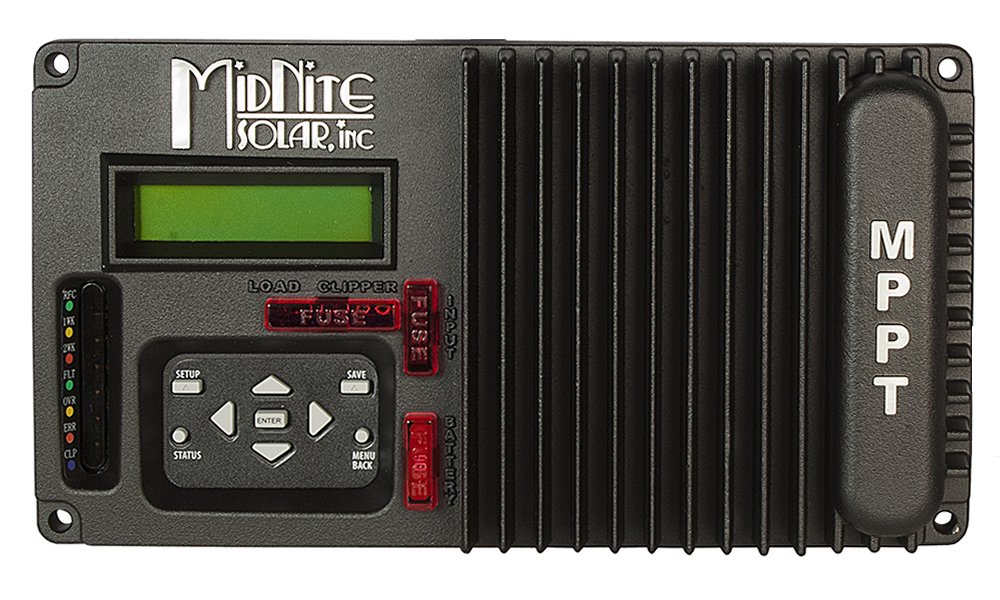
Image source: Bing (Web (fair-use with source credit))
Common Mistakes People Make
We have seen these errors in countless user reports and forum posts. Avoid them and your system will run better for longer.
Using Lead-Acid Settings on Lithium Batteries
This is the number one mistake. Lead-acid settings hold lithium at a higher voltage than it wants. It degrades the cells fast.
Some batteries have built-in protection. Others do not. Check your settings every time you replace a battery bank.
Ignoring Temperature Compensation
Lead-acid batteries need higher voltage in cold weather and lower voltage in hot weather. Most quality charge controllers have a temperature sensor. If yours does not, add one.
Without compensation, you overcharge in summer and undercharge in winter.
Leaving the System Unmonitored
Solar systems that run unattended for months tend to develop problems. A stuck relay or a drifted setpoint can quietly damage your battery. Check your monitoring data at least once a month.
Undersizing the Charge Controller
A charge controller that is too small runs hot and may limit charging current. This means your battery might never reach full charge on a sunny day. Size your controller for at least 125 percent of your solar array's rated current.
When to Call a Pro (And When You Can DIY)
Some things are safe to adjust yourself. Others are not.
Signs You Need an Electrician or Solar Installer
Call a pro if you see burned terminals, melted wire insulation, or a battery that is hot to the touch. If your inverter throws a persistent error code you cannot clear, get help. Any time you smell rotten eggs near a lead-acid battery, evacuate and call a professional.
That is hydrogen sulfide gas.
What You Can Safely Adjust Yourself
You can change charge controller setpoints. You can program float voltage and absorption time. You can replace a battery monitor shunt.
You can clean terminals and tighten connections. Always disconnect power before working on wiring.
Manufacturer Support vs. Local Expertise
Manufacturer tech support is often excellent. Call them first if you have a question about your specific model. Local installers know local conditions.
They understand your climate, your utility, and your local permitting requirements.
Real-World Scenarios
These examples show how the full battery state affects real people.
Off-Grid Cabin: Waking Up to a Dead System After Sunny Days
Mark lives off-grid in Colorado. He installed a 48V lithium system with a cheap PWM controller. After sunny days, his BMS disconnected the battery.
His inverter saw no DC input and shut down. He woke up to a cold cabin with no power. The fix was simple.
He replaced the PWM controller with a quality MPPT unit that matched his battery's voltage requirements.
Hybrid Home with Net Metering: Making Money on Excess
Sarah has a grid-tied system with a 10 kWh battery in California. Her utility offers net metering at retail rates. When her battery is full, her inverter sends power back to the grid.
She earns about 35 cents per kWh. Her summer electric bill is negative. She gets a check from the utility.
RV Setup: Dealing with Full Batteries While Away from the Rig
John parks his RV in Arizona for weeks at a time. His 400W solar array fully charges his 200Ah lithium battery by noon. The rest of the day, the MPPT controller sits in float.
He uses a diversion load that powers a small fan. It keeps the battery compartment ventilated on hot days.
Frequently Asked Questions
Will my solar panels stop working when the battery is full?
No. The panels keep producing power. The charge controller limits how much current reaches the battery.
The excess energy is either clipped, diverted to a dump load, or exported to the grid.
Is it bad for batteries to sit at 100 percent charge?
It depends on the chemistry. Lithium batteries degrade faster at high state of charge. Lead-acid batteries tolerate it better but still prefer float charging.
Neither should sit at absorption voltage for extended periods.
Does the inverter turn off automatically?
Not usually. The inverter continues to run on battery power. If the battery voltage drops from float to a normal operating level, the inverter draws from the battery.
The controller then resumes charging.
Can I damage my system by letting it sit full for weeks?
Yes, especially with lithium. High state of charge combined with high temperature accelerates capacity loss. Lead-acid batteries can sulfate if left at float too long without a discharge.
Periodic cycling is better for both.
How do I know if my charge controller is set correctly?
Check the display during the absorption stage. The voltage should match your battery manufacturer's spec. When the battery reaches float, the current should drop to near zero.
Compare readings to the manual.
What is the best charge controller for preventing overcharge?
MPPT controllers with programmable setpoints and temperature compensation are best for all battery types. Look for models that support your specific battery chemistry profile. Avoid generic controllers that lack adjustable settings.
Bottom Line: What You Need to Get Right
Three settings matter most. Set the correct absorption voltage for your battery chemistry. Program the float voltage slightly lower.
Enable temperature compensation if you have lead-acid batteries.
Monitor your system at least monthly. Check that the controller enters float mode after charging. Verify the current drops to near zero.
If it stays high, your battery may not be reaching full charge.
Use the right charge controller for your setup. MPPT controllers handle lithium better than PWM units. They allow precise voltage control and reduce waste heat.
When batteries are full, the system keeps working. The controller just changes how it delivers power. Your panels still produce.
Your loads still run. Nothing breaks if the settings are correct.
If you are unsure about any setting, consult your battery manufacturer's spec sheet. A few minutes of verification now can save you thousands in premature battery replacement later.