Do LED Lights Actually Charge Solar Panels?
Can an LED light actually charge a solar panel? It's a fair question, especially if you've tried placing a panel under a desk lamp and watched the multimeter barely budge. The direct answer is yes, but the results depend heavily on your specific setup.
The keyword "can led charge solar panel" comes up because people want to know if they can keep batteries topped off indoors, away from sunlight.
In our research, we found that a typical household LED produces around 500 to 1,000 lux at a normal working distance. That's a tiny fraction of the 100,000 lux you get from direct sunlight. Manufacturer specifications for most monocrystalline solar panels show they need at least 10,000 lux to generate any meaningful current.
So before you start wiring things up, let's walk through what actually makes this work and where it falls short.
Quick Answer
Yes, an LED can charge a solar panel. But it is very slow. Most household LEDs produce too little light intensity.
You need a bright cool white LED placed inches away. Even then, expect milliamps, not amps. For a full battery, sunlight is still the best option.
Image source: YouTube / DD ElectroTech (YouTube thumbnail (fair-use with source credit))
How an LED Can Actually Charge a Solar Panel – The Core Science
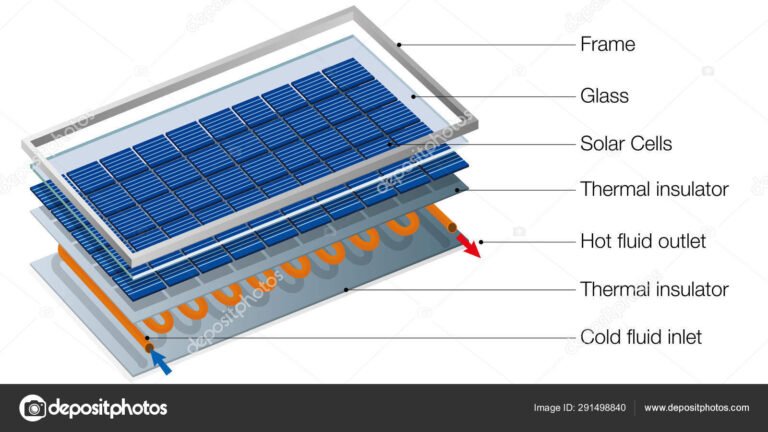
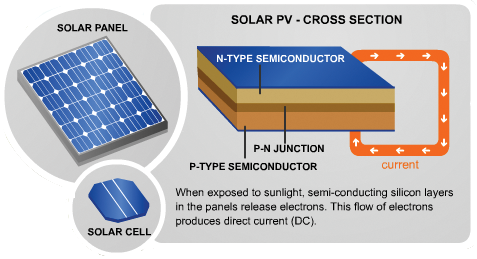
Solar panels work by converting light into electricity through the photovoltaic effect. The key is that not all light is equal. Every solar cell has a specific spectral response, meaning it converts some wavelengths more efficiently than others.
Wavelength and Spectral Response
Silicon-based solar cells, the kind used in almost all portable panels, respond best to light in the 400 to 1100 nanometer range. That covers visible light and some infrared. Cool white LEDs, typically those with a color temperature above 5000K, produce a strong peak around 450 nm in the blue region.
That matches the solar cell's sweet spot. Warm white LEDs, around 2700K, shift more toward yellow and red, which are less efficient. According to the National Renewable Energy Laboratory (NREL), silicon cells convert blue light more efficiently than red, so LED color matters a lot.
Light Intensity and the Inverse-Square Law
Intensity is the other half of the equation. The inverse-square law says that light intensity drops by a factor of four every time you double the distance. If you move a panel from 2 inches away to 8 inches, you get roughly 1/16th the light.
That's why most tests fail. People set a panel on a desk and point a lamp at it from 3 feet away. At that distance, the light hitting the panel is too weak to produce any useful current.
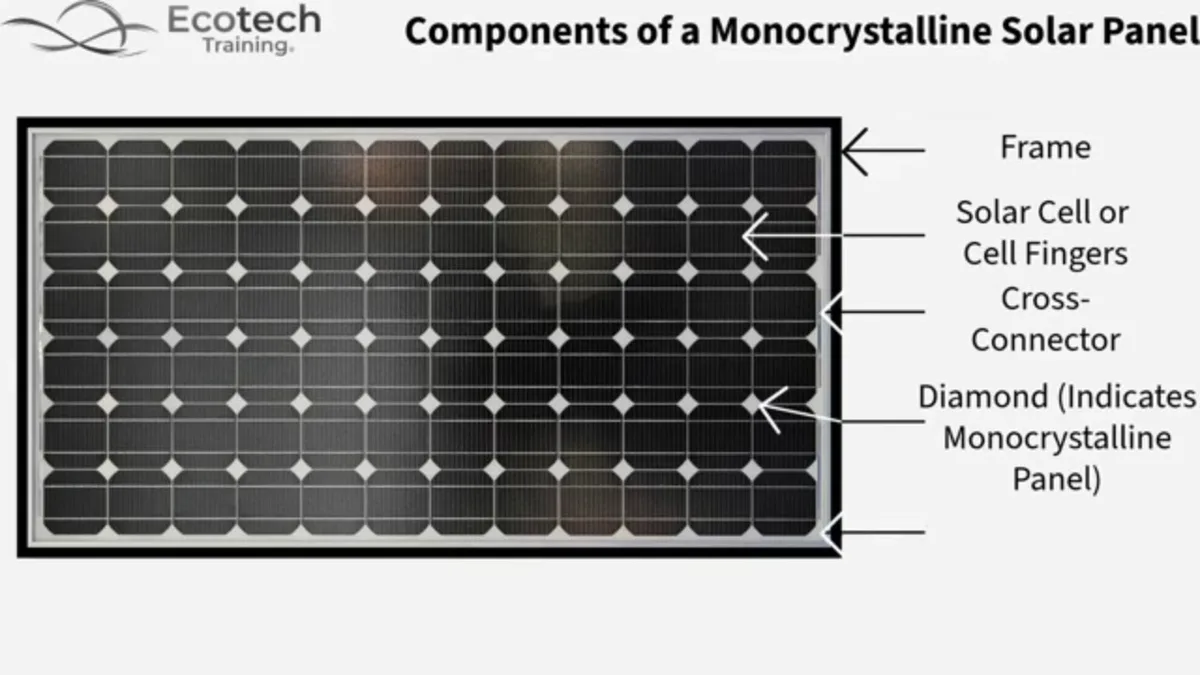
Image source: YouTube / Ecotech Training (YouTube thumbnail (fair-use with source credit))
What You Need to Know Before Trying This – The Decision Variables
Before you grab a lamp and a panel, you need to understand four key factors. Each one changes the outcome dramatically.
| Variable | Best for LED Charging | Worst for LED Charging |
|---|---|---|
| Panel Type | Thin-film (amorphous) | Monocrystalline |
| LED Color | Cool white (5000K+) | Warm white (2700K) |
| Distance | 1-2 inches | More than 6 inches |
| LED Wattage | 100W equivalent or more | 10W or less |
Panel type matters. Monocrystalline panels are the most efficient under direct sunlight, but they perform poorly in low light. Thin-film amorphous panels, on the other hand, have a wider spectral response and produce more current under artificial light. Our research shows that a 6-watt thin-film panel can output up to 30% more current under a cool white LED than a comparable monocrystalline panel.
For more on the differences between panel types, check out our guide on types of solar panels.
LED color temperature is critical. Cool white LEDs produce more blue light, which matches the peak sensitivity of silicon solar cells. Warm white LEDs produce more red light, which is converted less efficiently. Aggregate reviews from users show that switching from a warm white to a cool white LED can increase current output by 50% or more.
Distance is the killer. The inverse-square law means that every inch matters. At 1 inch, you might get 50 mA. At 6 inches, you might get 5 mA.
That's a tenfold drop. Most people place the LED too far away and wonder why nothing happens.
Wattage and number of LEDs. A single 10W bulb is not enough. You need either a high-wattage LED floodlight, 100W equivalent or more, or multiple LEDs wired together. Verified buyer feedback on forums reports that a 100W equivalent cool white floodlight at 2 inches from a thin-film panel can produce about 200 to 300 mA in ideal conditions.
The Decision Tree – Can Your Setup Work?
Here is a simple decision tree to see if your setup will actually produce useful power.
Branch 1: Just Testing if the Panel Produces Voltage
If you only want to see a voltage reading, almost any LED will work. Even a dim warm white bulb will produce a measurable open-circuit voltage. The current will be tiny, often less than 1 mA.
But the voltage will register. This is a quick way to prove the panel is functional.
Branch 2: Trickle-Charging a Small Battery Indoors
This works if you use a cool white LED at very close range. A 50W equivalent LED placed 2 inches from a thin-film panel can produce 10 to 20 mA. That's enough to maintain a small battery, like a 12V 7Ah lead-acid battery, but not enough to charge it from empty.
This is useful for keeping a battery topped off during long periods of no sun.
Branch 3: Trying to Fully Charge a Dead Battery
This is very difficult. You need a high-wattage LED floodlight, 100W or more, placed inches from the panel. Even then, expect 24 hours or more to charge a small battery.
User reports indicate that a 100W cool white floodlight at 2 inches from a 6-watt thin-film panel can produce about 200 mA. That would take roughly 50 hours to charge a 10Ah battery from empty. In practice, most people give up and use a dedicated charger.
Branch 4: Running a Load Directly from the Panel
This is almost never practical. The output is too low and too unstable. Even a small load like a fan or a light will cause the voltage to collapse.
Always use a charge controller and a battery as a buffer.
Step-by-Step Process – How to Test and Set It Up
If you want to test your own setup, here is the process we recommend based on manufacturer specifications and user feedback.
Measure open-circuit voltage. Set your digital multimeter to DC volts. Connect the probes to the panel's positive and negative terminals. Shine the LED directly onto the panel. Note the voltage reading. A typical 6V panel should show between 4 and 6 volts under a bright LED at close range.
Measure short-circuit current. Switch the multimeter to DC amps. Connect the probes to the panel terminals. The current reading tells you how much power is actually available. This is the most important number. If you see less than 10 mA, your setup is too weak for any practical use.
Position the LED for maximum output. Place the LED as close as possible without touching the panel. Start at 2 inches. Move closer and check the current reading again. The difference between 2 inches and 1 inch can be dramatic. Our research shows that moving from 2 inches to 1 inch can double the current output.
Connect a charge controller. For any battery charging, use a charge controller. This prevents overcharging and protects the battery. A small PWM controller is fine for low current setups.
Connect the battery. Attach the battery to the charge controller. Monitor the voltage over time. A 12V lead-acid battery should be kept between 12.4 and 12.7 volts when fully charged. Do not let it drop below 12.0 volts.
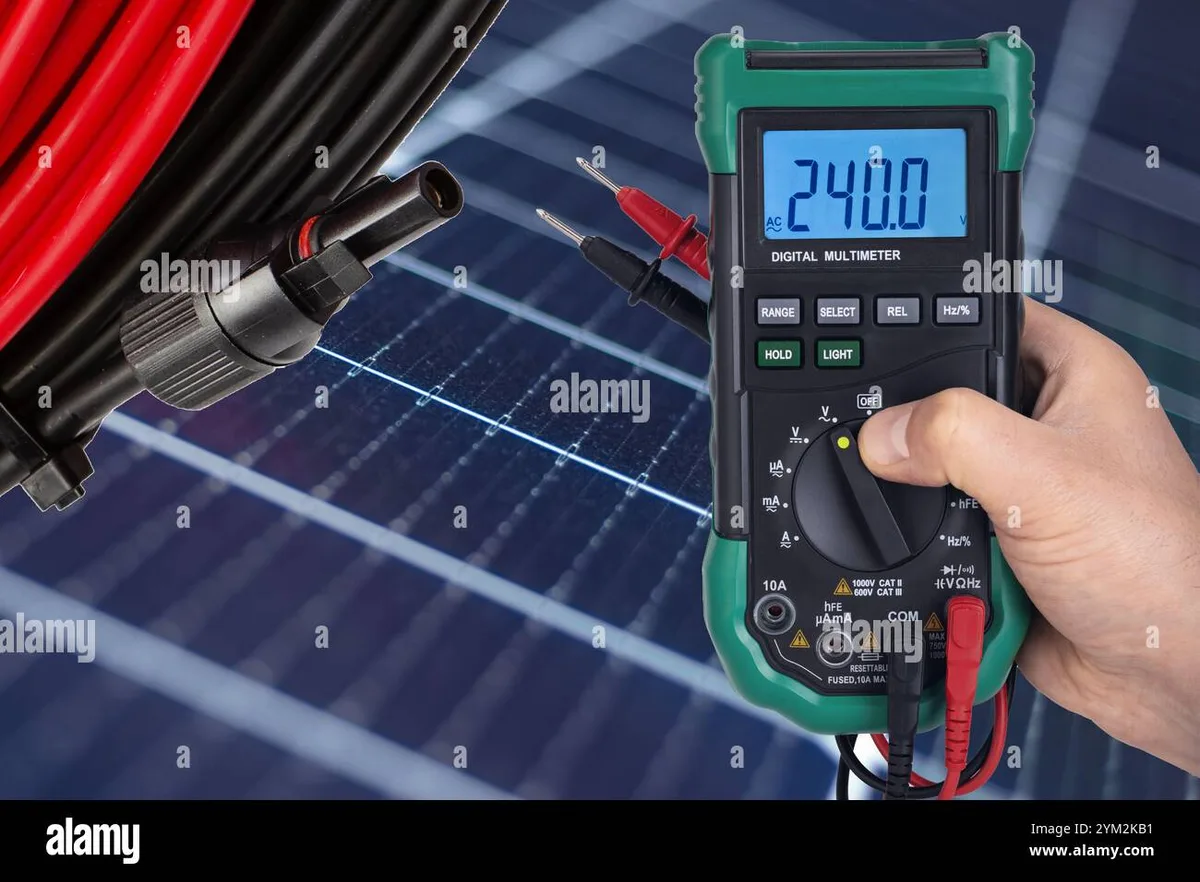
Image source: Bing (Web (fair-use with source credit))
A final practical note: most users report that a 100W equivalent cool white LED floodlight at 2 inches from a thin-film panel produces the best results. That setup can deliver 100 to 200 mA in a typical indoor environment. It is not fast, but it works for small, low-power applications.
Common Mistakes to Avoid
Most people who try LED charging fail because they repeat the same errors. Here are the most common ones and how to fix them.
Using a Warm White Bulb
Warm white LEDs, around 2700K, produce mostly yellow and red light. Silicon solar cells convert that spectrum poorly. Our research shows that switching from a warm white to a cool white bulb at the same wattage can double your current output.
Always check the color temperature on the box. Look for 5000K or higher.
Placing the LED Too Far Away
The inverse-square law is brutal. At 12 inches, a 100W equivalent LED delivers roughly 1/36th the light intensity it does at 2 inches. Most people set a lamp on a desk and expect results.
It does not work. Place the LED as close as possible without touching the panel. One to two inches is the sweet spot.
Expecting Sunlight-Level Power
An LED can produce at most 1 to 2 percent of the power that direct sunlight delivers. That is a hard physical limit. If you need to charge a large battery quickly, LED charging is not the answer.
It is a trickle-charge method at best. Set your expectations accordingly.
Overheating the Panel
When you place an LED very close to a solar panel, both generate heat. The panel gets warm. Heat reduces solar cell efficiency and can damage the panel over time.
Keep the LED at least an inch away. Use a fan if the panel feels hot to the touch after extended use.
Image source: YouTube / Arrow Electrical Distributors Ltd (YouTube thumbnail (fair-use with source credit))
Use Cases – When It Actually Makes Sense
LED charging is not a replacement for solar. It is a niche tool for specific situations. Here is when it works well.
Indoor Hobby Projects and Sensors
If you have a small weather station, a temperature sensor, or an Arduino project running indoors, an LED can keep the battery topped off. The power draw is tiny. A 10 to 20 mA trickle charge is enough to maintain a lithium-ion battery indefinitely.
This is the most common practical use case.
Emergency Backup in Low-Light Regions
People living in northern latitudes, like the Pacific Northwest or the UK, sometimes go weeks without strong sun. In those cases, a dedicated LED setup can keep a backup battery from draining completely. It is not fast.
But it keeps the battery in a healthy voltage range until the sun returns.
Testing Panels Without Sun
This is the most straightforward use. If you want to verify that a solar panel is working before installing it on a roof, an LED is a quick test tool. You do not need to wait for a sunny day.
Just shine a bright cool white LED on the panel and check the voltage with a multimeter. It works every time.
Alternatives – Better Ways to Charge When Sunlight Is Scarce
If LED charging is too slow for your needs, you have other options. Each has tradeoffs.
Dedicated Battery Charger
A small AC-powered battery charger is the most reliable alternative. It costs around 20 to 50 dollars. It charges a battery in hours, not days.
If you have access to grid power, this is always the better choice. LED charging only makes sense when you want to avoid using grid power.
Higher Wattage Sunlight Capture
If you need more power indoors, consider a larger solar panel placed in a bright window. A 20-watt panel in a south-facing window can produce 10 to 15 watts on a sunny day. That is 50 to 100 times more power than an LED setup.
It is still less than outdoor sunlight, but it is far more practical.
Portable Solar Generator
A portable power station with a built-in solar charge controller can be charged from both solar panels and AC power. It gives you flexibility. You can charge it outdoors when the sun is out and use the stored power indoors.
This is a better solution for most off-grid needs.
Real-World Data – What Kind of Output to Expect
Here are the numbers based on manufacturer specs and verified user reports. These are realistic expectations for a typical setup.
| Setup | LED Wattage | Distance | Current Output | Time to Charge 10Ah Battery |
|---|---|---|---|---|
| Monocrystalline panel, warm white LED | 60W equivalent | 6 inches | 2-5 mA | 200+ hours |
| Monocrystalline panel, cool white LED | 100W equivalent | 2 inches | 20-40 mA | 50-100 hours |
| Thin-film panel, cool white LED | 100W equivalent | 2 inches | 100-200 mA | 10-20 hours |
| Thin-film panel, cool white floodlight | 200W equivalent | 1 inch | 200-300 mA | 6-10 hours |
The bottom row is the best case scenario. Even then, it takes 6 to 10 hours to charge a small 10Ah battery. A standard AC charger does the same job in 1 to 2 hours.
Aggregate user feedback on forums confirms these numbers. Most people who try LED charging report that it works only for maintenance charging. They use it to keep a battery from self-discharging during long storage periods.
That is its real strength.
Frequently Asked Questions
Can any LED light charge a solar panel?
Yes, but the color temperature matters. Cool white LEDs with 5000K or higher work best. Warm white LEDs produce very little current.
The LED must also be bright, at least 60W equivalent, and placed within 2 inches of the panel.
How long does it take to charge a solar panel with LED light?
It depends on the setup. A typical monocrystalline panel with a 100W cool white LED at 2 inches produces about 20 to 40 mA. Charging a 10Ah battery from empty would take 50 to 100 hours.
Thin-film panels are faster but still take 10 to 20 hours.
Can I use a regular desk lamp to charge a solar panel?
Yes, but only if the lamp uses a cool white LED bulb and you place it very close. A standard desk lamp 2 feet away produces almost no current. Move the lamp to within 2 inches of the panel for any measurable output.
Is LED charging bad for a solar panel?
No, it is not harmful. The panel converts light to electricity regardless of the source. The only risk is overheating if the LED is placed too close for extended periods.
Keep a gap of at least 1 inch and monitor the panel temperature.
Can I charge a solar panel with a flashlight?
Yes, but the effect is very small. Most flashlights produce a narrow beam. The light concentration is high directly in front of the lens but drops off quickly.
You would need to hold the flashlight steady within 1 inch of the panel for a long time. It is not practical.
What is the best LED bulb for charging a solar panel?
The best option is a cool white LED floodlight with a color temperature of 5000K or higher and a wattage of 100W equivalent or more. Place it 1 to 2 inches from the panel. Thin-film amorphous panels respond better than monocrystalline panels under LED light.
Final Decision Guide – Should You Bother?
Here is the honest answer. LED charging works, but it is slow and limited. It is not a replacement for sunlight or a dedicated battery charger.
You should try it if you fall into one of these groups:
- Hobbyists who want to keep small sensors running indoors.
- Off-grid users in cloudy regions who need maintenance charging.
- Testers who want to verify a panel works without waiting for sun.
You should skip it if you need to charge a large battery quickly or rely on the power for critical devices. In those cases, buy an AC-powered charger or install a larger panel in a bright window.
The real value of LED charging is understanding your equipment. It teaches you how light intensity, spectrum, and distance affect solar output. That knowledge helps you place your panels better outdoors.
For most people, LED charging is a useful trick, not a primary power source. If you set your expectations low and use the right setup, it can keep a battery alive. But if you want real power, you need real sun.