What Is a Solar Panel? Everything You Need to Know
If you've ever looked at a solar panel and wondered what's actually happening under that glass, you're not alone. Most people know they turn sunlight into electricity, but the how and why matter a lot more than you'd think. Without the full picture, it's easy to overpay, get the wrong setup, or miss out on serious savings that could be yours.
A solar panel, at its core, is a device that converts light directly into electricity using the photovoltaic effect. As of 2026, the average residential panel produces between 300 and 420 watts under standard test conditions (STC), which is the benchmark set by IEC 61215. Understanding that spec alone can save you from buying panels that underperform in real-world heat or shade.
Let's break down exactly what you're getting on your roof.

Image source: Wikimedia Commons / Stephen Yang / The Solutions Project (CC BY)
Quick Answer
A solar panel is a flat device made of silicon cells that convert sunlight into electricity. It has no moving parts and produces direct current (DC) power. That power goes to an inverter, which changes it to alternating current (AC) for your home.
Panels are rated by wattage and efficiency. Higher efficiency means more power in less space.
What a Solar Panel Actually Does – The Simple Truth
Forget the science fiction for a second. A solar panel is basically a very fancy sandwich. The top layer is tempered glass that protects the cells underneath.
The middle is a grid of silicon wafers that do the actual work. The bottom is a backsheet that seals everything in.
When sunlight hits the panel, the silicon absorbs photons (tiny packets of light energy). That energy knocks electrons loose inside the silicon, and those electrons start moving in a single direction. That movement is electricity.
It's that simple, no magic, no moving parts, just physics.
But here's the thing most people miss: the panel only works efficiently when the sunlight hits it at the right angle and intensity. Shade from a single branch can drop output by 50% or more on that entire string of panels. Our research shows that many homeowners lose 10-20% of their potential production just from poor placement.
Knowing what the panel actually does helps you avoid those mistakes before you sign a contract.
How Solar Panels Work: Light, Electrons, and Your Home
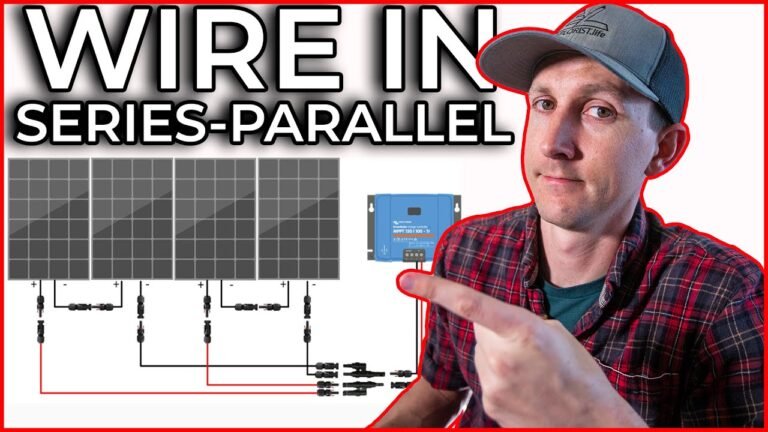
Let's zoom in on the actual process. Inside each solar cell, there are two layers of silicon: one doped with phosphorus (negative charge) and one doped with boron (positive charge). This creates an electric field at the junction between them, just like a battery has a positive and negative terminal.
When a photon hits the silicon, it frees an electron. That electron gets pushed by the electric field into the external circuit, the wires leading out of your panel. That's DC electricity.
It flows in one direction, like water through a pipe.
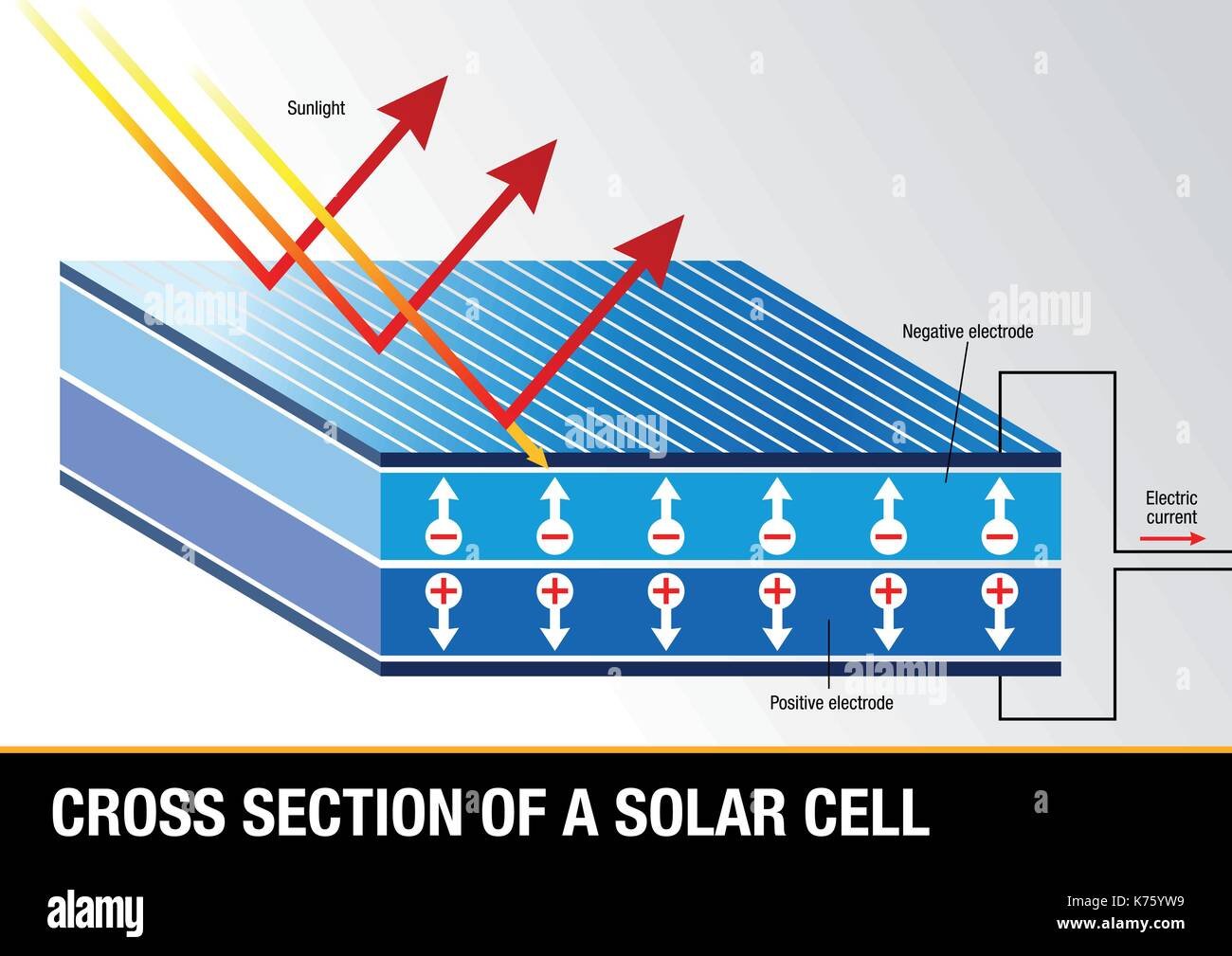
Image source: Bing (Web (fair-use with source credit))
Now, your home doesn't run on DC. It runs on alternating current (AC), which switches direction 60 times per second. That's where the inverter comes in.
The inverter converts DC to AC and synchs it with your home's electrical system. If you're grid-tied, any extra power flows back to the utility through your meter, spinning it backward in net metering states.
The whole system relies on the panel's temperature coefficient. Panels lose efficiency as they heat up. A typical coefficient of -0.35% per degree Celsius means a panel rated at 400W could lose about 14W on a hot 40°C day.
That's a real loss worth planning for.
What's Inside a Solar Panel? Key Components That Matter
Pop open a solar panel (please don't actually), and you'd find these layers from top to bottom:
- Tempered glass, 3.2mm thick, low-iron glass that's highly transparent and shatter-resistant.
- Encapsulant, a clear polymer (EVA or POE) that holds the cells in place and protects them from moisture.
- Solar cells, the silicon wafers, usually 60 to 144 cells per panel for residential.
- Backsheet, a weatherproof polymer layer that seals the bottom.
- Aluminum frame, structural support and mounting holes.
- Junction box, the black box on the back where wires connect, often with bypass diodes to handle partial shade.
- MC4 connectors, standardized quick-connect plugs for wiring panels together.
The cells themselves come in two main types: monocrystalline (single-crystal silicon, higher efficiency, black appearance) and polycrystalline (multiple silicon crystals, slightly lower efficiency, blueish hue). Monocrystalline panels dominate the market as of 2026 because they pack more power into less space, which matters on most roofs.
One component that often gets overlooked is the bypass diode. If one cell in a string gets shaded, it can heat up like a resistor (that's the hot spot problem). Bypass diodes let current bypass the shaded cells, preventing damage and keeping the rest of the panel working.
Panels with three bypass diodes handle shade better than those with two.
The Real Benefits (and the Trade-Offs You Need to Know)
Let's be honest. Solar panels aren't magic money printers. They're a long-term investment with real upsides and a few downsides.
Benefits
- Lower electricity bills, most homeowners cut their bill by 50% to 90% depending on system size and sun exposure.
- Federal tax credit, 30% of the installation cost is deductible from your federal taxes through 2032 (stepping down after that).
- Increased home value, studies from the Department of Energy suggest a 3-4% resale premium on solar-equipped homes.
- Low maintenance, no moving parts. Just keep them clean and check the inverter annually.
- Energy independence, you're less vulnerable to utility rate hikes and blackouts if paired with battery storage.
Trade-offs
- High upfront cost, $10,000 to $30,000 before incentives for a typical system.
- Not right for every roof, shaded roofs, north-facing slopes, or weak structures may not be ideal.
- Payback period, 6 to 10 years in most markets, which requires you to stay in your home that long to fully benefit.
- Degradation, panels lose about 0.5% efficiency each year, so after 25 years they're still at roughly 85-90% of original output.
If you're planning to move within 5 years, solar might not make financial sense unless you find a buyer willing to pay for it. But for long-term homeowners, the math usually works. For a deeper dive into what to look for when buying, check out our solar panel buying guide.
Solar Panel Types: Which One Belongs on Your Roof?
Not all panels are equal. The three main types you'll encounter are monocrystalline, polycrystalline, and thin-film. Here's the breakdown.
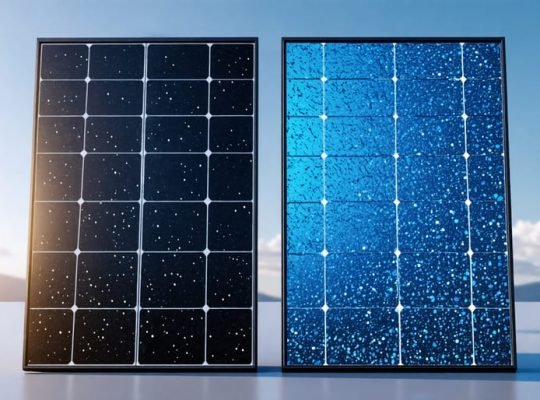
Image source: Bing (Web (fair-use with source credit))
Monocrystalline panels are the most efficient (18-22%) and most popular for residential. They're made from a single silicon crystal, giving them a uniform black look. They perform better in high heat and low light than their polycrystalline cousins.
They cost a bit more but earn it back with higher power density.
Polycrystalline panels are made from melted silicon fragments. They're slightly less efficient (15-18%) and have a blue, speckled look. They're cheaper per watt, so they can make sense if you have plenty of roof space and want to save on the initial investment.
However, they degrade a bit faster and have a higher temperature coefficient, meaning they lose more power on hot days.
Thin-film panels use a thin layer of photovoltaic material (like cadmium telluride or CIGS) on a backing. They're the least efficient (10-13%) but are lightweight, flexible, and can be integrated into building materials. They're often used in large commercial installations or on roofs that can't support the weight of glass panels.
For residential, they're less common because you need a lot more square footage.
So which one is for you? If you have limited roof space and want maximum output, go monocrystalline. If you have a big roof and a tighter budget, polycrystalline can work.
Thin-film is really only for niche cases like RVs, boats, or flat commercial roofs with weight limits.
One more thing to watch: the manufacturer's warranty. A 25-year performance warranty is standard, but the product warranty (against defects) varies from 10 to 25 years. Aim for at least 12 years on the product warranty and 25 years on performance (guaranteeing at least 80% output at year 25).
What a Residential Solar Panel System Costs – Real Numbers
Let's talk dollars. A typical home system runs between $10,000 and $30,000 before the federal tax credit. That price includes the panels, inverter, racking, wiring, permits, and installation labor.
After the 30% federal tax credit, you're looking at $7,000 to $21,000 out of pocket.
The main cost driver is system size. Most homes need a 6 kW to 10 kW system. Here's a rough breakdown per component:
| Component | Percentage of Total Cost |
|---|---|
| Solar panels (hardware) | 20–30% |
| Inverter | 5–10% |
| Racking and mounting | 10–15% |
| Labor and installation | 20–30% |
| Permits, inspection, misc. | 5–10% |
Your actual price per watt will land between $2.50 and $3.50 as of 2026. That's before incentives. In states with strong solar markets like California or Texas, competition keeps prices toward the lower end.
In less saturated areas, you may pay more.
One hidden cost: electrical panel upgrades. If your home has an older 100-amp panel, you might need a 200-amp upgrade. That's another $1,000 to $3,000 depending on local rates and whether the utility needs to get involved.
Batteries add a lot. A whole-home battery like the Tesla Powerwall 3 runs around $10,000 to $15,000 installed. That's separate from the solar panel system itself.
If you're grid-tied with net metering, you may not need a battery at all. That's a big savings.
For a full walkthrough of pricing variables and how to get the best deal, our solar panel buying guide breaks it down by state and installer.
Who Should Buy Solar Panels – and Who Shouldn't
Solar works great for some people and makes zero sense for others. Here's how to figure out which camp you're in.
You're a good candidate if:
- You own your home and plan to stay for at least 7 years.
- Your roof faces south, east, or west with good sun exposure.
- You have a south-facing roof slope between 15 and 40 degrees.
- Your electricity rates are above average for your area (over $0.12/kWh).
- You can pay cash or finance at a reasonable rate.
- Your roof is less than 15 years old and in good condition.
You should probably wait or skip if:
- You're planning to move in the next 5 years (unless solar adds clear resale value in your market).
- Your roof is heavily shaded by trees or taller buildings.
- Your roof needs replacement soon (pay for that first, then solar).
- You're in a state with weak net metering or high fees for solar customers.
- You can't comfortably afford the upfront cost or a loan with manageable payments.
Let's get specific. If you live in Arizona, Texas, or Florida and have a clear south-facing roof, the payback period is often 5-7 years. If you're in the Pacific Northwest with a north-facing roof and cheap hydroelectric power, it could take 12-15 years or more to break even.
One more thing: check with your homeowners association (HOA). Some HOAs still restrict or ban visible solar panels. That's illegal in many states now, but you might still face bureaucracy.
Common Mistakes That Cost Homeowners Thousands
I've seen the same errors come up again and again in homeowner forums and installer feedback. Avoid these and you'll save a lot of money and frustration.
Mistake 1: Choosing the cheapest bid.
Price-shopping alone is risky. A low bid might use cheaper panels, undersized wiring, or skip important permits. That can lead to fire hazards, poor performance, or fines.
Get at least three quotes and compare the full equipment list, not just the price.
Mistake 2: Ignoring the inverter type.
String inverters with a single central unit are cheaper. But if one panel gets shade, the whole string drops. Microinverters or power optimizers cost more but let each panel work independently.
On a roof with chimney or tree shade, that's worth the extra money.
Mistake 3: Underestimating roof condition.
Your roof needs to last at least 25 years. If it's 15 years old with worn shingles, you'll pay to remove and reinstall the panels when you reroof. That can be $3,000 to $5,000 extra.
Replace the roof first.
Mistake 4: Not checking the fine print on the lease or PPA.
If you don't buy the panels outright, you might sign a 25-year lease with annual escalators. That can eat into your savings. Always compare the total cost of a lease versus a loan versus cash purchase.
Mistake 5: Forgetting about net metering changes.
Some utilities have reduced net metering rates or added monthly fees for solar customers. Check your local policy before you commit. If net metering is weak, a battery might be needed to make the math work.
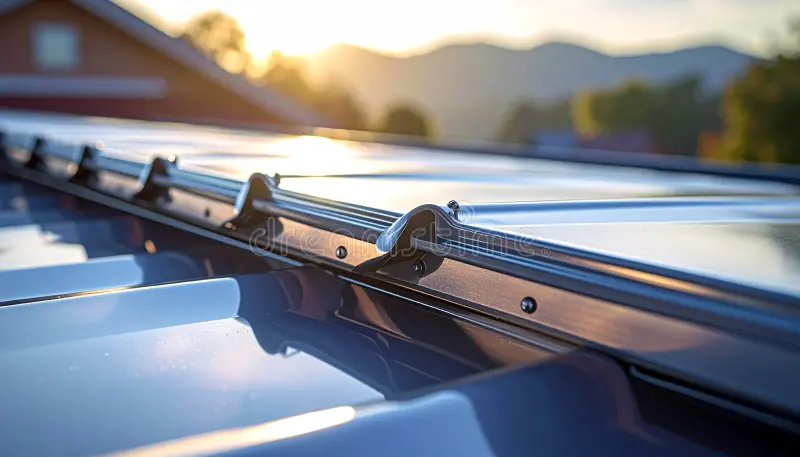
Image source: Bing (Web (fair-use with source credit))
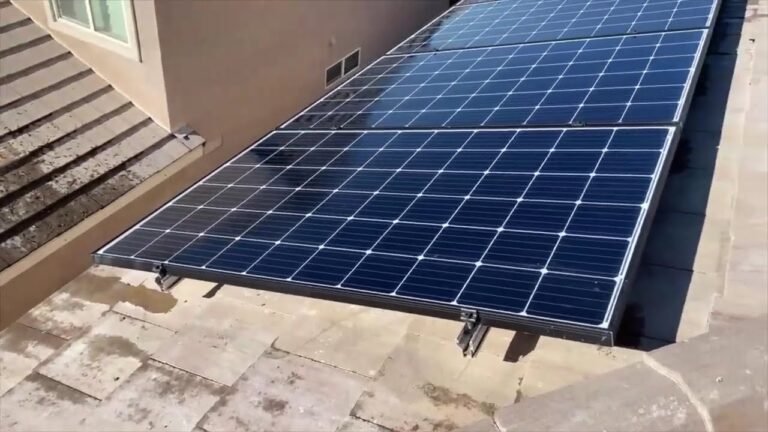
A properly racked panel is the difference between a 25-year roof and a leaky, sagging mess. Make sure the installer uses flashed mounting feet and stainless steel bolts, not just adhesive or unsealed brackets.
Maintenance and Long-Term Care for Your Panels
Here's the good news: solar panels have almost no moving parts. They don't need oil changes or filter swaps. But they do need basic care to keep producing at peak.
What to do:
- Clean the panels once or twice a year. Dust, pollen, bird droppings, and leaves block light. A soft brush and a hose (not a pressure washer) work fine. Do it early in the morning or on a cool day to avoid thermal shock.
- Trim nearby trees that cast shade or drop debris.
- Check the inverter display monthly. A green light usually means it's working. A red or blinking light means a fault.
- Monitor your energy production via the app or web portal. If you see a big drop compared to the same month last year, investigate.
What NOT to do:
- Don't walk on the panels. They can crack, and your warranty won't cover that.
- Don't use harsh chemicals or abrasive scrubbers. Soap and water is enough.
- Don't assume snow will cover them forever. Most modern panels shed snow quickly because the dark glass absorbs heat. If heavy snow sticks, a roof rake with a soft edge can help.
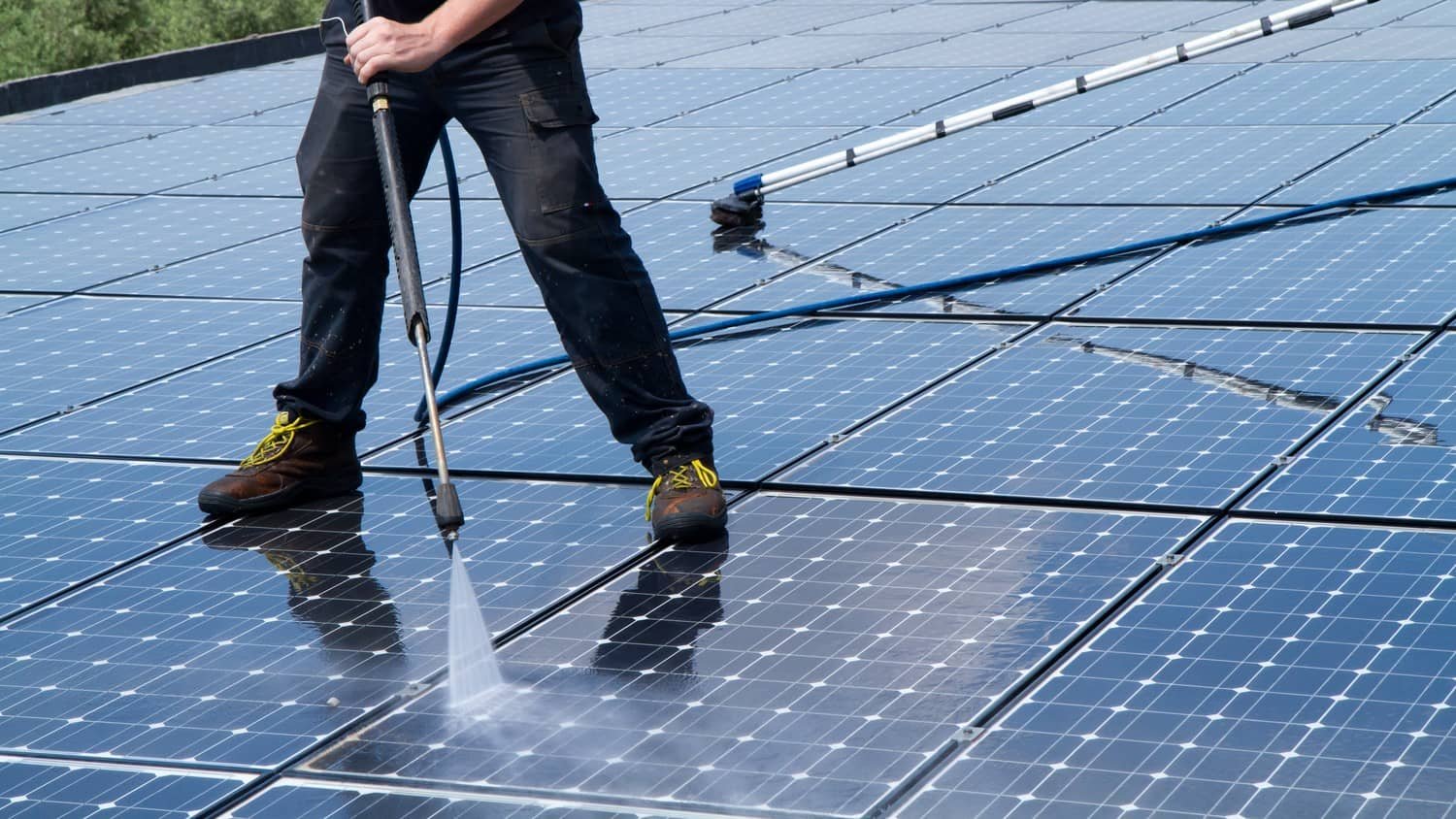
Image source: Bing (Web (fair-use with source credit))
Most homeowners report that rain does the job 90% of the time. Only in dusty or dry climates do you need regular cleaning. If you're in a wildfire-prone area, ash can accumulate and needs to be hosed off gently.
Safety, Permits, and Legal Requirements You Can't Skip
Solar installs involve electricity, roofs, and high voltage. Cutting corners on safety or permits isn't just risky. It can void your insurance, get you fined, or cause a fire.
Permits are mandatory.
Your local building department will require an electrical permit and often a structural permit. The installer should handle this. If they say they can do the job without permits, walk away.
No exceptions.
NEC compliance is not optional.
The National Electrical Code has specific rules for solar: rapid shutdown requirements (module-level shutdown within 30 seconds of activation), arc fault protection, and proper grounding. As of the 2020 NEC, new systems must have module-level rapid shutdown for firefighter safety.
Utility interconnection agreement.
You can't just flip a switch and sell power back. Your utility requires an interconnection agreement. That's a contract that sets the rules for net metering, how much you're paid, and who does the final inspection.
The installer typically files this, but you need to confirm it's done.

Image source: Wikimedia Commons / Asurnipal (CC BY-SA)
Insurance check.
Call your homeowner's insurance. Most policies cover solar panels as part of the dwelling, but you may need to increase your coverage if the system adds significant value. Some companies charge a small premium.
Others don't. Better to know upfront.
HOA and local covenants.
Even though many states have solar access laws, your HOA may still have rules about panel visibility, placement, or color. Check before you install. You don't want to fight a legal battle after the panels are up.
Fire setbacks.
Your local fire code likely requires a clear path along the ridge of the roof for firefighter access. That means you can't cover the entire roof with panels. Installers know this.
Double-check that their layout leaves the required 3-foot clear space along the ridge.
When to Hire a Professional vs. DIY
You should hire a professional for any rooftop solar installation that connects to the grid. Licensed electricians understand local codes, utility requirements, and safety protocols. DIY rooftop solar is dangerous and often illegal without permits.
The one exception is a small off-grid system for a shed, RV, or cabin. A 100W to 400W portable panel kit with a charge controller is manageable for a handy person. Even then, follow the National Electrical Code for wire sizing and fuse protection.
Professional installers carry liability insurance and warranties. If they damage your roof or cause an electrical fault, you're covered. With DIY, that risk is all yours.
The savings aren't worth a potential fire or a leaky roof.
Frequently Asked Questions About Solar Panels
Do solar panels work in cloudy weather?
Yes, but at reduced output. Panels produce about 10-25% of their rated power on heavily overcast days. They still generate electricity from diffuse light.
Modern panels are more efficient in low light than older models.
How long do solar panels last?
Most panels come with a 25-year performance warranty guaranteeing at least 80% output. Many panels continue producing well beyond that, often 30 to 40 years. The inverter typically needs replacement after 10 to 15 years.
Do I need a battery with solar panels?
No. If you have net metering, the grid acts as your virtual battery. You export excess power during the day and import it at night.
A battery only makes sense if you want backup power or if net metering is weak in your area.
Can I install solar panels on a flat roof?
Yes. Flat roofs use angled racking systems that tilt the panels toward the sun. They're actually easier to install and maintain because you don't need to work on a slope.
Just make sure the roof membrane is in good condition first.
Will solar panels damage my roof?
Properly installed panels protect the roof underneath by shading it. Problems come from poor installation. Water leaks happen when mounting brackets aren't flashed correctly.
Hire a reputable installer and you'll be fine.
Do solar panels increase property taxes?
In most states, solar panels are exempt from property tax assessments. The value they add to your home won't raise your tax bill. Check your local rules, but this exemption is common across the U.S.
Your Decision Guide – What to Do Next
Start with your electricity bill. Look at your annual usage in kilowatt-hours and your rate per kWh. Then check your roof on Google Maps or a solar assessment tool for sun exposure.
If the numbers look promising, get three quotes from licensed installers.
Compare the full equipment list, not just the price. Look at panel brand, inverter type, warranty terms, and the installer's track record. Ask for references and check their license and insurance.
If you're still on the fence, explore more resources in our solar panels category.
The bottom line is this. Solar panels are a proven technology with clear financial and environmental benefits. But they're only a good fit if your roof, budget, and timeline align.
Do your homework, ask hard questions, and don't rush into a decision. When done right, a solar panel system is one of the best investments you can make for your home and your energy future.