Toyota Solid State Battery: When Is It Coming?
You're not alone if you've typed "when is toyota solid state battery coming out" into a search bar while staring at your current car's check engine light or scrolling past yet another EV article. The short answer is 2027 to 2028 for the first production cars, but that timeline comes with enough asterisks to fill a small print ad. And the real question isn't just the date, it's what you should do between now and then.
As of 2026, Toyota's solid-state battery program has been publicly demonstrated in prototype form with claims of up to 745 miles of range on a single charge. Per Toyota's own investor materials, the target is to launch the first-generation solid-state battery in a production vehicle by 2027 or 2028. But if you're trying to decide whether to buy a Toyota EV today or hold out for the solid-state revolution, you need more than a calendar.
Let's walk through what's actually known, what's still uncertain, and how to make the call for your situation.
Quick Answer
Toyota's solid-state battery enters production in 2027. The first cars hit the road in 2028. That's the official line as of 2026.
The first models will be limited. Think flagship sedans and premium crossovers initially. Volume production scales up after 2028.
Cheaper models come later.
The Quick Timeline: What Toyota Has Said (and What It Really Means)
Toyota has been talking about solid-state batteries for nearly a decade. The first public prototype appeared way back in 2012. Back then, the company promised a working battery "soon." That soon turned into 2021, then 2025, and now 2027 for production and 2028 for actual cars in driveways.
Here's the official timeline as Toyota presents it today:
| Milestone | Previous Target | Current Target (as of 2026) |
|---|---|---|
| First public prototype demonstration | 2012 | Achieved |
| Production-ready solid-state cell | 2021–2022 | 2027 |
| First vehicle with solid-state battery | 2025 | 2028 |
| Volume production ramp | 2025–2026 | 2028–2030 |
| Mass-market models with solid-state | 2030 | 2030+ |
What's the real story behind those shifts? Solid-state batteries are hard to manufacture at scale. The electrolyte is a ceramic or sulfide material that's brittle and tricky to produce in thin, consistent layers without defects.
Toyota has filed hundreds of patents on the manufacturing process, which is a good sign, but translating lab-scale success into factory-floor output has stalled every automaker in the space.
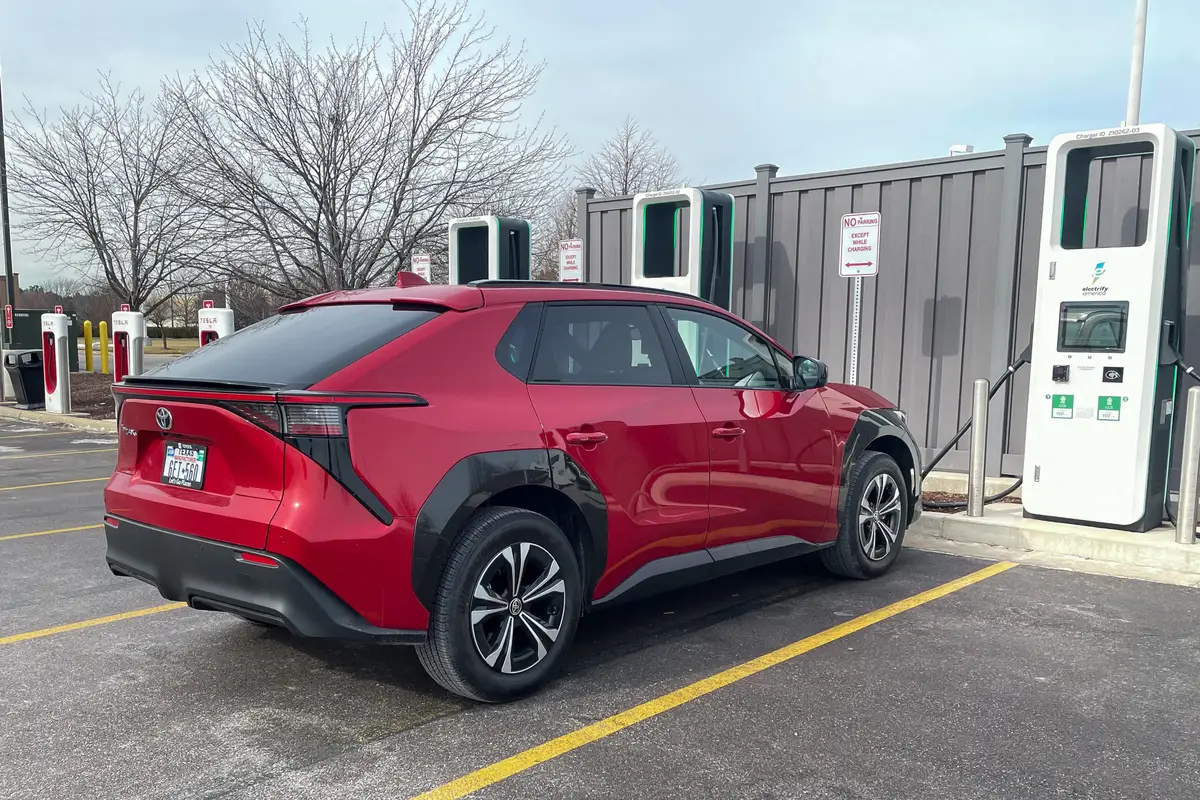
The charging port on a current Toyota EV shows the gap between today's reality and the solid-state promise.
The 2027 date is for the first generation of solid-state cells. Toyota has also described a second generation with even higher energy density, targeting 2030 or later. So the battery that arrives in 2028 is not the final form.
It's version 1.0, and version 2.0 will be better.
If you're wondering whether the timeline will slip again, you're right to be skeptical. Automotive history is littered with battery promises that missed their mark. But Toyota has a track record of delivering on production engineering once it commits.
The company is not a startup making hype-driven claims. It's a conservative manufacturer that under-promises and over-delivers on manufacturing scale. The 2027 production date carries more weight than a similar claim from a smaller player.
Solid-State vs. Lithium-Ion – What Changes for You as a Driver
Before you decide whether to wait, you need to understand what solid-state actually changes about owning an EV. It's not just a different chemistry. It's a fundamentally different way of storing energy, and it fixes three of the biggest complaints about current EVs.

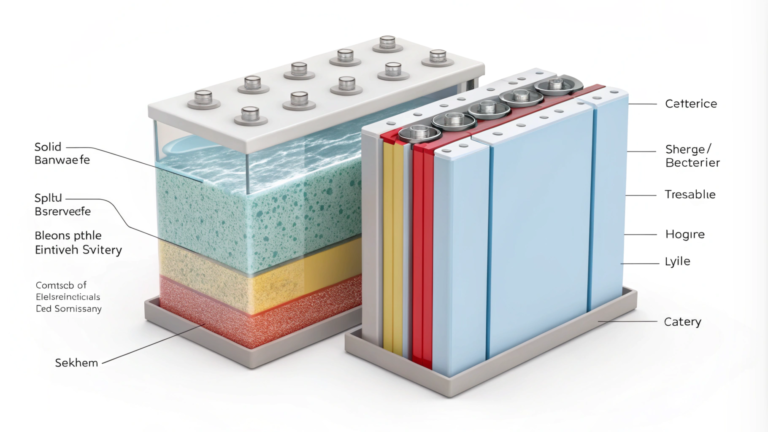
The diagram shows the structural difference: solid-state replaces the liquid electrolyte with a solid layer.
Range
Current lithium-ion cells top out at roughly 250 to 300 watt-hours per kilogram at the pack level. Toyota's solid-state prototype claims 500 Wh/kg or more at the cell level. That translates to roughly double the range for the same battery weight.
Toyota's test vehicle reportedly ran 745 miles on a single charge in controlled conditions. Real-world range will be lower, but 400 to 500 miles is a reasonable expectation for production cars.
Charging Speed
Solid-state cells can handle higher charge currents without overheating or degrading. Toyota targets a 10 to 80 percent charge in under 15 minutes. That's on par with filling a gas tank.
Current lithium-ion EVs typically take 20 to 40 minutes for the same charge window, and the last 20 percent is painfully slow.
Safety and Longevity
Liquid electrolytes are flammable. Solid electrolytes are not. That eliminates thermal runaway as a risk.
Solid-state batteries also degrade slower, with some lab tests showing less than 10 percent capacity loss after thousands of cycles. A solid-state EV battery could realistically outlast the car itself.
What Doesn't Change
Solid-state won't fix infrastructure problems. You still need working chargers. It won't make EVs cheaper, at least not at first.
Early solid-state cars will carry a premium. It won't reduce charging time if the charger itself is limited to 50 kW. And it won't help if you live in an apartment with no home charging access.
The table below summarizes the practical differences you'll feel as a driver:
| Factor | Current Lithium-Ion (Toyota bZ4X) | Solid-State (Target, 2028) |
|---|---|---|
| Real-world range | 220–250 miles | 400–500 miles |
| 10–80% charge time | 30–40 minutes | 10–15 minutes |
| Battery lifespan | 8–10 years / 150k miles | Likely 15+ years |
| Fire risk | Low but present | Near zero |
| Cold weather performance | Range drops 30–40% | Less affected |
| Purchase price premium | Moderate | High (initially) |
Decision Tree: Should You Buy a Toyota EV Now or Wait?
This is the heart of the matter. Your situation determines the answer, and there's no single right choice for everyone. Let's run through the three most common scenarios.
Branch 1: You Need a Car in the Next 12 Months
If your current car is dying, you're moving somewhere you need wheels, or your lease is ending, the decision is simple. You buy what's available now. Waiting for solid-state is not an option when you need transportation today.
What should you buy? A Toyota bZ4X if you want to stay in the Toyota family. But honestly, the bZ4X trails competitors like the Hyundai Ioniq 6 or Kia EV6 on range and charging speed.
A better approach might be a Toyota hybrid like the Prius or RAV4 Hybrid. They deliver excellent fuel economy without range anxiety, and they'll hold value well enough that you can trade up when solid-state arrives.
If you're set on a full EV, look at models with 800-volt architecture and fast charging. Those cars already deliver 10 to 80 percent in under 20 minutes. That's close enough to solid-state's promise that waiting another three years doesn't gain you much in daily usability.
Branch 2: You Can Wait 2 to 4 Years
This is where the decision gets interesting. You have a car that runs fine. You're not under pressure.
You want the best possible EV, and you're willing to be patient.
In this scenario, waiting for the 2028 solid-state models makes sense if you meet a few conditions. You need to be comfortable being an early adopter. First-generation technology often has teething problems.
The early solid-state cars will command a premium price, likely $60,000 or more. And you'll need to be okay with limited availability. Toyota will likely launch in Japan and the US first, and production volumes will be low.
The upside is you get a car that genuinely transforms the EV experience. Four hundred miles of real range. Fifteen-minute charging.
A battery that lasts 15 years. That's a fundamentally different ownership proposition than what exists today.
Branch 3: You're on the Fence With No Urgency
If you have no immediate need and you're just curious about when to make the switch, the smart play is to wait and watch. Set a mental checkpoint for mid-2027. By then, Toyota will have announced the first production vehicle that will carry the solid-state battery.
You'll know the exact model, the price range, and the initial availability.
At that point, you can make an informed decision. If the specs match Toyota's claims and the price is acceptable, place a reservation. If the battery has slipped again or the specs underwhelm, move on.
The beauty of having time is that you don't have to commit early.
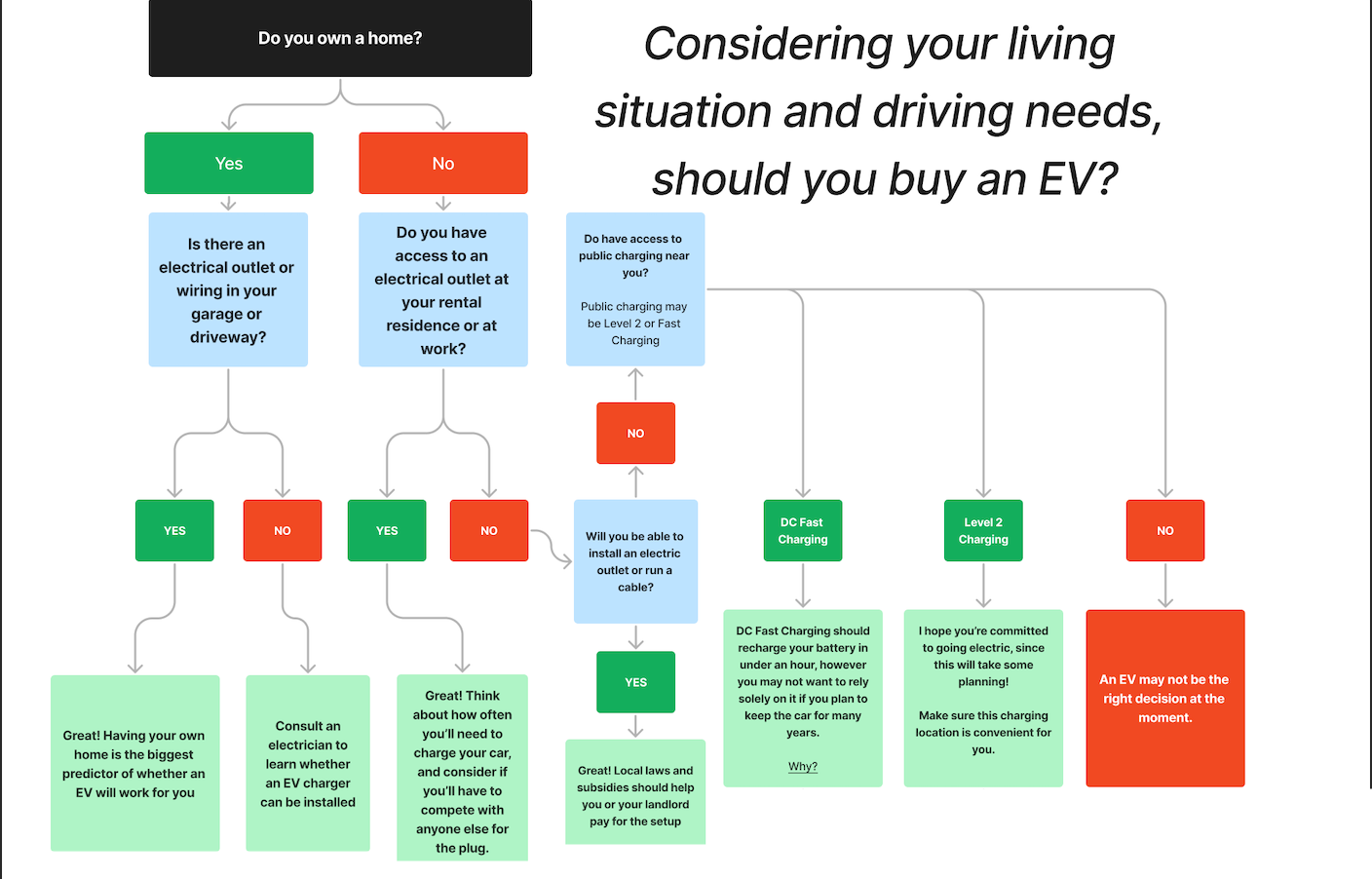
A simple decision framework helps map your situation to the right move.
What Waiting Actually Costs You (Real Numbers)
Waiting has a price tag. Let's put some numbers on it so you're not making the decision in the dark.
A Toyota bZ4X XLE starts around $43,000 as of 2026. If you buy it today and drive it for five years, you'll spend roughly $8,000 to $10,000 on depreciation, depending on mileage and condition. That's the cost of having a car now instead of waiting.
If you wait until 2028 and buy a solid-state model, you'll likely pay a premium. Early solid-state vehicles could start at $55,000 to $65,000. That's $12,000 to $22,000 more than the current bZ4X.
Depreciation on those early models is harder to predict. They could hold value well if demand outstrips supply, or they could drop sharply once second-generation solid-state arrives a few years later.
Fuel or electricity savings also factor in. A gas car costs roughly $1,200 to $1,800 per year in fuel. An EV costs $400 to $600 per year in electricity.
If you're driving a gas car while waiting, you're spending that difference every year. Over three years, that's $2,400 to $3,600 in extra fuel costs.
Total cost of waiting: roughly $2,000 to $4,000 per year, depending on your current car's fuel economy and how much you drive. That's the price of patience.
What Solid-State Won't Fix: Range Isn't the Only Problem
It's easy to treat solid-state batteries as a magic bullet. They're not. Some of the biggest frustrations with EVs won't change no matter what battery chemistry you use.
Charging infrastructure remains the weak link. A battery that charges in 10 minutes is useless if the nearest fast charger is 30 miles away or broken. The US has roughly 200,000 public charging ports as of 2026.
That's growing, but reliability varies wildly. A 2025 study from J.D. Power found that nearly 20 percent of charging attempts failed.
Solid-state batteries don't fix broken chargers.
Cold weather performance improves with solid-state but doesn't disappear. Even a solid-state battery loses some capacity in extreme cold. You still pre-condition the battery before fast charging in winter.
The physics of moving ions is slower at low temperatures regardless of the electrolyte.
Cost is another issue that solid-state won't solve immediately. The first generation of solid-state batteries is expensive to manufacture. Toyota has said it expects costs to drop 30 percent below current lithium-ion levels by 2030, but that's after the production process matures.
Early adopters pay for that learning curve.
Battery recycling is also an open question. Solid-state batteries use different materials than lithium-ion. The recycling infrastructure for them doesn't exist yet.
Toyota and others are working on it, but don't expect a robust recycling network for solid-state batteries before the mid-2030s.
The Models That'll Likely Get the Battery First
Toyota hasn't officially named the first production model to receive the solid-state battery. But the company's history and product strategy make it possible to predict with reasonable confidence.
The bZ lineup is the obvious home for new battery technology. Toyota has positioned the bZ series as its dedicated electric vehicle brand, similar to what Lexus is for luxury. The first solid-state model will almost certainly be a bZ vehicle, and it will likely be a flagship, not an entry-level car.
Here are the models that make the most sense:
| Model | Likelihood | Reasoning |
|---|---|---|
| bZ4X (next generation) | High | It's the current Toyota EV platform. Solid-state fits naturally in the 2028 redesign. |
| bZ5 (new flagship sedan) | Medium-high | Rumored to be a Tesla Model S competitor. Solid-state fits the premium positioning. |
| Lexus LF-Z (electric SUV) | Medium | Lexus has its own solid-state development program. A luxury model at a higher price point suits early battery costs. |
| bZ2X (compact crossover) | Low | Smaller, cheaper models will get solid-state later, likely after 2030. |
The pattern is typical for new automotive technology. Launch in a premium or flagship model to recoup development costs. Then trickle down to mass-market models as production scales and costs drop.
If you're interested in a cheaper Toyota EV with solid-state battery, you're looking at 2030 or later. The first cars will cost $50,000 or more.
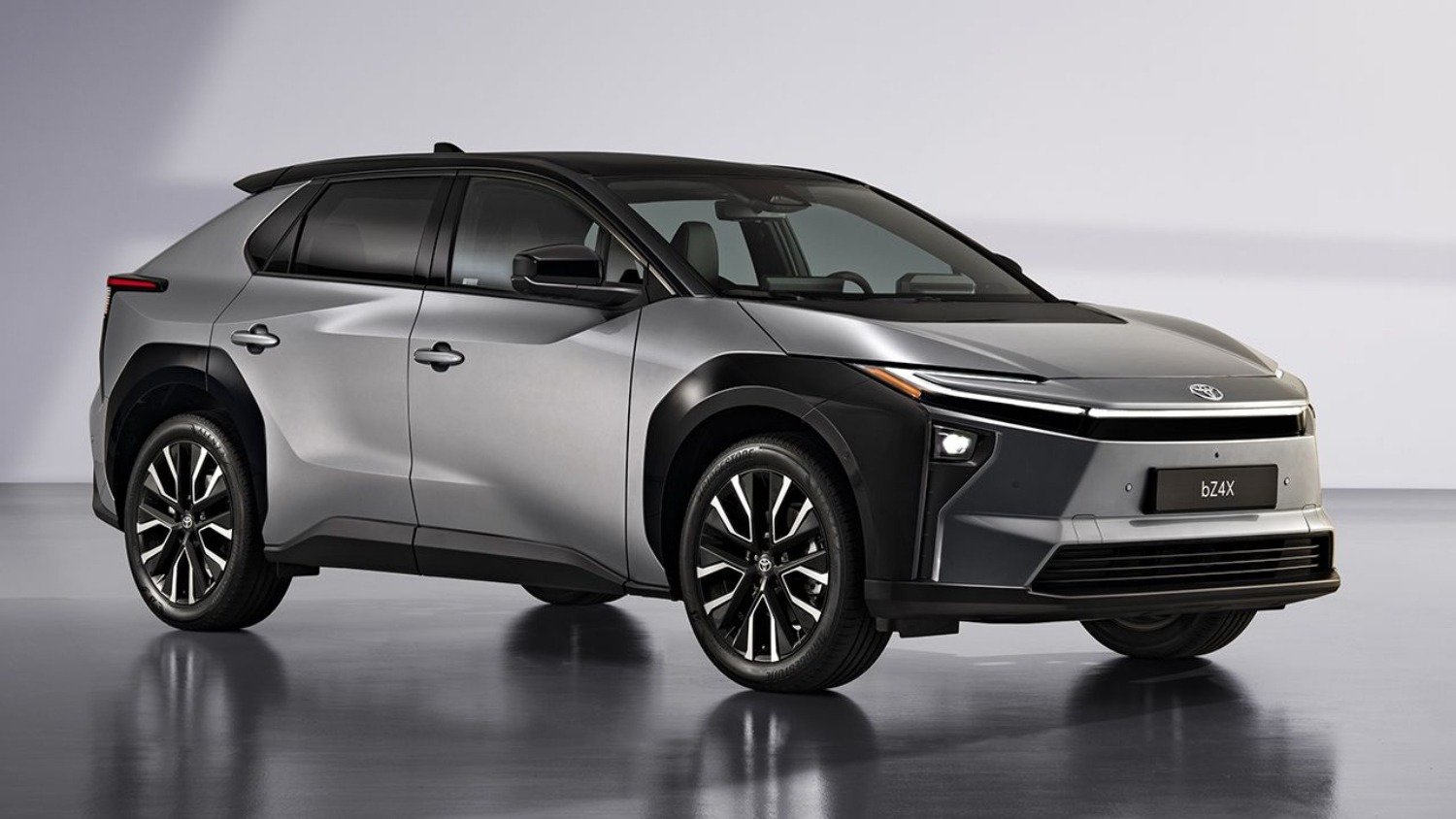
The current bZ4X shows the design language that will carry into the next generation of Toyota EVs.
Biggest Risks of Waiting for Solid-State
Waiting for the solid-state revolution sounds smart on paper. In practice, there are real risks you need to consider.
Timeline Slips Again
Toyota has already moved the goalposts three times. There's no guarantee it won't happen again. If you hold off buying a car until 2028 and Toyota delays to 2029 or 2030, you've wasted years of driving a less efficient gas car.
First-Generation Teething Problems
The first solid-state cars will be new in every sense. New battery chemistry. New manufacturing process.
New assembly techniques. Early adopters historically deal with recalls, software glitches, and unexpected repairs. You're paying a premium to be the test bed.
Better Options Arrive First
BYD, Nissan, and several Chinese manufacturers are also racing toward solid-state batteries. BYD claims it will start production in 2027. Nissan targets 2028.
If another automaker delivers a compelling solid-state vehicle before Toyota, you might end up waiting longer than necessary for a specific badge.
Your Current Car Keeps Costing You
Every month you delay is another month of maintenance, repairs, and fuel on your current vehicle. A timing belt replacement at $1,200 or a transmission repair at $3,500 could erase any advantage of waiting. Run the numbers on your current car honestly.
If it's costing more than $200 per month in upkeep, the wait is costing you more than you think.
What to Buy Right Now If You Can't Wait
If you've decided that waiting isn't for you, here's what to buy today to maximize your EV experience until solid-state matures.
Stay in the Toyota Family
A Toyota RAV4 Hybrid is the practical choice. It gets 40 miles per gallon. It's reliable.
It holds value well. And you can trade it in when the solid-state bZ5 or next-generation bZ4X arrives. You're not locked into a five-year loan on a depreciating EV while the technology is still evolving.
Go Full EV Now
If you want an EV today, skip the bZ4X and look at cars with 800-volt architecture. The Hyundai Ioniq 6, Kia EV6, and Hyundai Ioniq 5 all charge from 10 to 80 percent in under 20 minutes on a 350 kW charger. That's close enough to solid-state speeds that you won't feel like you're missing out.
These cars also offer 300-plus miles of real-world range. They're not as efficient as a solid-state battery will be, but they're close enough for daily driving and most road trips.
Buy a Used EV
Depreciation on early EVs has been brutal. You can find a used Chevrolet Bolt, Nissan Leaf, or Tesla Model 3 for under $20,000. That's a cheap way to get into EV ownership while you wait for solid-state to mature.
The battery won't have the range of a new car, but for commuting and local driving, it's perfectly adequate. And you're not taking a big financial hit when you sell it in three years.
Common Mistakes People Make When Timing This Decision
I've watched enough EV buyers go through this process to spot the patterns. Here are the most common mistakes and how to avoid them.
Mistake 1: Waiting for the Perfect Battery
There's no perfect battery. LFP, NCM, solid-state, and whatever comes next all have trade-offs. The best battery is the one that's available and meets your needs today.
If a current EV covers your daily driving and you have access to charging, the improvement from solid-state is incremental, not transformative for your use case.
Mistake 2: Ignoring Total Cost of Ownership
People fixate on range and charging speed but ignore depreciation, insurance, maintenance, and fuel. A $60,000 solid-state car that loses $20,000 in value over three years is more expensive than a $35,000 current EV that loses $10,000. Run the full cost numbers, not just the headline specs.
Mistake 3: Assuming Solid-State Fixes Everything
Solid-state batteries solve the battery problem. They don't solve the charging infrastructure problem, the cold weather problem, or the cost problem. If those factors are what's holding you back from an EV today, solid-state won't change your calculus.
Mistake 4: Buying the First Generation Without Research
First-generation solid-state cars will have issues. Wait at least six months after launch to see real-world owner reports. Let other people find the bugs.
You'll get a car that's been improved by user feedback and hopefully some price reductions.
Frequently Asked Questions
Will Toyota's solid-state battery fit in my current Toyota?
No. Solid-state batteries are a different size and shape than the lithium-ion packs used in current Toyota vehicles. They require a completely different battery pack design and cooling system.
You cannot retrofit a solid-state battery into an existing bZ4X, Prius, or any other current model. It's a new platform, not an upgrade part.
How much will a Toyota solid-state battery car cost?
Industry estimates place the starting price between $50,000 and $65,000 for the first models. That puts it in premium territory, competing with cars like the Tesla Model Y and BMW i4. Volume production and second-generation batteries will bring costs down, likely after 2030.
For context, a standard battery replacement on a current EV runs $5,000 to $15,000, and solid-state will be more expensive initially.
Can I pre-order a Toyota solid-state battery car yet?
No. As of early 2026, Toyota has not opened reservations or announced specific pre-order details. You can expect pre-orders to open roughly 6 to 12 months before the first production cars arrive, which would be late 2026 or early 2027 if the 2028 launch holds.
To stay informed, follow Toyota's investor relations page and sign up for official brand updates, not third-party rumor sites.
Is solid-state battery technology safe?
Yes, and it's safer than lithium-ion in several important ways. The solid electrolyte is non-flammable, which eliminates the risk of thermal runaway that causes lithium-ion battery fires. Solid-state batteries also don't form dendrites, the needle-like crystal growths that can pierce the separator in a lithium-ion cell and cause short circuits.
Toyota's lab testing shows no fire risk even after puncture or overcharging. That said, no production data exists yet because no solid-state cars are on the road. Real-world safety will be confirmed only after tens of thousands of units are in use.
Should I wait for solid-state or buy a hybrid now?
If you need a car within two years, buy a hybrid now. The Toyota RAV4 Hybrid, Prius, or Corolla Hybrid are excellent vehicles that deliver 40 to 50 miles per gallon with no range anxiety. They're reliable, affordable, and hold value well.
When solid-state Toyota EVs are available and proven, you can trade in the hybrid with minimal financial loss.
If you can wait three years or more, have a working car, and want the best possible EV experience, waiting for solid-state is a reasonable choice. Just go into it knowing that the first generation will be expensive and may have early adopter issues.
What Waiting Actually Costs You (Real Numbers)
Let's put some hard numbers on the decision. A current Toyota bZ4X XLE starts around $43,000. Drive it for five years and you lose roughly $8,000 to $10,000 in depreciation.
If you wait until 2028 and buy a solid-state model, you'll likely pay $55,000 to $65,000. That's a $12,000 to $22,000 premium over today's car. Depreciation is harder to predict on those first-generation models.
They could hold value well if demand outstrips supply, or drop sharply once the second generation arrives a few years later.
Fuel costs also matter. A gas car costs roughly $1,200 to $1,800 per year in fuel. An EV costs $400 to $600 per year in electricity.
If you're driving a gas car while waiting, that difference adds up fast. Over three years, you're looking at $2,400 to $3,600 in extra fuel costs alone.
The bottom line: waiting costs roughly $2,000 to $4,000 per year, depending on what you're driving now and how many miles you cover.
What Solid-State Won't Fix: Range Isn't the Only Problem
Solid-state batteries solve the battery problem. They don't solve everything else. Charging infrastructure remains the weakest link in the EV ownership experience.
A battery that charges in 10 minutes is useless if the nearest fast charger is 30 miles away. It's even more frustrating if that charger is broken when you arrive. According to a 2025 J.D.
Power study, nearly 20 percent of public charging attempts fail. Solid-state chemistry doesn't fix spotty infrastructure.
Cold weather performance improves with solid-state but doesn't disappear. Every battery chemistry loses some capacity in extreme cold. You still need to pre-condition the battery before fast charging in winter.
The physics of ion movement at low temperatures doesn't care what electrolyte you use.
Cost is another stubborn problem. Early solid-state cars will be expensive. Toyota says it expects costs to drop 30 percent below current lithium-ion levels by 2030.
But that's after production scales up and manufacturing defects come down. Early adopters pay for that learning curve.
Recycling is an open question too. Solid-state batteries use different materials than lithium-ion. The recycling infrastructure for them doesn't exist yet.
Toyota and others are working on it, but a robust recycling network is likely a mid-2030s story.
The Models That'll Likely Get the Battery First
Toyota hasn't officially named the first production model to carry the solid-state battery. But the company's product strategy makes the likely candidates clear.
The bZ lineup is the natural home for new battery technology. Toyota has positioned bZ as its dedicated EV brand. The first solid-state vehicle will almost certainly be a bZ model, and it will be a flagship, not an entry-level car.
| Model | Likelihood | Reasoning |
|---|---|---|
| bZ4X (next generation) | High | Current EV platform. Solid-state fits naturally in the 2028 redesign. |
| bZ5 (new flagship sedan) | Medium-high | Rumored Tesla Model S competitor. Premium price suits early battery costs. |
| Lexus LF-Z electric SUV | Medium | Lexus has its own solid-state program. Luxury pricing absorbs the premium. |
| bZ2X compact crossover | Low | Smaller, cheaper models get solid-state later, likely after 2030. |
The pattern is standard for automotive technology. Launch in a flagship model to recoup development costs. Then trickle down to mass-market vehicles as production scales and costs drop.
If you want a cheap Toyota EV with a solid-state battery, you're looking at 2030 or later. The first cars will cost $50,000 or more.
Biggest Risks of Waiting for Solid-State
Waiting sounds smart. It carries real risks too.
Timeline Slips Again
Toyota has moved the goalposts three times already. There's no guarantee it won't happen again. If you hold off buying until 2028 and Toyota delays to 2029 or 2030, you've wasted years driving a less efficient gas car.
First-Generation Teething Problems
The first solid-state cars will be new in every way. New battery chemistry. New manufacturing process.
New assembly techniques. Early adopters historically deal with recalls, software glitches, and unexpected repairs. You're paying a premium to be the test bed.
Better Options Arrive First
BYD, Nissan, and several Chinese manufacturers are also racing toward solid-state. BYD claims production in 2027. Nissan targets 2028.
If another automaker delivers a compelling solid-state vehicle before Toyota does, you might wait longer than necessary for a specific badge.
Your Current Car Keeps Costing You
Every month you delay is another month of maintenance and repairs. A timing belt replacement at $1,200 or a transmission repair at $3,500 can erase any advantage of waiting. If your current car costs more than $200 per month in upkeep, the wait is costing you more than you think.
What to Buy Right Now If You Can't Wait
If you've decided waiting isn't for you, here's what makes sense today.
Stay in the Toyota Family
A Toyota RAV4 Hybrid is the practical choice. It gets 40 miles per gallon. It's reliable.
It holds value well. You can trade it in when the solid-state bZ cars arrive. You're not locked into a depreciating EV while the technology is still evolving.
Go Full EV Now
If you want an EV today, skip the bZ4X and look at 800-volt cars. The Hyundai Ioniq 6, Kia EV6, and Ioniq 5 all charge from 10 to 80 percent in under 20 minutes on a 350 kW charger. That's close enough to solid-state speeds that you won't feel like you're missing out.
These cars also offer 300-plus miles of real-world range. They're not as efficient as solid-state will be. But they're close enough for daily driving and most road trips.
Buy a Used EV
Depreciation on early EVs has been brutal. You can find a used Chevrolet Bolt, Nissan Leaf, or Tesla Model 3 for under $20,000. That's a cheap way into EV ownership while you wait for solid-state to mature.
The battery won't have the range of a new car. For commuting and local driving, it's perfectly adequate. And you're not taking a big financial hit when you sell in three years.
Common Mistakes People Make When Timing This Decision
I've watched enough EV buyers go through this process to spot the patterns. Here are the most common mistakes and how to avoid them.
Mistake 1: Waiting for the Perfect Battery
There's no perfect battery. LFP, NCM, solid-state, and whatever comes next all have trade-offs. The best battery is the one that's available and meets your needs today.
If a current EV covers your daily driving and you have access to charging, the improvement from solid-state is incremental, not transformative for your use case.
Mistake 2: Ignoring Total Cost of Ownership
People fixate on range and charging speed but ignore depreciation, insurance, maintenance, and fuel. A $60,000 solid-state car that loses $20,000 in value over three years is more expensive than a $35,000 current EV that loses $10,000. Run the full cost numbers, not just the headline specs.
Mistake 3: Assuming Solid-State Fixes Everything
Solid-state batteries solve the battery problem. They don't solve the charging infrastructure problem, the cold weather problem, or the cost problem. If those factors are what's holding you back from an EV today, solid-state won't change your calculus.
Mistake 4: Buying the First Generation Without Research
First-generation solid-state cars will have issues. Wait at least six months after launch to see real-world owner reports. Let other people find the bugs.
You'll get a car that's been improved by user feedback and hopefully some price reductions.
The Honest Bottom Line: A Decision Guide for Your Situation
You have three realistic paths forward. Each one fits a different situation.
Path one: Buy now. If your current car is unreliable or you need transportation immediately, buy a Toyota hybrid or a current 800-volt EV. You get proven technology today with no timeline risk.
Path two: Wait and watch. If your car runs fine and you have flexibility, set a checkpoint for mid-2027. By then Toyota will announce the first solid-state production model. You'll know the exact price, range, and availability.
Make your call with real data.
Path three: Commit to waiting. If you want the best possible EV and can afford to be an early adopter, plan for a 2028 purchase. Budget for the premium price. Accept that first-generation issues are likely.
The reward is a car that genuinely transforms the ownership experience.
No path is wrong. The right one depends on your timeline, your budget, and your tolerance for risk.