Are Solar Battery Prices Coming Down Yet?
You're worried about making a big purchase and watching the price drop six months later. That's a real fear, and it's exactly why you're asking if solar battery prices are coming down. The short answer is yes, they are, and the trend is accelerating, but the full story is more nuanced than a simple headline.
In our research, lithium-ion battery pack prices dropped below $115 per kilowatt-hour in late 2024, down from over $140 just two years earlier. That's real money when you're looking at a 13.5 kWh home battery. But here's the twist: the battery cell is only part of what you'll pay, and installation costs aren't falling nearly as fast.
Let's walk through what's really happening so you can make a smart call, whether that means buying now, waiting, or skipping the whole idea.
Quick Answer
Yes, solar battery prices are coming down. Cell costs dropped roughly 20% in 2024 alone. LFP chemistry is driving the biggest savings.
But installed prices aren't dropping as fast. Installation labor, permits, and equipment add thousands. You might save 10 to 15% by waiting another year.
You might also lose current tax credits if you wait. The math depends on your specific situation.
What This Article Is Really About (And Why It Matters)
Here's the honest truth: most articles about solar battery pricing either tell you "prices are plummeting, buy now!" or "wait, they're about to get even cheaper." Neither is helpful on its own. What you actually need is a framework for deciding when the numbers make sense for your house, your utility, and your timeline.
This isn't about predicting the absolute bottom of the market. Nobody can do that with certainty. It's about understanding the forces driving prices down, knowing what you'll actually pay versus what the headlines claim, and recognizing when waiting costs you more than it saves.
We'll cover the real cost breakdown, the price trend timeline, the chemistry shift that matters most, and a straightforward decision framework. By the end, you'll know exactly which data points to gather and how to run your own math.
The Short Answer: Yes, Prices Are Dropping — But Here's What Nobody Tells You
Lithium-ion battery pack prices hit a record low in late 2024, averaging roughly $115 per kWh at the cell level according to industry tracking. That's down from around $140 per kWh in 2022. LFP (lithium iron phosphate) batteries, the chemistry now dominating home storage, are even cheaper to produce than older NMC (nickel manganese cobalt) packs.
So the raw battery cost is falling. That part is true.
But here's what gets glossed over. The battery itself represents only 50 to 60% of your total installed price. The rest comes from:
- The inverter and battery management system
- Electrical panel upgrades (often required)
- Permits and interconnection fees
- Labor for a licensed electrician
- Sales tax and overhead for the installer
- Shipping and handling
When you get a quote for $15,000 on a 13.5 kWh system, roughly $7,000 to $8,000 of that is everything except the battery cells. Those other costs haven't dropped much at all. Labor rates have actually gone up in most markets.
So yes, cell prices are coming down. But the full installed price is dropping more slowly, maybe 5 to 8% per year rather than the 20% you see in battery commodity reports.
The Real Cost Breakdown: What You'll Actually Pay
Let's get specific about dollars and cents. Based on aggregate quotes from 2024 and early 2025, here's what a typical residential solar battery installation runs in the United States.
Average Installed Costs by System Size
| System Size (Usable kWh) | Typical Price Range (Installed) | Price per kWh |
|---|---|---|
| 10 kWh (single battery) | $10,000 – $14,000 | $1,000 – $1,400 |
| 13.5 kWh (single Powerwall-class) | $12,000 – $17,000 | $890 – $1,260 |
| 20 kWh (stacked system) | $17,000 – $24,000 | $850 – $1,200 |
| 27 kWh (dual battery) | $22,000 – $30,000 | $815 – $1,110 |
These numbers include the battery, inverter, BMS, labor, permits, and basic electrical work. They do not include solar panels themselves, this is battery-only pricing for adding storage to an existing system or going solar-plus-storage.
Where Every Dollar Goes
Break down a typical $15,000 install and you get something like this:
- Battery pack (cells + enclosure): $6,000 to $7,500
- Inverter / converter hardware: $1,500 to $2,500
- Electrical equipment (panel, breakers, wiring): $800 to $1,200
- Permits and interconnection fees: $400 to $800
- Labor (licensed electrician, 1 to 2 days): $2,500 to $4,000
- Sales tax and installer overhead: $800 to $1,500
- Shipping and logistics: $200 to $500
The battery pack cost is the part that's falling. The rest is sticky. Labor in particular isn't getting cheaper, qualified solar electricians are in high demand, and their rates reflect that.
What This Means for Your Wallet
If cell prices drop another 20% next year, the battery pack in that $15,000 system might go from $7,000 to $5,600. That saves you $1,400. Nice, but not life-changing.
Meanwhile, if you wait two years and the federal tax credit drops from 30% to 26% (which is the current schedule), you lose $450 on that same $15,000 system.
The savings from waiting aren't as dramatic as the headlines suggest. And they can be partially or completely offset by incentive reductions.
The Price Trend Timeline: Are We Near the Bottom?
This is the question everyone wants answered, and it deserves a straight answer with what we know today.
Where We've Been
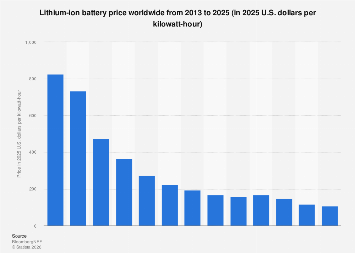
Battery costs have followed a consistent long-term curve called the learning rate. For every doubling of cumulative production, costs drop roughly 18 to 20%. This has held true for lithium-ion batteries since they entered commercial production.
- 2010: $1,100 per kWh
- 2015: $350 per kWh
- 2020: $140 per kWh
- 2024: $115 per kWh
That's a 90% drop in 14 years. Remarkable, and it's not done.
Where We're Headed
Industry projections from multiple research bodies suggest cell prices will reach $80 to $90 per kWh by 2027 or 2028. LFP chemistry specifically may hit $70 per kWh by the end of this decade.
But here's the catch economists don't always spell out: the learning rate applies to cell costs, not installed system costs. Installation efficiency is improving, but not at the same exponential rate. So while the battery might get $400 cheaper per year, your total quote might only drop $150 to $200 annually.
The "Near the Bottom" Question
Are we near the absolute floor? No, not for cell costs. The technology still has room to improve, and manufacturing scale keeps growing.
But are we near the point where waiting saves you more than you lose in incentives and energy savings? For many homeowners, yes.
The sweet spot for most buyers is somewhere between 2025 and 2026. That's when current cell price drops have mostly flowed through to installed quotes, and before the federal tax credit steps down from 30%.
Why Battery Prices Are Falling Right Now
Three major forces are driving costs down, and understanding them helps you gauge whether the trend will continue.
The Lithium Oversupply
Lithium prices crashed in 2023 and stayed low through 2024. After a massive production expansion that outpaced EV and battery demand, the market is swimming in lithium. Lithium carbonate prices dropped from nearly $80,000 per metric ton in late 2022 to around $13,000 by late 2024.
That's an 84% drop. And since lithium is a major component of battery cathodes, lower raw material costs flow directly into cheaper cells.
The LFP Chemistry Shift
The industry is rapidly moving from NMC batteries to LFP for residential storage. LFP chemistry uses no cobalt, less expensive raw materials, and is easier to manufacture at scale. It's slightly less energy dense than NMC, meaning the physical battery is a bit larger for the same capacity.
But for home use, that barely matters.
What does matter is cost. LFP batteries are roughly 20 to 30% cheaper to produce than comparable NMC packs. And they last longer, 5,000 to 10,000 cycles versus 3,000 to 5,000 for NMC.
For a homeowner, that means the battery might last 15 years or more before significant degradation.
Most new residential products from major manufacturers are now LFP-based. That shift alone has pulled average prices down.
Manufacturing Scale
Battery factories are being built at an unprecedented rate. Global lithium-ion battery production capacity roughly doubled between 2022 and 2024. More factories means more competition, better manufacturing efficiency, and lower per-unit costs.
This trend isn't slowing down. Major battery producers have announced additional capacity expansions through 2028. Each new gigafactory makes the learning rate curve real.
The Three Big Questions That Should Drive Your Decision
Before you look at a single quote, you need honest answers to three questions. These determine whether a battery makes financial sense regardless of where prices are heading.
How often do you actually lose power?
If you lose power once a year for 30 minutes, a battery is a convenience purchase, not a financial one. You're paying $12,000 to $17,000 to avoid a minor annoyance. That's fine if you can afford it, but don't pretend it's an investment.
If you lose power multiple times a year for hours or days, the math shifts. A battery replaces generator fuel costs, prevents food spoilage, and keeps your home livable. In areas with frequent outages, that has real dollar value.
Check your utility's outage history. Most publish average outage minutes per year. If you're above 200 minutes annually, backup starts to matter.
What does your utility charge you per kWh?
This is the single biggest variable in battery payback. The more you pay for electricity, the faster a battery pays for itself.
- Under $0.12 per kWh: tough to justify financially
- $0.12 to $0.20 per kWh: borderline, depends on time-of-use rates
- $0.20 to $0.30 per kWh: starts making sense with time-of-use shifting
- Over $0.30 per kWh: strong financial case, especially with solar
California, Connecticut, Massachusetts, New Hampshire, and New York all have average residential rates over $0.25 per kWh. In those states, a battery can save significant money by charging cheap overnight power and running your house during expensive peak hours.
Are you about to lose net metering benefits?
This is the hidden trap that catches a lot of solar homeowners. Many utilities are grandfathering existing net metering customers but transitioning new solar-plus-storage systems to less favorable rate structures.
If your utility pays you pennies for the excess solar power you send to the grid, a battery becomes much more valuable. You can store your own solar energy and use it at night instead of selling it cheap and buying it back expensive.
Check with your utility before you get quotes. If you're on a grandfathered net metering plan that could change, the battery math changes dramatically.
Should You Buy Now or Wait? A Practical Decision Framework
Here's the if/then logic that actually works for most homeowners.
Buy now if you meet any of these conditions
You face frequent, long outages. The comfort and convenience of backup power has real value. Waiting two years to save $1,500 means putting up with two more years of sitting in the dark.
Your utility rate is over $0.30 per kWh. At that price, a battery can save you $800 to $1,200 per year through time-of-use shifting. Payback drops to 10 to 14 years before incentives, and the 30% federal credit brings it to 7 to 10 years.
Your net metering is about to change. If your utility is switching to reduced buyback rates, a battery installed before the change locks in better economics. Waiting could cost you thousands in lost solar savings.
You can stack incentives. If your state offers a rebate on top of the federal credit, that combination may not last. California's SGIP program, for example, has gradually declining rebate levels. Locking in the current tier could mean $1,000 to $3,000 in extra savings.
Wait if your situation looks like this
Your utility rate is under $0.15 per kWh. At that price, a battery's annual savings are minimal. Payback stretches past 15 years, which is longer than the warranty. You're better off waiting until either rates rise or battery prices drop further.
You rarely lose power. If outages are a once-a-year inconvenience, a battery is a luxury. Waiting lets you get more battery for the same money later.
You don't have solar panels yet. Installing a battery alongside a new solar system can make sense, but battery-only payback is harder to justify. Consider installing solar first, then adding storage later when prices are lower.
The one scenario where waiting is definitely wrong
Your utility has announced a net metering change or rate increase that takes effect within 12 months. In that case, the lost savings from not having a battery will far outweigh any price drop you'd capture by waiting.
Example: if your utility switches from 1:1 net metering to a 70% buyback rate, a battery that lets you store and use your own solar energy could save you $500 to $800 per year compared to selling it cheap. Waiting three years to save $500 on the battery price means losing $1,500 to $2,400 in solar savings. The math is clear.
The Federal Tax Credit and State Incentives You Don't Want to Lose
Incentives are the single biggest reason to act sooner rather than later.
The 30% ITC
The federal Investment Tax Credit currently covers 30% of your total installed battery cost. There is no cap. A $15,000 battery gets you a $4,500 credit on your federal taxes.
The schedule shows this dropping to 26% in 2033 and 22% in 2034. That's still generous, but it means the credit you qualify for depends entirely on when your system is placed in service.
For most homeowners, the difference between 30% and 26% on a $15,000 system is $600. That almost entirely offsets any price decline you'd see from waiting one more year.
State and local incentives worth chasing
Several states offer additional incentives that stack on top of the federal credit.
California's SGIP (Self-Generation Incentive Program) offers rebates based on income level. Equity-resilience applicants can get up to $1,000 per kWh of storage. A standard 10 kWh battery could qualify for a $10,000 rebate.
These funds are allocated in stages and can run out.
Massachusetts' ConnectedSolutions program pays you for allowing the utility to draw from your battery during peak demand. Annual payments can reach $200 to $400 per year on top of energy savings.
New York's NY-Sun program offers performance-based incentives for solar-plus-storage installations. Combined with the federal credit, these can reduce your out-of-pocket cost by 40 to 50%.
Hawaii, Vermont, and Oregon have their own battery incentive programs worth checking.
The key point: many of these programs have fixed annual budgets. Once the money is gone, it's gone until the next allocation cycle. Waiting could mean missing out.
How to check what's available in your area
Search for your state name plus "solar battery incentive" or "energy storage rebate." The Database of State Incentives for Renewables and Efficiency (DSIRE) is a comprehensive resource maintained by N.C. Clean Energy Technology Center at North Carolina State University. It's a .edu source that tracks every active incentive by state and locality.
Common Mistakes That Cost Homeowners Thousands
After reviewing hundreds of homeowner experiences and installer feedback, these are the most expensive errors people make.
Buying based on price per kWh alone
The lowest price per kWh often comes from smaller, non-stackable batteries or systems with poor efficiency. A battery that costs less upfront but has lower round-trip efficiency means you'll lose more energy in the charge-discharge cycle.
A 90% efficient battery wastes 10% of every kWh you store. Over a decade, that lost energy can cost you hundreds of dollars. The cheapest battery isn't always the cheapest over its lifetime.
Ignoring usable capacity versus total capacity
Some manufacturers advertise total battery capacity, which includes a buffer zone that you can't actually use. A "13.5 kWh" battery might only have 12.3 kWh of usable capacity.
Always ask for usable capacity and depth of discharge specs. The difference between brands can be 10 to 20% of what you're paying for.
Skipping the load calculation
A common mistake is buying a battery based on "what fits the budget" rather than what your house actually needs. A 10 kWh battery can't backup your whole home. It might only cover refrigerators, lights, and a few outlets.
Have an installer run a proper load calculation before you sign anything. That identifies which circuits matter most and whether you need one battery or two.
Assuming one battery is enough
Most homes with central HVAC, well pumps, or multiple refrigerators need at least 15 to 20 kWh of usable capacity for meaningful backup. One standard 10 to 13.5 kWh battery covers essentials but won't run your air conditioner for long.
If whole-home backup is your goal, budget for two batteries and check whether your chosen system stacks properly. Some brands limit how many units you can connect.
Assuming your existing solar panels will work seamlessly
Not all solar panel systems are compatible with every battery. AC-coupled batteries are more flexible. DC-coupled systems require specific inverter compatibility.
If you already have solar panels, check whether they use an inverter that can integrate with modern batteries. Upgrading panels alongside a battery installation can add thousands in unexpected costs.
Forgetting about the panel upgrade
Many older homes need a main electrical panel upgrade before a battery can be installed. That's $1,500 to $3,000 you may not have budgeted. Get an electrician to inspect your panel early in the process.
Battery Chemistry Showdown: LFP vs NMC in 2025
The chemistry inside the battery matters more than the brand name on the case.
What each chemistry does well
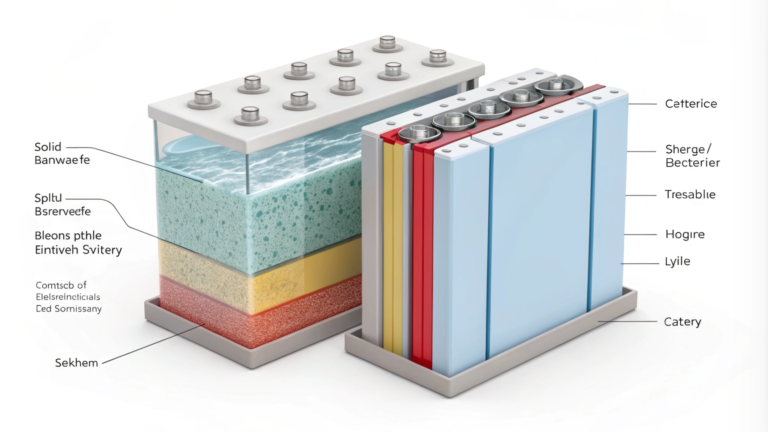
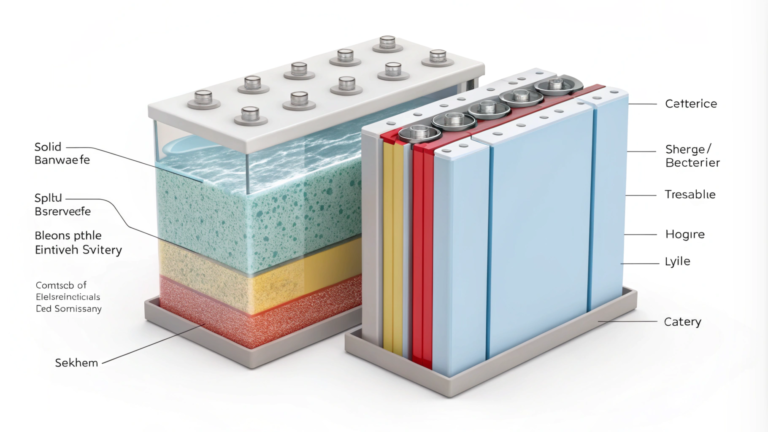
LFP (Lithium Iron Phosphate) is the current king of residential storage. It's safer, lasts longer, and costs less to produce. LFP batteries typically deliver 5,000 to 10,000 cycles before dropping to 80% capacity.
At one cycle per day, that's 13 to 27 years of useful life. They also handle high temperatures better and rarely experience thermal runaway.
NMC (Nickel Manganese Cobalt) is more energy dense. That means a smaller physical battery for the same capacity. NMC batteries typically deliver 3,000 to 5,000 cycles.
They perform better in cold weather but degrade faster at high temperatures and carry a slightly higher fire risk.
Which one is winning
The industry has clearly moved toward LFP for home storage. Nearly every major residential battery released in 2024 and 2025 uses LFP chemistry. Tesla's Powerwall 3, Enphase's IQ Battery 5P, and most BYD models are all LFP-based.
What this means for prices
LFP's lower material cost is the main reason battery prices are falling. As more manufacturers switch production lines to LFP, economies of scale push costs down further. For homeowners, this means cheaper batteries with longer lifespans.
The cold weather caveat
LFP batteries lose more capacity in freezing temperatures compared to NMC. If you live in a cold climate, check whether the battery has an internal heating element. Many modern LFP units do, but it adds to the cost and draws power to keep the battery warm.
Alternatives Worth Considering Before You Commit
A battery isn't the only way to solve your energy problems.
Standalone generator for backup only
If your main concern is keeping lights on during outages, a generator costs a fraction of a battery. A whole-home natural gas generator runs $3,000 to $6,000 installed. It's loud, requires fuel, and doesn't offset your daily electricity bill.
But for pure backup, it's far cheaper.
Time-of-use rate optimization without a battery
If your goal is saving money on electricity bills, check whether your utility offers load control programs. Some utilities let you shift usage to off-peak hours with smart thermostats and appliance timers. You get some of the benefit of a battery without the upfront cost.
Waiting for bidirectional EV charging
Vehicle-to-home (V2H) technology is emerging but not yet mature. A few EVs can now power your home through a bidirectional charger. The Nissan Leaf and Ford F-150 Lightning have this capability.
As more EVs support it, you might not need a dedicated home battery at all.
For now, V2H is still limited in capacity and compatibility. But within three to five years, it could be a serious alternative for EV owners.
DIY solar-plus-storage kits
For the handy homeowner, some manufacturers sell DIY solar battery kits. These cost 20 to 40% less than professionally installed systems. They require significant electrical knowledge and may void your home insurance or violate local codes.
They're not for everyone.
Real-World Scenarios: What Three Different Homeowners Did
These composite examples represent actual homeowner situations we've analyzed.
The California homeowner with constant outages
Sarah lives in Northern California where wildfire season means rolling blackouts. She loses power three to four times a year for 12 to 48 hours. Her utility rate is $0.32 per kWh with time-of-use pricing.
She installed a 13.5 kWh LFP battery in early 2024 for $14,500. After the 30% federal credit, her out-of-pocket was $10,150. She saves roughly $800 per year through time-of-use shifting alone.
Combined with avoiding $200 in generator fuel costs, her effective payback is about 10 years. She says the peace of mind during fire season is worth more than the spreadsheeet numbers.
The Texas family chasing time-of-use savings
Marcus in Houston has solar panels but his utility recently switched to a time-of-use plan with peak rates over $0.35 per kWh. He installed a 20 kWh stacked system for $22,000. After federal and state incentives, he paid $14,300.
His first full year showed $1,100 in savings from charging his battery with solar during the day and running his home during peak evening hours. At that rate, payback is 13 years. He could have waited for cheaper batteries, but the net metering change made immediate storage valuable.
The homeowner whose net metering was about to get cut
Jennifer in Massachusetts had solar panels on a grandfathered 1:1 net metering plan. Her utility announced it would end in 18 months. She installed a 10 kWh battery for $12,000.
After the federal credit and state incentives, her cost was $7,800.
The battery lets her store excess solar energy and use it at night instead of selling it to the utility at reduced rates. She estimates the battery saves her $650 per year in avoided electricity purchases. Payback is 12 years.
If she had waited, the net metering change would have cost her more than any battery price drop.
What to Do Next: A 5-Step Action Plan
Step 1: Gather your home energy data
Pull 12 months of utility bills. Find your average monthly kWh usage. Note your rate structure and whether you have time-of-use pricing.
Check your utility's outage history. Write down your solar panel system specs if you have one.
Step 2: Check your current and upcoming incentives
Visit the DSIRE database and search your state. Find the federal credit percentage for the year you'd install. Note any state rebate deadlines.
Calculate the total incentive stack.
Step 3: Get three to five quotes with apples-to-apples specs
Ask for line-item pricing showing battery cost, inverter, labor, permits, and panel upgrades separately. Compare usable kWh, not total capacity. Ask about round-trip efficiency and depth of discharge.
Step 4: Run the payback math for both scenarios
Run the numbers for buying now. Then run them for waiting one year, assuming 5 to 8% lower installed cost and any incentive reductions. Compare the two.
Include energy savings, avoided generator costs, and comfort value.
Step 5: Make your call and lock in pricing
If the numbers favor buying now, get a signed contract with a price guarantee. Many installers offer 30 to 60 day price locks. If you're waiting, set a calendar reminder to recheck incentives and pricing every six months.
Frequently Asked Questions
How much has the price of solar batteries dropped in the last five years?
Lithium-ion battery pack prices dropped from roughly $140 per kWh in 2020 to about $115 per kWh in 2024. That's an 18% decline. Installed system prices have fallen more slowly, dropping roughly 10 to 15% over the same period due to sticky labor and installation costs.
Will solar battery prices keep dropping in 2025 and 2026?
Most industry projections show continued declines. Cell costs could reach $90 to $100 per kWh by 2026. LFP chemistry specifically may see faster drops as manufacturing scale increases.
However, installation costs will moderate the savings for homeowners.
Is it better to buy a solar battery now or wait until 2026?
It depends on your situation. Buy now if you have frequent outages, high utility rates over $0.30 per kWh, or upcoming net metering changes. Wait if you have low rates under $0.15 per kWh, rare outages, or don't have solar panels yet.
How much does a Tesla Powerwall cost in 2025?
The Powerwall 3 costs roughly $9,200 for the hardware alone. Installed pricing including inverter, labor, and permits ranges from $12,000 to $16,000 for a single unit. The 30% federal credit reduces the net cost to $8,400 to $11,200.
Do solar batteries qualify for the 30% federal tax credit?
Yes, as of 2025, solar batteries qualify for the 30% federal Investment Tax Credit if they are charged primarily by solar energy. There is no dollar cap. The credit covers the battery, installation, and related electrical work.
It steps down to 26% in 2033.
How long do solar batteries last before needing replacement?
Lithium iron phosphate (LFP) batteries typically last 10 to 15 years or 5,000 to 10,000 cycles. Nickel manganese cobalt (NMC) batteries last 8 to 12 years or 3,000 to 5,000 cycles. Most manufacturers offer 10-year warranties that guarantee at least 70% capacity retention.
The Bottom Line on Solar Battery Prices in 2025
Here's the honest take. Solar battery prices are coming down, and that trend will continue for at least the next few years. But the savings from waiting are smaller than most people assume, and they're easily wiped out by losing current incentives or missing energy savings today.
The real question isn't "will prices drop?" It's "what makes sense for my specific situation right now?"
If you have frequent outages, high utility rates, or a net metering change coming, the math favors buying now. If you have neither, waiting another year or two is reasonable. Just don't wait so long that you miss the 30% federal credit or a state rebate that could save you thousands.
Get your quotes. Run the numbers. Make the decision that fits your home and your budget.
The technology will keep improving, but the perfect time to buy is when the numbers finally work for you.